
Loading, please wait...
LOT 0004
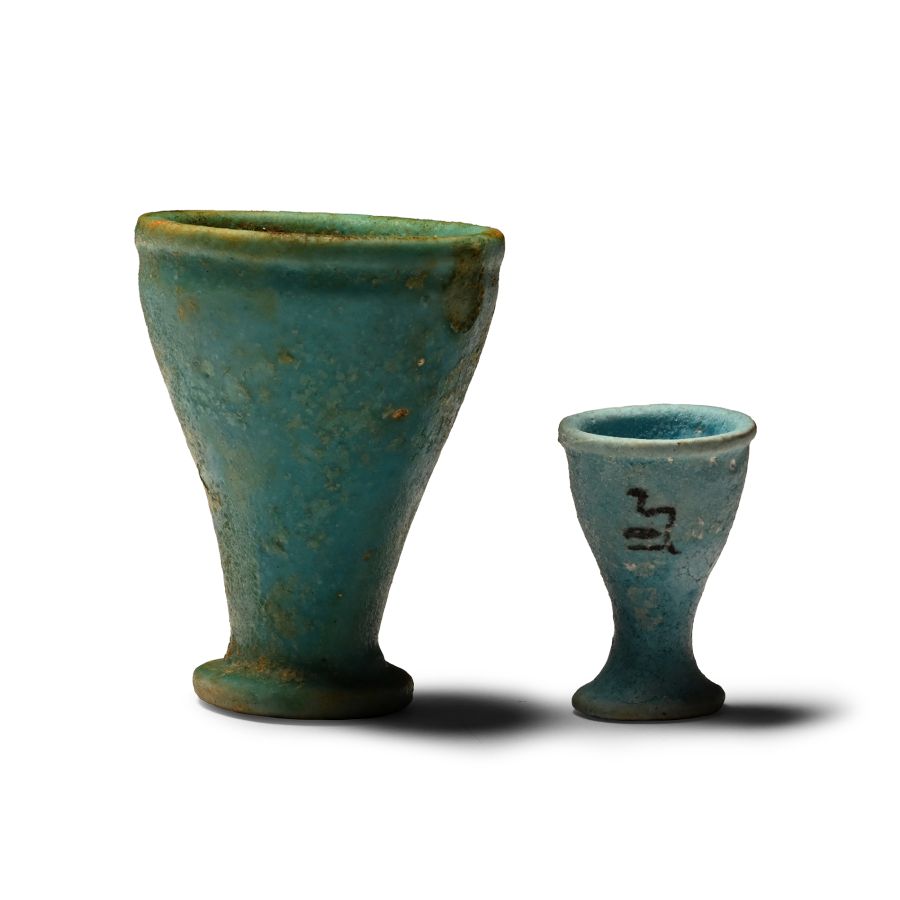
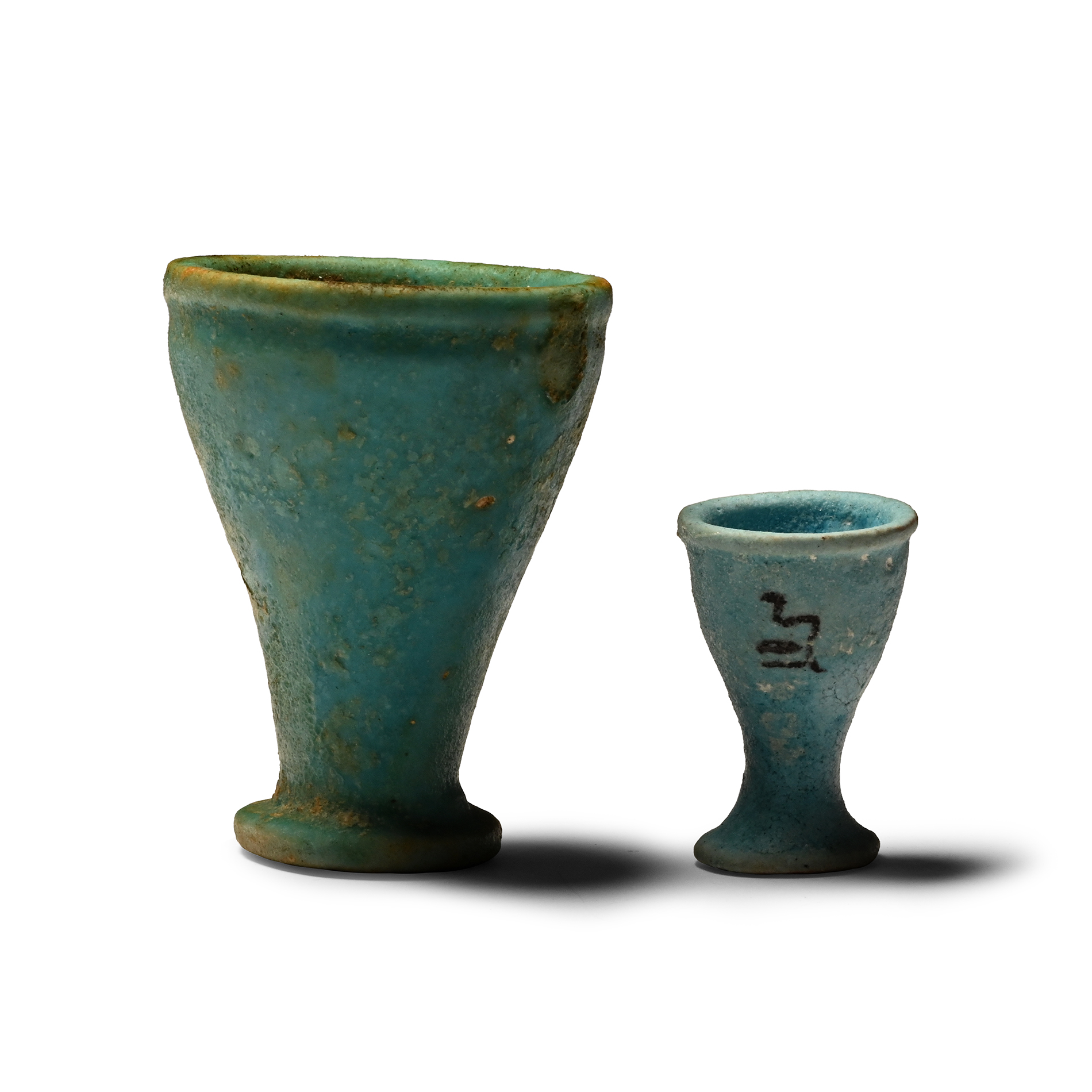
Egyptian Blue Faience Offering Cups
1ST MILLENNIUM B.C.
1 1/8 - 1 7/8 in. (37 grams total, 29-48 mm).
Group of two bell-shaped cups, the smaller with black hieroglyphic inscription. [2]
ProvenanceAcquired on the German art market, 1989-1995.
with The Museum Gallery, 19 Bury Place, London, WC1, UK, 1998-2003.
Property of a London based academic, 2003-present.
TimeLine Auctions follows a vetting process to ensure the authenticity and legality of all items, reinforcing our commitment to integrity and responsible trading. Each antiquity, antique, and coin lot undergoes thorough examination by a vetting committee of at least ten external specialists, professional trade association members, scientists, and archaeologists: Our Vetting Process
AUCTIONS:
TimeLine is a leading auction house specialising in antiquities, ancient art, collectables, natural history, coins, medals, and books. Our auctions offer museums, collectors, historians, and enthusiasts the opportunity to acquire unique and historically significant pieces.
-
.jpg)
Egyptian Basalt Torso of Naophoros
Late Period, 664-332 B.C.Sold for (Inc. bp): £1,690
Carved in the round, depicting a male carrying a rectangular shrine intended to hold a figure of a goddess; arms and upper chest bare, strap to the chest to support an apron, dorsal pillar to the reverse; accompanied by a custom-made stand. 4.6 kg, 19.3 cm (5.18 kg total, 25 cm including stand)
From the collection of Danish furniture designer Ole Wanscher (1903-1985). Accompanied by an academic report by Egyptologist Paul Whelan. Accompanied by a copy of a photo of Wanscher in his office, circa 1960. This lot has been checked against the Interpol Database of stolen works of art and is accompanied by search certificate number no.11843-207728.
Ole Wanscher was a leading figure of the Scandinavian Design movement. Wanscher was inspired by ancient designs, and one of his most famous creations, the 'Egyptian Stool', was based on folding chairs from Egypt's New Kingdom. This piece is visible in the background of a photo of Wanscher in his office, circa 1960. -
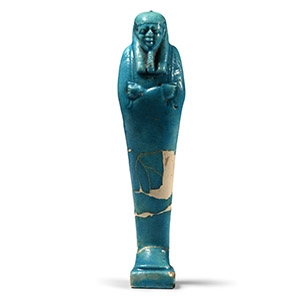
Egyptian Blue Glazed Shabti
Late Period, 664-332 B.C.Sold for (Inc. bp): £364
Faience shabti with detailed face, beard and wig, holding a pick and hoe, dorsal pillar and seed bag to left shoulder; some loss to surface; repaired. 162 grams, 16.5 cm
Ex Gilles Grimm collection, Paris, France. Acquired by the current owner from Aguttes, 19 December 2018, no.451. Property of a French collector. -
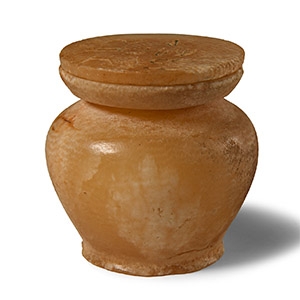
Egyptian Alabaster Kohl Pot
Middle Kingdom, circa 2035-1665 B.C.Sold for (Inc. bp): £715
Barrel-shaped with broad flat rim; with later hieroglyphic inscription to the lid. 115 grams, 47 mm high with lid
Acquired in the mid 1980s-1990s. From the family collection of Mr S.A., Switzerland, thence by descent. Private collection since the late 1990s.
