
Loading, please wait...
LOT 0439
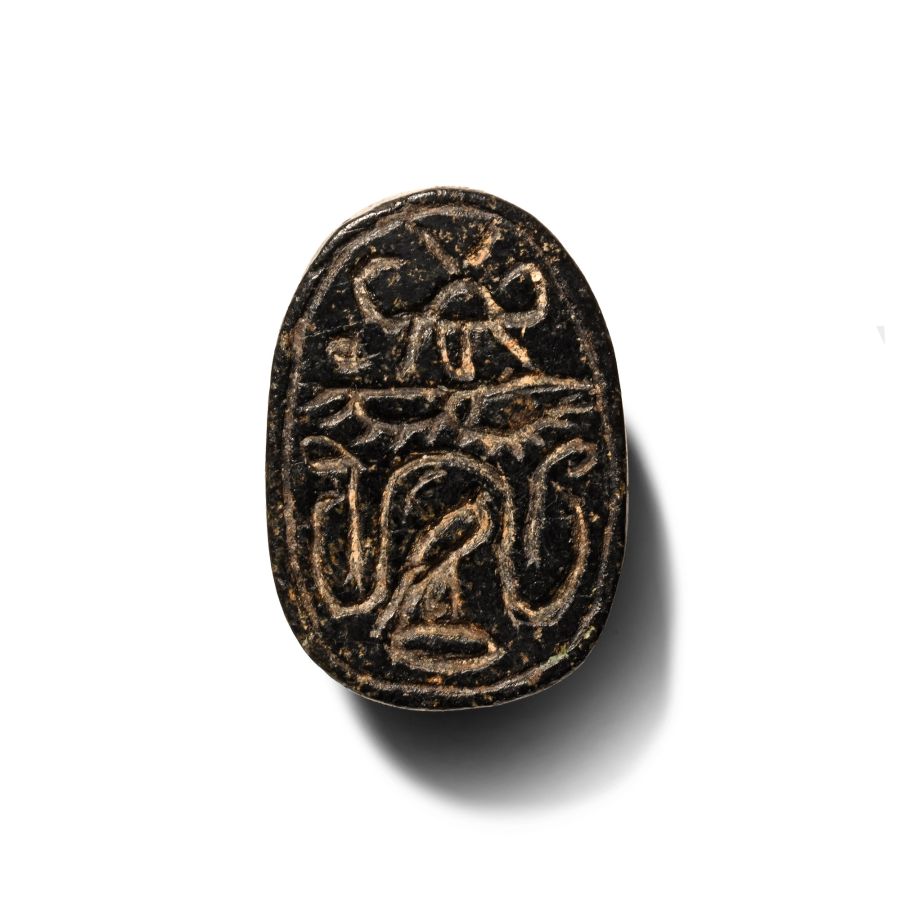
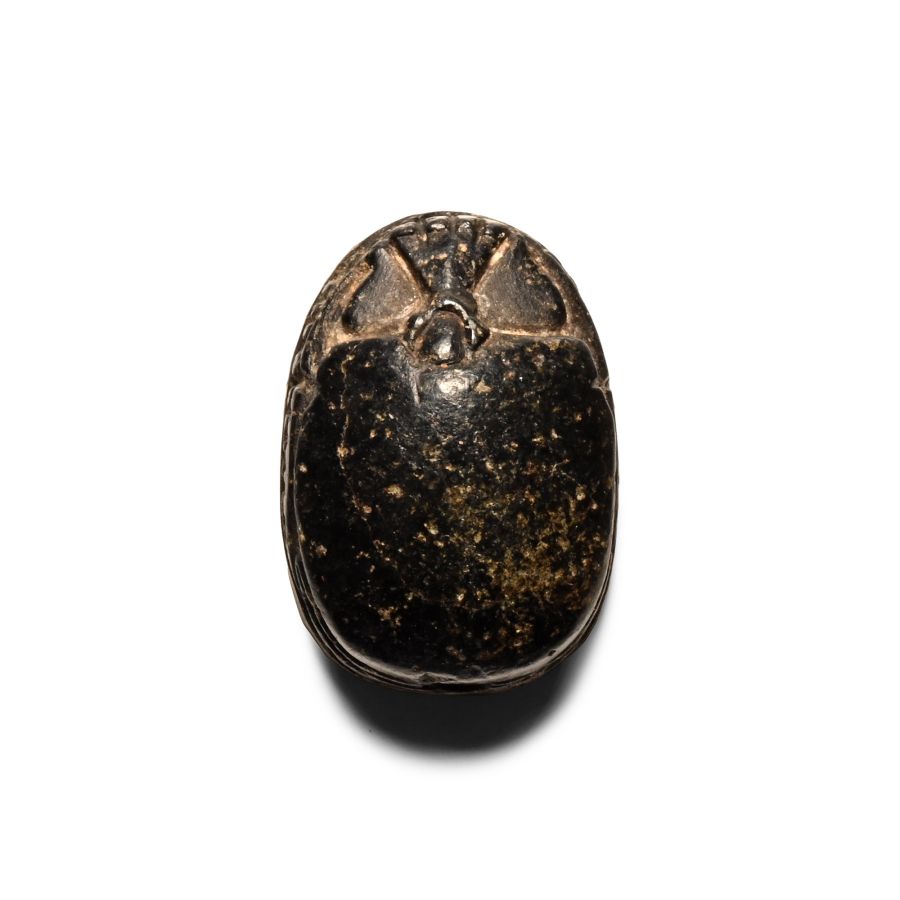
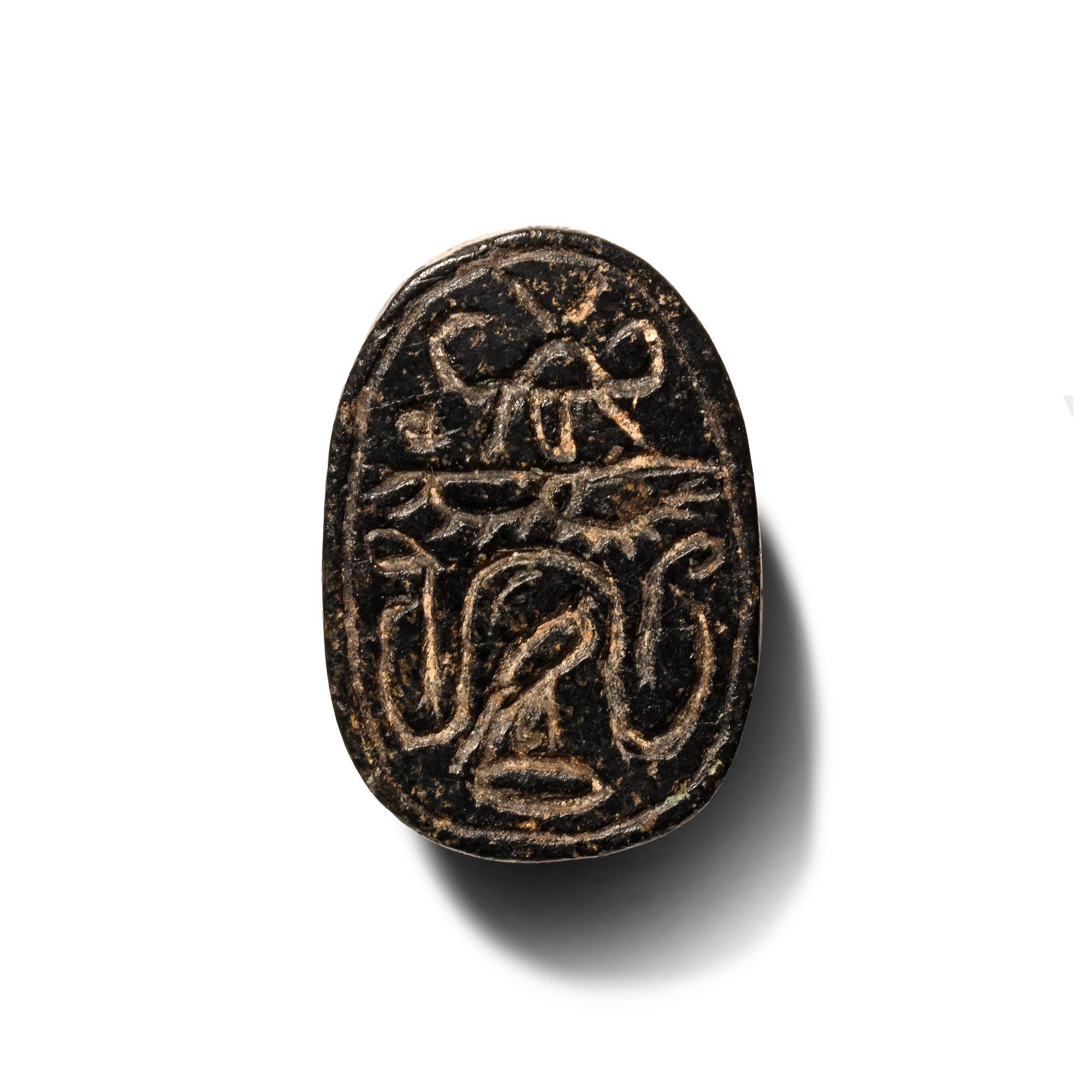
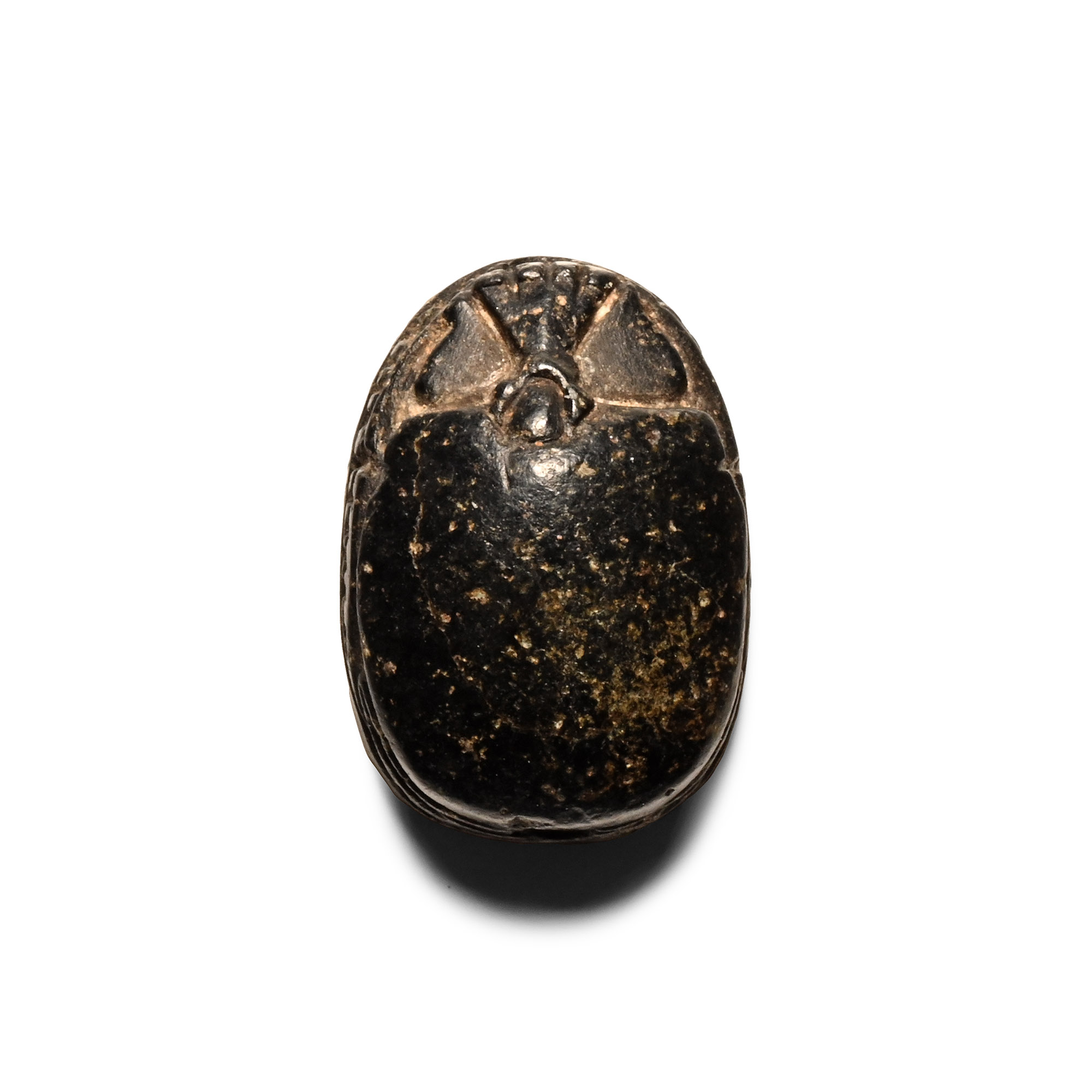
Egyptian Black Stone Scarab with Uraei and Falcon
NEW KINGDOM-LATE PERIOD, 1550-332 B.C.
3/4 in. (3.09 grams, 18 mm).
Scarab with carapace detailing, falcon figure to the underside.
ProvenanceEx North London gentleman's collection, 1990s.
Property of a Cambridgeshire, UK, gentleman.
TimeLine Auctions follows a vetting process to ensure the authenticity and legality of all items, reinforcing our commitment to integrity and responsible trading. Each antiquity, antique, and coin lot undergoes thorough examination by a vetting committee of at least ten external specialists, professional trade association members, scientists, and archaeologists: Our Vetting Process
AUCTIONS:
TimeLine is a leading auction house specialising in antiquities, ancient art, collectables, natural history, coins, medals, and books. Our auctions offer museums, collectors, historians, and enthusiasts the opportunity to acquire unique and historically significant pieces.
-
Egyptian Blue Faience Offering Cups
1st millennium B.C.Sold for (Inc. bp): £585
Group of two bell-shaped cups, the smaller with black hieroglyphic inscription. 37 grams total, 29-48 mm
Acquired on the German art market, 1989-1995. with The Museum Gallery, 19 Bury Place, London, WC1, UK, 1998-2003. Property of a London based academic, 2003-present. -
Egyptian Fabric Panel Group
Coptic, 4th century A.D.Sold for (Inc. bp): £130
Comprising: square panel with border of repeated motif of an amphora and vine issuing from the top, guilloche, radiating foliage; similar with guilloche enclosing repeating ring motifs, knotwork band and central radiating fleur-de-lys motifs; similar with concentric bands of roundels and central floret; each mounted on a wooden-framed fabric backing. 1.08 kg total, 25.3 x 25.5 cm each
Acquired from Esther Fitzgerald Rare Textiles, London, UK. Property of a North American gallery. -
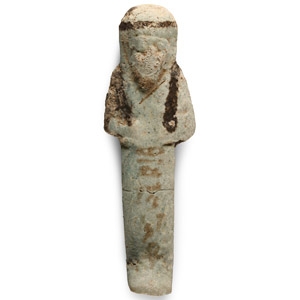
Egyptian Faience Hieroglyphic Shabti For Djed-Bastet-iuef-ankh
Third Intermediate Period, 1069-702 B.C.Sold for (Inc. bp): £156
With pale blue surface and applied black detailing to hair, seed-bag and tools; faint hieroglyphs to lower body giving the dedication 'The Osiris, Djed-Bastet-iuef-ankh'. 18.9 grams, 80 mm
From a UK collection in the 1990s. Property of a Cambridgeshire, UK, gentleman.
