
Loading, please wait...

LOT 0016
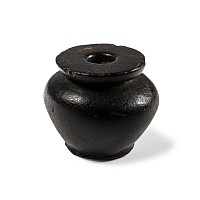
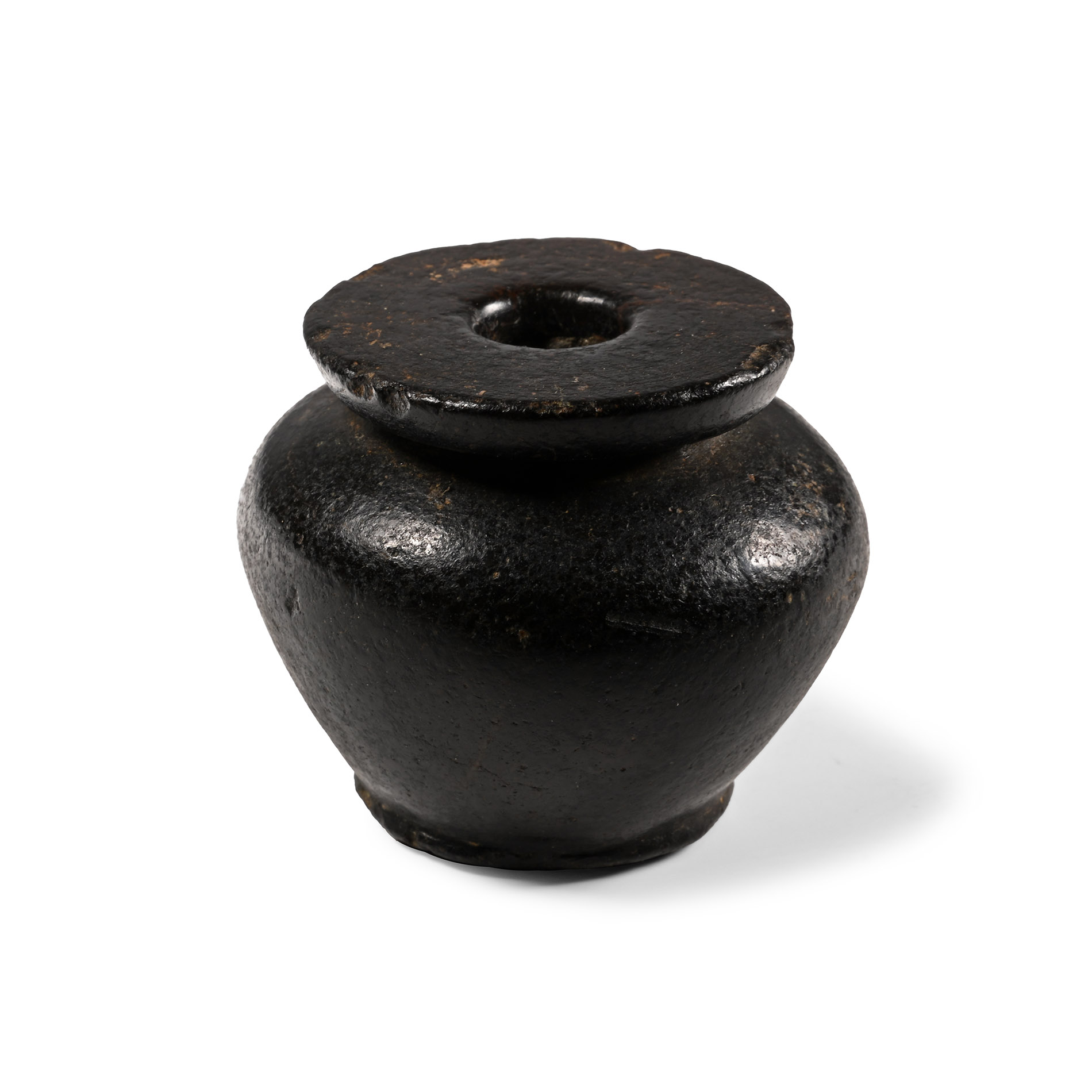
Egyptian Black Stone Kohl Vessel
MIDDLE KINGDOM, CIRCA 1991-1665 B.C.
2 in. (190 grams, 53 mm wide).
Squat in profile with integral discoid base, broad discoid rim to the mouth.
ProvenanceSwiss collection, acquired in 1998.
LiteratureCf. Guidotti, M.C., Vasi dall’epoca protodinastica al Nuovo Regno, Museo Egizio di Firenze, Rome, 1991, p.120, no. 114, for a similar example.
FootnotesSuch vessels contained kohl, an eyepaint either green or black. Kohl was used as a cosmetic in daily life, mentioned in funerary texts as necessary make-up in the presentation of the deceased before Osiris, and served as a medical treatment for eye ailments. The small size of kohl jars and their tiny capacity indicate the preciousness and costliness of the contents.
CONDITIONTimeLine Auctions follows a vetting process to ensure the authenticity and legality of all items, reinforcing our commitment to integrity and responsible trading. Each antiquity, antique, and coin lot undergoes thorough examination by a vetting committee of at least ten external specialists, professional trade association members, scientists, and archaeologists: Our Vetting Process
AUCTIONS:
TimeLine is a leading auction house specialising in antiquities, ancient art, collectables, natural history, coins, medals, and books. Our auctions offer museums, collectors, historians, and enthusiasts the opportunity to acquire unique and historically significant pieces.
-
Egyptian Limestone 'Floral' Inlay Group
Roman Period, 30 B.C.-323 A.D. or earlierSold for (Inc. bp): £85
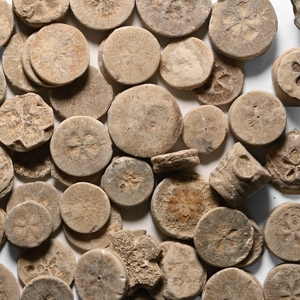
Group of discoid inlay plaques or gaming counters, crinoids with cinquefoil motif. 80 grams total, 12-19 mm
From a central London ADA gallery, 1990s.
Flowers were symbolic of rebirth due to the daily reopening of their petals after nightfall. As a result, they were widely used in domestic settings, religious and funerary contexts, and as adornments. Similar rosette discs, like those recovered from the Ramesside Period palace at Qantir, were used as decorative elements in royal palaces. -
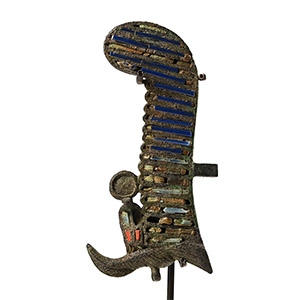
Egyptian Bronze and Glass Inlaid Ostrich Feather from an Atef Crown
Late Period-Ptolemaic Period, circa 664-30 B.C.Sold for (Inc. bp): £650
Stylised ostrich plume surmounting a ram's horn, uraeus with sun disk to one side; side tang and loop on the underside for attachment; the plume decorated with a series of narrow horizontal recesses to accept inlays, with some original remaining as well as later replacements in blue glass. 244 grams total, 18.5 cm
UK private collection of Werner Forman (1921-2010), formed between 1950-1980.
The atef crown consists of a central element similar to the hedjet or White Crown, flanked by two ostrich feathers, often with a pair of ram's horns beneath and uraei on either side. The meaning of atef is uncertain, but it may mean either 'his might' or 'his terror'. The crown first appeared in the 5th Dynasty and is particularly associated with the underworld god Osiris. -
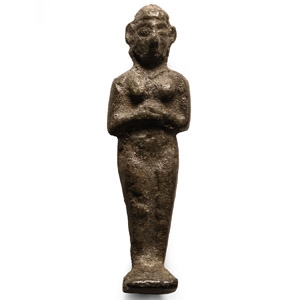
Phoenician Bronze Statuette of a Naked Female
6th-4th century B.C.Sold for (Inc. bp): £169
Modeled in the round with arms folded across the abdomen, standing nude on a square base. 107 grams, 94 mm
Acquired in Egypt by Lieutenant James Alexander Goodman in the 1920s. Thence by descent to his grandson.
Lieutenant Goodman served in the 4th Battalion Welsh Regiment during World War I and saw action in Palestine during the capture of Bethlehem, (for which he won an MC). After the war, he setup a business selling Fordson trucks and tractors in Alexandria, Egypt. A keen antiquarian, he collected ancient objects during his time in Alexandria and when he visited the pyramids at Giza. After his first marriage failed, he returned to the UK in the early 1930s. On his death in 1959, he passed his small collection of Egyptian objects on to his second wife, Ruby Goodman. On Ruby’s death in 1994, they were left to their second daughter, Rosemary Johnson, (née Goodman), and are currently in the possession of her son.
