
Loading, please wait...
LOT 0470
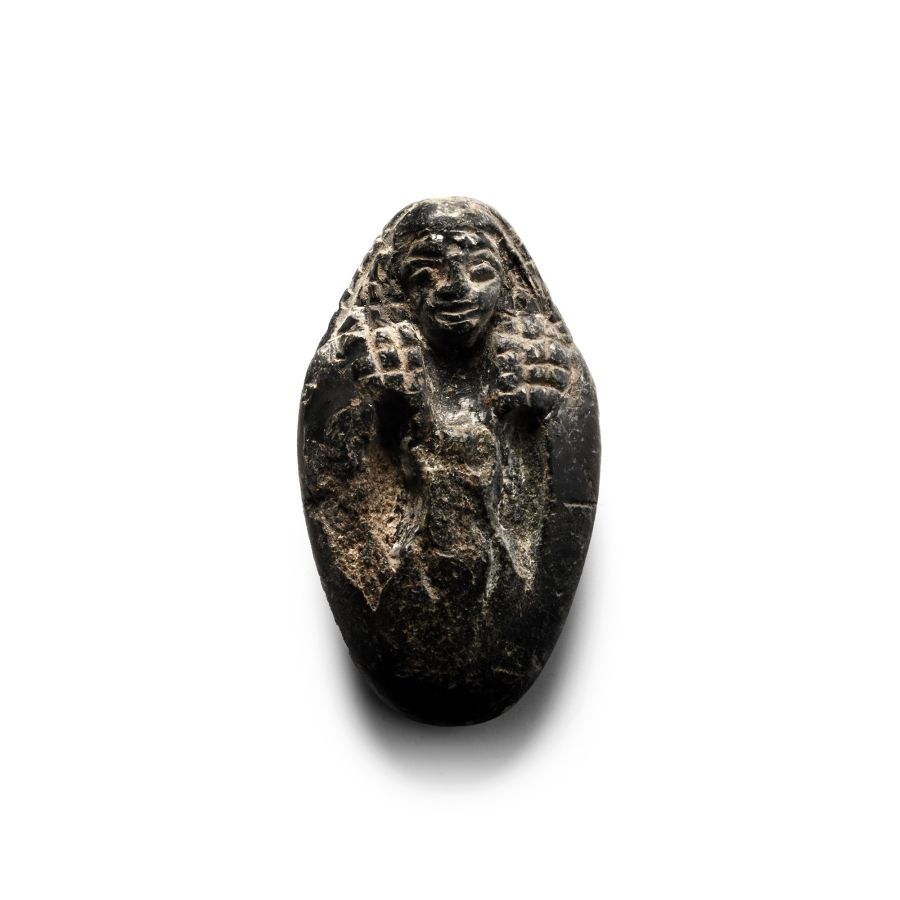
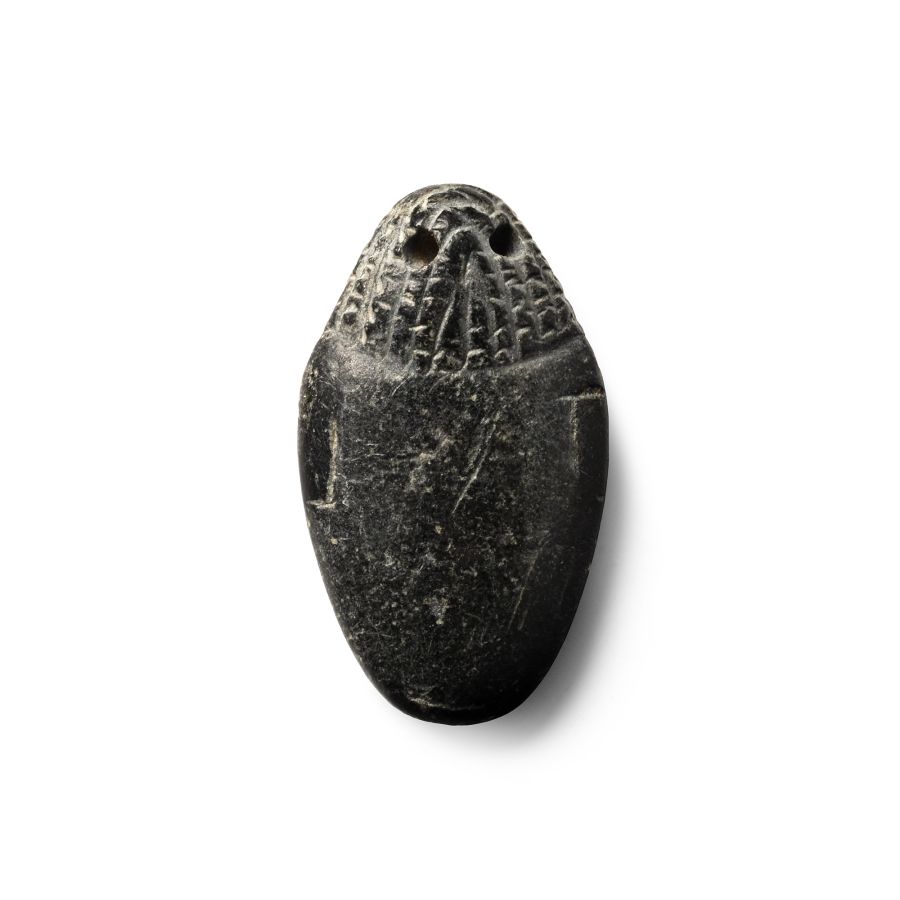
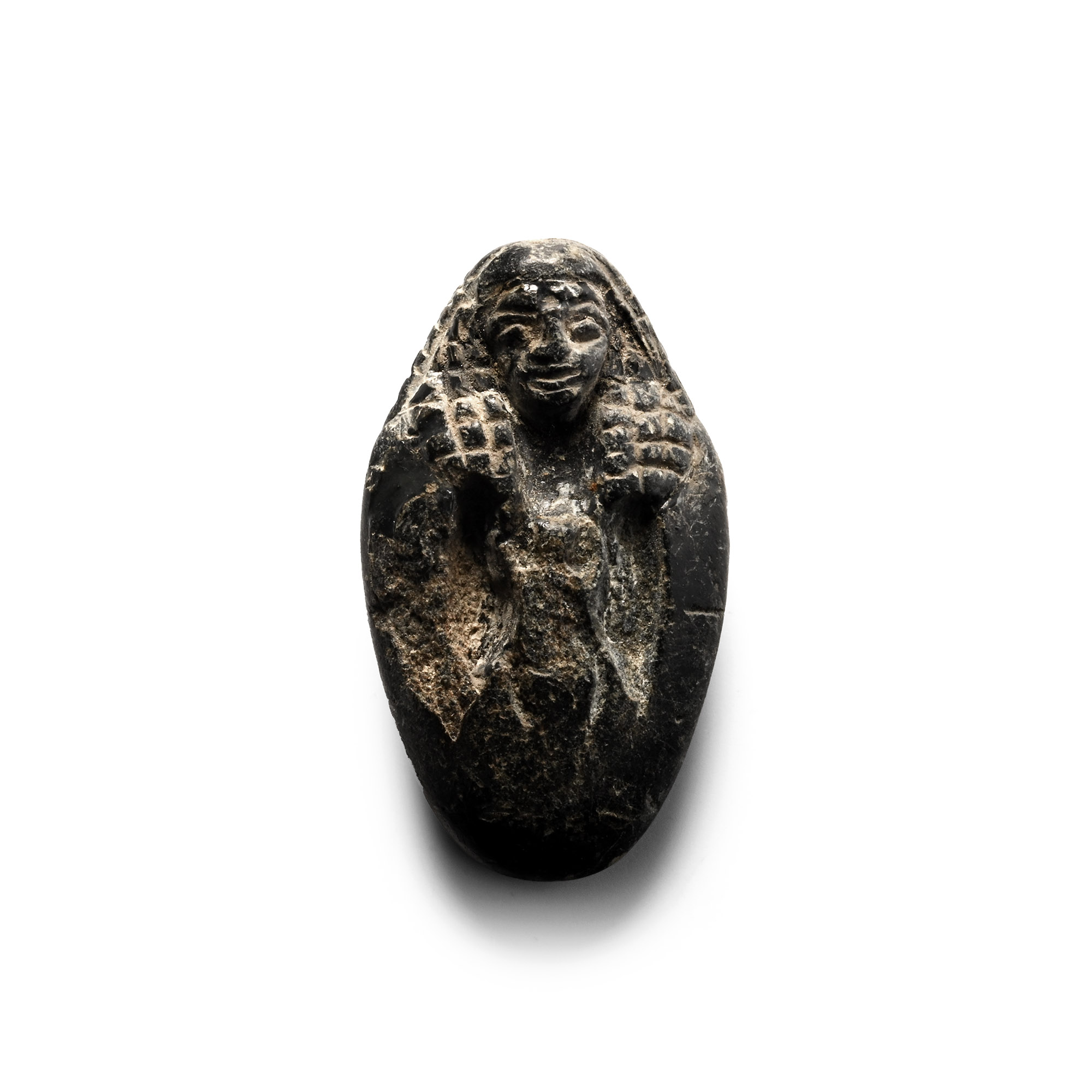
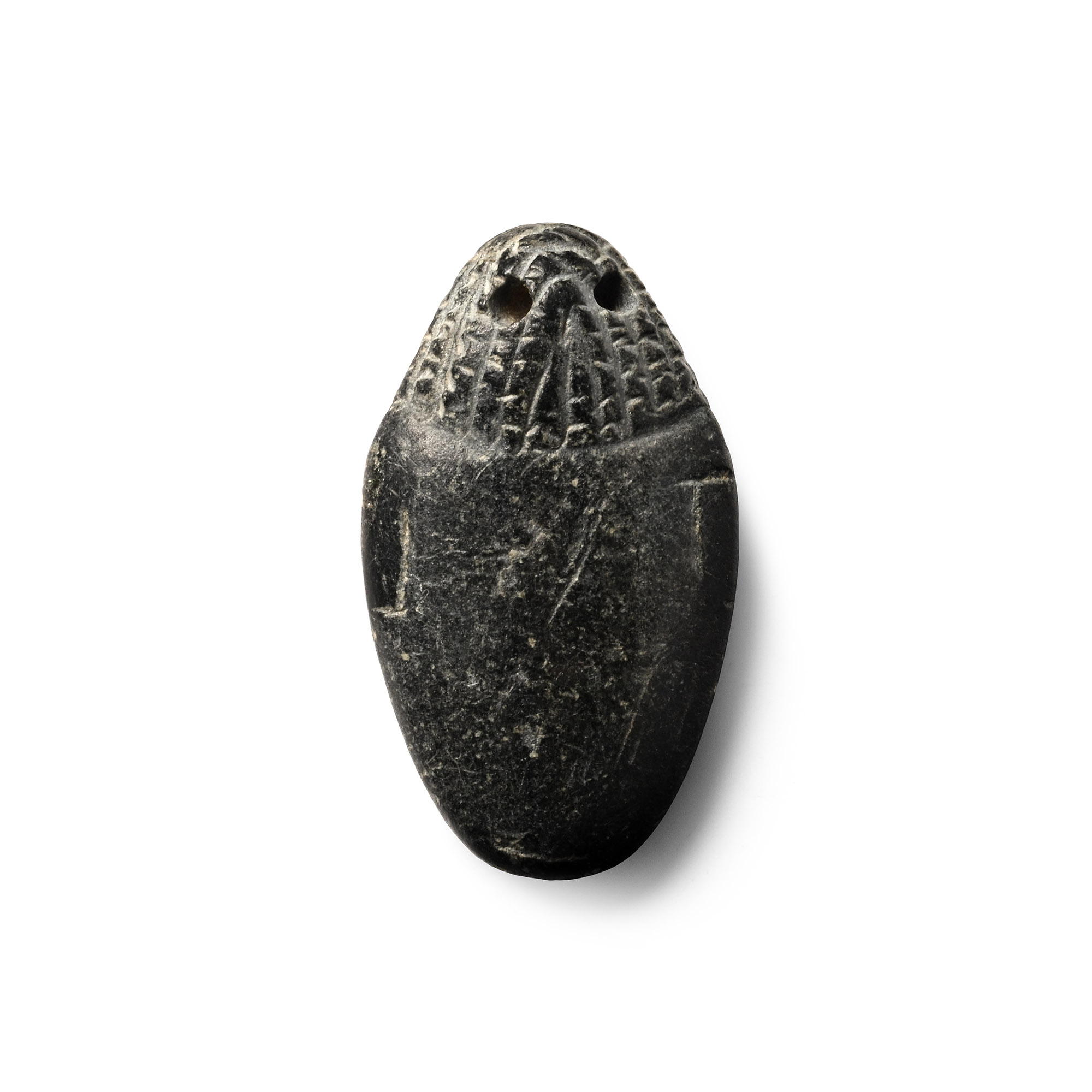
Egyptian Black Stone Heart Amulet
NEW KINGDOM, CIRCA 1500-1200 B.C.
1 5/8 in. (13.3 grams, 41.6 mm).
Carved in the half-round, lentoid in plan, with a human head wearing a hatched wig, remains of a scarab beetle in the centre, pierced to reverse for suspension. [No Reserve]
Provenancewith Archaeologia, Switzerland, before 1983.
Ex private North American collection.
London private collection, 2016.
Cf. Andrews, C., Amulets of Ancient Egypt, London, 1994, Fig. 61, for examples of this amulet type.
CONDITIONTimeLine Auctions follows a vetting process to ensure the authenticity and legality of all items, reinforcing our commitment to integrity and responsible trading. Each antiquity, antique, and coin lot undergoes thorough examination by a vetting committee of at least ten external specialists, professional trade association members, scientists, and archaeologists: Our Vetting Process
AUCTIONS:
TimeLine is a leading auction house specialising in antiquities, ancient art, collectables, natural history, coins, medals, and books. Our auctions offer museums, collectors, historians, and enthusiasts the opportunity to acquire unique and historically significant pieces.
-
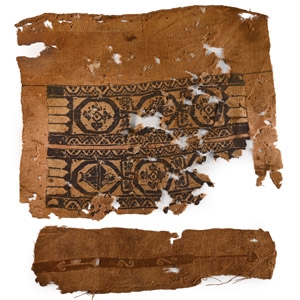
Egyptian Coptic Textile Fragment Group
Circa 7th century A.D.Sold for (Inc. bp): £286
Comprising: a large fragment of a tunic with double segmenta in dark purple wool over linen, S torsion, formed by two parallel stripes, embroidered with kantharos and floral patterns, inscribed in tondos within bands with crenellated borders; a thin clavus connected to an orbiculus ending in an arrow shape, red purple and brown wool over linen, S torsion, embroidered with S shaped and lanceolate patterns. 207 grams total including package, 31-33.5 cm
Acquired 1970s-1996. Property of a North American collector. London collection, 2016.
This type of embroideries were typical of tunics and garments characterised by full-length clavi, and segmenta, decorated with either intricate geometric patterns or floral and vegetal motifs. In Christian symbology, the kantharos was an ancient Greek wine cup that symbolised resurrection and eternal life through Christ. -
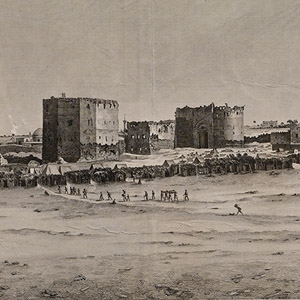
Very Large Egyptian Expedition Lithograph of a View of Alexandria
Early 19th century A.D.Estimate: £100 - 140 (+bp*)
Opening Bid: £50
Proof etching on laid paper of plate 98 from Description de l'Égypte : ou, Recueil des observations et des recherches qui ont été faites en Égypte pendant l'expédition de l'armée française. entitled Vue de l'Esplanade ou Grande Place du port neuf et de l'Enceinte des Arabes, Seconde partie. 233 grams, 105 x 66.5 cm
From the collection of a North American priest. Acquired between 1981-1996. Property of a North American collector.
Produced between February 1802 and 1830 on the orders of Napoleon Bonaparte; published between 1809 and 1828. Just 1,000 copies were distributed to various institutions, printed on laid paper with an 'Égypte ancienne et moderne' watermark. The book is subtitled Recueil des observations et des recherches qui ont été faites en Égypte pendant l’expédition de l’Armée française, publié par les ordres de Sa Majesté l’Empereur Napoléon le Grand (Gathering of observations and discoveries which were made in Egypt during the expedition of the French army, published on the orders of His Majesty the Emperor Napoleon the Great). It was the world's first encyclopedia devoted exclusively to the remains of ancient Egypt. The plates of this book are the first to present the archaeological sites of Thebes (Luxor). -
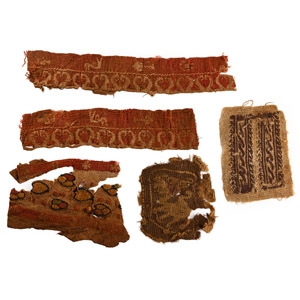
Egyptian Coptic Textile Fragment Group
Circa 4th-6th century A.D.Sold for (Inc. bp): £260
Comprising: fragment of a segmentum in red and coarse linen, S torsion, embroidered with geometric motifs; fragment of another segmentum in red, yellow, blue and green wool, with representations of buds within a red frame; a small tabula in purple wool over linen background, embroidered with a stylised image of Pegasus; a double segmenta, in purple over linen, embroidered with wave motif. 66 grams total including package, 7.8-20.5 cm
Acquired 1970s-1996. Property of a North American collector. London collection, 2016.
These are pieces of extraordinary finesse in both material and design. They all probably were once applied as a decoration of various garments, such as tunics, cloaks, and shawls.
