
Loading, please wait...
LOT 0488
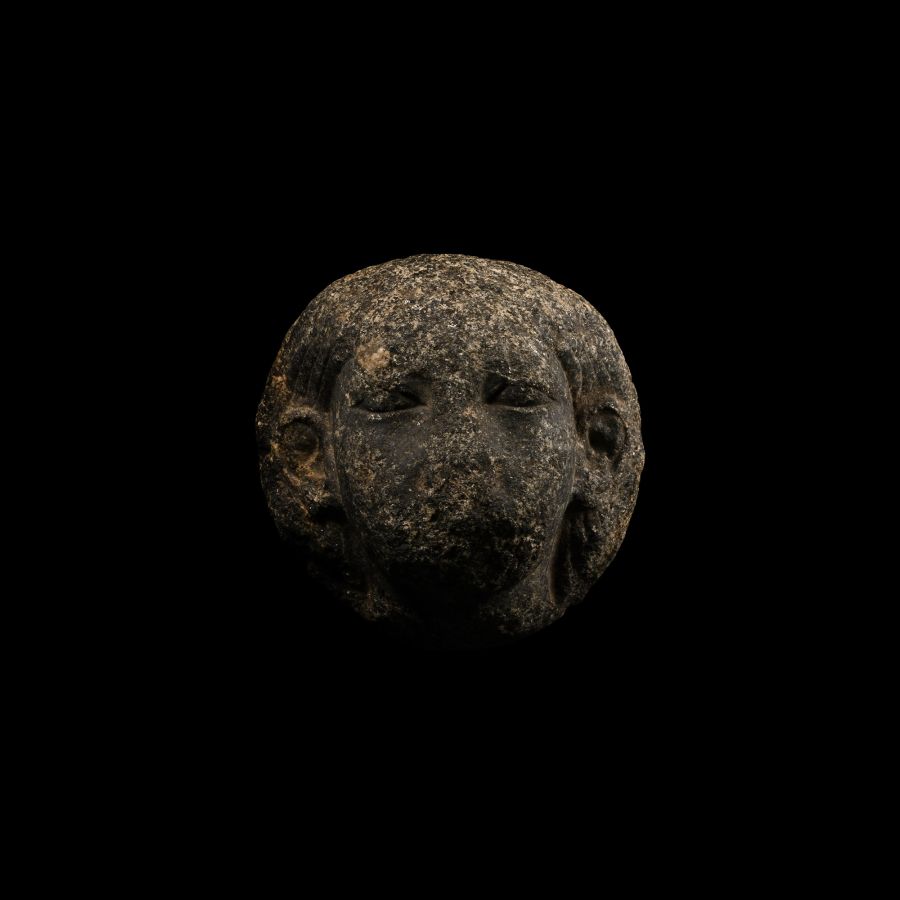
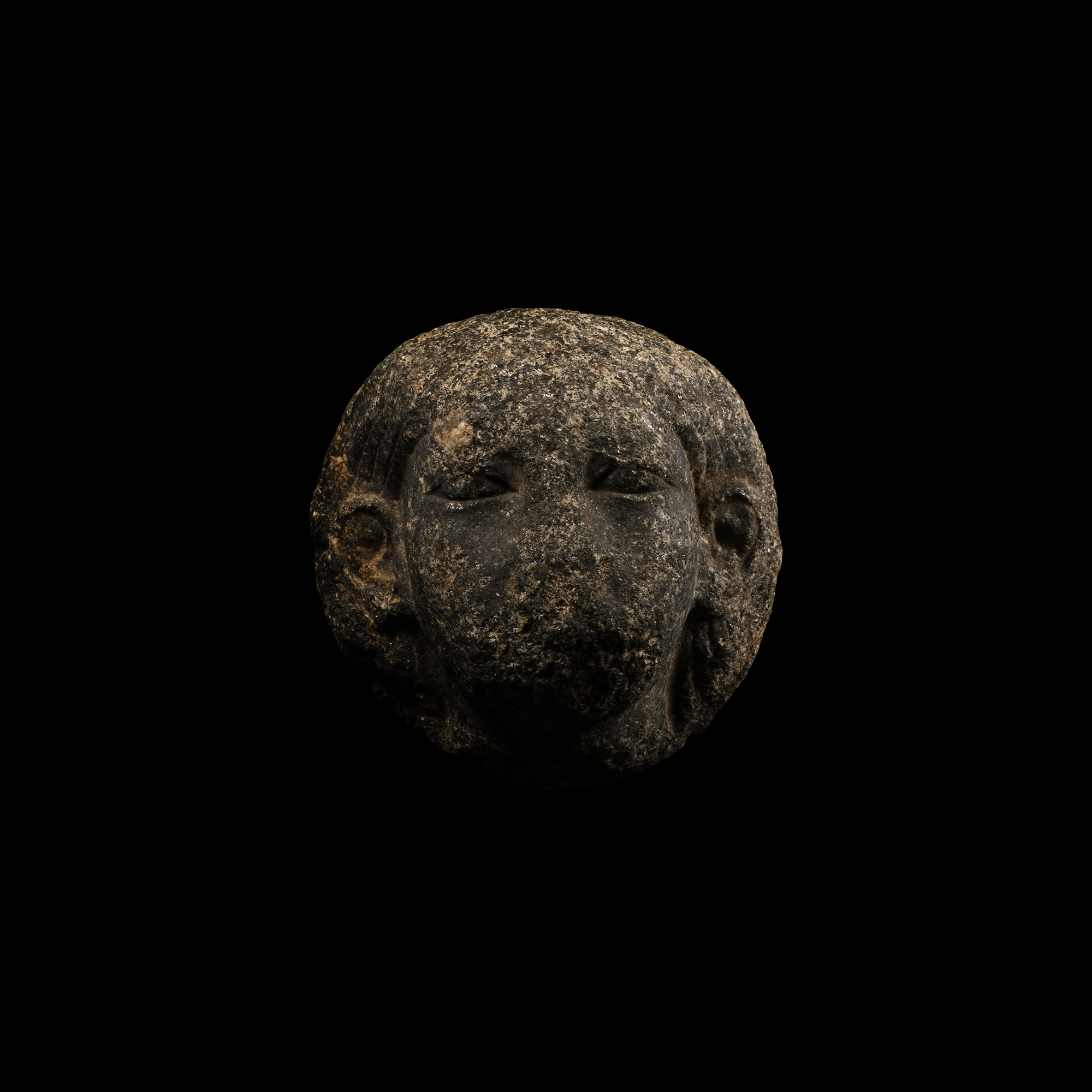
Egyptian Black Stone Head of a Female
MIDDLE KINGDOM, LATE 12TH DYNASTY, 1862-1787 B.C.
3 3/4 in. (1.1 kg, 94 mm).
Carved in the round head with almond-shaped eyes and copious hair, detailed ears; jawline, neck and cheeks abraded.
ProvenanceAcquired in the mid 1980s-1990s.
Private collection, Switzerland, thence by descent.
Private collection, since the late 1990s.
This lot is accompanied by an illustrated lot declaration signed by the Head of the Antiquities Department, Dr Raffaele D'Amato.
Cf. Bourriau, J., Pharaohs and Mortals: Egyptian art in the Middle Kingdom, Cambridge, 1988, p.49, no.38, for a portrait of a female head with similar features.
FootnotesThe nearly spherical shape suggests that the head was repurposed as a pounder.
CONDITIONTimeLine Auctions follows a vetting process to ensure the authenticity and legality of all items, reinforcing our commitment to integrity and responsible trading. Each antiquity, antique, and coin lot undergoes thorough examination by a vetting committee of at least ten external specialists, professional trade association members, scientists, and archaeologists: Our Vetting Process
AUCTIONS:
TimeLine is a leading auction house specialising in antiquities, ancient art, collectables, natural history, coins, medals, and books. Our auctions offer museums, collectors, historians, and enthusiasts the opportunity to acquire unique and historically significant pieces.
-
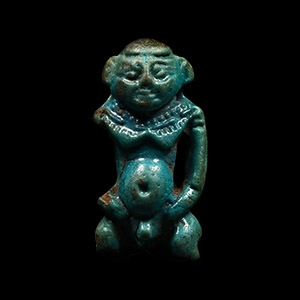
Egyptian Blue Glazed Faience Figure of Pataikos
Saite Period, 26th Dynasty, 664-545 B.C.Sold for (Inc. bp): £468
Wearing a broad collar and a stylised scarab on top of the head, elongated arms resting on the lower part of his protruding abdomen. 10.8 grams, 43 mm
Acquired in the mid 1980s-1990s. Private collection, Switzerland, thence by descent. Private collection, since the late 1990s. This lot is accompanied by an illustrated lot declaration signed by the Head of the Antiquities Department, Dr Raffaele D'Amato.
Herodotus mentions Pataikos as a dwarf-like representation of Ptah, although the ancient Egyptian name of the god remains unclear. These diminutive amulets symbolise Ptah’s immense magical power, which served to protect the wearer from dangerous creatures such as snakes and crocodiles. The role of the deity in the funerary sphere is explained in Spell 164 of the Book of the Dead, where a Pataikos is used to protect the deceased's heart from enemy attacks and the putrefaction of the body. -
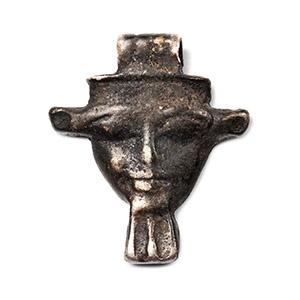
Egyptian Silver Hathor Amulet
Late-Ptolemaic Period, 664-30 B.C.Sold for (Inc. bp): £975
D-shaped mask representing the human-headed Hathor with cow ears and a short beard, a ribbed suspension loop above. 0.7 grams, 11 mm
From an early 20th century collection. This lot is accompanied by an illustrated lot declaration signed by the Head of the Antiquities Department, Dr Raffaele D'Amato. -
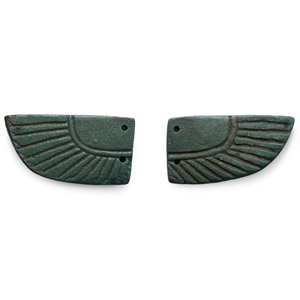
Egyptian Faience Scarab Wing Pair
Late Period, 664-332 B.C.Sold for (Inc. bp): £143
Each flat-section with a band of feathers within the border, two attachment holes. 15 grams total, 43-44 mm
From the private collection of the late Julian Bird, UK, formed since the 1970s. This lot is accompanied by an illustrated lot declaration signed by the Head of the Antiquities Department, Dr Raffaele D'Amato.
These wings were once part of a central scarab amulet. Winged scarabs often served as funerary adornments and were believed to symbolise the rebirth and regeneration of the deceased.
