
Loading, please wait...
LOT 0458
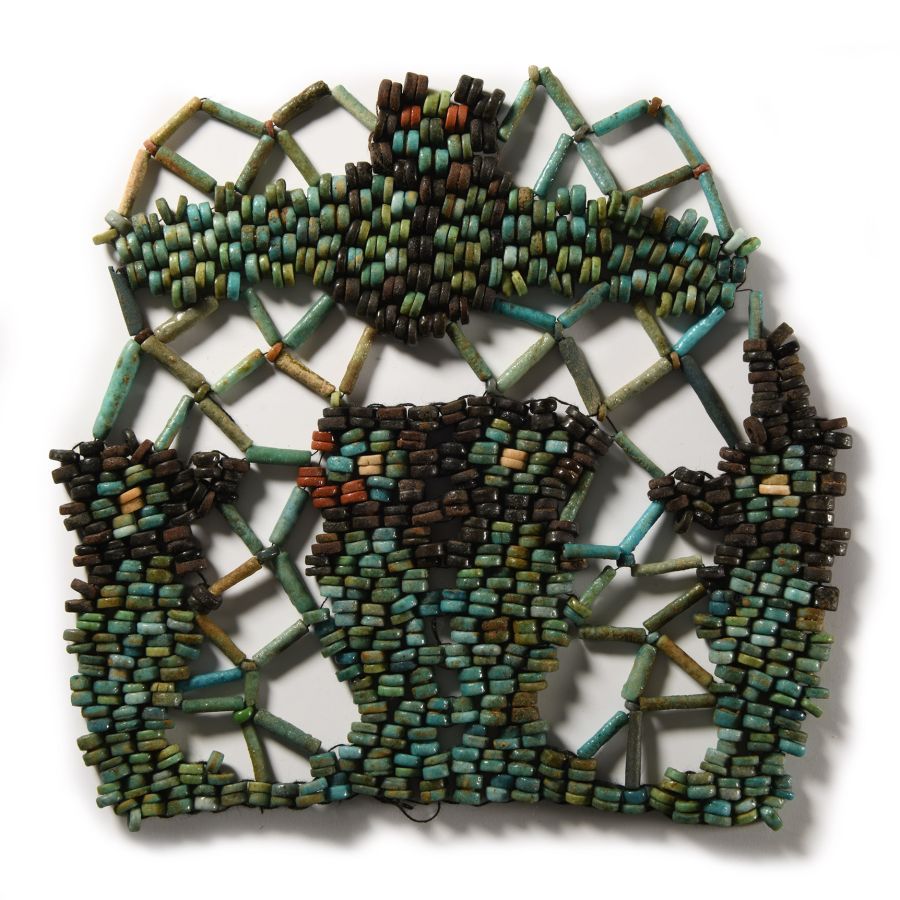
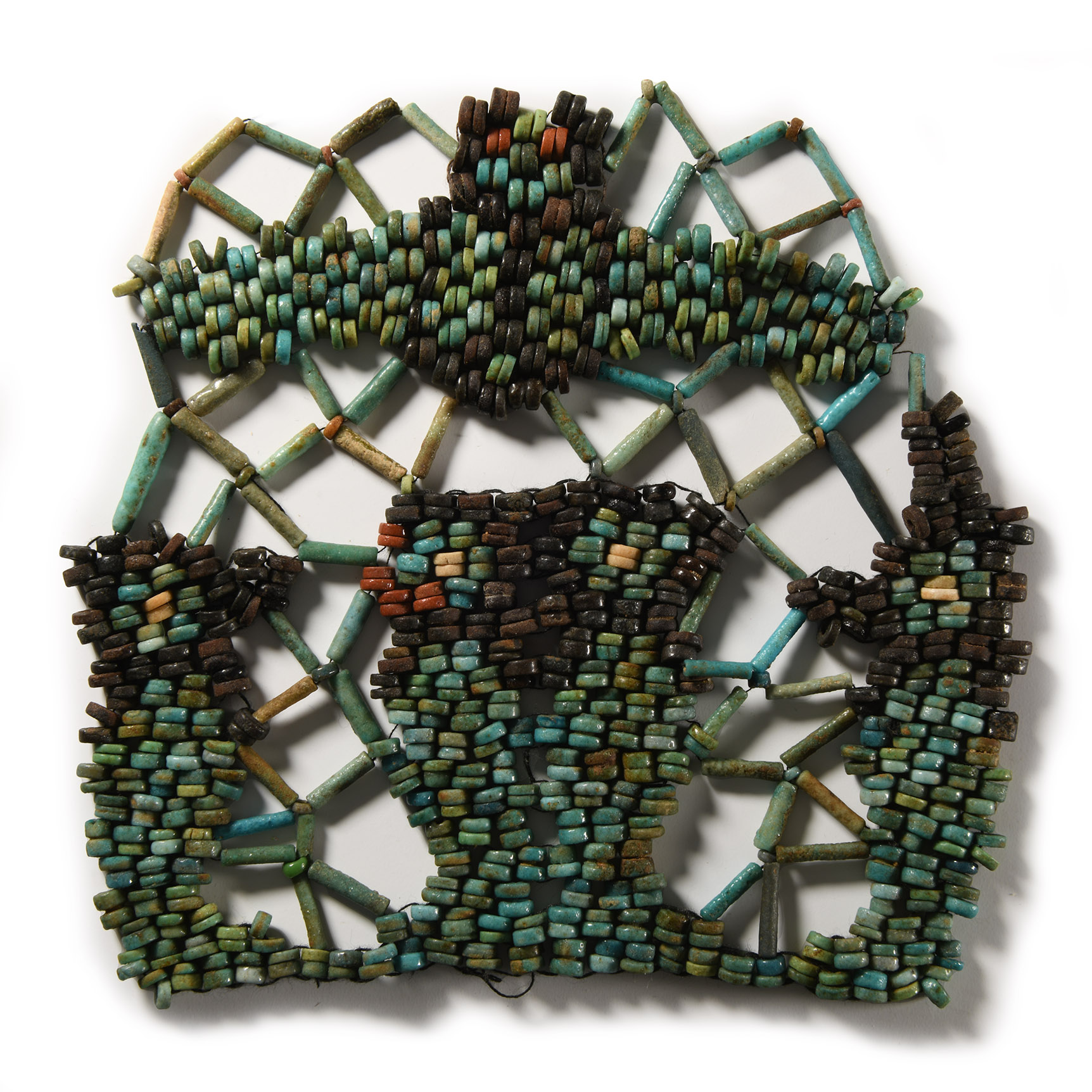
Egyptian Bead Panel with Four Sons of Horus and Winged Scarab
PTOLEMAIC PERIOD, 332-30 B.C.
4 7/8 in. (46 grams, 12.5 cm high).
Restrung as an openwork panel with a winged scarab above and the four sons of Horus below as two opposing pairs.
ProvenancePreviously on French art market in the 1990s.
Ex London, UK, collection.
Cf. Manley, B., and Dodson, A., Life Everlasting. National Museum of Scotland Collection of Ancient Egyptian Coffins, Edinburgh, 2010, p.114, no.43, for a bead-work shroud incorporating a winged scarab and Four Sons of Horus.
FootnotesThe Four Sons of Horus were deities responsible for protecting the internal organs of the deceased. The human-headed Imsety protected the liver, the baboon-headed Hapy protected the lungs, the jackal-headed Duamutef protected the stomach, and the falcon-headed Qebehsenuef protected the intestines.
CONDITIONTimeLine Auctions follows a vetting process to ensure the authenticity and legality of all items, reinforcing our commitment to integrity and responsible trading. Each antiquity, antique, and coin lot undergoes thorough examination by a vetting committee of at least ten external specialists, professional trade association members, scientists, and archaeologists: Our Vetting Process
AUCTIONS:
TimeLine is a leading auction house specialising in antiquities, ancient art, collectables, natural history, coins, medals, and books. Our auctions offer museums, collectors, historians, and enthusiasts the opportunity to acquire unique and historically significant pieces.
LOT 0458
Egyptian Bead Panel with Four Sons of Horus and Winged Scarab
Sold for (Inc. bp): £130
-
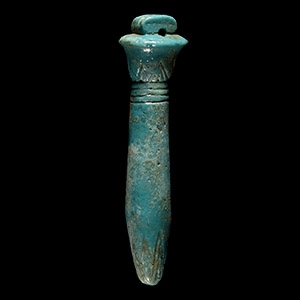
Large Egyptian Faience Papyrus Amulet Pendant
Late Period, 664-332 B.C.Sold for (Inc. bp): £468
With stylised incised lotus petal detailing to base and neck; ribbed suspension loop. 11 grams, 66 mm
with Bonhams, Antiquities, 21 October 1999, no.432-436. -
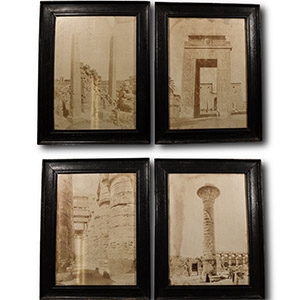
Original Framed Photographs of Egyptian Monuments
1922 A.D.Sold for (Inc. bp): £156
Group of four original photographs, each in a glazed wooden frame: (1) Karnak: Gateway of Ptolemy III Euergetes and Ptolemy IV Philopator at the Precinct of Montu (2) Obelisks at Karnak, on the right erected by Thutmose I (reign c. 1520 - 1492 BCE) and on the left by Hatshepsut (1479-1458 BCE) (3) Column of Taharqa, Karnak Temple (4) Karnak temple columns with hieroglyphs. 4.6 kg total, 46 x 35.5 cm each
Property of a North Lincolnshire, UK, gentleman. -
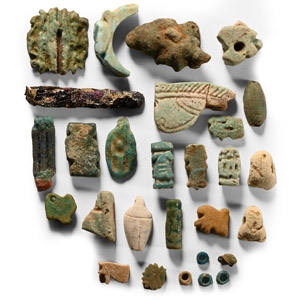
Egyptian Faience Amulet and Bead Collection
Late Period, 664-332 B.C.Sold for (Inc. bp): £260
Mixed group including eye of Horus, flower, standing figure and other types. 18 grams total, 3 - 33 mm
From a collection acquired on the UK art market from various auction houses and collections mostly before 2000. From an important Cambridgeshire estate; thence by descent.
