
Loading, please wait...
_900x900.jpg "Egyptian Basalt Torso of Naophoros")
_200x200.jpg "Egyptian Basalt Torso of Naophoros")
_900x900.jpg "Egyptian Basalt Torso of Naophoros")
_200x200.jpg "Egyptian Basalt Torso of Naophoros")
_900x900.jpg "Egyptian Basalt Torso of Naophoros")
_200x200.jpg "Egyptian Basalt Torso of Naophoros")
_900x900.jpg "Egyptian Basalt Torso of Naophoros")
_200x200.jpg "Egyptian Basalt Torso of Naophoros")
_900x900.jpg "Egyptian Basalt Torso of Naophoros")
_200x200.jpg "Egyptian Basalt Torso of Naophoros")
_900x900.jpg "Egyptian Basalt Torso of Naophoros")
_200x200.jpg "Egyptian Basalt Torso of Naophoros")
.jpg "Egyptian Basalt Torso of Naophoros")
.jpg "Egyptian Basalt Torso of Naophoros")
.jpg "Egyptian Basalt Torso of Naophoros")
.jpg "Egyptian Basalt Torso of Naophoros")
.jpg "Egyptian Basalt Torso of Naophoros")
.jpg "Egyptian Basalt Torso of Naophoros")
LOT 0011
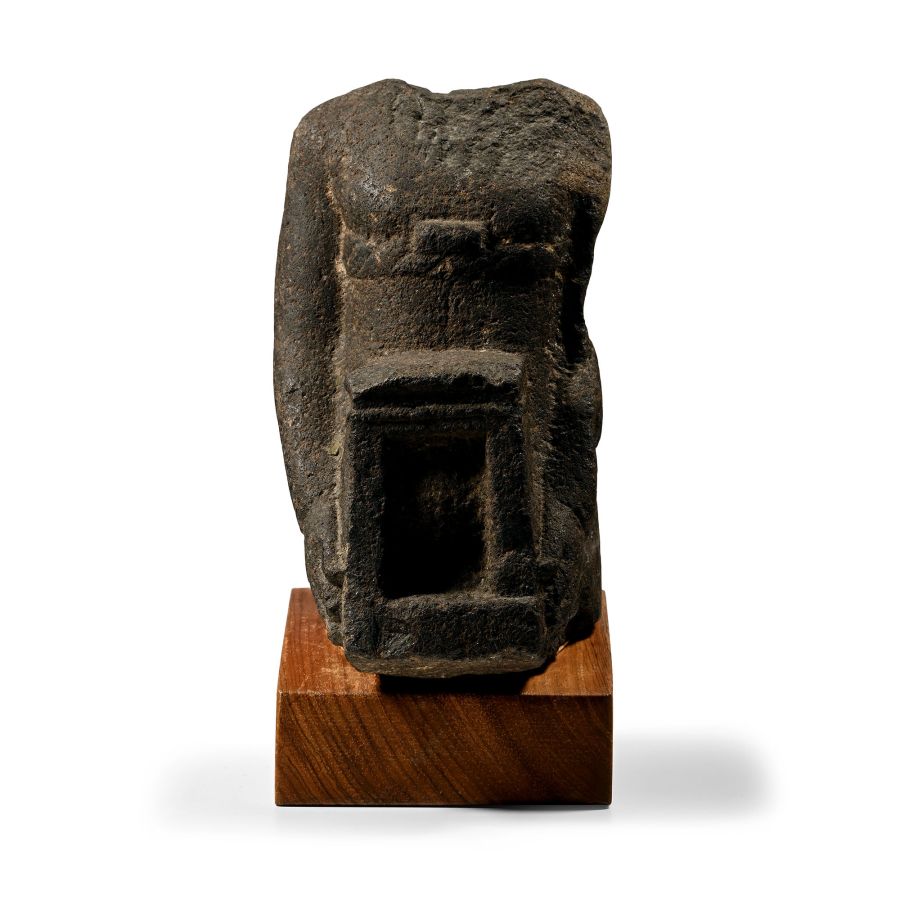
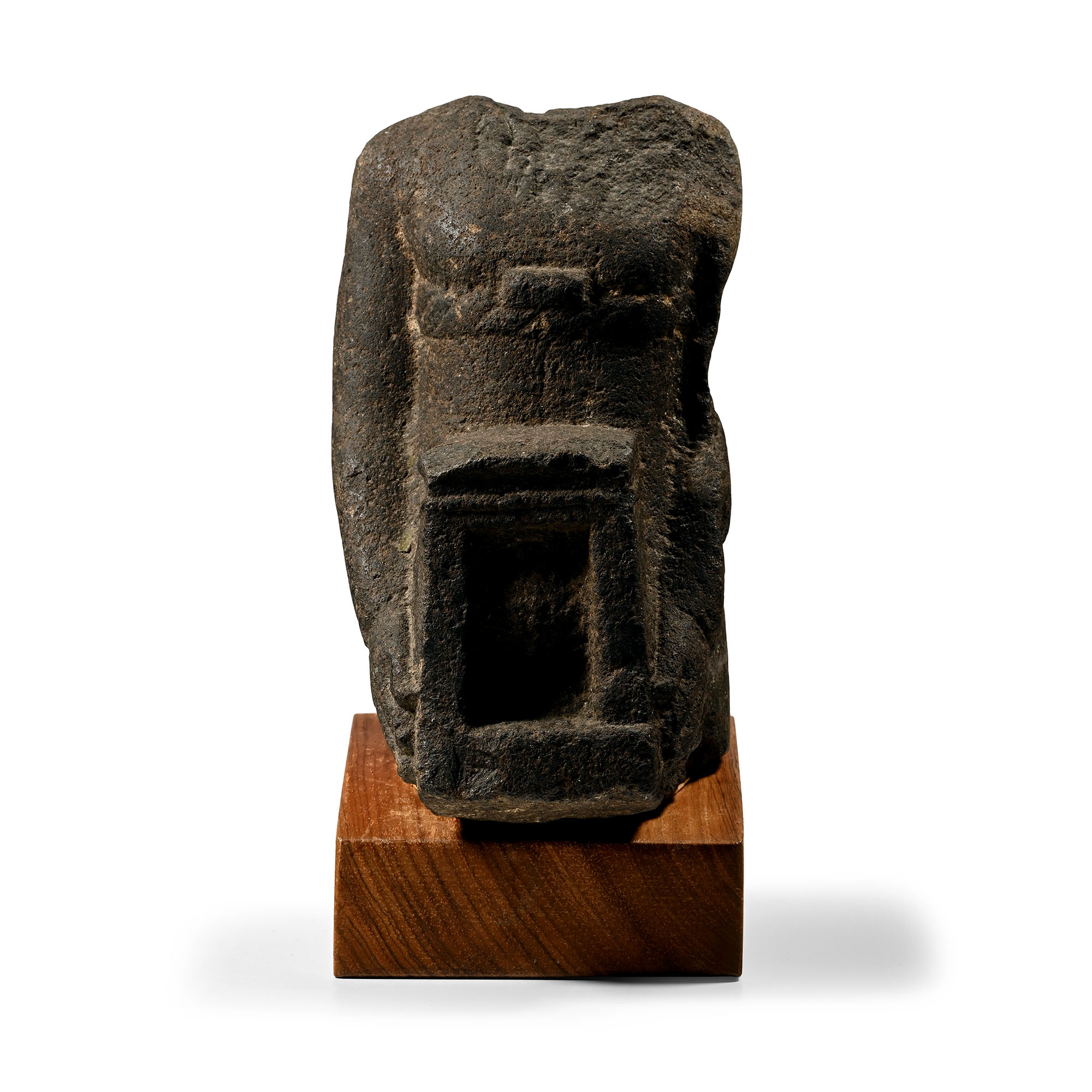
Egyptian Basalt Torso of Naophoros
LATE PERIOD, 664-332 B.C.
7 5/8 in. (9 7/8 in.) (4.6 kg, 19.3 cm (5.18 kg total, 25 cm including stand)).
Carved in the round, depicting a male carrying a rectangular shrine intended to hold a figure of a goddess; arms and upper chest bare, strap to the chest to support an apron, dorsal pillar to the reverse; accompanied by a custom-made stand. [No Reserve]
ProvenanceFrom the collection of Danish furniture designer Ole Wanscher (1903-1985).
Accompanied by an academic report by Egyptologist Paul Whelan.
Accompanied by a copy of a photo of Wanscher in his office, circa 1960.
This lot has been checked against the Interpol Database of stolen works of art and is accompanied by search certificate number no.11843-207728.
Ole Wanscher was a leading figure of the Scandinavian Design movement. Wanscher was inspired by ancient designs, and one of his most famous creations, the 'Egyptian Stool', was based on folding chairs from Egypt's New Kingdom. This piece is visible in the background of a photo of Wanscher in his office, circa 1960.
CONDITIONTimeLine Auctions follows a vetting process to ensure the authenticity and legality of all items, reinforcing our commitment to integrity and responsible trading. Each antiquity, antique, and coin lot undergoes thorough examination by a vetting committee of at least ten external specialists, professional trade association members, scientists, and archaeologists: Our Vetting Process
AUCTIONS:
TimeLine is a leading auction house specialising in antiquities, ancient art, collectables, natural history, coins, medals, and books. Our auctions offer museums, collectors, historians, and enthusiasts the opportunity to acquire unique and historically significant pieces.
-
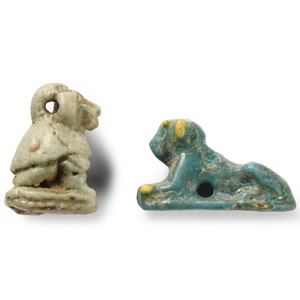
Egyptian Faience Amulet Group
Late Period, 664-332 B.C.Sold for (Inc. bp): £247
Comprising a resting lioness on a rectangular base and the god Thoth in baboon form. 1.30 grams total, 12-15 mm
From the collection of Doctor Girard, a collector for over 60 years. with Hotel des Ventes de Clermont-Ferrand, 22 May 2017. Property of a French collector.
Throughout ancient Egyptian mythology, lioness goddesses played a significant role in the religious beliefs of the people. These goddesses, including Sekhmet, Bastet, and Wadjet were revered as powerful and fierce protectors. Their presence was believed to ward off evil and safeguard the people from harm. The baboon was an animal manifestation of the god Thoth. Thoth was revered for his association with knowledge, writing, and healing. It is likely that the popularity of Thoth amulets as mummy amulets is linked to his role as the recorder of the final judgment, which determined whether the deceased had lived a life of virtue. -
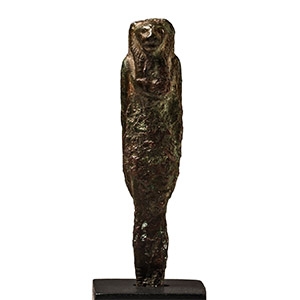
Egyptian Bronze Sekhmet Statuette
Late Period, 664-332 B.C.Sold for (Inc. bp): £338
Standing figure of Sekhmet with arms held at her sides, wearing a wig and tight-fitting robe; mounted on a custom-made display stand. 30 grams total, 73 mm including stand
From a collection acquired on the UK art market from various auction houses and collections mostly before 2000. From an important Cambridgeshire estate; thence by descent.
Sekhmet was a ferocious and aggressive deity, the consort of Ptah, and closely associated with the king. An amulet would imbue its wearer with her power. -
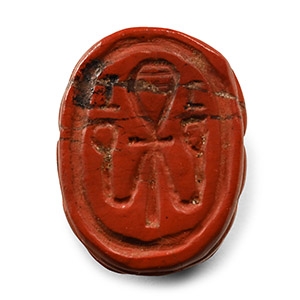
Egyptian Orange Jasper Scarab
New Kingdom, 1550-1069 B.C.Sold for (Inc. bp): £286
Carved with design to the underside of a central ankh symbol flanked by stylised rearing cobras. 1.52 grams, 13 mm
From an early 20th century collection.
