
Loading, please wait...
LOT 0421
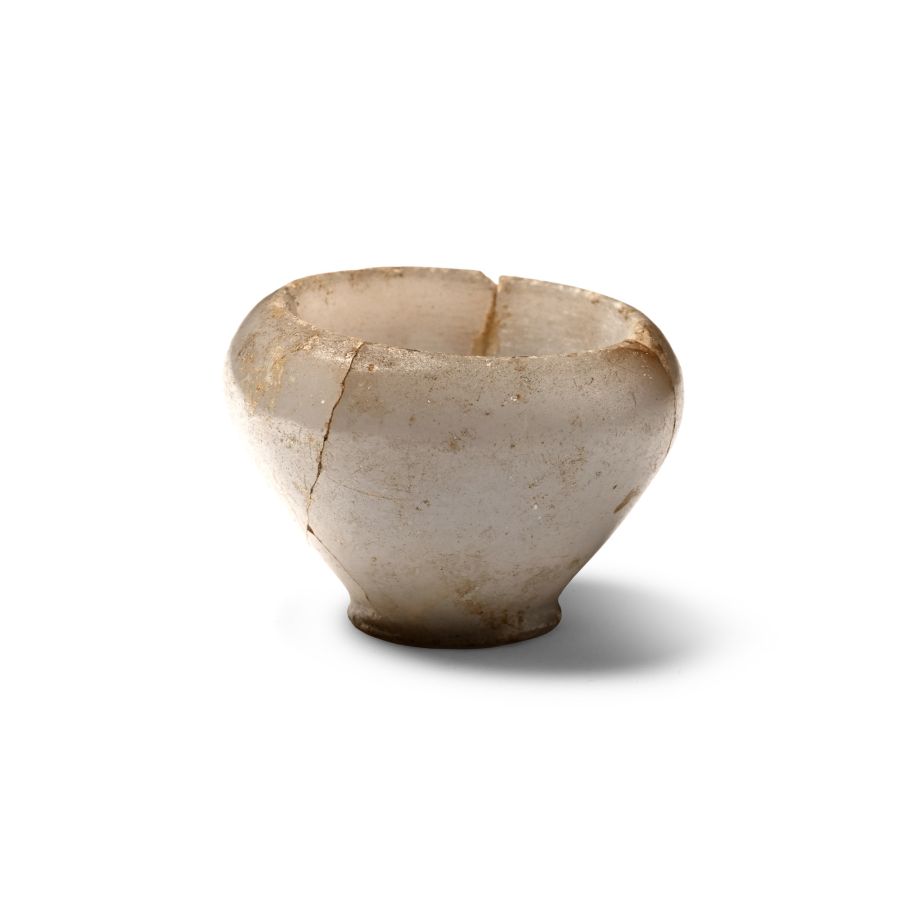
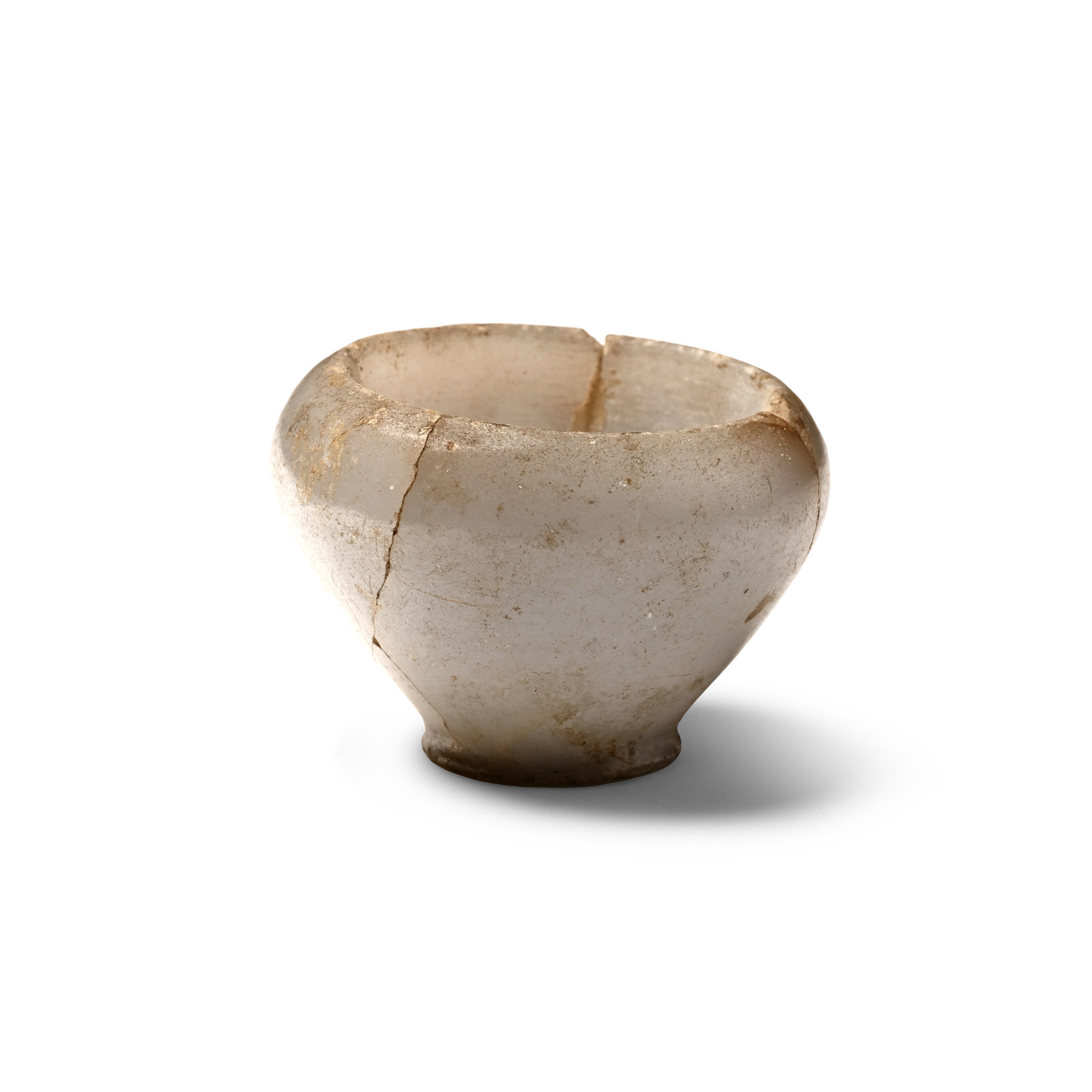
Egyptian Anhydrite Cosmetic Bowl
MIDDLE KINGDOM, CIRCA 2040-1780 B.C.
1 1/2 in. (33.68 grams, 39 mm).
Conical in profile with rounded rim, narrow disc base; repaired; a rare stone.
ProvenanceEx William Ohly, 1883-1955.
Ex Abbey Museum, Barnet, by descent.
Cf. Aston, B.G., Ancient Egyptian Stone Vessels: Materials and Forms, SAGA 5, Heidelberg, 1994, pp.145-146, no. 157, for the type.
FootnotesAnhydrite, incorrectly called "blue marble" by early excavators, was a stone favoured by the ancient Egyptians from the Middle Kingdom to the Second Intermediate Period. This particular example follows a Middle Kingdom-style cosmetic kohl jar that could be modelled with or without an integral rim.
CONDITIONTimeLine Auctions follows a vetting process to ensure the authenticity and legality of all items, reinforcing our commitment to integrity and responsible trading. Each antiquity, antique, and coin lot undergoes thorough examination by a vetting committee of at least ten external specialists, professional trade association members, scientists, and archaeologists: Our Vetting Process
AUCTIONS:
TimeLine is a leading auction house specialising in antiquities, ancient art, collectables, natural history, coins, medals, and books. Our auctions offer museums, collectors, historians, and enthusiasts the opportunity to acquire unique and historically significant pieces.
LOT 0421
Egyptian Anhydrite Cosmetic Bowl
Estimate £150 - 200€170 - 230 (for guidance only)$200 - 270 (for guidance only)
-
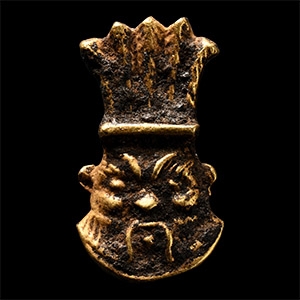
Egyptian Gold Bes Amulet
New Kingdom, circa 1550-1070 B.C.Sold for (Inc. bp): £1,235
Mask of Bes with feathered crown; attachment bar to reverse. 3.57 grams, 18 mm
Ex French collection, early 20th century. From the collection of a late Japanese gentleman, 1970s onwards.
From the New Kingdom onwards, Bes became one of ancient Egypt's most popular apotropaic deities. Despite his somewhat fearsome appearance, Bes served as the patron and protector of pregnant women and children, and was also believed to shield them from snakes. -
.jpg)
Egyptian Green Stone Frog Amulet
Late Period, 664-332 B.C.Sold for (Inc. bp): £351
Modelled seated on an oval base; pierced for suspension. 1.47 grams, 13 mm
Mrs Allinson to Mrs Foster, 1867 and thence by descent to the current owner, Stanley Crescent, London, UK.
Frog amulets in ancient Egypt symbolised fertility, rebirth, and renewal. Associated with the goddess Heket, who was connected to childbirth and life-giving forces, these amulets were especially popular in contexts related to fertility and protection during pregnancy and labour. Their association with the annual Nile flood, which brought new life to the land, further underscored their symbolism of revival and abundance. -
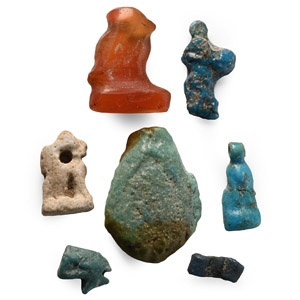
Egyptian Amulet Bead Collection
Late Period, 664-332 B.C.Sold for (Inc. bp): £104
Group of amuletic beads and pendants including a wedjat-eye, Horus in falcon form, a seated Bastet, Bes playing a tambourine, and other types. 3.3 grams total, 8-19.5 mm
with Archaeologia, Switzerland, before 1983. Ex private North American collection. London private collection, 2016.
