
Loading, please wait...
LOT 0423
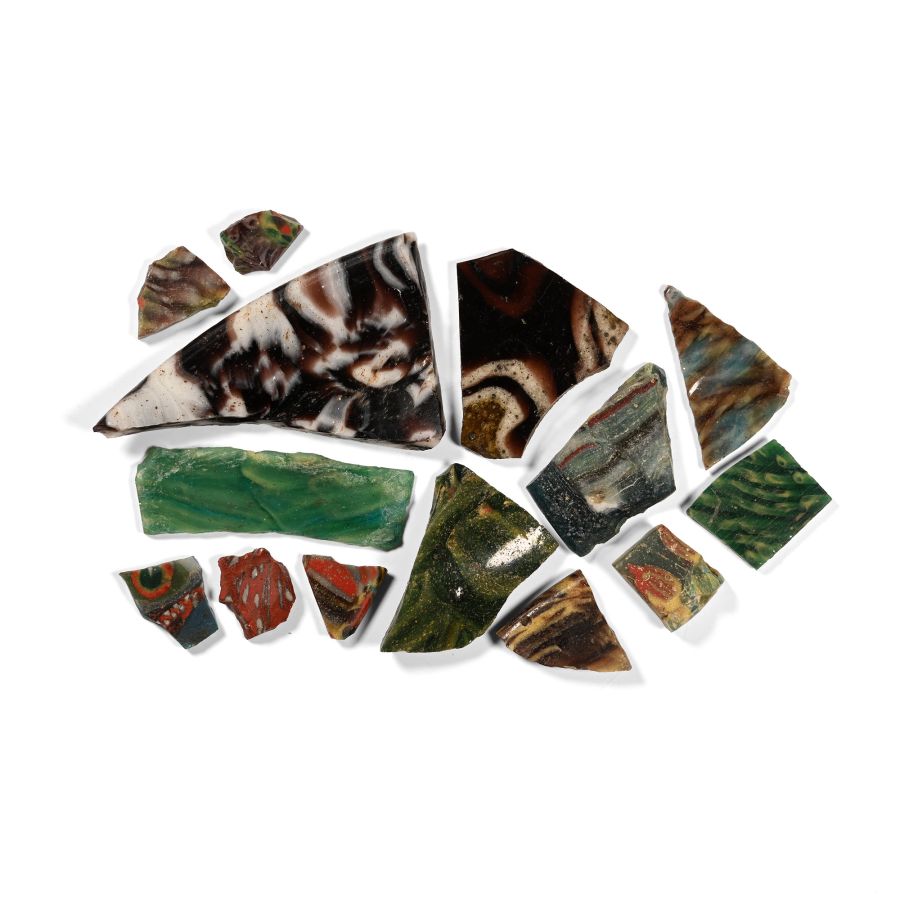
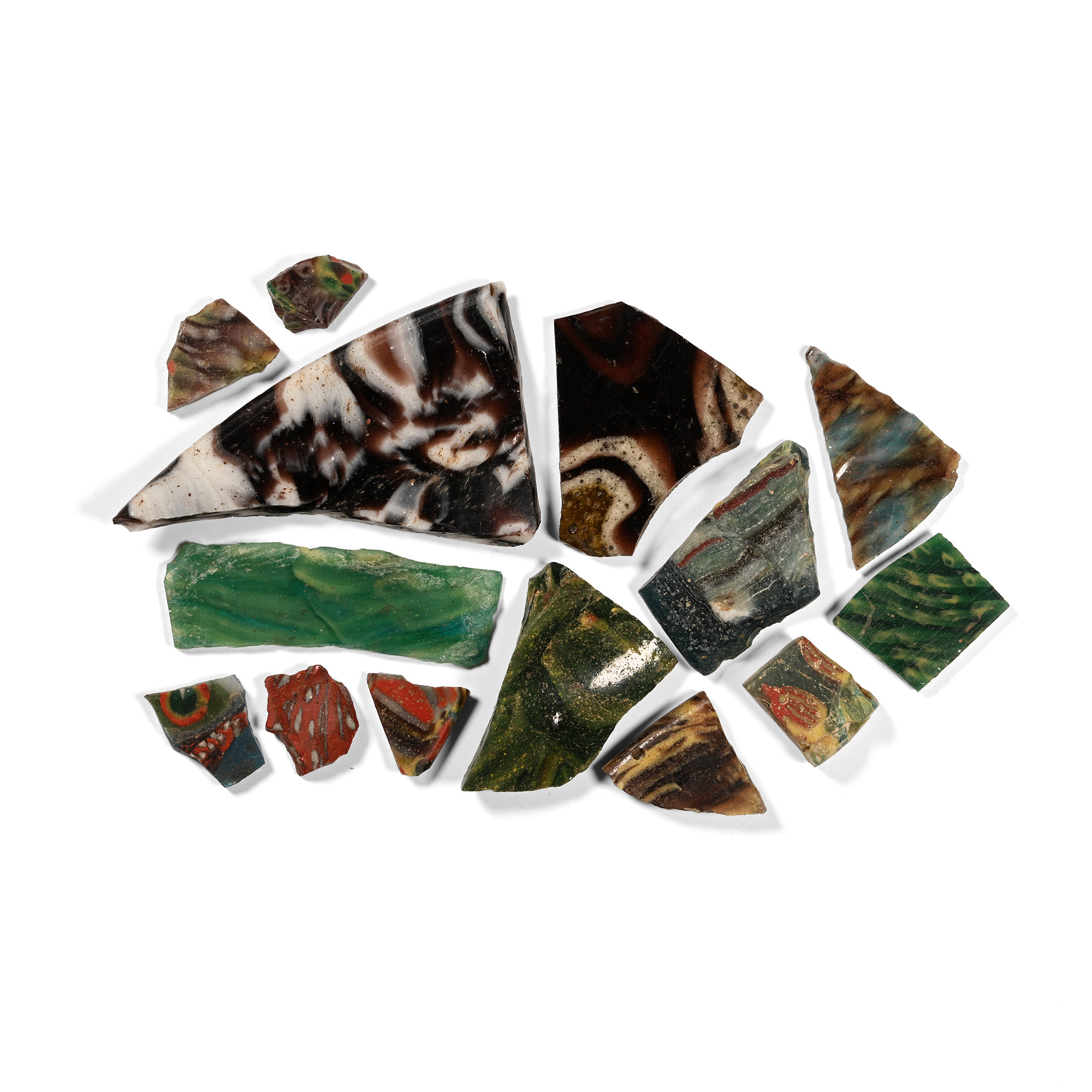
Egyptian and Other Mosaic Glass Fragment Collection
3RD CENTURY B.C.-4TH CENTURY A.D.
5/8 - 2 3/4 in. (58 grams total, 15-71 mm).
Comprising fourteen polychrome fragments displaying vibrant colours and patterns, two with a rounded lip. [14]
ProvenanceEx Gallery Mikazuki before 1984.
London gallery, latterly Mayfair, UK, collection.
This lot is accompanied by an illustrated lot declaration signed by the Head of the Antiquities Department, Dr Raffaele D'Amato.
TimeLine Auctions follows a vetting process to ensure the authenticity and legality of all items, reinforcing our commitment to integrity and responsible trading. Each antiquity, antique, and coin lot undergoes thorough examination by a vetting committee of at least ten external specialists, professional trade association members, scientists, and archaeologists: Our Vetting Process
AUCTIONS:
TimeLine is a leading auction house specialising in antiquities, ancient art, collectables, natural history, coins, medals, and books. Our auctions offer museums, collectors, historians, and enthusiasts the opportunity to acquire unique and historically significant pieces.
-
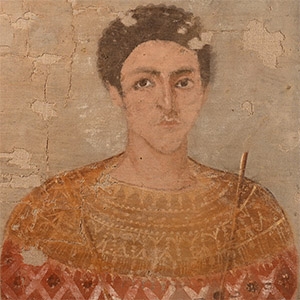
Romano-Egyptian Painted Portrait on Linen
1st-2nd century A.D.Estimate: £30,000 - 40,000 (‡+bp*)
Opening Bid: £15,000
Encaustic painting on thin linen fabric, upper part of the funeral shroud with half-length representation of the deceased, representing the bust of a young man in the guise of mummiform Osiris holding implements of his divinity, black hair, wearing a gilt broad collar (maniakion) and netting, pink dress ornamented with rosettes, traces of halo in white pigment; set in a glazed frame. 4.3 kg, 58 x 63 cm including frame
Collection of the estate of Patti Cadby Birch (1923-2007), New York, USA. with Sotheby’s, New York, Antiquities, 5 June 2008, sale no.8452, no.105. European private collection, acquired thereafter. Accompanied by a copy of an Art Loss Register certificate, no.S00014603. Accompanied by an academic report by Dr Raffaele D'Amato. This lot has been checked against the Interpol Database of stolen works of art and is accompanied by a search certificate number no.12612-234638. This lot has been cleared against the Art Loss Register database, and is accompanied by an illustrated lot declaration signed by the Head of the Antiquities Department, Dr Raffaele D'Amato.
Fayum portraits, painted on wood or linen, applied to the mummies of the Graeco-Roman period, are one of the most wonderful legacies that the koiné of the Graeco-Roman world has left us. Due to the favourable climate enhancing the state of preservation, these encaustic paintings have left us an almost photographic testimony of the faces of the inhabitants of Roman Egypt. The realistic portrait shows here the idea of the deceased as Osiris. This idea, already existing in the Ptolemaic Period regardless of the gender of the person represented, continued to exist in the Graeco-Roman period. The deceased is undoubtedly a young man, beardless, with black and slightly frizzy hair. A similar male portrait with the same type of clothing, the attributes: nimbus and the identifying elements of Osiris can be found in a portrait now in Paris (Parlasca, 2003, no.771, pl.172,3). Patti Cadby Birch (1923-2007) was a prominent American philanthropist and collector, known for her significant contributions to the arts. A patron of institutions such as The Metropolitan Museum of Art and the Museum of Modern Art in New York, she supported numerous exhibitions and acquisitions, particularly in the fields of antiquities and Islamic art. Works from her esteemed collection have been widely exhibited and are held in several major museum collections. -
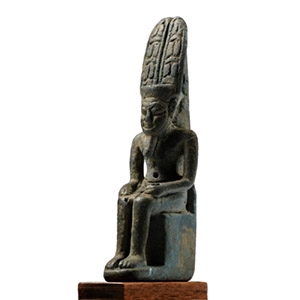
Egyptian Blue Amulet of Amun
Late Period, 26th Dynasty, circa 664-525 B.C.Estimate: £2,000 - 3,000 (+bp*)
Opening Bid: £1,000
The god modelled seated on a throne with a dorsal pillar, hands resting on his knees, wearing a short kilt and a two-plume feather crown; mounted on a wooden stand. 15.75 grams total, 71 mm including stand
with Charles Ede Ltd, London, UK. Private collection, London, UK, acquired from the above on 12 July 1994. Accompanied by a copy of the Charles Ede invoice. This lot has been checked against the Interpol Database of stolen works of art and is accompanied by a search certificate number no.12632-235078. This lot has been cleared against the Art Loss Register database, and is accompanied by an illustrated lot declaration signed by the Head of the Antiquities Department, Dr Raffaele D'Amato.
The amulet of the god Amun served both religious and protective purposes in ancient Egypt. Amun, a major deity associated with creation, kingship, and hidden power. Wearing an amulet bearing Amun’s image or name was believed to invoke his divine protection, grant strength, and confer favour or legitimacy. Such amulets were also placed among burial goods to ensure the deceased was protected and guided in the afterlife. -
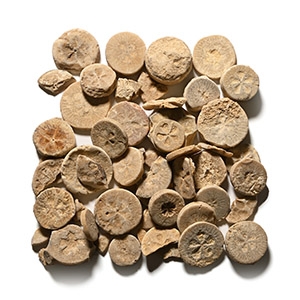
Egyptian Limestone Floral Inlay Group
Roman Period, 30 B.C.-323 A.D. or earlierSold for (Inc. bp): £59
Group of discoid inlay plaques or gaming counters, crinoids with cinquefoil motif; some fragmentary. 49 grams total, 6-17 mm
From a central London ADA dealership, 1980-1990. This lot is accompanied by an illustrated lot declaration signed by the Head of the Antiquities Department, Dr Raffaele D'Amato.
Flowers were symbolic of rebirth due to the daily reopening of their petals after nightfall. As a result, they were widely used in domestic settings, religious and funerary contexts, and as adornments. Similar rosette discs, like those recovered from the Ramesside Period palace at Qantir, were used as decorative elements in royal palaces.
