
Loading, please wait...
LOT 0458
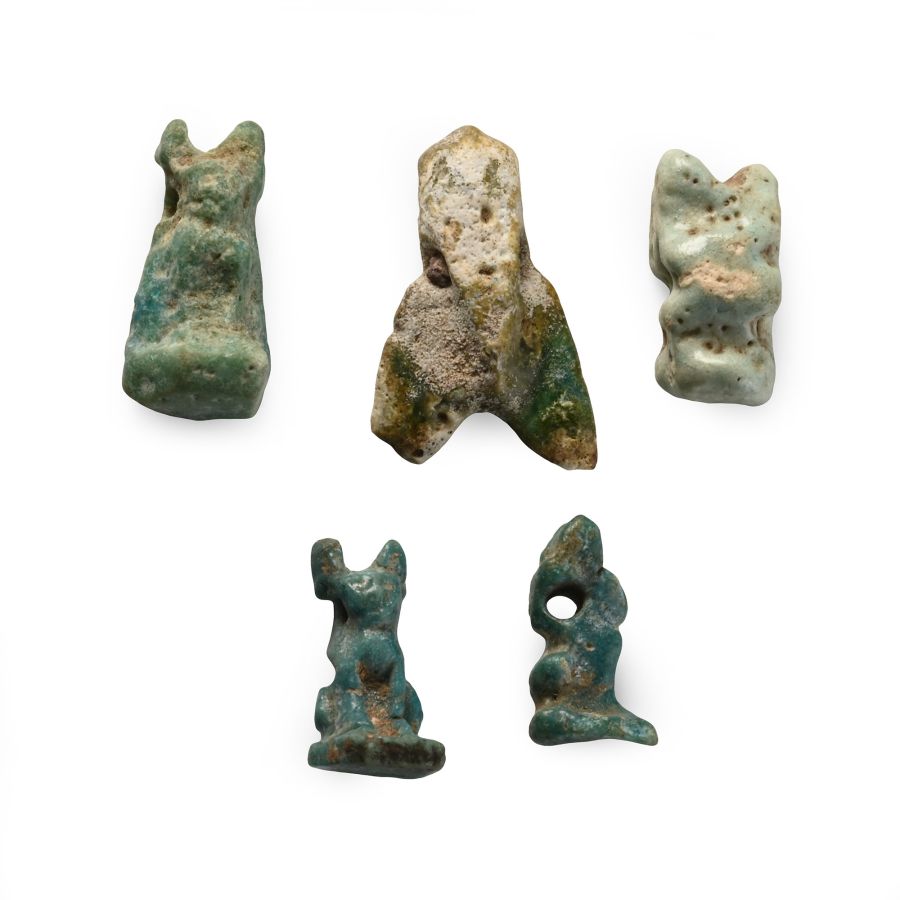
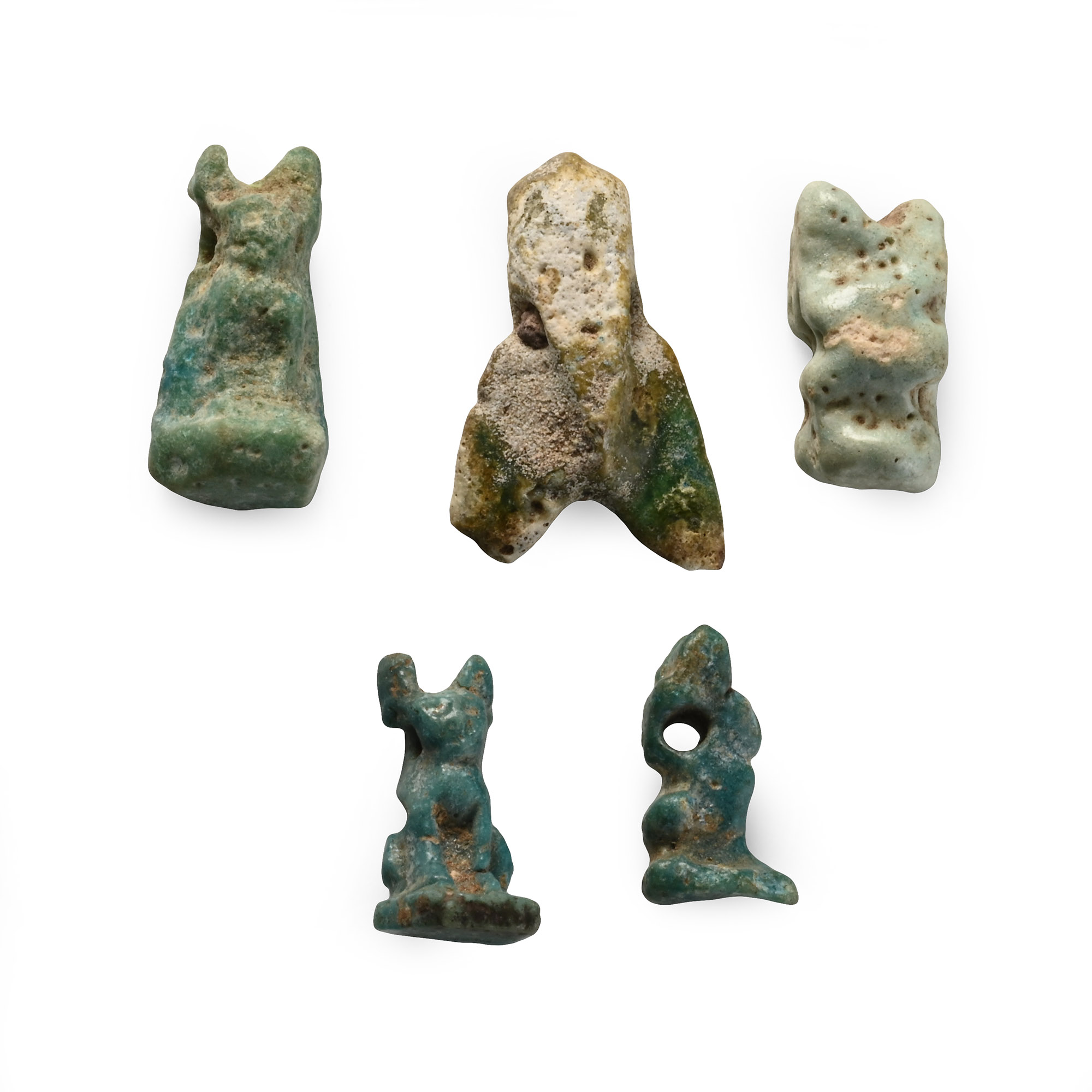
Egyptian Amulet Collection
LATE PERIOD, 664-332 B.C.
3/8 - 1/2 in. (1.56 grams total, 10-15 mm).
Comprising two crouching Bastet cat figures, a hare, a fly, and a simplified Anubis. [5, No Reserve]
Provenancewith Archaeologia, Switzerland, before 1983.
Ex private North American collection.
London private collection, 2016.
TimeLine Auctions follows a vetting process to ensure the authenticity and legality of all items, reinforcing our commitment to integrity and responsible trading. Each antiquity, antique, and coin lot undergoes thorough examination by a vetting committee of at least ten external specialists, professional trade association members, scientists, and archaeologists: Our Vetting Process
AUCTIONS:
TimeLine is a leading auction house specialising in antiquities, ancient art, collectables, natural history, coins, medals, and books. Our auctions offer museums, collectors, historians, and enthusiasts the opportunity to acquire unique and historically significant pieces.
-
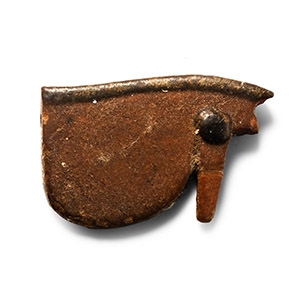
Egyptian Brown Glazed Eye of Horus Amulet
Late Period, 664-332 B.C.Sold for (Inc. bp): £39
Wedjat amuletic bead in dark brown faience with applied black detailing to the pupil and brow. 8.63 grams, 44 mm
with Archaeologia, Switzerland, before 1983. Ex private North American collection. London private collection, 2016. -
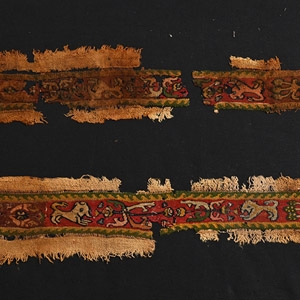
Large Mounted Egyptian Coptic Textile Pair with Animals
Mid 6th century A.D.Sold for (Inc. bp): £1,560
Pair of decorative tunic strips (clavi) ending with circular decorations (orbiculi), red, green and yellow wool, S-twist tapestry, decorated with two rows of lions alternating with vegetal elements running in a contrasting manner. 434 grams total, mount: 1.21 m
Acquired 1970s-1996. Property of a North American collector. London collection, 2016.
Among the many fragments of wool tunics are several long strips that match to form nearly full-length central pectoral clavi. They are patterned with a profusion of small figures or interlaced abstract designs, birds, plants and animals with a contrasting border filled with geometric motifs. -
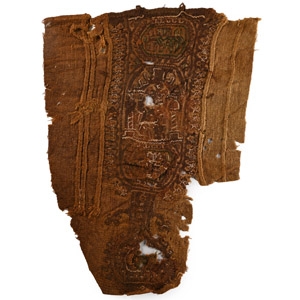
Large Egyptian Coptic Textile Fragment
Circa 4th-8th century A.D.Sold for (Inc. bp): £169
Very large tunic fragment with a clavus connected by a thin band to the orbiculus, in red purple, brown and red granate wool over linen, S torsion, embroidered with three tondos decorated with stylised images of dancers with raised heads and curly hair; crenellated borders. 108 grams total including package, 30 cm
Acquired 1970s-1996. Property of a North American collector. London collection, 2016.
This type of embroidery was typical of tunics and garments characterised by full-length clavi, decorated with either intricate geometric patterns or with a multitude of small figures and animals, often edged with geometric borders and finished with thick, weft-loop fringes or cords.
