
Loading, please wait...
LOT 0504
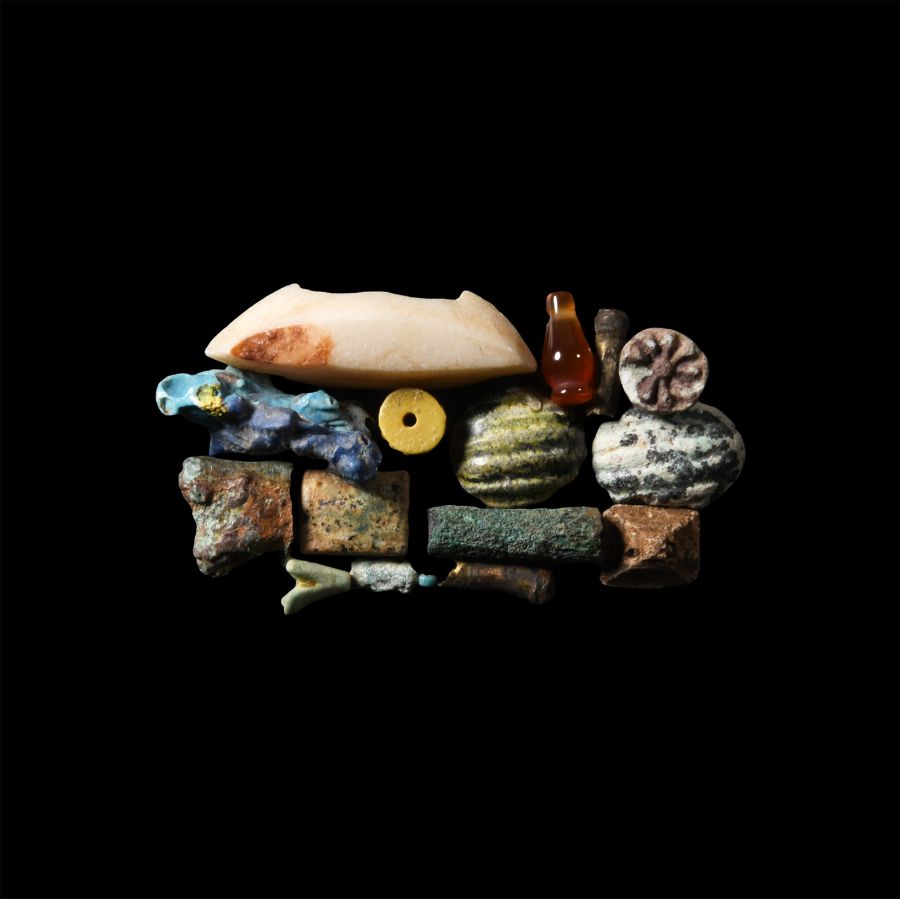
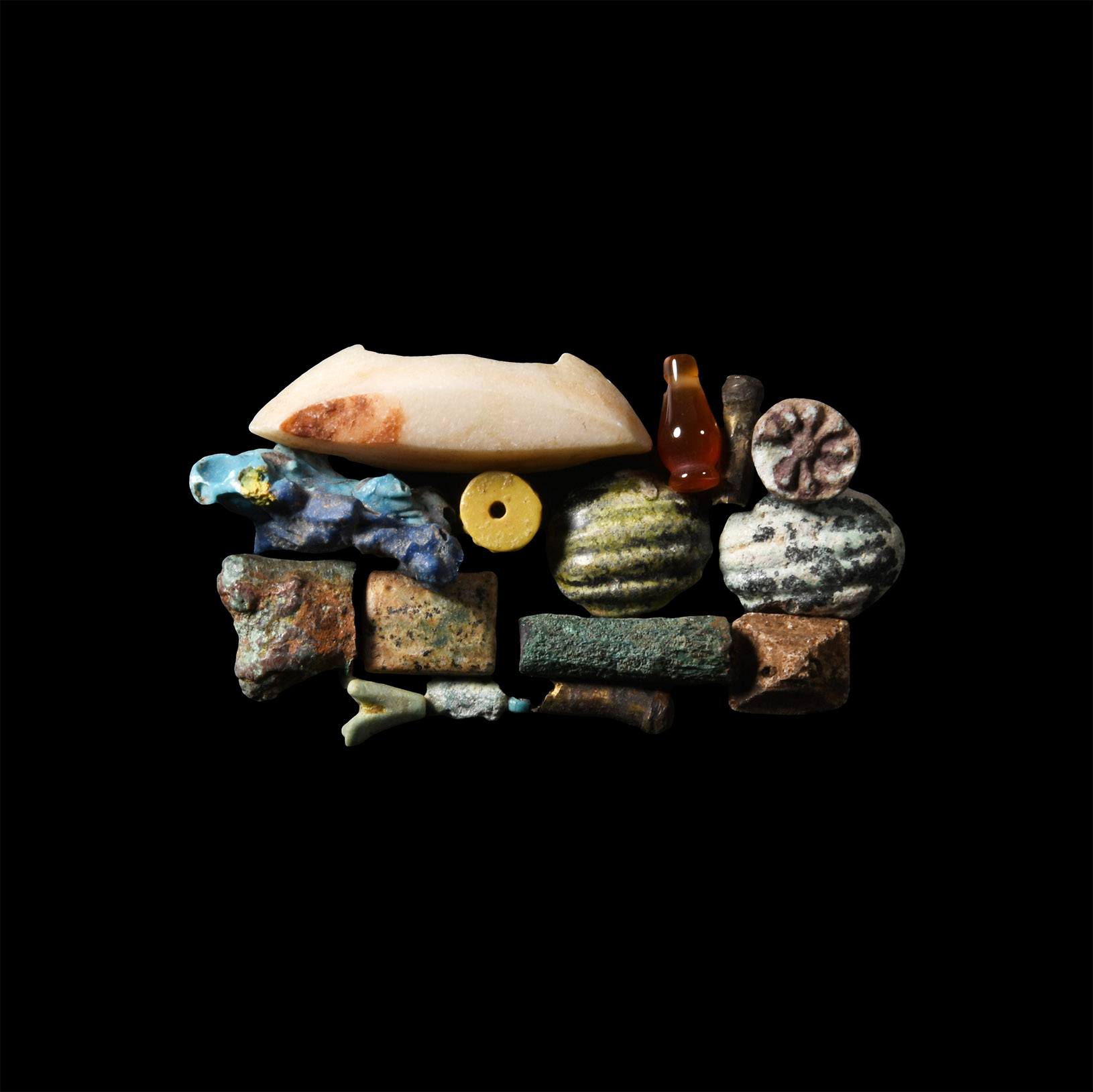
Egyptian Amulet and Bead Collection
LATE PERIOD-PTOLEMAIC PERIOD, 664-30 B.C.
3/8 - 1 1/2 in. (23.2 grams total, 8-38 mm).
Composed of stone, glass and composition amulets and beads of various types, including and eye insert. [15, No Reserve]
ProvenanceFrom a Paris gallery, French collection pre 1978.
CONDITIONTimeLine Auctions follows a vetting process to ensure the authenticity and legality of all items, reinforcing our commitment to integrity and responsible trading. Each antiquity, antique, and coin lot undergoes thorough examination by a vetting committee of at least ten external specialists, professional trade association members, scientists, and archaeologists: Our Vetting Process
AUCTIONS:
TimeLine is a leading auction house specialising in antiquities, ancient art, collectables, natural history, coins, medals, and books. Our auctions offer museums, collectors, historians, and enthusiasts the opportunity to acquire unique and historically significant pieces.
-

Egyptian Faience Amulet Group
New Kingdom, Amarna Period, 1353-1336 B.C.Sold for (Inc. bp): £169
Composed of polychrome amulets of various types, with suspension loops, including figures of deities and fruit, together with other examples. 1.05 grams total, 11-14 mm
From an early 20th century collection, Surrey, UK. -
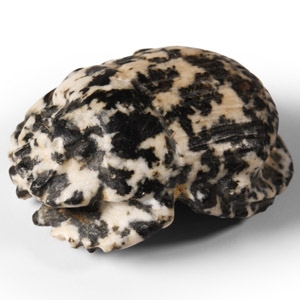
Egyptian Speckled Diorite Funerary Scarab
Late Period, 664-525 B.C.Estimate: £2,500 - 3,500 (+bp*)
Opening Bid: £1,250
Detailing to the carapace and clypeus, pierced lug to the underside of the prothorax. 7.59 grams, 25 mm
From an early 20th century collection, Home Counties, UK, 1930-1940s. This lot has been checked against the Interpol Database of stolen works of art and is accompanied by search certificate no.202894.
Funerary scarabs such as this were placed within the wrappings of the mummy on various parts of the body. They undoubtedly served a protective role but, unlike heart scarabs, their precise function is not known. -
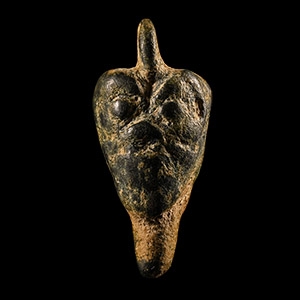
Phoenician Bronze Pazuzu Head Amulet
7th-6th century B.C.Sold for (Inc. bp): £351
Piriform pendant with janiform facial detailing and loop. 16.2 grams, 31 mm
Acquired 1969-1999. From the private collection of the late Mr S.M., London, UK, thence by descent.
Pazuzu was a divine personification of the southwestern wind, and ruled supreme over other wind demons. As an apotropaic entity, he was considered as both destructive and dangerous, whose power could repel other demons and safeguard homes from their malevolent influence. Phoenician artisans produced many cross-cultural items with Egyptian and Mesopotamian influences.
