
Loading, please wait...
_900x900.jpg "Egyptian Amethyst Scarab in Gold Frame")
_200x200.jpg "Egyptian Amethyst Scarab in Gold Frame")
.jpg "Egyptian Amethyst Scarab in Gold Frame")
LOT 0046
Egyptian Amethyst Scarab in Gold Frame
LATE PERIOD, 664-332 B.C. AND LATER
2 in. (12.45 grams, 52 mm).
Carved with lightly incised carapace, chipped to the obverse; set in a 19th century gold frame.
ProvenanceFrom an early 20th century collection.
CONDITIONTimeLine Auctions follows a vetting process to ensure the authenticity and legality of all items, reinforcing our commitment to integrity and responsible trading. Each antiquity, antique, and coin lot undergoes thorough examination by a vetting committee of at least ten external specialists, professional trade association members, scientists, and archaeologists: Our Vetting Process
AUCTIONS:
TimeLine is a leading auction house specialising in antiquities, ancient art, collectables, natural history, coins, medals, and books. Our auctions offer museums, collectors, historians, and enthusiasts the opportunity to acquire unique and historically significant pieces.
-
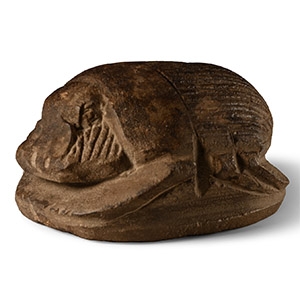
Egyptian Carved Stone Scarab
1st millennium B.C.Estimate: £500 - 700 (+bp*)
Opening Bid: £250
With textured carapace and detailed head and legs; underside blank. 159 grams, 63 mm
Acquired on the German art market, 1989-1995. with The Museum Gallery, 19 Bury Place, London, WC1, UK, 1998-2003. Property of a London based academic, 2003-present. -
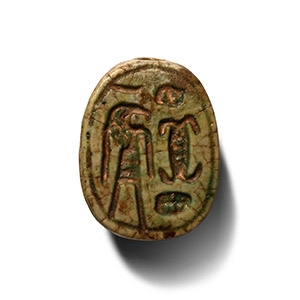
Egyptian Steatite Scarab with Thoth Standing
New Kingdom-Late Period, 1550-332 B.C.Sold for (Inc. bp): £286
Underside with standing figure of Thoth facing the symbol for the goddess Neith. 1.65 grams, 14 mm
Ex North London gentleman's collection, 1990s. Property of a Cambridgeshire, UK, gentleman.
Thoth was revered for his association with knowledge, writing, and healing. In a funerary context, Thoth was probably linked to his role as the recorder of the final judgment, which determined whether the deceased had lived a life of virtue. A positive report ensured the rebirth of the deceased in the eternal Afterlife. Neith was a prominent deity in ancient Egyptian mythology, revered as a warrior and mother goddess. Her cult gained significant importance during the Ramesside dynasties when she became closely associated with the sun god. Neith was known for her fierce protection and maternal guidance. -
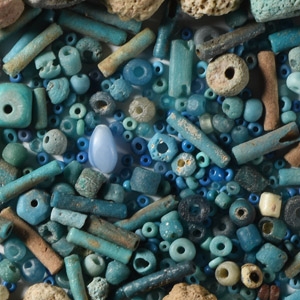
Egyptian Mixed Faience Bead Group
Late-Roman Period, 664 B.C.-323 A.D.Sold for (Inc. bp): £111
Including tubular, melon, annular and other types. 5.1.8 grams total, 2-20 mm
From the private collection of the late Mrs Belinda Ellison, a long time member of the Egyptian Exploration Society, c.1940-2020.
