
Loading, please wait...
LOT 0004
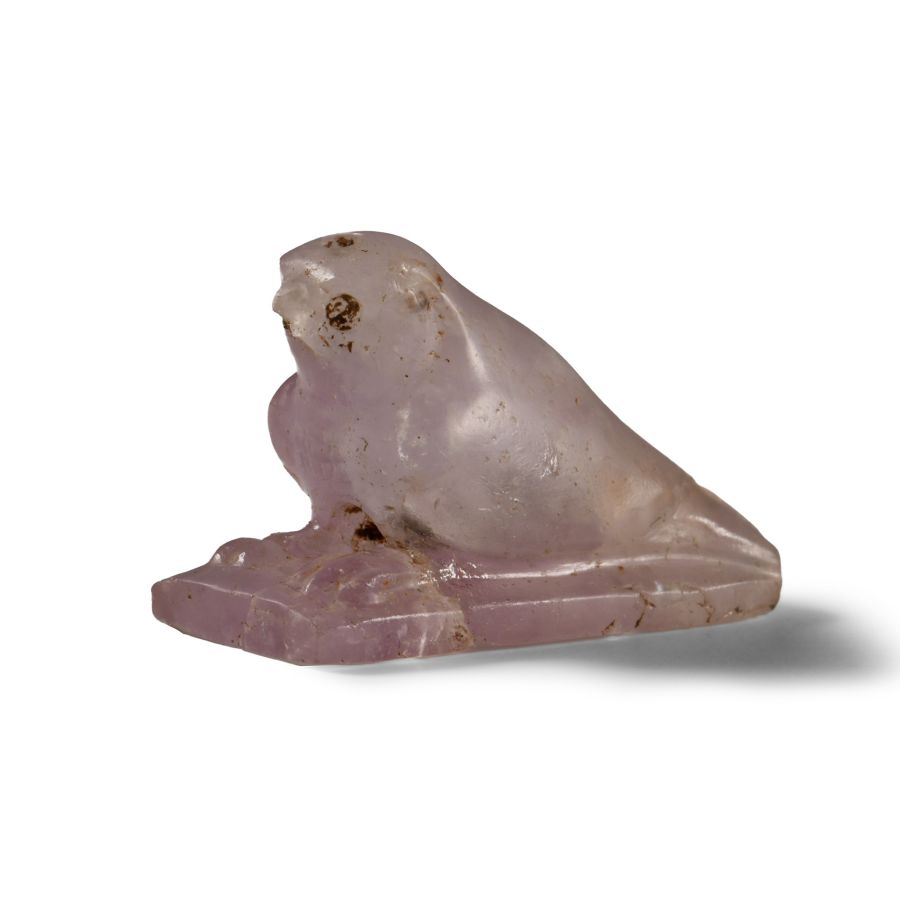
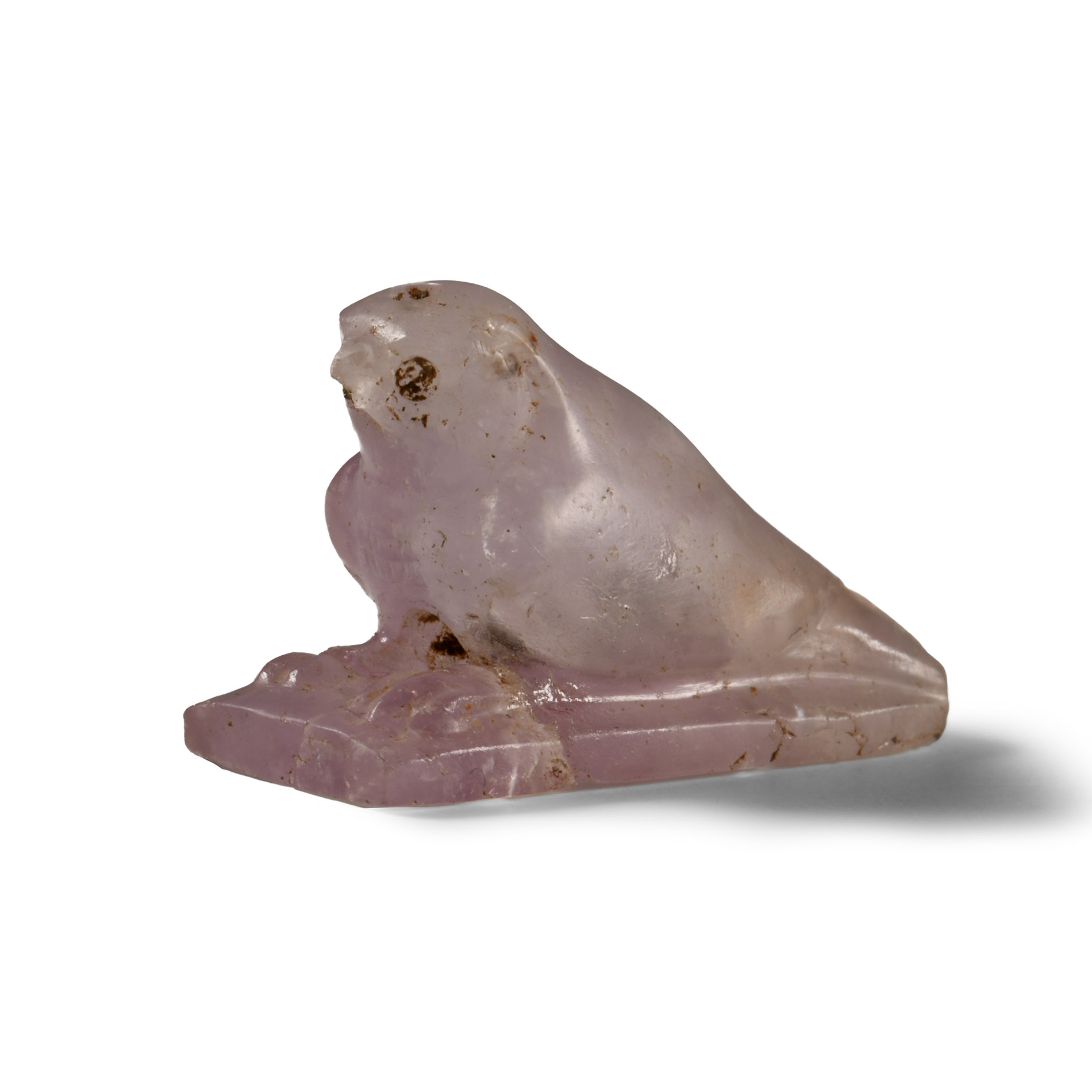
Egyptian Amethyst Horus Amulet
LATE PERIOD, 664-332 B.C.
1 in. (5.98 grams, 27 mm).
Carved in the round, the falcon seated on a rectangular base with outstretched talons, the wings neatly tucked against the body, incised detailing and drilled eyes; a small drilled depression on the top of the head; drilled longitudinally for suspension.
ProvenanceFrom an early 20th century collection.
Accompanied by a previous catalogue information slip.
Cf. a similar amulet in hematite (Ptolemaic-Roman Age) in the Louvre, inventory no.E10944, in Quack, J. F., Altägyptische Amulette und ihre Handhabung, Tübingen, 2022, p.350.
CONDITIONTimeLine Auctions follows a vetting process to ensure the authenticity and legality of all items, reinforcing our commitment to integrity and responsible trading. Each antiquity, antique, and coin lot undergoes thorough examination by a vetting committee of at least ten external specialists, professional trade association members, scientists, and archaeologists: Our Vetting Process
AUCTIONS:
TimeLine is a leading auction house specialising in antiquities, ancient art, collectables, natural history, coins, medals, and books. Our auctions offer museums, collectors, historians, and enthusiasts the opportunity to acquire unique and historically significant pieces.
-
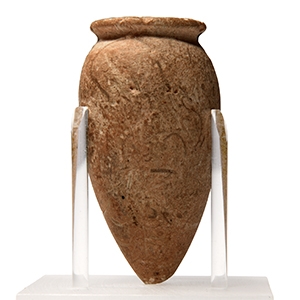
Egyptian Stone Alabastron
Late Old Kingdom, circa 2300 B.C.Estimate: £300 - 400 (‡+bp*)
Opening Bid: £150
The body with rounded shoulders, convex outer face and pointed base, everted rim; accompanied by a custom-made display base. 34.2 grams, 48 mm high (48.9 grams, 55 mm including stand)
Acquired in Europe before 1994. European collection. -
.jpg)
Egyptian Faience Beaded Mummy Mask with Sons of Horus
Ptolemaic Period, 332-31 B.C.Sold for (Inc. bp): £445
Restrung netted beadwork panel of annular and tubular glazed composition beads in blues, greens, black, cream and red-brown colours, depicting a mummy face mask with false beard, a scarab with extended wings below, the 'Four Sons of Horus’ beneath the scarab, joined together with areas of open netting of tubular beads; mounted in a glazed frame with papyrus backing. 127 grams, 28 cm
Previously with Mariaud de Serres, Paris, France. From a Paris gallery.
The Four Sons of Horus were deities responsible for protecting the internal organs of the deceased. The human-headed Imsety protected the liver, the baboon-headed Hapy protected the lungs, the jackal-headed Duamutef protected the stomach, and the falcon-headed Qebehsenuef protected the intestines. -
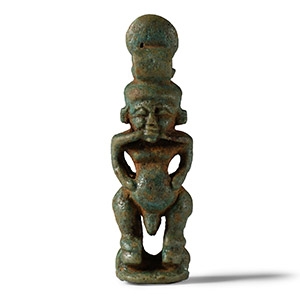
Egyptian Janiform Pataikos and Ra-Horakhty Faience Amulet
Late Period-Ptolemaic Period, 664-30 B.C.Estimate: £1,500 - 2,000 (+bp*)
Opening Bid: £800
Modelled in the round, Pataikos depicted nude with his arms resting on his rounded belly, large genitals and a suspension loop on his head; the nude Ra-Horakhty depicted falcon-headed, wearing a sun disc and a tripartite wig, his hand resting on his waist; each standing on stylised crocodiles(?) on a rounded base. 13.4 grams, 60.5 mm
Ex AH collection, London, UK, 1980s. Accompanied by a previous catalogue information slip.
Pataikos amulets were used for protection against negative forces and dangerous animals such as snakes, crocodiles, and scorpions. These amulets also symbolised rejuvenation and were often embellished with solar imagery, as seen in this example which features the sun disc headgear and Ra-Horakhty.
