
Loading, please wait...
LOT 0019
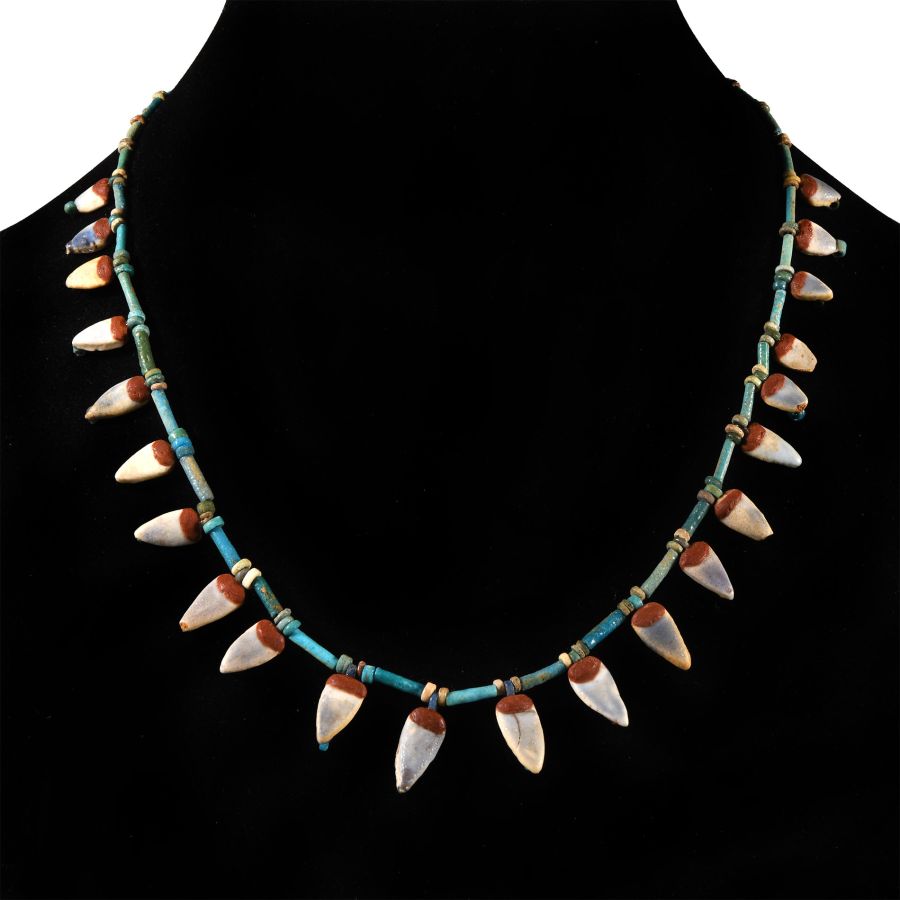
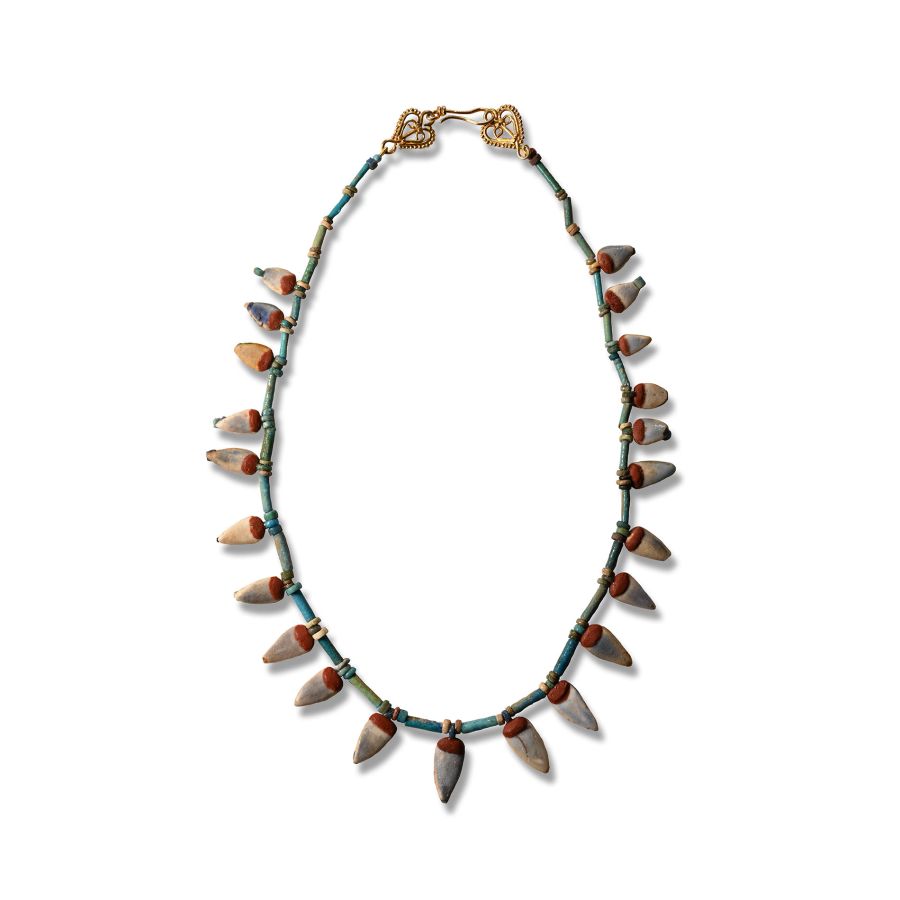
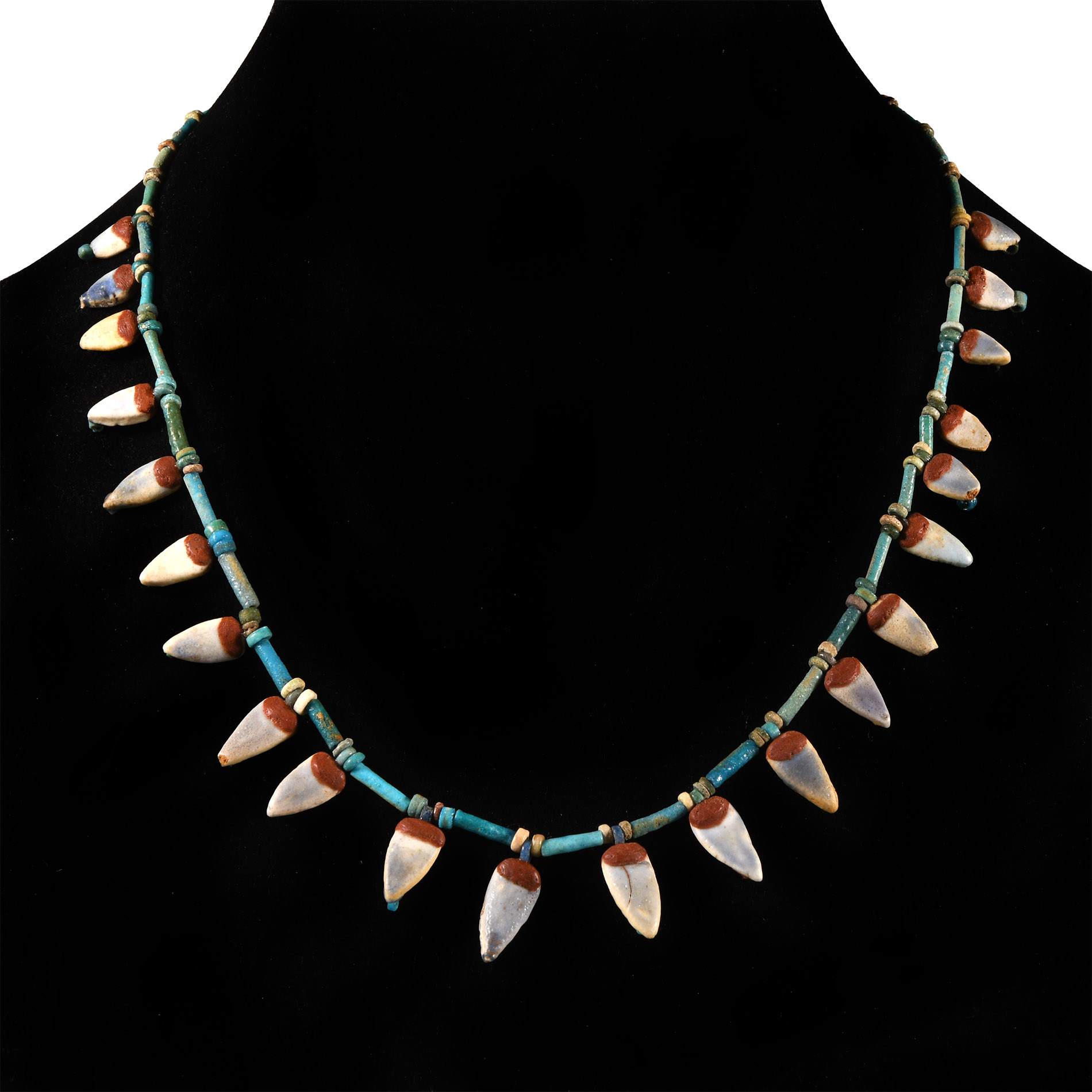
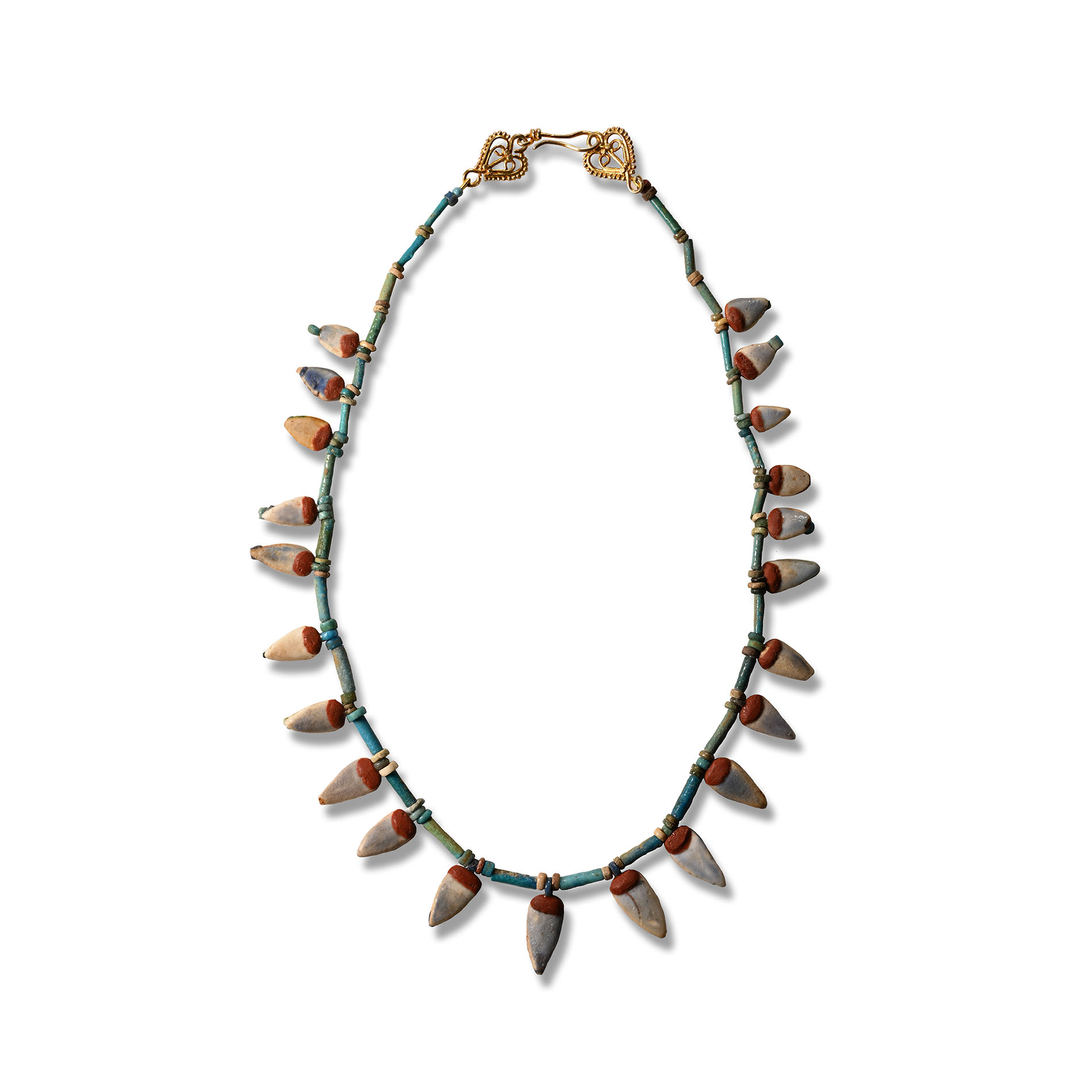
Egyptian Amarna Period Beaded Fruit Necklace
18TH DYNASTY, 1332-1346 B.C.
17 1/4 in. (13.1 grams, 44 cm).
Restrung necklace of annular and tabular beads with fructiform amulets.
ProvenanceEx London, UK, collection, 1990s.
LiteratureCf. Aldred, C., Jewels of the Pharaohs. Egyptian Jewellery of the Dynastic Period, London, 1971, p.135 no.125, and p.231, for an elaborate Amarna necklace incorporating similarly shaped bi-chrome petal-shaped pendant beads.
FootnotesPetal-shaped beads of faience and glass were widely used in jewellery during the Amarna Period. During this era, advanced production methods enabled the creation of bi-chrome and polychrome designs, which often included newly developed colours. This resulted in vibrant necklaces that resembled festive collars made of natural floral elements.
CONDITIONTimeLine Auctions follows a vetting process to ensure the authenticity and legality of all items, reinforcing our commitment to integrity and responsible trading. Each antiquity, antique, and coin lot undergoes thorough examination by a vetting committee of at least ten external specialists, professional trade association members, scientists, and archaeologists: Our Vetting Process
AUCTIONS:
TimeLine is a leading auction house specialising in antiquities, ancient art, collectables, natural history, coins, medals, and books. Our auctions offer museums, collectors, historians, and enthusiasts the opportunity to acquire unique and historically significant pieces.
-
Egyptian Amarna Period Beaded Fruit Necklace
18th Dynasty, 1332-1346 B.C.Sold for (Inc. bp): £598
Restrung necklace of annular and tabular beads with fructiform amulets. 13.1 grams, 44 cm
Ex London, UK, collection, 1990s.
Petal-shaped beads of faience and glass were widely used in jewellery during the Amarna Period. During this era, advanced production methods enabled the creation of bi-chrome and polychrome designs, which often included newly developed colours. This resulted in vibrant necklaces that resembled festive collars made of natural floral elements. -
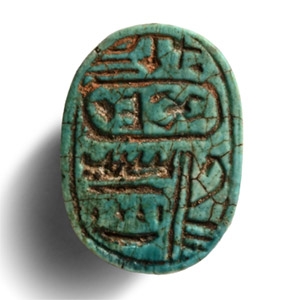
Egyptian Blue Glazed Scarab of Thutmose III
New Kingdom, 18th Dynasty, circa 1504-1452 B.C.Sold for (Inc. bp): £364
With detailed carapace, legs and mouth; hieroglyphs to the underside including cartouche of Thutmose III. 2.74 grams, 17.13 mm
From an old Suffolk, UK, collection. Acquired in the UK before 1980. From the personal collection of Derek Rogers, Suffolk, UK.
Thutmose III was a renowned warrior king widely revered even centuries after his reign. -
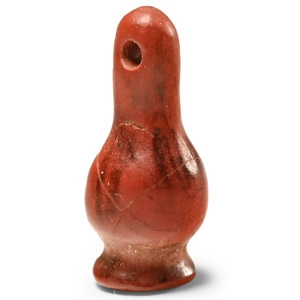
Egyptian Jasper Poppy Head Amulet
New Kingdom, 18th-19th Dynasty, circa 1550-1213 B.C.Sold for (Inc. bp): £104
Polished and with integral pierced suspension loop. 0.78 grams, 15 mm
From an early 20th century collection.
Amulets in the form of poppies were used to heal, alleviate pain, and ward off death. This type of amulet was also associated with Osiris, the Egyptian deity of agriculture, death, and the afterlife.
