
Loading, please wait...
_900x900.jpg "Egyptian Alabaster Mirror Handle")
_200x200.jpg "Egyptian Alabaster Mirror Handle")
_900x900.jpg "Egyptian Alabaster Mirror Handle")
_200x200.jpg "Egyptian Alabaster Mirror Handle")
.jpg "Egyptian Alabaster Mirror Handle")
.jpg "Egyptian Alabaster Mirror Handle")
LOT 0024
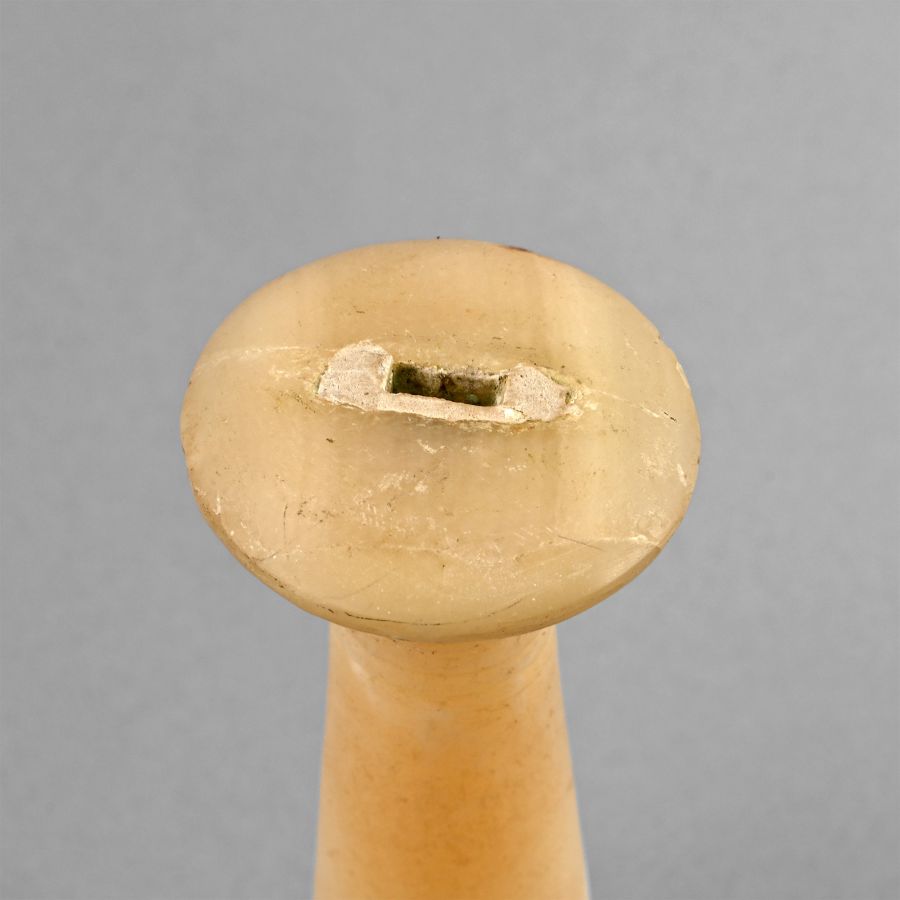
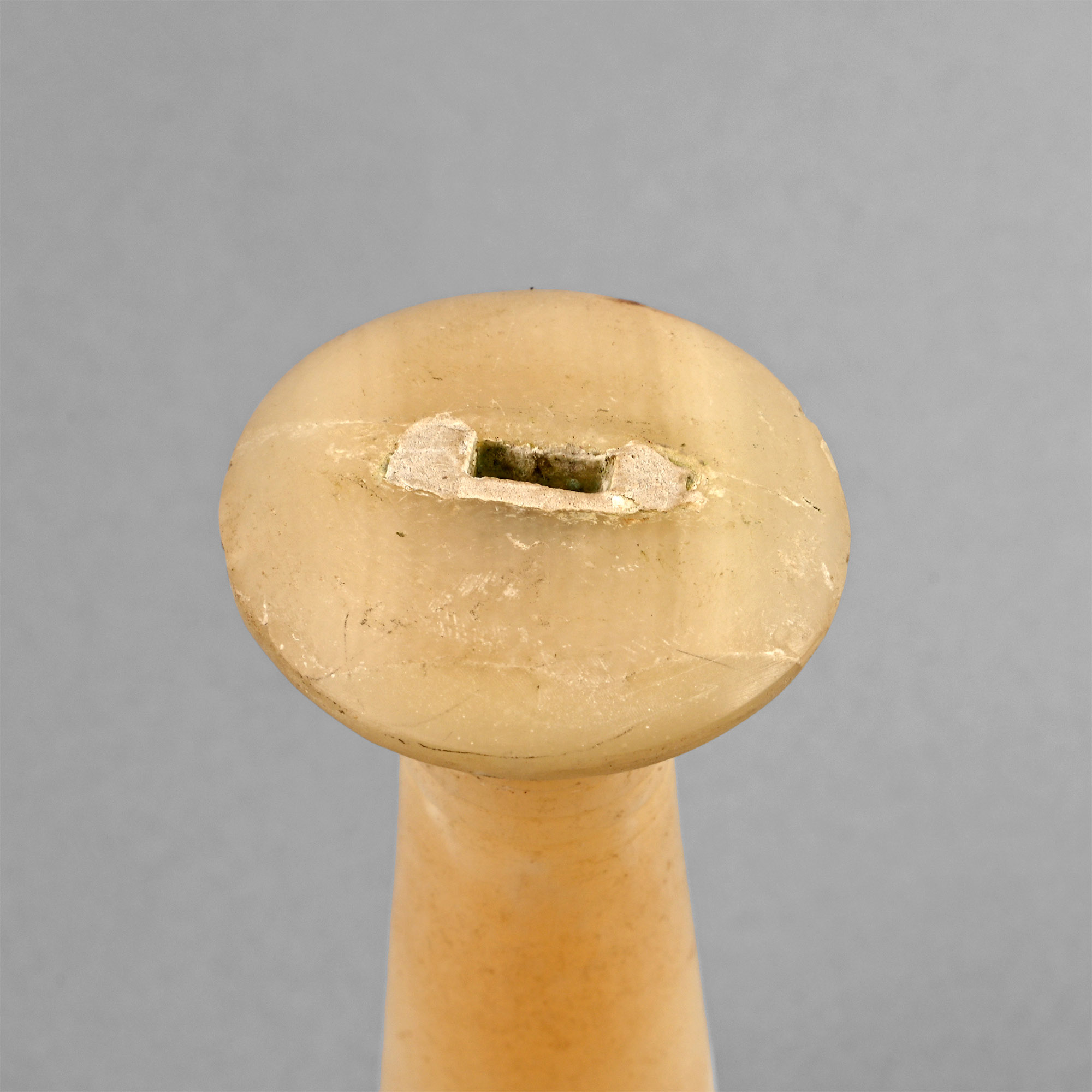
Egyptian Alabaster Mirror Handle
NEW KINGDOM, 18TH-20TH DYNASTY, 1550-1070 B.C.
5 3/4 in. (482 grams total, 14.5 cm including stand).
In the form of a papyrus column, the upper platform pierced through for insertion of a bronze mirror, incised with lotus petals at the top of the shaft and at the base; mounted on a custom-made display stand.
Provenancewith Nicholas Wright, London, UK, 1969.
Christie's, London, 14 April 2011, no.128.
Accompanied by copies of the relevant Christie's catalogue pages.
This lot has been checked against the Interpol Database of stolen works of art and is accompanied by search certificate number no.12941-243535.
Cf. Petrie, W.M.F., Objects of Daily Use, Warminster, 1972, pl. XXVI, nos. 12 and 16, for similar papiriform examples.
FootnotesThe papyrus stalk was used in the hieroglyphic script for the word 'wadj', meaning 'fresh', making it an appropriate talisman for the preservation of the body.
CONDITIONTimeLine Auctions follows a vetting process to ensure the authenticity and legality of all items, reinforcing our commitment to integrity and responsible trading. Each antiquity, antique, and coin lot undergoes thorough examination by a vetting committee of at least ten external specialists, professional trade association members, scientists, and archaeologists: Our Vetting Process
AUCTIONS:
TimeLine is a leading auction house specialising in antiquities, ancient art, collectables, natural history, coins, medals, and books. Our auctions offer museums, collectors, historians, and enthusiasts the opportunity to acquire unique and historically significant pieces.
-
Egyptian Faience Mummy Bead Necklace with Bastet
Late Period, 664-332 B.C. and laterSold for (Inc. bp): £111
Restrung necklace of tubular and annular beads with later pendant figure of Bastet as centrepiece. 9.93 grams, 80 cm long
From a private Tyneside collection, formed since the early 2000s. -
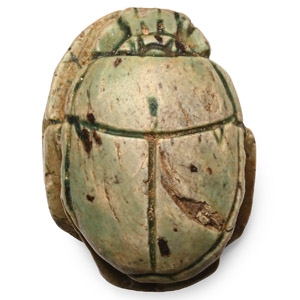
Large Egyptian Steatite Scarab with Hieroglyphs
Late Period, 664-332 B.C.Estimate: £300 - 400 (+bp*)
Opening Bid: £150
Detailed carapace and head, underside with animals and wedjat motif; pierced longitudinally. 6.65 grams, 24 mm
Mrs Allinson to Mrs Foster, 1867 and thence by descent to the current owner, Stanley Crescent, London, UK. -
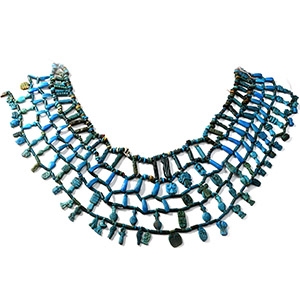
Egyptian Faience Broad Collar Amulet Necklace
Late Period, 664-332 B.C.Estimate: £2,500 - 3,500 (+bp*)
Opening Bid: £1,250
A restrung group of annular and figural beads forming a collar of five descending tiers including djed pillar, atef crown, cartouche and other types. 53 grams total, 32.5 cm wide
Property of a North London, UK, gallery. This lot has been checked against the Interpol Database of stolen works of art and is accompanied by search certificate number no.12935-246384.
Several faience collars found in the tomb of Tutankhamun use amuletic forms, the hes-vase, nefer-sign, and cartouche pendants as part of primarily plant-form collars. Depictions of collars on the sarcophagi and gold mask from the tomb of Tuiya and Yuia also show nefer-signs and palmettes used alongside the more common plant designs.
