
Loading, please wait...
LOT 0003
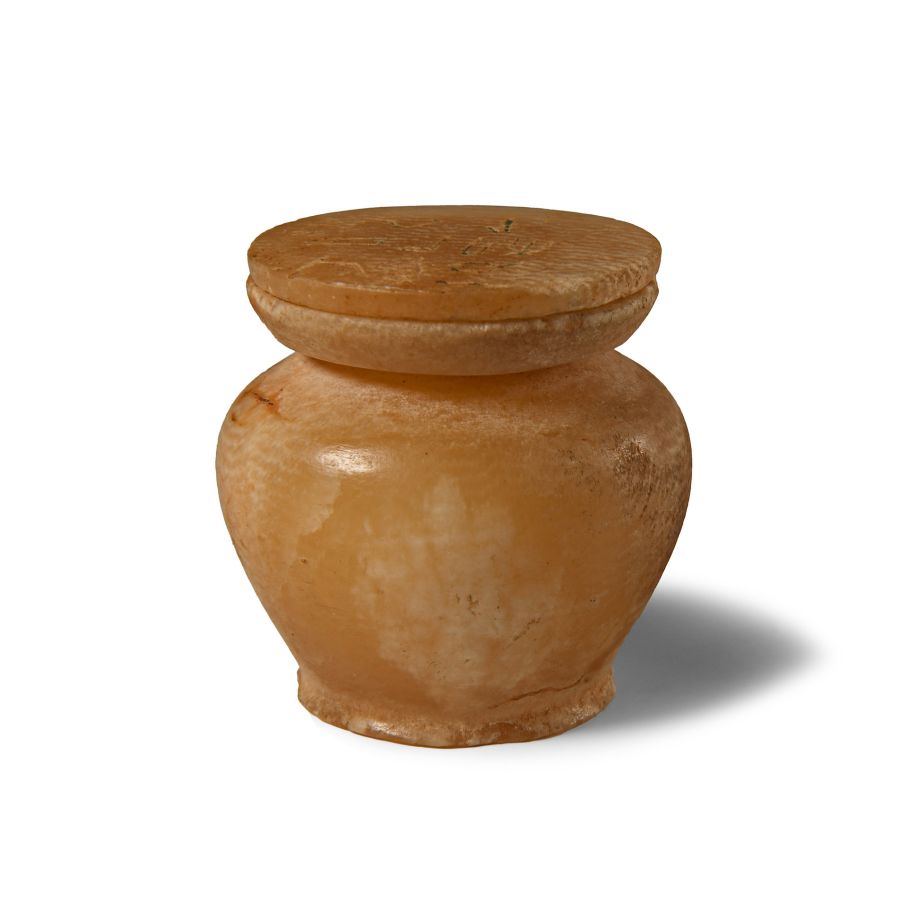
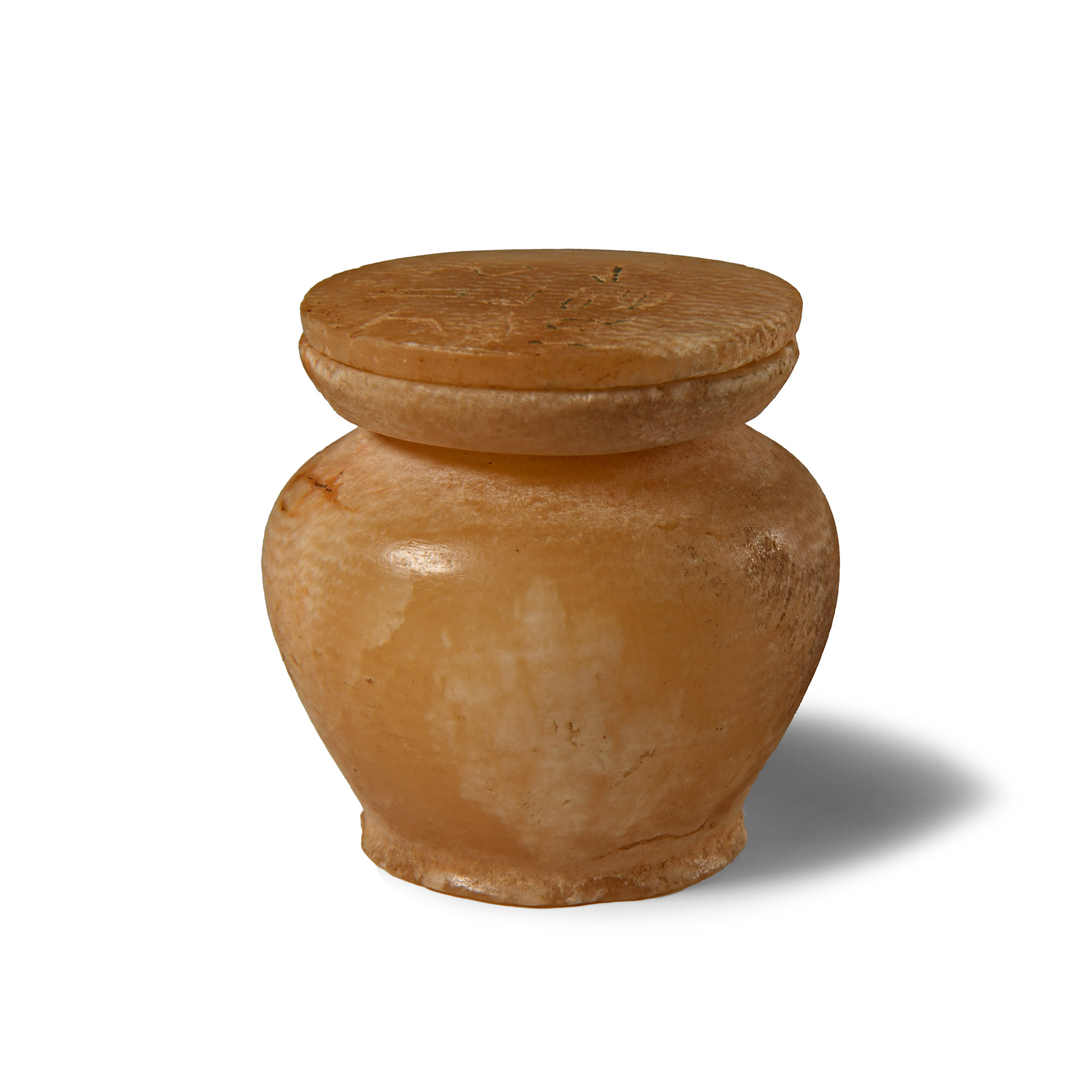
Egyptian Alabaster Kohl Pot
MIDDLE KINGDOM, CIRCA 2035-1665 B.C.
1 7/8 in. (115 grams, 47 mm high with lid).
Barrel-shaped with broad flat rim; with later hieroglyphic inscription to the lid.
ProvenanceAcquired in the mid 1980s-1990s.
From the family collection of Mr S.A., Switzerland, thence by descent.
Private collection since the late 1990s.
Cf. Guidotti, M.C., Vasi dall’epoca protodinastica al Nuovo Regno, Museo Egizio di Firenze, Rome, 1991, pp.120-121, for examples.
CONDITIONTimeLine Auctions follows a vetting process to ensure the authenticity and legality of all items, reinforcing our commitment to integrity and responsible trading. Each antiquity, antique, and coin lot undergoes thorough examination by a vetting committee of at least ten external specialists, professional trade association members, scientists, and archaeologists: Our Vetting Process
AUCTIONS:
TimeLine is a leading auction house specialising in antiquities, ancient art, collectables, natural history, coins, medals, and books. Our auctions offer museums, collectors, historians, and enthusiasts the opportunity to acquire unique and historically significant pieces.
-
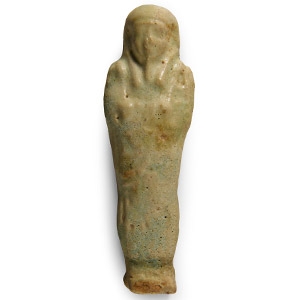
Egyptian Blue Glazed Faience Shabti
Late Period, 664-332 B.C.Sold for (Inc. bp): £111
With dorsal pillar, hands folded across the chest holding a pick and hoe, with a front panel of faintly impressed hieroglyphic text. 72 grams, 10.7 cm
Ex M.S. Ciappara collection, Norfolk, UK, 1939-1950.
Shabti figures were created to carry out heavy manual tasks on behalf of a person in the afterlife. They were often depicted with tools in their hands, such as baskets, mattocks, and hoes. Over time, the number of shabtis in a standard elite burial increased, from one in the Eighteenth Dynasty to several in the Nineteenth Dynasty, to one for every day of the year by the Third Intermediate Period. The number of shabtis remained in the hundreds during the Late Period. -
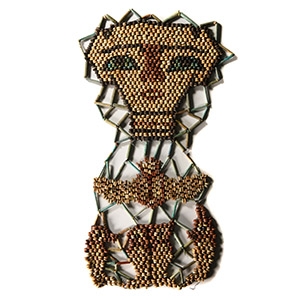
Large Egyptian Faience Beaded Mummy Mask with Sons of Horus
Ptolemaic Period, 332-30 B.C.Sold for (Inc. bp): £351
Restrung netted beadwork panel of annular and tubular glazed composition beads in blues, greens, black, cream and red-brown colours, depicting a mummy face mask with false beard, a scarab with extended wings below, the 'Four Sons of Horus’ beneath the scarab, joined together with areas of open netting of tubular beads; restrung with some later beads. 123 grams, 30 cm
Ex Mariaud de Serres, Paris, France, 1980-1990s. From a London, UK, collection.
The Four Sons of Horus were deities responsible for protecting the internal organs of the deceased. The human-headed Imsety protected the liver, the baboon-headed Hapy protected the lungs, the jackal-headed Duamutef protected the stomach, and the falcon-headed Qebehsenuef protected the intestines. -
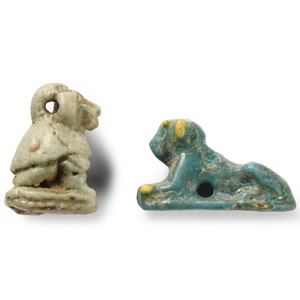
Egyptian Faience Amulet Group
Late Period, 664-332 B.C.Sold for (Inc. bp): £247
Comprising a resting lioness on a rectangular base and the god Thoth in baboon form. 1.30 grams total, 12-15 mm
From the collection of Doctor Girard, a collector for over 60 years. with Hotel des Ventes de Clermont-Ferrand, 22 May 2017. Property of a French collector.
Throughout ancient Egyptian mythology, lioness goddesses played a significant role in the religious beliefs of the people. These goddesses, including Sekhmet, Bastet, and Wadjet were revered as powerful and fierce protectors. Their presence was believed to ward off evil and safeguard the people from harm. The baboon was an animal manifestation of the god Thoth. Thoth was revered for his association with knowledge, writing, and healing. It is likely that the popularity of Thoth amulets as mummy amulets is linked to his role as the recorder of the final judgment, which determined whether the deceased had lived a life of virtue.
