
Loading, please wait...
LOT 0500
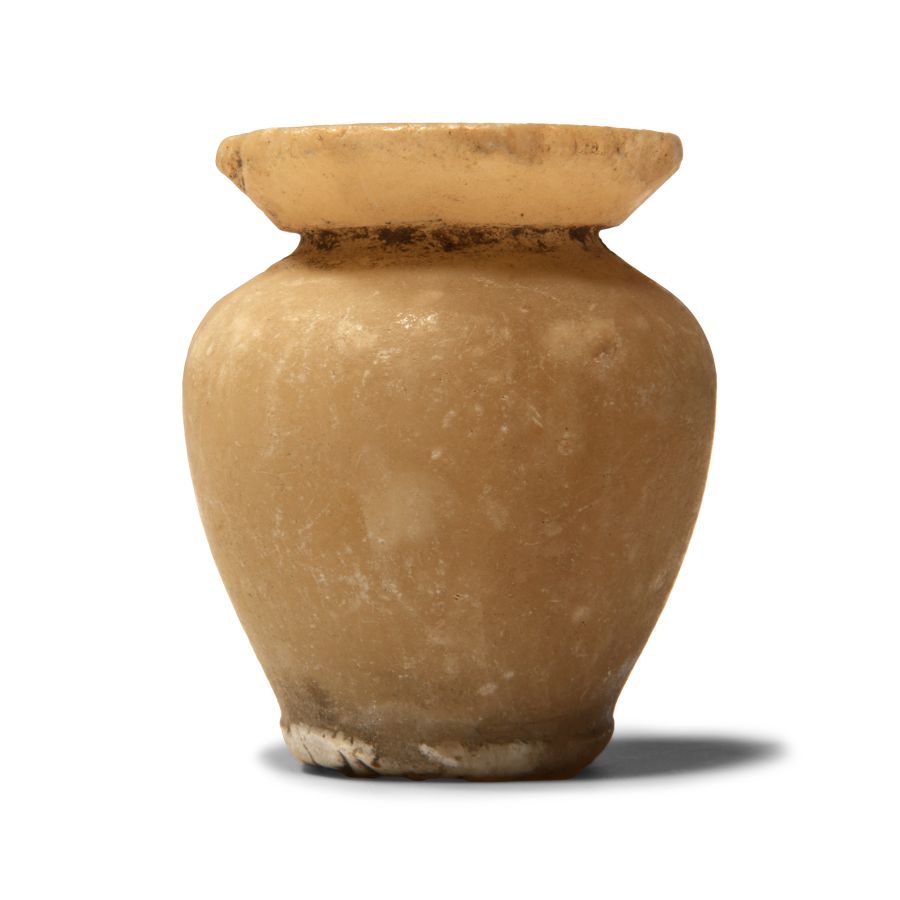
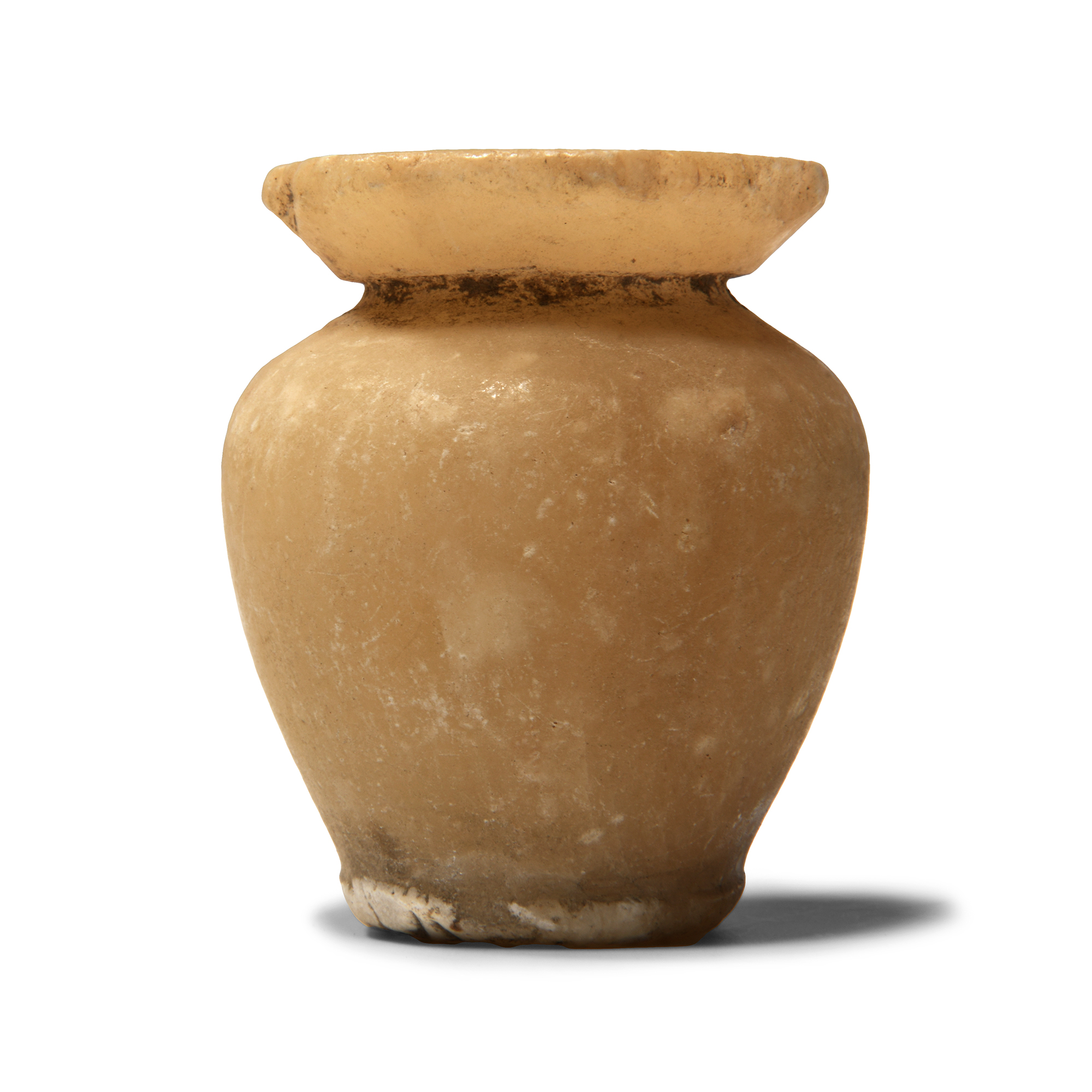
Egyptian Alabaster Kohl Pot
NEW KINGDOM, 1550-1069 B.C.
2 1/4 in. (128 grams, 56 mm).
The miniature piriform body with everted neck and rim, shallow integral foot; chipped.
ProvenanceAcquired in Europe before 1993.
LiteratureCf. Guidotti, M.C., Vasi dall’epoca protodinastica al Nuovo Regno, Museo Egizio di Firenze, Rome, 1991, p.178, no.248, for a vessel of similar form.
CONDITIONTimeLine Auctions follows a vetting process to ensure the authenticity and legality of all items, reinforcing our commitment to integrity and responsible trading. Each antiquity, antique, and coin lot undergoes thorough examination by a vetting committee of at least ten external specialists, professional trade association members, scientists, and archaeologists: Our Vetting Process
AUCTIONS:
TimeLine is a leading auction house specialising in antiquities, ancient art, collectables, natural history, coins, medals, and books. Our auctions offer museums, collectors, historians, and enthusiasts the opportunity to acquire unique and historically significant pieces.
-
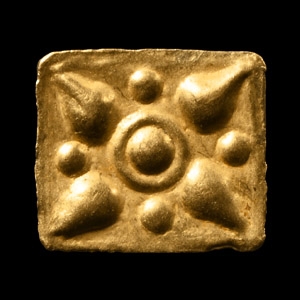
Egyptian Gold Setting with Glass Inlay
Late Period, 664-332 B.C.Estimate: £150 - 200 (+bp*)
Opening Bid: £75
Square sheet gold cell with repoussé quatrefoil to the undeside, inset glass panel in red glass and pale turquoise faience. 1.18 grams, 10 mm
From a late Japanese specialist collector, 1970-2000s. -
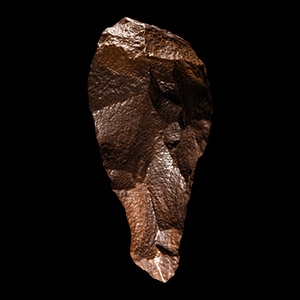
Egyptian Classic Teardrop-Shaped Knapped Handaxe
Palaeolithic Period, circa 200,000 B.C.Sold for (Inc. bp): £98
Lozenge-section knapped piriform handaxe; inked inscription 'NILE' to verso. 225 grams, 12.6 cm
From a very old collection based on the cabinet patination. From a collection acquired on the UK art market from various auction houses and collections mostly before 2000. From an important Cambridgeshire estate; thence by descent. -
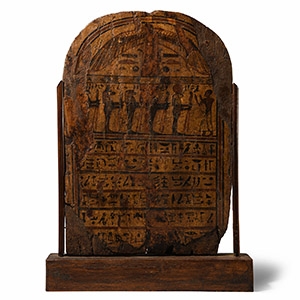
Egyptian Wooden Stela for Pa-di-Amun-(em)-ipat with Ra-Horakhty
Late Period-Ptolemaic Period, 664-30 B.C.Sold for (Inc. bp): £15,600
Arch-topped and composed of two vertical boards, coated with gesso and skilfully painted on one side; the lunette decorated with a winged sun-disc and two pendant uraei; the central vignette depicting the deceased worshipping the falcon-headed god Ra-Horakhty with the Four Sons of Horus standing behind, each with their name written above; the lower register with six lines of hieroglyphic text providing an offering formula for the benefit of the deceased: Transliteration of the hieroglyphs: 1) ḥtp-dı-͗nsw rꜤ-ḥr-Ꜣḫtı͗nṯr Ꜥ nb pt sḥḏ [.....] wsır͗ ẖntt [ım͗ntt?] 2) nṯr Ꜥ nb Ꜣbḏw dı⸗͗f pr.t-ḫrw t ḥnḳt kꜢ Ꜣpd [....] ḫt nb(t) (n) fr(t) wꜢbt […] 3) ḫt nbt nḏm dı⸗͗f ḥtpw ḏfꜢw [...]f ḫꜢ m t dı⸗͗f ḫꜢ m 4) ḥnḳt dı⸗͗f ẖꜢ ır͗p [...] dı⸗͗f ḫꜢ m ı͗[...] dı⸗͗f ḫꜢ ı(͗Ꜣ)r(r)t dı⸗͗f 5) m snṯr ḥr ḫꜢwt [...] ḳrs nfr ḥr ım͗nt nfr 6) n [..] wsır͗ [......] pꜢ-dı-͗ım͗n(m) ıp͗ Ꜣ.t ms (n) ḫꜢ [....] Translation: 1) An offering that the king and Ra-Horakhty, Great God, Lord of Heaven, the illuminated [...] Osiris Foremost [of the West?] 2) Great God, Lord of Abydos (that) he may give a voice-offering (of) bread, beer, oxen, and fowl […] everything good and pure […] 3) everything sweet, he gives offerings of provisions […] a thousand of bread, he gives a thousand of 4) beer, he gives a thousand of wine […], he gives a thousand of vines, he gives a thousand of 5) incense on the altar […] a good burial in the beautiful West 6) for […] the Osiris[…] Pa-di-Amun-(em)-ipat born (to) Kha[…]; on the verso, an old handwritten collection label reading: 'From Harding & Sm[ith] Collection Sale Sotheby 2 Nov 1922 L.N. 234. A families[sic] stele, arched top, with the deceased worshipping a standing Horus attended by the four Children of Horus and six horizontal lines of inscription in colour. SP/10a'; mounted in a custom-made wooden frame. 1.96 kg, 45 cm high
From the collection of the late W. Harding Smith (1848-1922). with Sotheby, Wilkinson & Hodge, 34 & 35 New Bond Street, 2 November 1922, no.234. Old handwritten label to verso reading 'From ‘....’ ‘....’ collection Sale Sotheby 2 Nov 1922 L.N.234...' Accompanied by an academic report by Egyptologist Paul Whelan. Accompanied by a copy of the 1922 Sotheby, Wilkinson & Hodge catalogue pages.
