
Loading, please wait...

LOT 0502
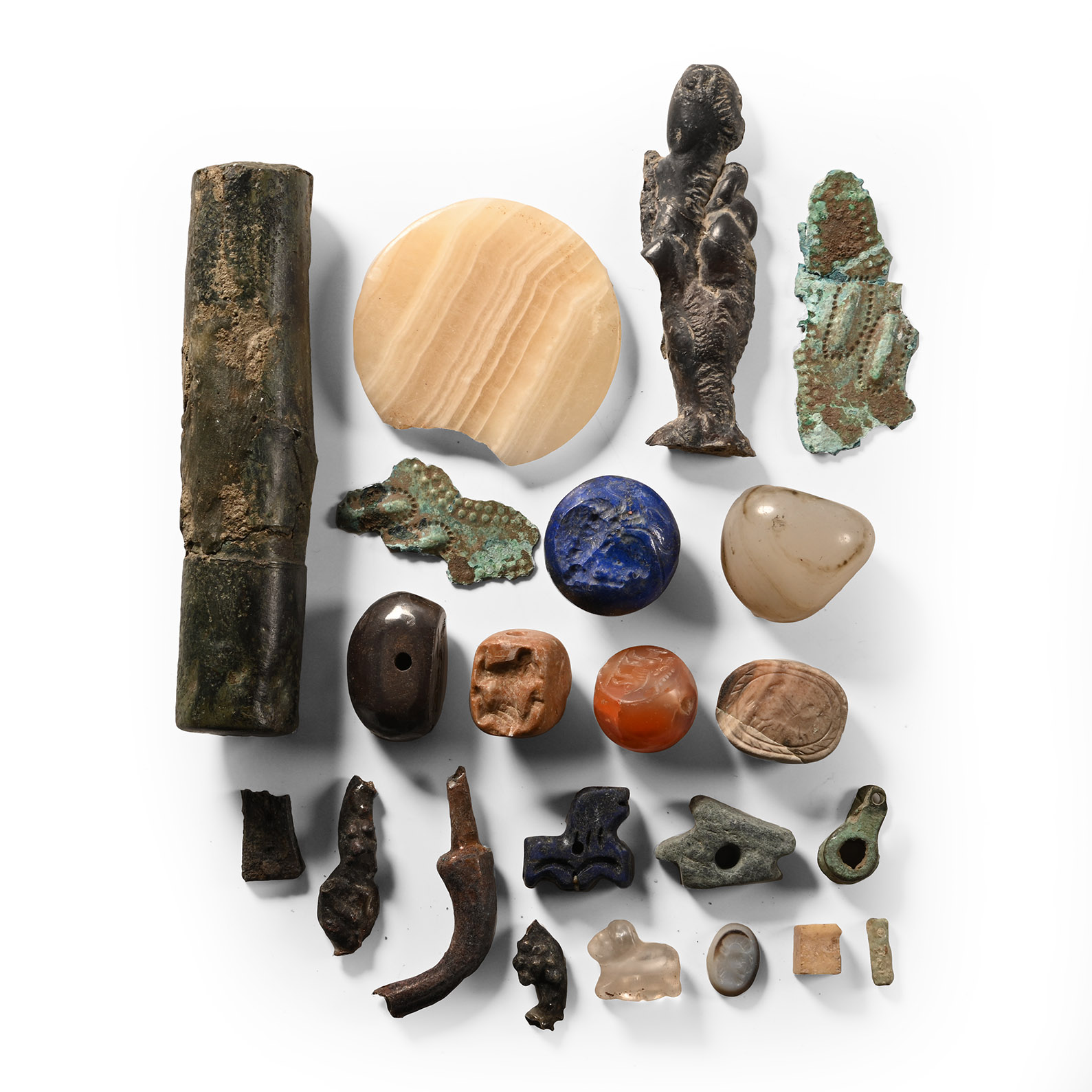
Egyptian Alabaster Kohl Pot Lid and Other Items
LATE PERIOD, 664-332 B.C. AND LATER
1/4 - 3 1/2 in. (126 grams total, 7-89 mm).
Including oblate beads, scarab with the underside carved with a human figure and winged gryphon, a rock crystal dog, sheet bronze fragments, a bronze cylindrical case, and other items. [22, No Reserve]
ProvenanceCollected from 1970-1999.
From the collection of the late Mr S.M., London, UK.
TimeLine Auctions follows a vetting process to ensure the authenticity and legality of all items, reinforcing our commitment to integrity and responsible trading. Each antiquity, antique, and coin lot undergoes thorough examination by a vetting committee of at least ten external specialists, professional trade association members, scientists, and archaeologists: Our Vetting Process
AUCTIONS:
TimeLine is a leading auction house specialising in antiquities, ancient art, collectables, natural history, coins, medals, and books. Our auctions offer museums, collectors, historians, and enthusiasts the opportunity to acquire unique and historically significant pieces.
-
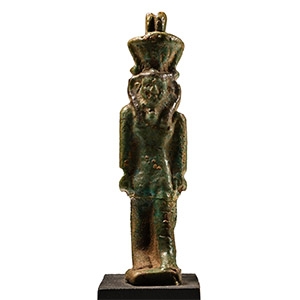
Egyptian Faience Figure of Nefertum
Ptolemaic Period, 332-30 B.C.Estimate: £700 - 900 (‡+bp*)
Opening Bid: £350
Turquoise faience standing figure of Nefertum in a striding pose with arms at the sides, sporting a black coloured tripartite wig surmounted by the god's distinctive headdress consisting of a lotus flower with two plumes on top; a suspension loop at the back; repaired. 71 grams total, 13 cm including stand
Property from an American deceased estate, acquired between 1970 and 1989. with Bonham's, London, 28 October 2009, no.81 [Part].
Nefertum was closely associated with the creator god Ptah and the goddesses Sekhmet and Bastet. He represented the first sunlight and the sweet scent of the Egyptian blue lotus flower (nymphaea caerulea). According to beliefs, the sun rose from the bloom of a blue lotus, embodying notions of rebirth and rejuvenation. Additionally, as the lotus was seen as a symbol of fertility, it is possible that this amulet was also worn for that purpose. -
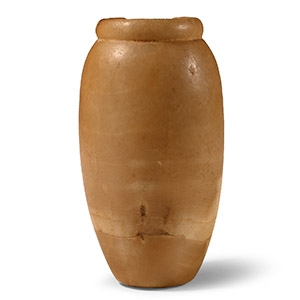
Egyptian Ovoid Alabaster Jar
Early Dynastic Period, circa 3100-2900 B.C.Estimate: £1,000 - 1,400 (+bp*)
Opening Bid: £389
With rounded lip, and oval body slightly tapering to a flat base. 517 grams, 11.5 cm high
Mary Stout Shaw (1880-1962); thence by direct descent to the present owner. Accompanied by a copy of a 1976 family photo featuring some of the collection on display.
Mary Kilgour Stone was born in 1880 in Cincinnati, Ohio. On 25 November 1903, she married Percy Wyfold Stout from Gloucester (DSO, OBE, 1875-1937), who had moved to Cairo after an international rugby career. After fighting in the First World War, Percy became the Director of the Egyptian Delta Land Company and the Anglo-American Nile Tourist Company. He and Mary were friends with the famous Major Gayer-Anderson, who worked as a doctor on the company’s cruise boats between 1930 and 1939. Gayer-Anderson tells in his memoir how this allowed him to make frequent trips to Upper Egypt and fulfil his passion for collecting (and dealing in) ancient Egyptian art. In his company, Mary became an enthusiast about all things Egypt and formed an elegant collection of ancient Egyptian alabaster vessels, including the following lots. She was particularly fascinated with the ancient cat goddess Bastet. Therefore, when Gayer-Anderson decided to give his famous ancient bronze cat to the British Museum in 1939, he made sure the donation was in both his name and Mary Stout Shaw’s, as a tribute to their friendship. -
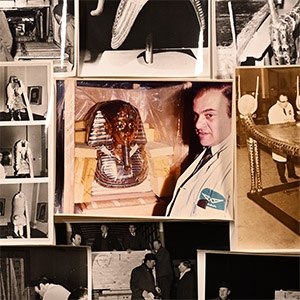
Original Press Photographs of the 1972 Tutankhamun Exhibition
1972 A.D.Sold for (Inc. bp): £39
Comprising monochrome glossy photographs with printed caption to the reverse: 'Tutankhamun's Funerary Couch. The divine cow in the final stages of wrapping, being embraced by Mr. T.G.H. James, Assistant Keeper of the British Museum'; 'The six stages in the packing of the gilded wooden statue of Tutankhamun; one of a pair that stood sentinel at the entrance to the inner chamber'; 'Colin Ashby of Walford Wingate Forwarders Ltd in the course of packing the major item in the Tutankhamun collection at the Cairo Museum. The funerary mask from Tutankhamun's mummy is made of beaten gold and is the finest ever found.' (Colour photo); 'The funerary mask from Tutankhamun's mummy made of beaten gold and the finest ever found. (Please credit the Cairo Museum)'; 'Part of the carefully-packed contents of Tutankhamun's tomb at London Airport on arrival from Cairo. Lt.Col. E.C. Easter MBE, Chairman of Walford Wingate Forwarders Ltd. the company responsible for the entire packing and surface transportation operation, supervises the off-loading of part of the world's most fabulous treasure.' (2 photographs); 'Never has B.O.A.C.'s slogan been more assuring. the innocent looking cargo being unloaded at London Airport is part of a priceless consignment from Cairo for the forthcoming exhibition of the contents of Tutankhamun's tomb to be held at the British Museum. Flown in by the R.A.F. and B.O.A.C. under British Government indemnity, the world's greatest treasure trove was packed and handled by Walford Wingate Forwarders Ltd.'; 'Tutankhamun's Funerary Couch. Preliminary inspection of Tutankhamun's funerary couch by Messrs Ashby and Burnett of Walford Wingate Forwarders Ltd.'; 'Tutankhamun's Funerary Couch. One of the divine cows separated from the couch in the early stages of wrapping'. 102 grams total, 25.2 x 17.7 - 25.3 x 20.4 cm
Property of a Cambridgeshire, UK, gentleman.
