
Loading, please wait...
LOT 0493
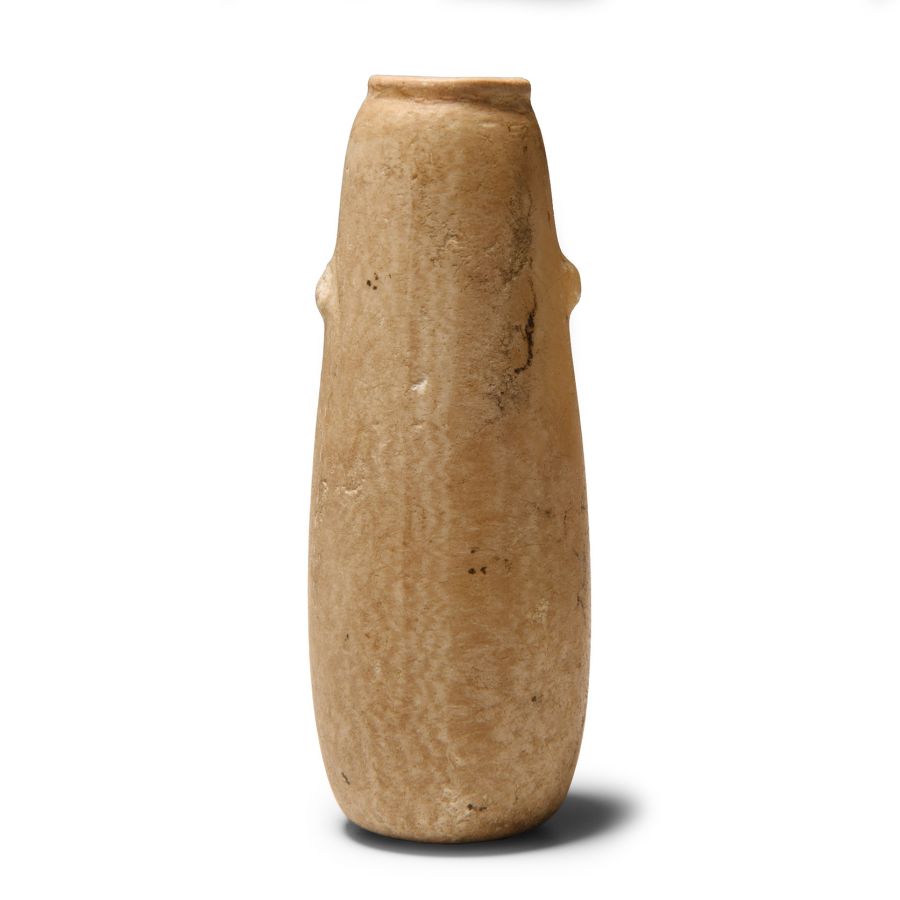
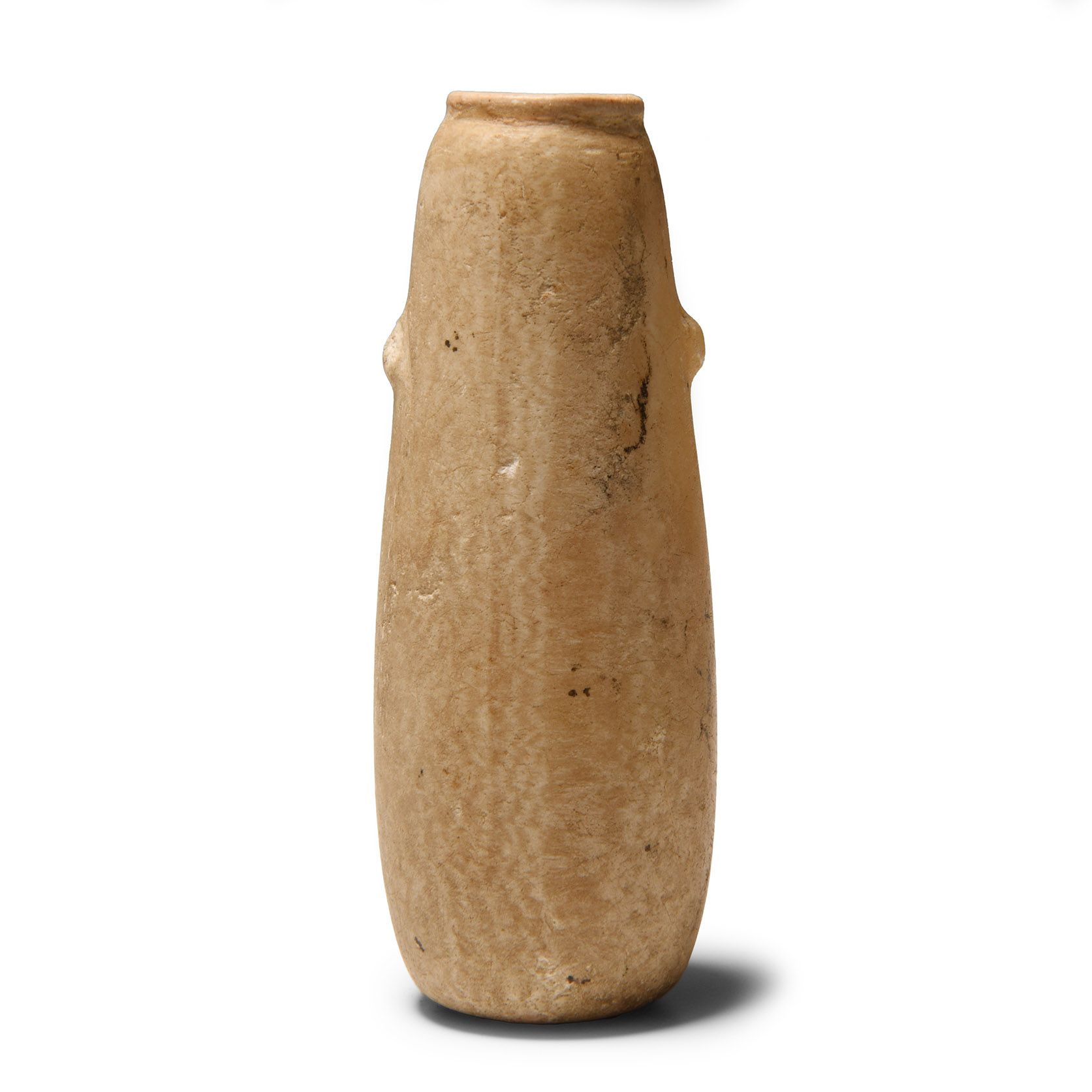
Egyptian Alabaster Cosmetic Jar
LATE PERIOD, 664-332 B.C.
3 3/8 in. (77 grams, 87 mm).
Carved cosmetics jar, tapering gradually towards the top, with two small lugs at the shoulders, a collared rim, and flattened base.
ProvenancePrivate collection, Zurich, acquired in 1975 when the owners lived in Cairo (1975-1980).
with Bonhams London, Antiquities, 23 July 2020, lot 119 (part).
Property of a Bristol, UK, gentleman.
TimeLine Auctions follows a vetting process to ensure the authenticity and legality of all items, reinforcing our commitment to integrity and responsible trading. Each antiquity, antique, and coin lot undergoes thorough examination by a vetting committee of at least ten external specialists, professional trade association members, scientists, and archaeologists: Our Vetting Process
AUCTIONS:
TimeLine is a leading auction house specialising in antiquities, ancient art, collectables, natural history, coins, medals, and books. Our auctions offer museums, collectors, historians, and enthusiasts the opportunity to acquire unique and historically significant pieces.
-
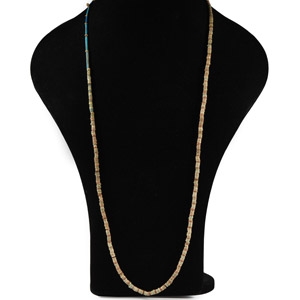
Egyptian Faience Mummy Bead Necklace
Late Period, 664-332 B.C.Sold for (Inc. bp): £65
Restrung group of annular and tubular beads. 17.9 grams, 95 cm long
From an old English deceased estate. Acquired on the London art market in the early 1990s. Property of a London, UK, collector. -
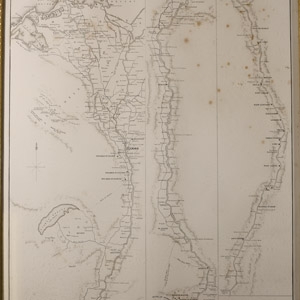
David Roberts Print
19th century A.D.Sold for (Inc. bp): £52
Printed map of Egypt and Nubia with locations marked of the sketches of David Roberts, RA on his 1849 expedition; mounted in a glazed wooden frame. 2.2 kg, 46 x 64 cm
From the private collection of the late Mrs Belinda Ellison, a long time member of the Egyptian Exploration Society, c.1940-2020. -
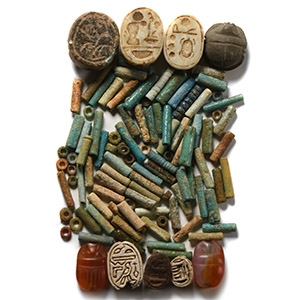
Egyptian Faience Bead and Scarab Collection
New Kingdom-Late Period, circa 1400-332 B.C.Sold for (Inc. bp): £624
Including tubular and annular beads, scarabs and scaraboids with inscriptions, including the prenomen of Amenhotep III (Neb-Maat-Re) and the nomen of Amenhotep II (A-Kheperu-Re). 22.4 grams total, 3-18 mm
From an early to mid 20th century collection, West country, UK.
