
Loading, please wait...
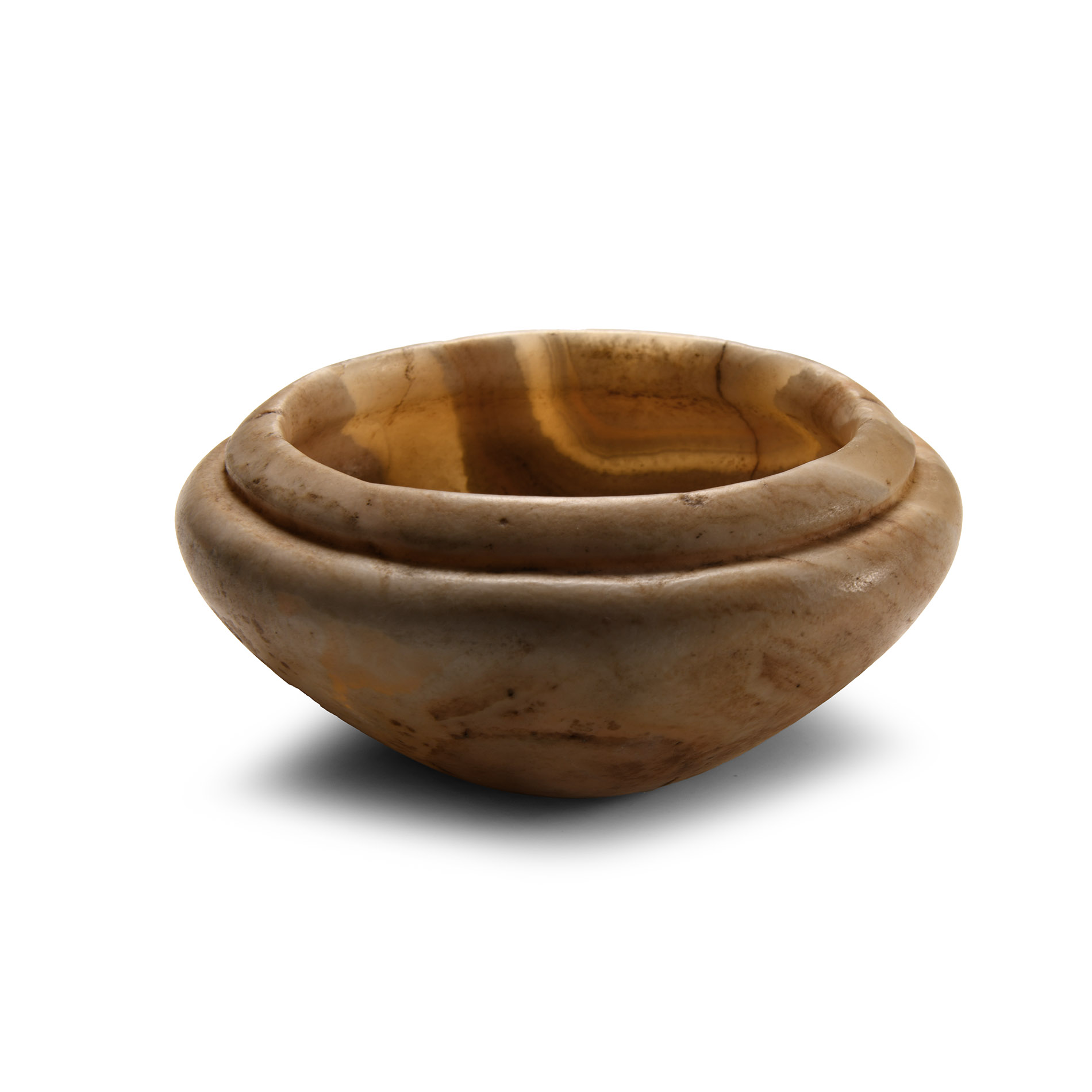
LOT 0484
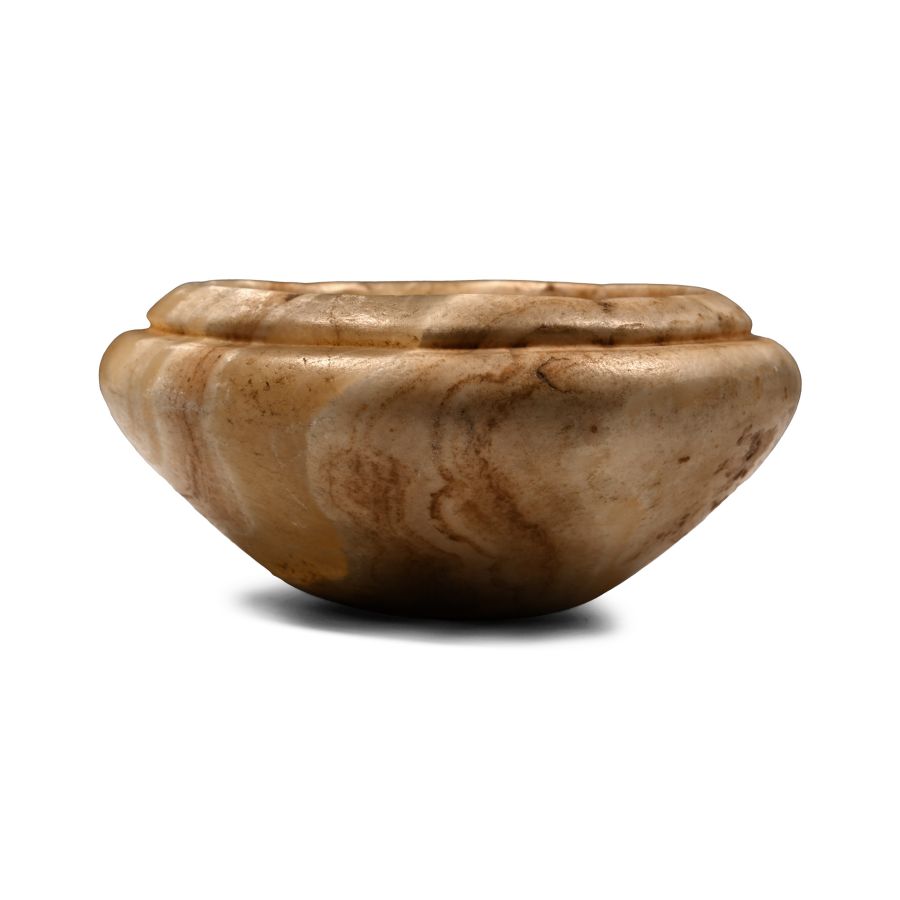
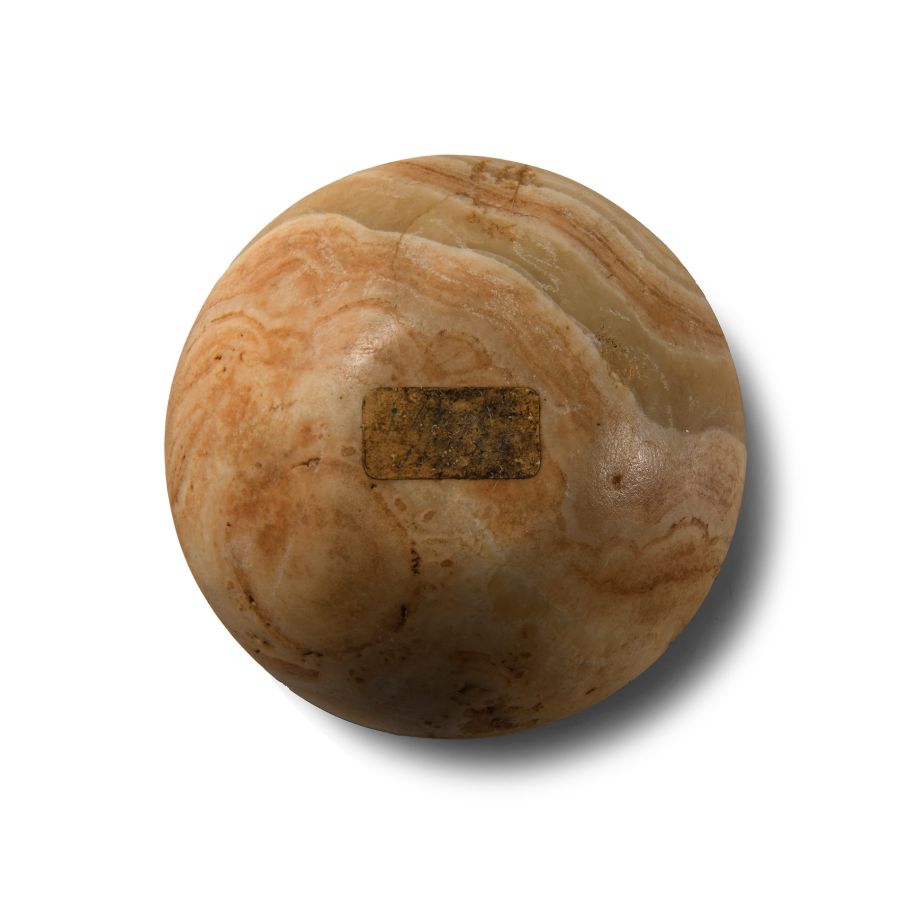
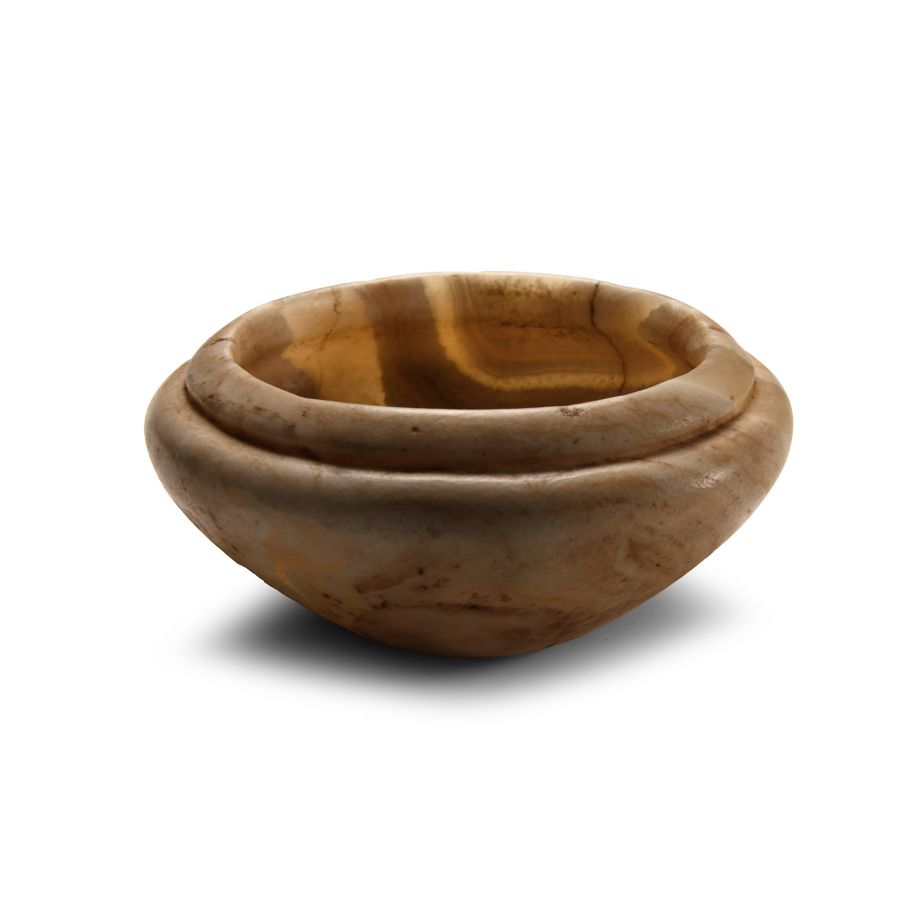
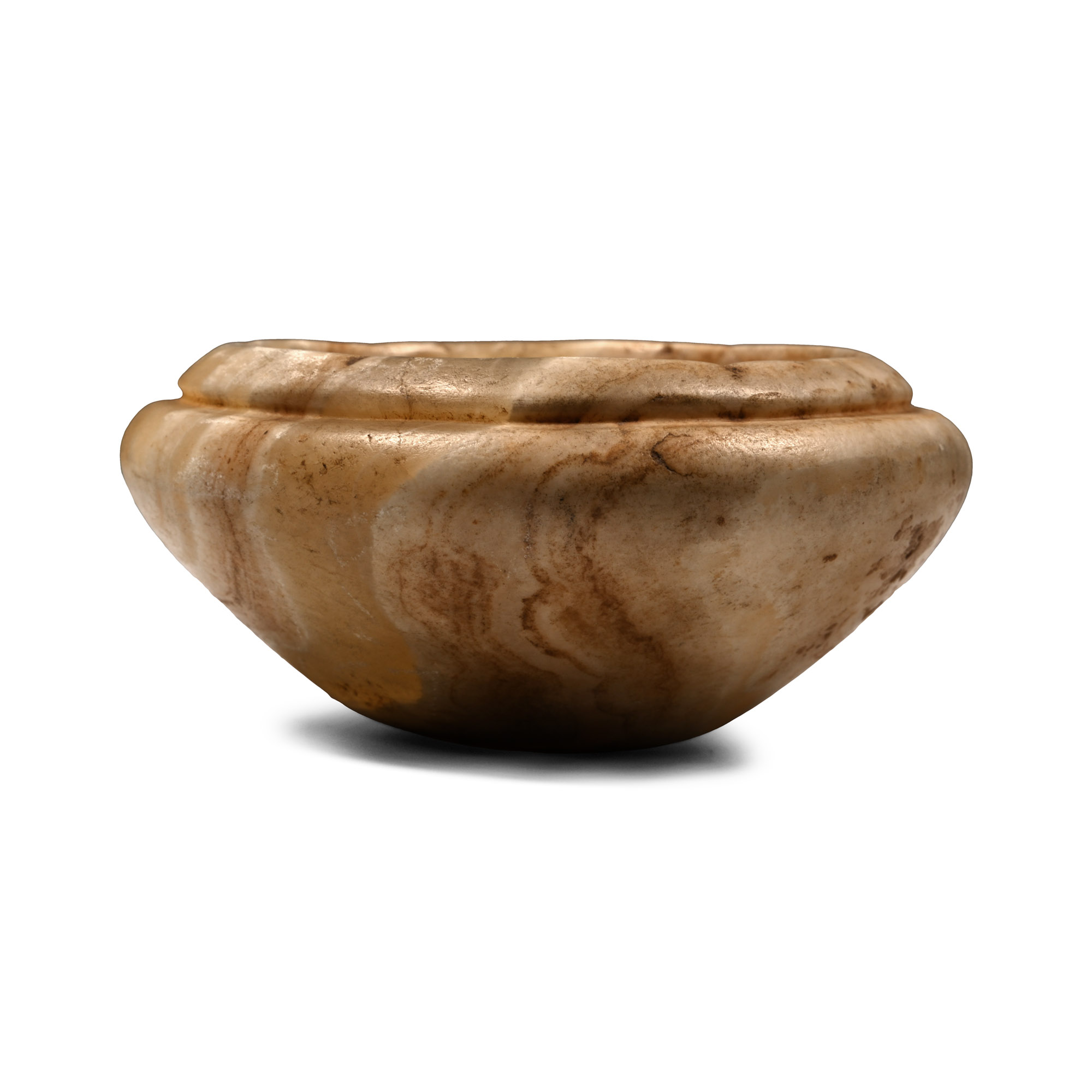
Egyptian Alabaster Bowl
1ST DYNASTY, CIRCA 3000 B.C.
4 1/2 in. (380 grams, 11.6 cm wide).
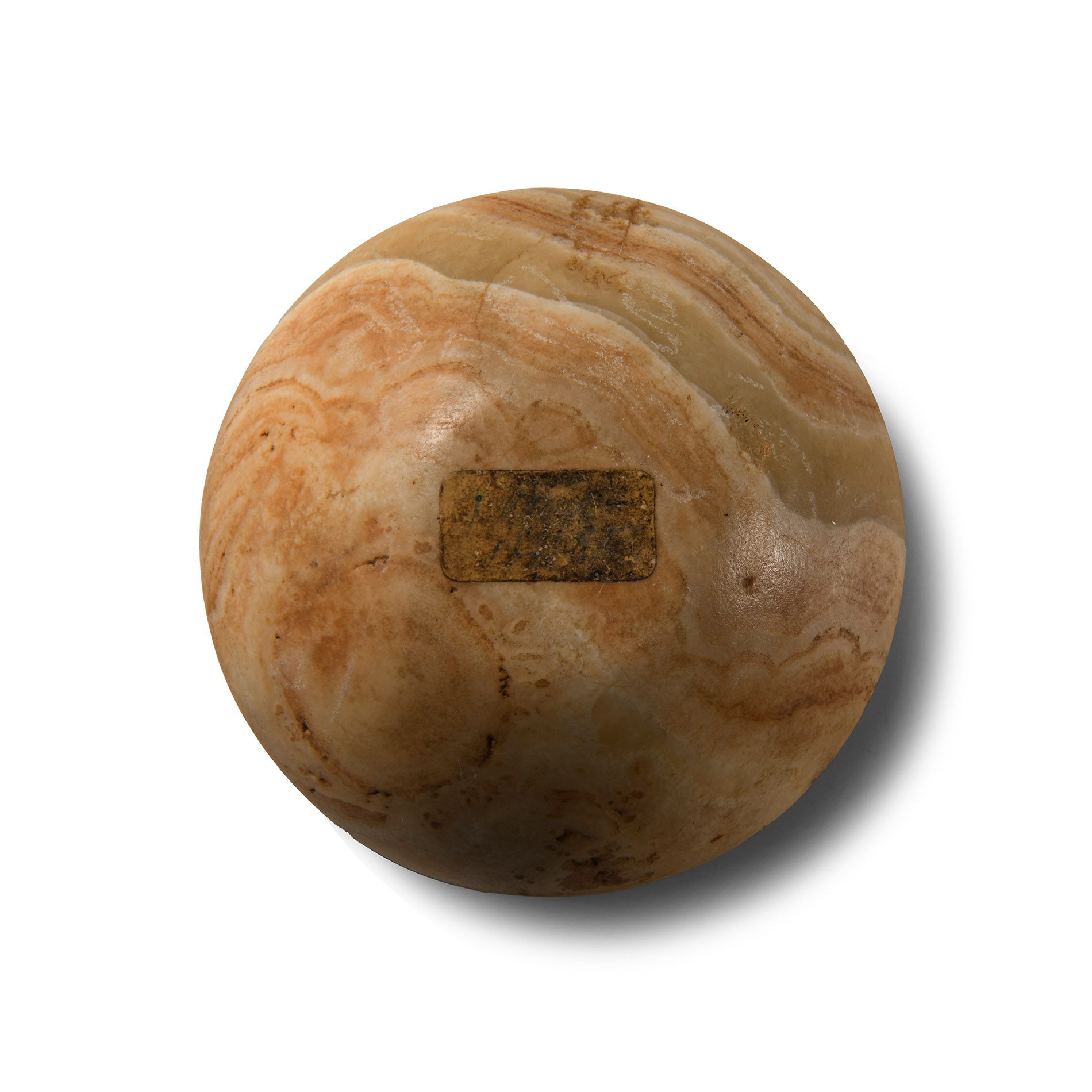
Of conical profile with flattened base, carinated shoulder and stepped rounded rim, possibly for accepting a lid.
ProvenanceProperty from an American deceased estate, acquired between 1970-1989.
with Bonhams, London, 28 October 2009, no.16 (Part).
Private European collection.
Accompanied by copies of the relevant Bonhams catalogue pages.
This lot has been checked against the Interpol Database of stolen works of art and is accompanied by a search certificate number no.12071-215259.
This lot is accompanied by an illustrated lot declaration signed by the Head of the Antiquities Department, Dr Raffaele D'Amato.
Cf. Vandier d’Abbadie, J., Les objets de toilette égyptiens au Musée du Louvre, Paris, 1972, pp.108, 110, nos. 433-434, for two examples of this type in the Louvre; El-Khouli, A., Egyptian Stone Vessels: Predynastic Period to Dynasty III, vol.3, London, 1974, pl. 81, nos.2122-2125, for similar form.
CONDITIONTimeLine Auctions follows a vetting process to ensure the authenticity and legality of all items, reinforcing our commitment to integrity and responsible trading. Each antiquity, antique, and coin lot undergoes thorough examination by a vetting committee of at least ten external specialists, professional trade association members, scientists, and archaeologists: Our Vetting Process
AUCTIONS:
TimeLine is a leading auction house specialising in antiquities, ancient art, collectables, natural history, coins, medals, and books. Our auctions offer museums, collectors, historians, and enthusiasts the opportunity to acquire unique and historically significant pieces.
-
.jpg)
Egyptian Limestone Relief
Late Period, 664-332 B.C.Sold for (Inc. bp): £2,080
A fragment featuring a low-relief depiction of a male head in profile with a shoulder-length duplex wig, the upper part intricately detailed with herringbone stripes and a fringed edge, transitioning into heavy curls at the lower part, sporting a short beard and a boldly carved ear with an indented lobe, drilled for a mounting peg. 1.95 kg, 26.5 cm
Acquired in the mid 1980s-1990s. Private collection, Switzerland, thence by descent. Private collection, since the late 1990s. This lot has been checked against the Interpol Database of stolen works of art and is accompanied by a search certificate number no.12626-234637. This lot has been cleared against the Art Loss Register database, and is accompanied by an illustrated lot declaration signed by the Head of the Antiquities Department, Dr Raffaele D'Amato. -
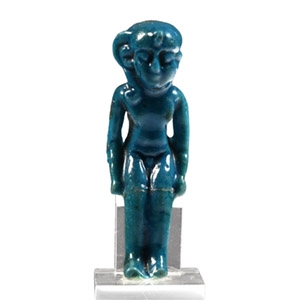
Egyptian Turquoise Glazed Seated Harpocrates
Late Period, 26th Dynasty, circa 664-525 B.C.Estimate: £500 - 700 (+bp*)
Opening Bid: £250
The god in a semi-seated pose with sidelock and uraeus; mounted on a custom-made stand. 10 grams total, 52 mm including stand
Collection de Son Excellence Mandou Riaz (1895-1963). Archéologie, François de Ricqlès, Paris, 11-12 November 2001, no.186. Private collection, London, UK, acquired from the above sale. Accompanied by a copy of the François de Ricqlès invoice. This lot is accompanied by an illustrated lot declaration signed by the Head of the Antiquities Department, Dr Raffaele D'Amato.
While the semi-seated pose of the figurine may imply that it was part of a composite statuette, possibly featuring a separately modelled throne or seated on the lap of his mother, Isis, independent amulets with suspension loops depicting the god in this pose are also prevalent. Harpocrates is the Greek rendering of the Egyptian Hor-pa-khered, which translates as ‘Horus the Child’. This designation refers to Horus as the divine infant of Isis and Osiris. Wearing the amulet of Harpocrates could grant the wearer the same protection that Isis provided to her beloved son. -
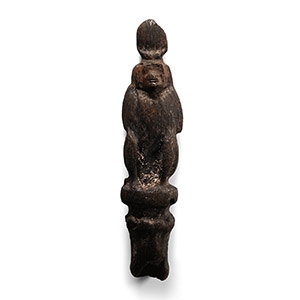
Egyptian Ebony Thoth Figure
1st millennium B.C.Estimate: £200 - 300 (+bp*)
Opening Bid: £100
Carved in the round figure of a baboon with horned sun-disc headgear, crouching on a balustered tubular shaft. 6.87 grams,74 mm
Acquired on the German art market, 1989-1995. with The Museum Gallery, 19 Bury Place, London, WC1, UK, 1998-2003. Property of a London based academic, 2003-present. This lot is accompanied by an illustrated lot declaration signed by the Head of the Antiquities Department, Dr Raffaele D'Amato.
The baboon represented an animal manifestation of the god Thoth. This deity was revered for his associations with knowledge, writing, and healing. The popularity of Thoth was also likely tied to his role as the recorder of the final judgment, which determined whether the deceased had led a virtuous life.
