
Loading, please wait...
LOT 0002
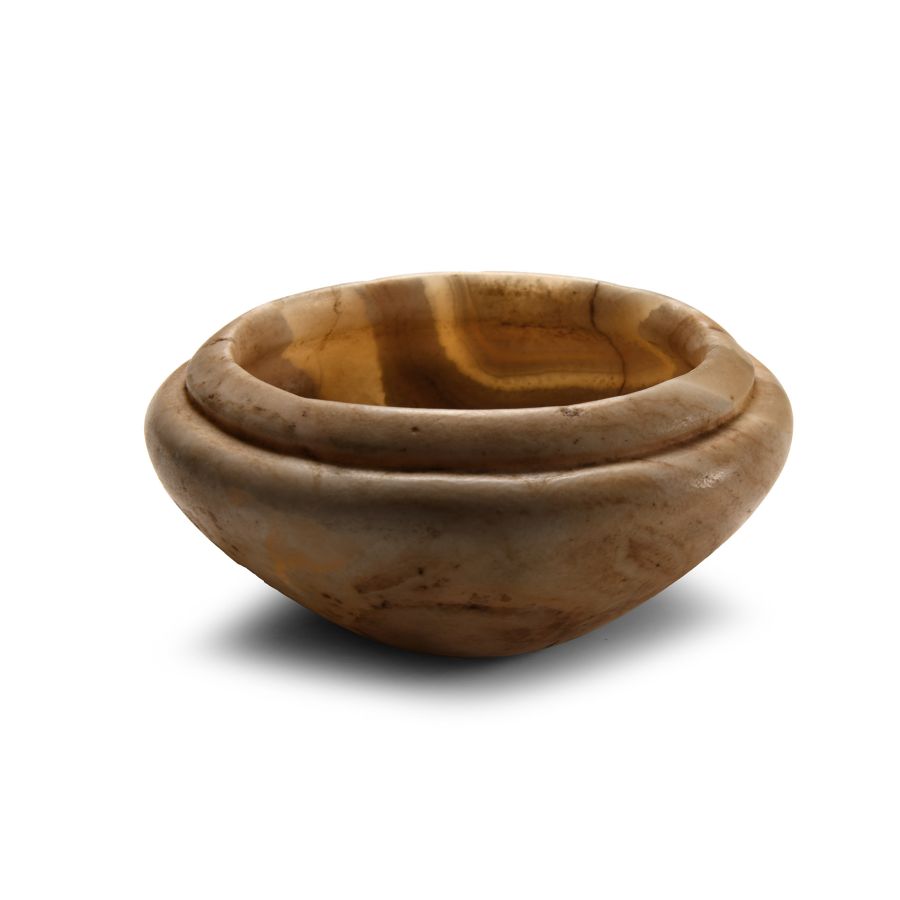
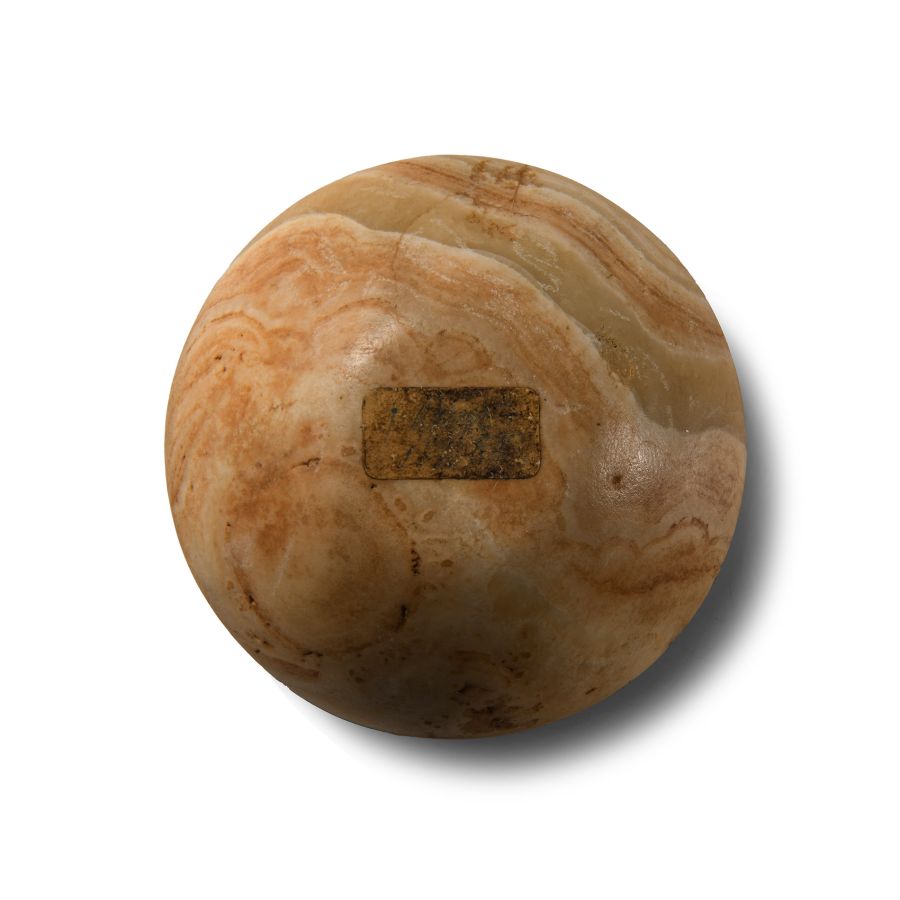
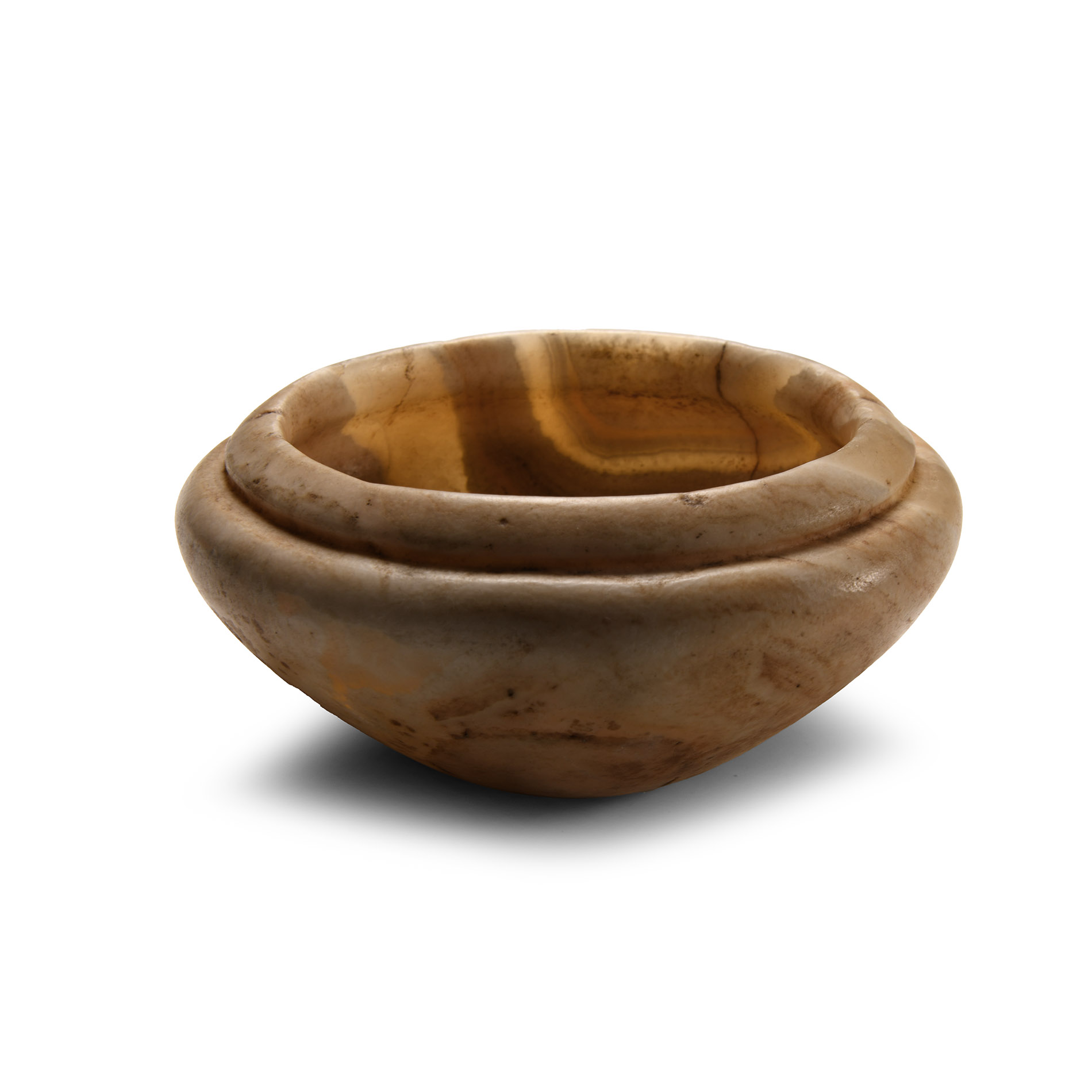
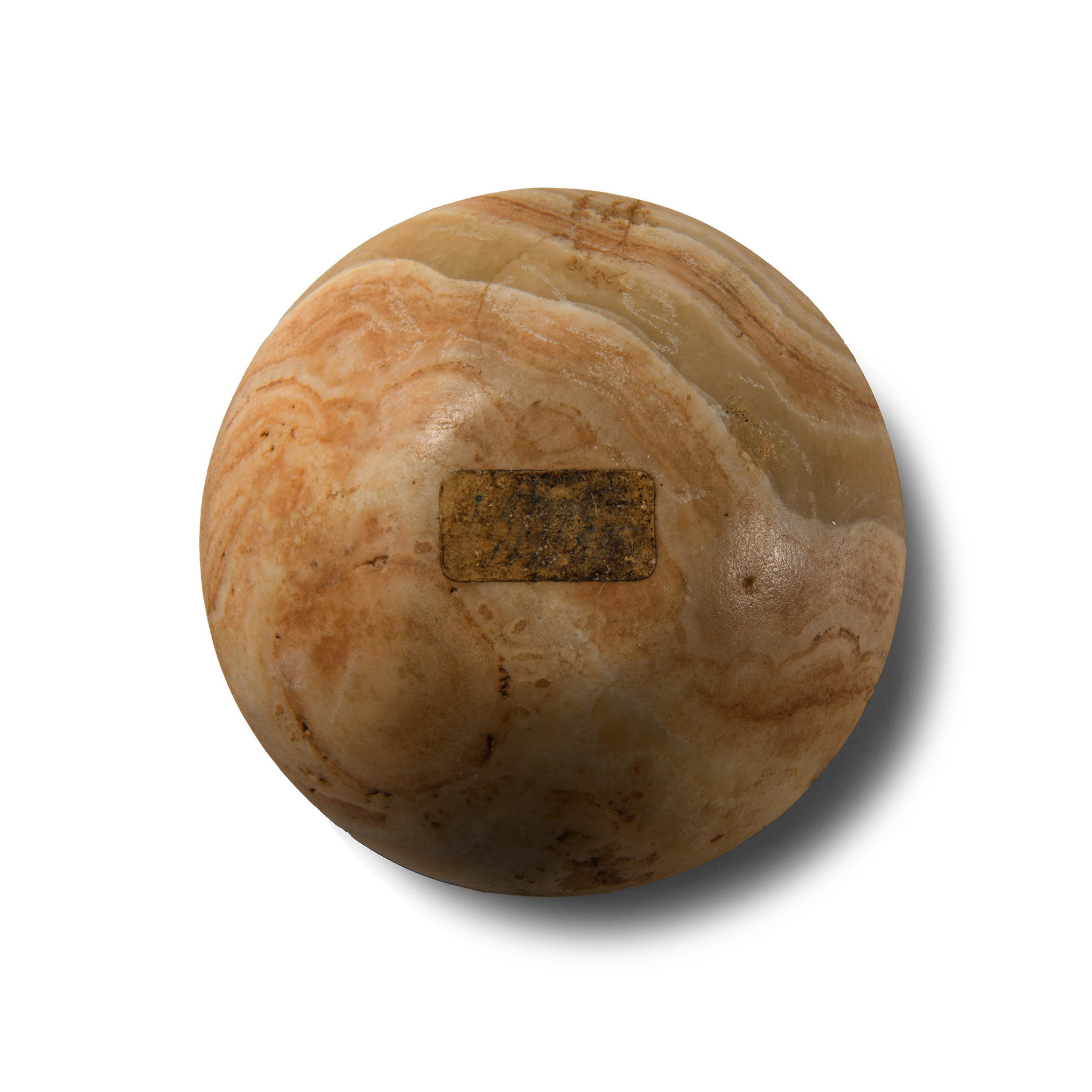
Egyptian Alabaster Bowl
1ST DYNASTY, CIRCA 3000 B.C.
4 1/2 in. (380 grams, 11.6 cm wide).
Of conical profile with flattened base, carinated shoulder and stepped rounded rim, possibly for accepting a lid.
ProvenanceProperty from an American deceased estate, acquired between 19770-1989.
with Bonhams, London, 28 October 2009, no.16 (Part).
Private European collection.
Accompanied by copies of the relevant Bonhams catalogue pages.
This lot has been checked against the Interpol Database of stolen works of art and is accompanied by a search certificate number no.12071-215259.
Cf. Vandier d’Abbadie, J., Les objets de toilette égyptiens au Musée du Louvre, Paris, 1972, pp.108, 110, nos. 433-434, for two examples of this type in the Louvre.
CONDITIONTimeLine Auctions follows a vetting process to ensure the authenticity and legality of all items, reinforcing our commitment to integrity and responsible trading. Each antiquity, antique, and coin lot undergoes thorough examination by a vetting committee of at least ten external specialists, professional trade association members, scientists, and archaeologists: Our Vetting Process
AUCTIONS:
TimeLine is a leading auction house specialising in antiquities, ancient art, collectables, natural history, coins, medals, and books. Our auctions offer museums, collectors, historians, and enthusiasts the opportunity to acquire unique and historically significant pieces.
LOT 0002
Egyptian Alabaster Bowl
Estimate £1,800 - 2,400€2,090 - 2,780 (for guidance only)$2,430 - 3,240 (for guidance only)
-
Egyptian Millefiori Glass Bead Group
Roman Period, 30 B.C.-323 A.D.Sold for (Inc. bp): £208
Three spherical glass beads decorated with geometric millefiori patterns. 10 grams total, 12-15 mm
Collected from 1969-1999. From the collection of the late Mr S.M., London, UK. -
Egyptian Faience Hieroglyphic Shabti For Djed-Bastet-iuef-ankh
Third Intermediate Period, 1069-702 B.C.Sold for (Inc. bp): £156
With pale blue surface and applied black detailing to hair, seed-bag and tools; faint hieroglyphs to lower body giving the dedication 'The Osiris, Djed-Bastet-iuef-ankh'. 18.9 grams, 80 mm
From a UK collection in the 1990s. Property of a Cambridgeshire, UK, gentleman. -
.jpg)
Egyptian Faience Shabti for Nesy-Amun
Third Intermediate Period, 21st Dynasty, 1069-943 B.C.Sold for (Inc. bp): £1,170
Modelled in deep blue faience with applied black detailing to the hair, eyes, seed bag, agricultural tools and three bands of hieroglyphs to the lower body reading giving the title and name of 'Nesy-Amun, Justified'; very rare. 75 grams, 11.1 cm
European collection, latterly in private UK collection, 1990. Read by John Taylor at the British Museum on 27 February 2009. Accompanied by a copy of a handwritten information card and a print out of the Christie's example.
Nesy-Amun was the Fourth Prophet of Amun in the 21st Dynasty. The mummy was recovered from the priest's hole, cache II, Deir el-Bahari.
