
Loading, please wait...
LOT 0026
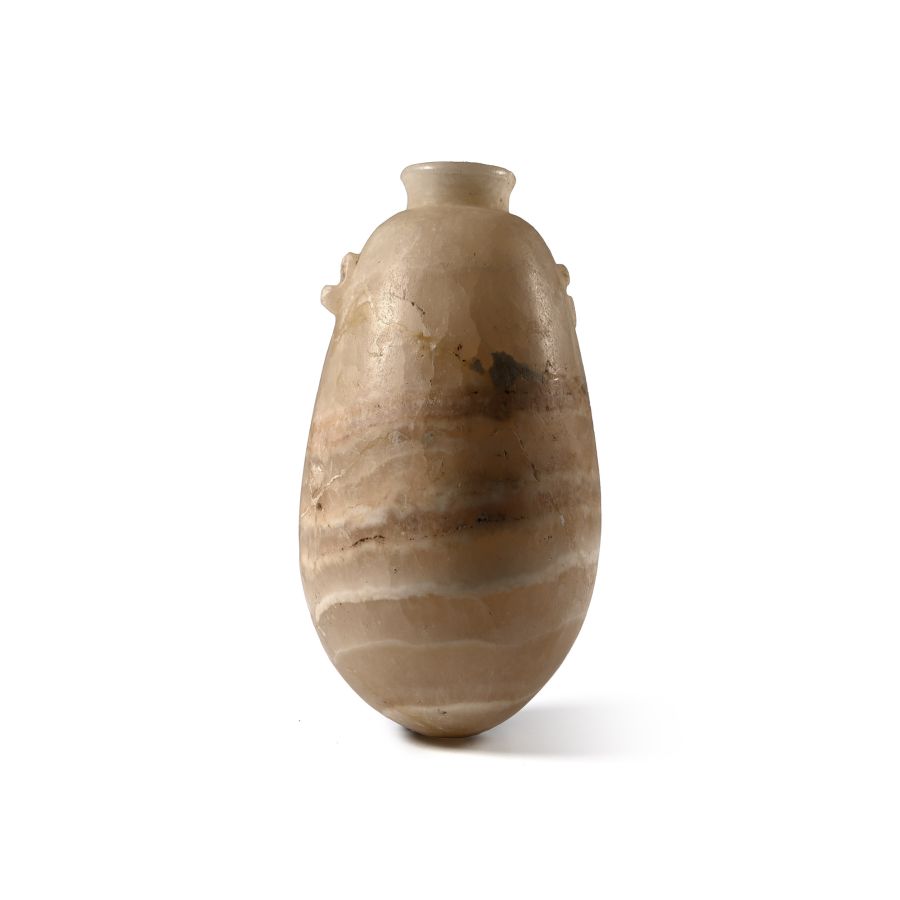
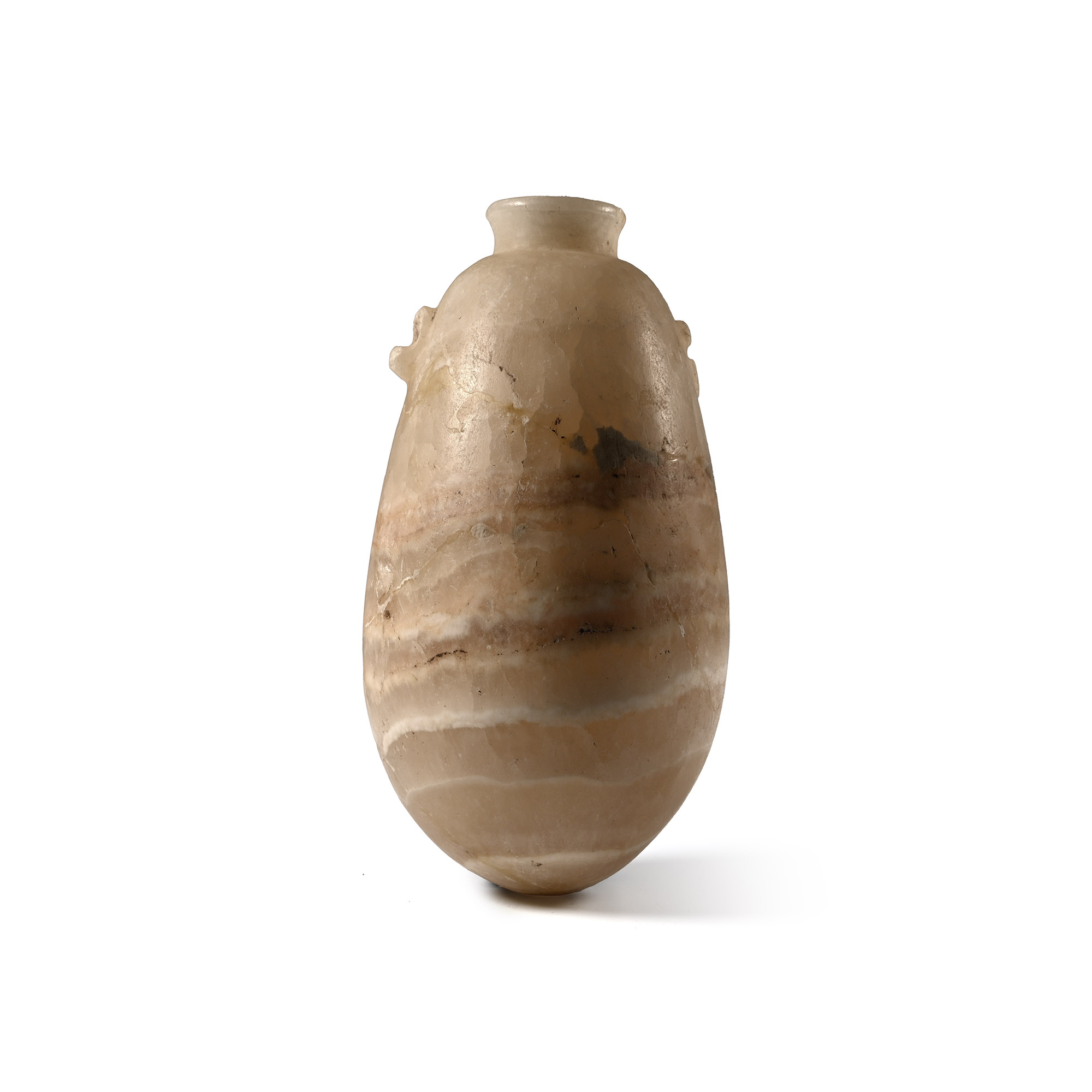
Egyptian Alabaster Alabastron
LATE PERIOD, 664-332 B.C.
5 1/2 in. (332 grams, 14 cm).
Ovoid jar with a rounded base, concave shoulders and flared neck; remains of lug handles, restored.
ProvenanceAcquired in the mid 1980s-1990s.
Private collection, Switzerland, thence by descent.
Private collection, since the late 1990s.
Cf. Aston, B.G., Ancient Egyptian Stone Vessels: Materials and Forms, SAGA 5, Heidelberg, 1994, p.89, fig.18, no.218, for a similar vessel.
CONDITIONTimeLine Auctions follows a vetting process to ensure the authenticity and legality of all items, reinforcing our commitment to integrity and responsible trading. Each antiquity, antique, and coin lot undergoes thorough examination by a vetting committee of at least ten external specialists, professional trade association members, scientists, and archaeologists: Our Vetting Process
AUCTIONS:
TimeLine is a leading auction house specialising in antiquities, ancient art, collectables, natural history, coins, medals, and books. Our auctions offer museums, collectors, historians, and enthusiasts the opportunity to acquire unique and historically significant pieces.
LOT 0026
Egyptian Alabaster Alabastron
Estimate £700 - 900€810 - 1,040 (for guidance only)$950 - 1,220 (for guidance only)
-
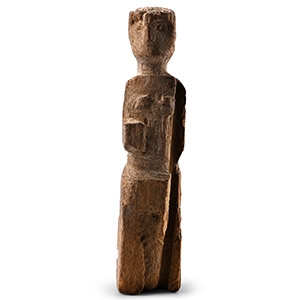
Coptic Wooden Standing Figure
Circa 4th-5th century A.D.Sold for (Inc. bp): £208
With drum-shaped head and incised eyes, slender neck, reserved breasts, right arm bent with hand extended, trim waist, full hips, seated on a rectangular throne(?); deep vertical slot to the left side. 214 grams, 25cm
Fair condition, usage wear.
From an important central London collection formed since the mid 1960s; thence by descent. From the private collection of John Meredith, acquired since the 1990s; thence by descent. -
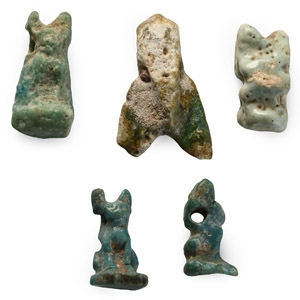
Egyptian Amulet Collection
Late Period, 664-332 B.C.Sold for (Inc. bp): £111
Comprising two crouching Bastet cat figures, a hare, a fly, and a simplified Anubis. 1.56 grams total, 10-15 mm
with Archaeologia, Switzerland, before 1983. Ex private North American collection. London private collection, 2016. -
.jpg)
Egyptian Hardstone Scarab
Late Period, 664-332 B.C.Estimate: £500 - 700 (+bp*)
Opening Bid: £250
With detailed clypeus and head, raised ridge separating the wing case, resting on an oval base with plain underside. 10.1 grams, 27 mm
From the property of a London, UK, gentleman, 1970-2000s.
The scarab, which represented the dung beetle, was the most popular amulet in ancient Egypt for approximately two thousand years until the Ptolemaic Period when it gradually fell out of favour. The popularity of scarabs extended beyond the borders of Egypt, and they were also distributed and produced in other regions, such as Phoenicia and Israel. The beetle is named khepri, derived from the verb 'to come into existence', and was considered the embodiment of the creator god Khepri, who was self-created. The ancient Egyptians mistakenly believed that the young beetle emerging from the dung ball was the result of an act of self-creation.
