
Loading, please wait...
LOT 0420
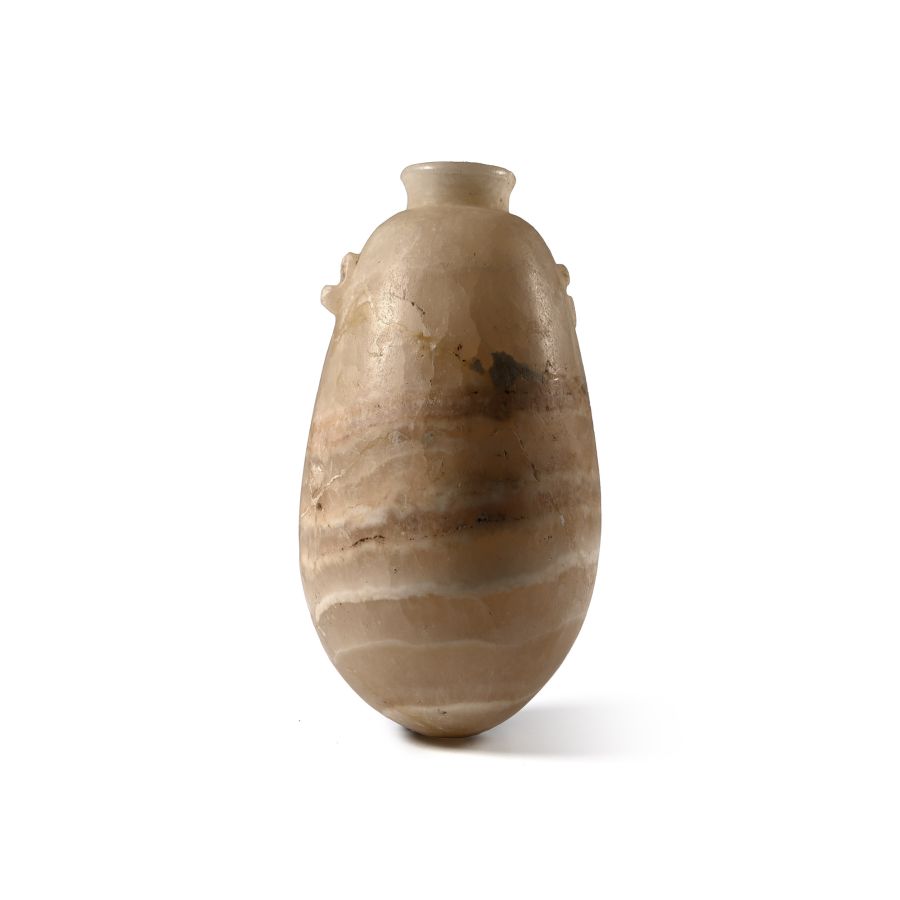
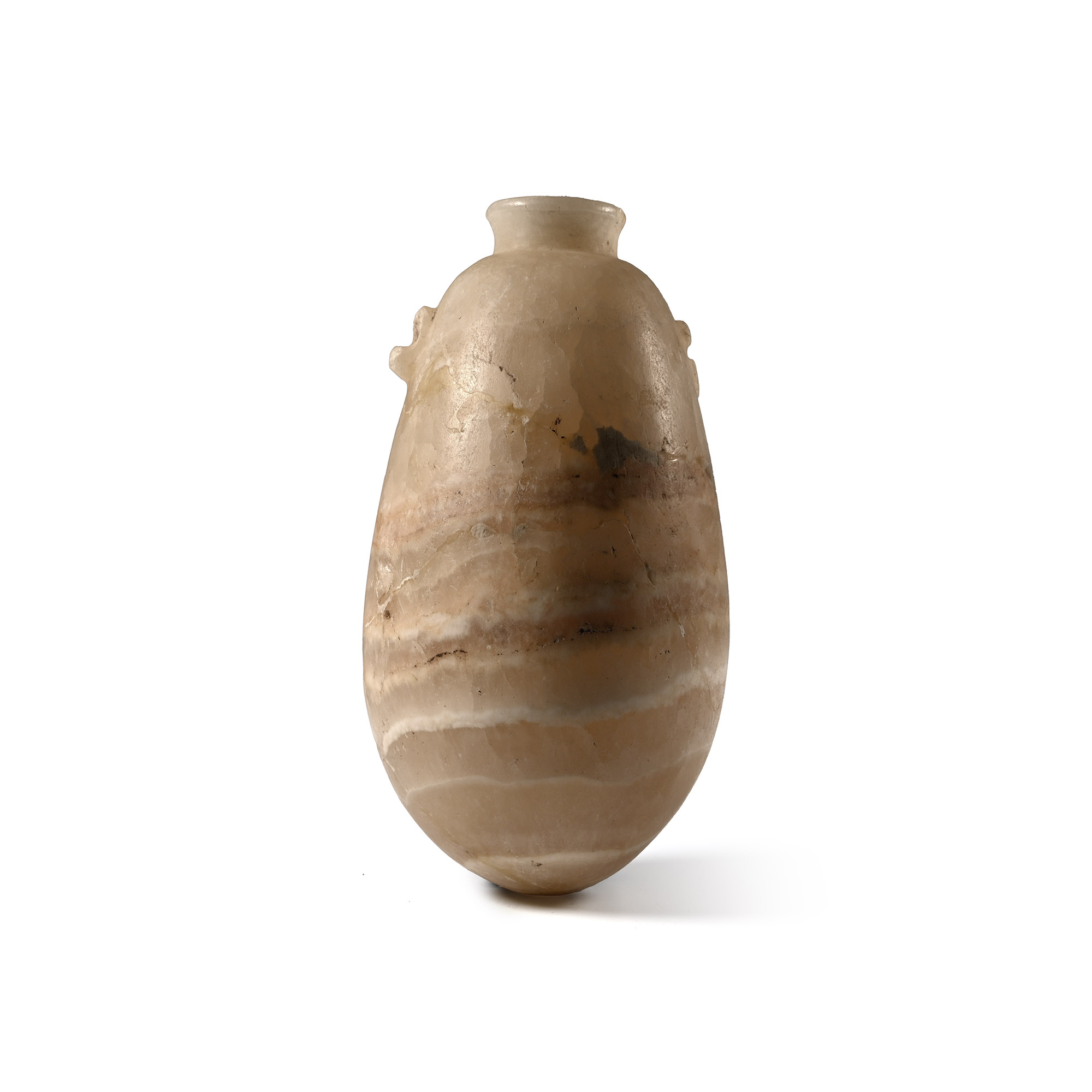
Egyptian Alabaster Alabastron
LATE PERIOD, 664-332 B.C.
5 1/2 in. (332 grams, 14 cm).
Ovoid jar with a rounded base, concave shoulders and flared neck; remains of lug handles, restored.
ProvenanceAcquired in the mid 1980s-1990s.
Private collection, Switzerland, thence by descent.
Private collection, since the late 1990s.
This lot is accompanied by an illustrated lot declaration signed by the Head of the Antiquities Department, Dr Raffaele D'Amato.
Cf. Aston, B.G., Ancient Egyptian Stone Vessels: Materials and Forms, SAGA 5, Heidelberg, 1994, p.89, fig.18, no.218, for a similar vessel.
CONDITIONTimeLine Auctions follows a vetting process to ensure the authenticity and legality of all items, reinforcing our commitment to integrity and responsible trading. Each antiquity, antique, and coin lot undergoes thorough examination by a vetting committee of at least ten external specialists, professional trade association members, scientists, and archaeologists: Our Vetting Process
AUCTIONS:
TimeLine is a leading auction house specialising in antiquities, ancient art, collectables, natural history, coins, medals, and books. Our auctions offer museums, collectors, historians, and enthusiasts the opportunity to acquire unique and historically significant pieces.
LOT 0420
Egyptian Alabaster Alabastron
Estimate £800 - 1,000€930 - 1,160 (for guidance only)$1,080 - 1,350 (for guidance only)
-
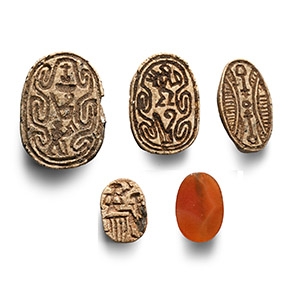
Egyptian Mixed Scarab Collection
Mostly Late Period, 664-332 B.C.Estimate: £500 - 700 (+bp*)
Opening Bid: £250
Comprising: three faience scarabs with detailed bodies and hieroglyphs on the underside; one carnelian scarab with plain base; one scaraboid with hieroglyphs to the underside. 22.75 grams total, 15-28 mm
From the collection of a gentleman, acquired on the London art market in the 1990s. This lot is accompanied by an illustrated lot declaration signed by the Head of the Antiquities Department, Dr Raffaele D'Amato. -
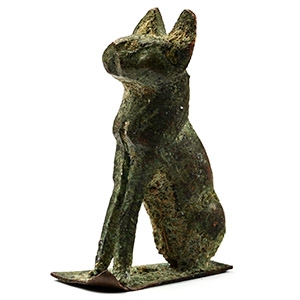
Egyptian Bronze Bastet Cat Amulet
Late Period, 664-332 B.C.Sold for (Inc. bp): £338
Modelled in the round as a seated cat on an oblong base, large pointed ears with a notch behind them. 14 grams, 30 mm
Private collection, 1970s. Private collection, 2017. This lot is accompanied by an illustrated lot declaration signed by the Head of the Antiquities Department, Dr Raffaele D'Amato.
In ancient times, the cat was revered as the sacred animal of the goddess Bastet, who was worshipped in Bubastis, located in the Nile Delta. She was a protective mother goddess and the daughter of the sun god Re. Amulets provided the wearer with the goddess's protection. -
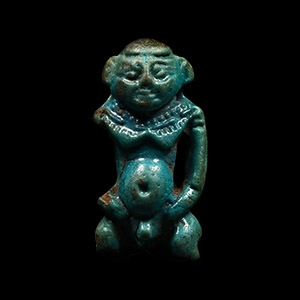
Egyptian Blue Glazed Faience Figure of Pataikos
Saite Period, 26th Dynasty, 664-545 B.C.Sold for (Inc. bp): £468
Wearing a broad collar and a stylised scarab on top of the head, elongated arms resting on the lower part of his protruding abdomen. 10.8 grams, 43 mm
Acquired in the mid 1980s-1990s. Private collection, Switzerland, thence by descent. Private collection, since the late 1990s. This lot is accompanied by an illustrated lot declaration signed by the Head of the Antiquities Department, Dr Raffaele D'Amato.
Herodotus mentions Pataikos as a dwarf-like representation of Ptah, although the ancient Egyptian name of the god remains unclear. These diminutive amulets symbolise Ptah’s immense magical power, which served to protect the wearer from dangerous creatures such as snakes and crocodiles. The role of the deity in the funerary sphere is explained in Spell 164 of the Book of the Dead, where a Pataikos is used to protect the deceased's heart from enemy attacks and the putrefaction of the body.
