
Loading, please wait...
LOT 0466
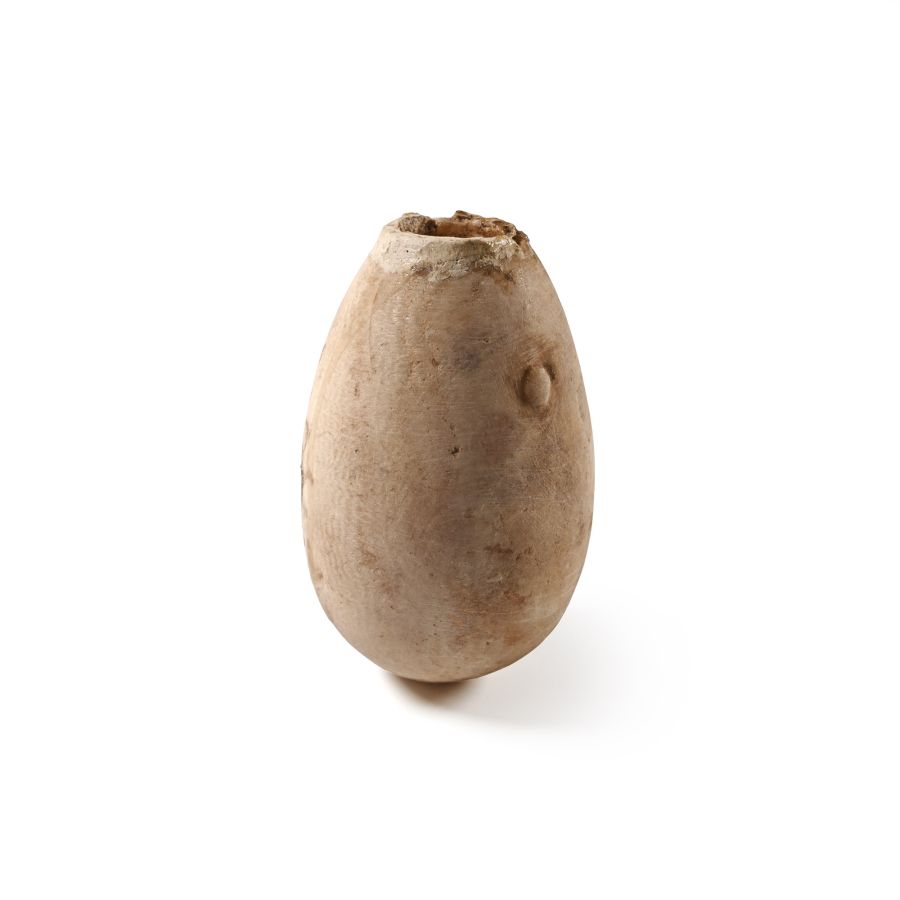
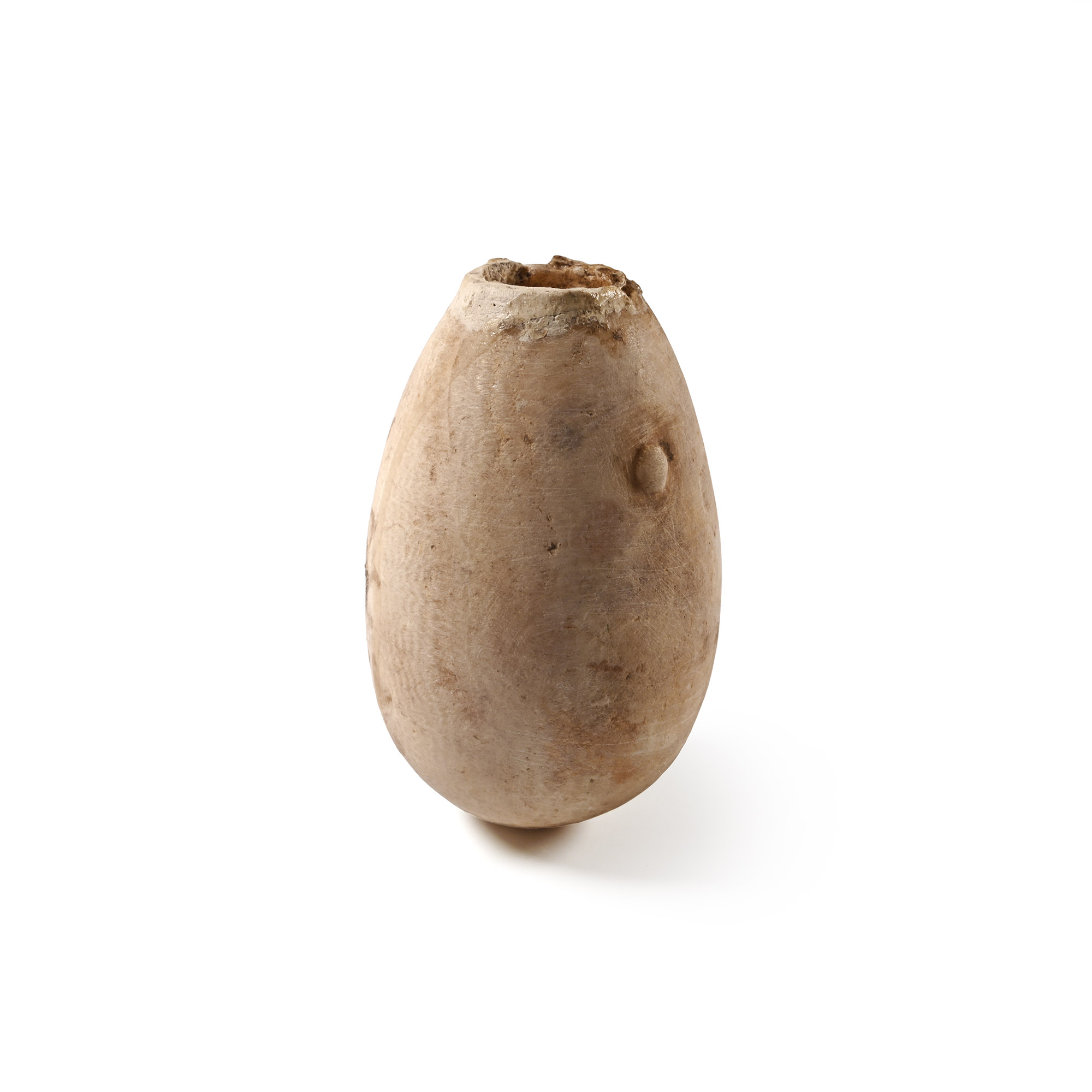
Egyptian Alabaster Alabastron
7TH-6TH CENTURY B.C.
2 7/8 in. (121 grams, 72 mm).
With an ovoid body and two small lug handles to the upper body.
ProvenanceAcquired in the mid 1980s-1990s.
Private collection, Switzerland, thence by descent.
Private collection, since the late 1990s.
This lot is accompanied by an illustrated lot declaration signed by the Head of the Antiquities Department, Dr Raffaele D'Amato.
Cf. Aston, B.G., Ancient Egyptian Stone Vessels, Heidelberg, 1994, nos.218-219, pp.162-163.
FootnotesThe name by which we know the vessel in question comes directly from its name in Greek— alábastron —which itself was derived from Egyptian, although It is difficult to say whether the name in Egyptian first applied to the type of vessel or to the stone used to make it. Pliny (NH 36.12, 37.54) includes an alabastrites or alabastritis from Alabastrum near Thebes in Egypt among his description of stones, and Theophrastus (On Stones, 1.6) an alabastrítes, also from near Thebes. Ptolemy (Geography, 4.5) even mentions an alabastrites mons, a mountain of alabaster, in the same vicinity. The prototype of the alabastron shape with two lug handles first appeared in Egypt at the end of the Middle Kingdom and continued in use with slight variations through New Kingdom times. After an apparent hiatus in the use of the shape at the end of the Late Bronze Age, it appeared again in the second half of the eighth century in a form more similar to our specimen and became common by the 26th Dynasty.
CONDITIONTimeLine Auctions follows a vetting process to ensure the authenticity and legality of all items, reinforcing our commitment to integrity and responsible trading. Each antiquity, antique, and coin lot undergoes thorough examination by a vetting committee of at least ten external specialists, professional trade association members, scientists, and archaeologists: Our Vetting Process
AUCTIONS:
TimeLine is a leading auction house specialising in antiquities, ancient art, collectables, natural history, coins, medals, and books. Our auctions offer museums, collectors, historians, and enthusiasts the opportunity to acquire unique and historically significant pieces.
-
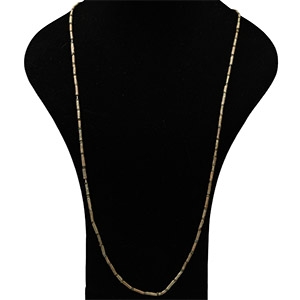
Egyptian Faience Bead Necklace String
Late Period, 664-332 B.C.Sold for (Inc. bp): £33
Composed of light blue tubular beads interspersed with darker coloured annular beads; restrung. 8.7 grams total, 101 cm long
Acquired on the UK art market, circa 1980. Property of an East London, UK, collector. This lot is accompanied by an illustrated lot declaration signed by the Head of the Antiquities Department, Dr Raffaele D'Amato. -
.jpg)
Egyptian Steatite Harpocrates Statuette
Late Period, 664-332 B.C.Estimate: £1,500 - 2,000 (+bp*)
Opening Bid: £750
Carved in the round, the nude standing figure of the god sporting a solar disc and uraeus headdress, wearing a sidelock, and holding a lotus flower, accompanied by an integral dorsal pillar and base; one arm missing. 15.26 grams, 78 mm
Ex Thomas collection, UK, 1980s-1990s. This lot has been cleared against the Art Loss Register database, and is accompanied by an illustrated lot declaration signed by the Head of the Antiquities Department, Dr Raffaele D'Amato.
Harpocrates is the Greek rendering of the Egyptian Hor-pa-khered, which translates as ‘Horus the Child’. This designation refers to Horus as the divine infant of Isis and Osiris. His nudity represents youth and purity. The sun disc and lotus flower symbolises divine rebirth and solar renewal. The sun disc connects him to Ra and the daily cycle of rebirth, while the lotus—opening with the sunrise—emphasises creation and emergence from chaos. Together, these elements express triumph over death and the promise of eternal life. -
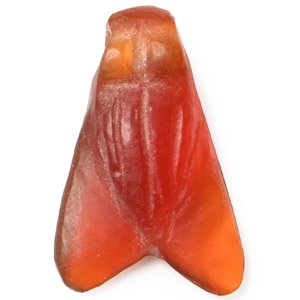
Egyptian Carnelian Fly Amulet
Late Period, 664-332 B.C.Sold for (Inc. bp): £195
Carved with simple body and eye detailing and polished; drilled through the eyes for suspension. 0.32 grams, 12 mm
Ex North London, UK, gallery, early 2000s. This lot is accompanied by an illustrated lot declaration signed by the Head of the Antiquities Department, Dr Raffaele D'Amato.
Egyptian artists often depicted fly whisks with pharaohs and officials, suggesting flies were just nuisances. In reality, Egyptians valued flies for their speed and persistence. Small fly amulets appeared around 3200 B.C. in Naqada II burials, gaining popularity and varying materials during the New Kingdom, including gold, silver, lapis lazuli, carnelian, amethyst, faience, and gemstones. These amulets were thought to protect against insect bites and troublesome creatures via apotropaic magic and possibly symbolised fecundity. Pharaohs awarded gold fly-shaped pendants to honour soldiers' bravery in battle.
