
Loading, please wait...
LOT 0474
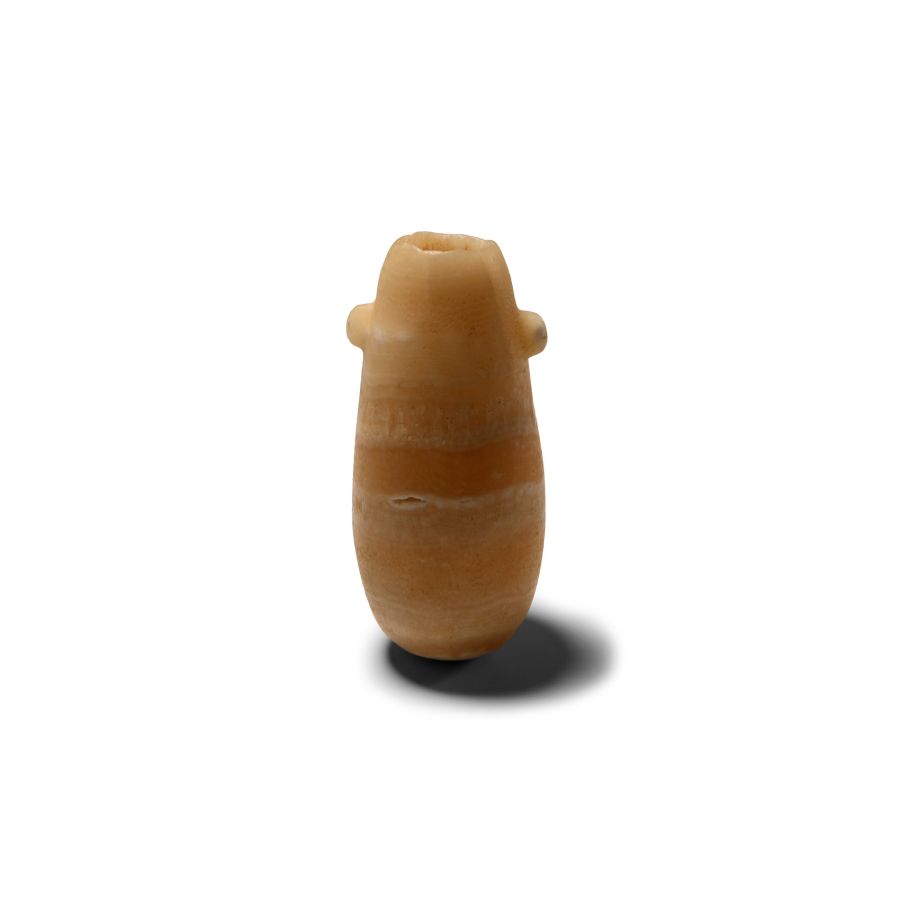
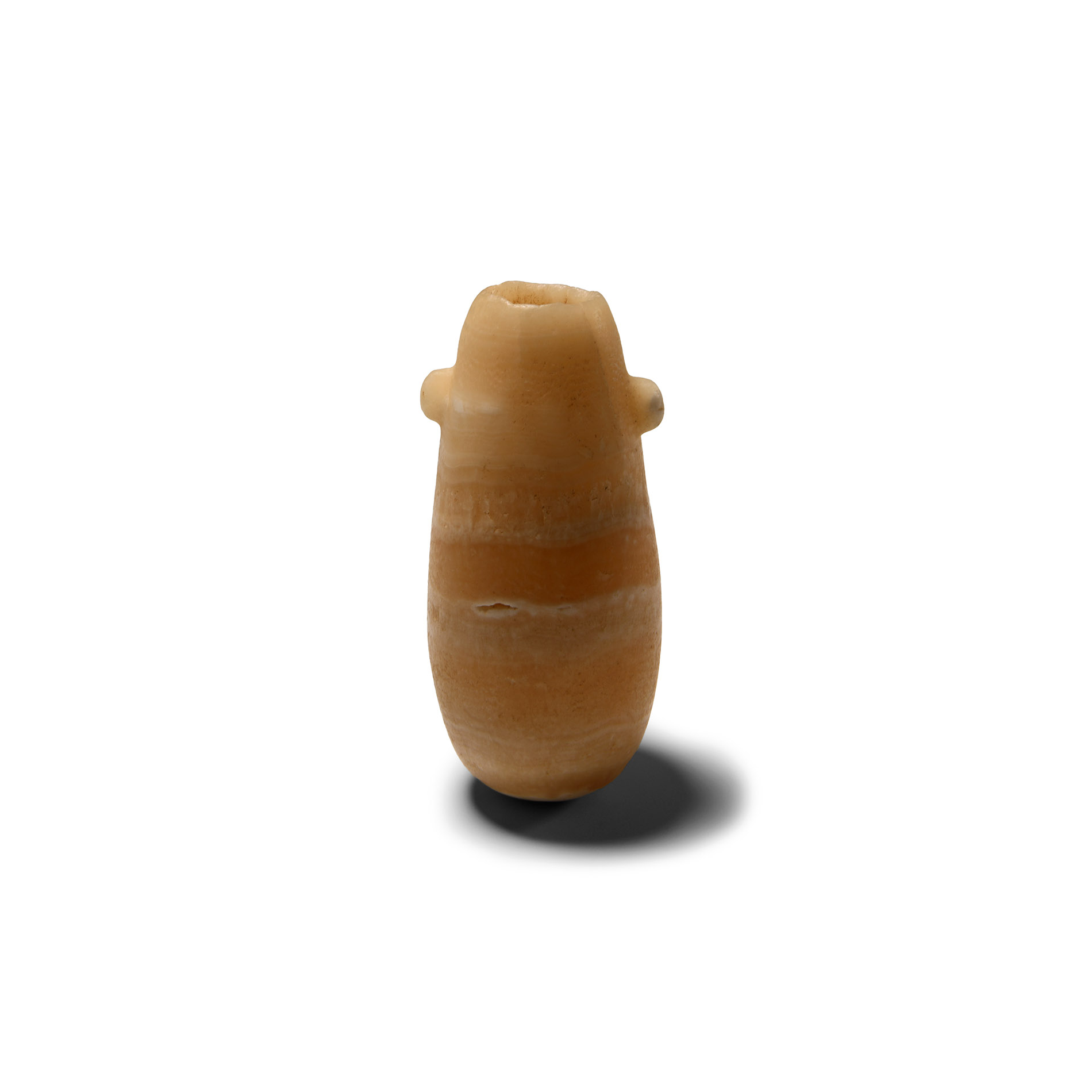
Egyptian Alabaster Alabastron
LATE PERIOD, 664-332 B.C.
3 7/8 in. (139 grams, 97 mm high).
The piriform vessel with rounded base, two integral lug handles to the neck; fractured above the neck.
ProvenanceAcquired in Europe before 1992.
LiteratureCf. The British Museum, accession/miscellaneous number E.1.1888, for similar; Aston, B.G., Ancient Egyptian Stone Vessels: Materials and Forms, Heidelberg, 1994, pp.162-163 (Third Intermediate Period), p.166 (Late Period), for the type.
CONDITIONTimeLine Auctions follows a vetting process to ensure the authenticity and legality of all items, reinforcing our commitment to integrity and responsible trading. Each antiquity, antique, and coin lot undergoes thorough examination by a vetting committee of at least ten external specialists, professional trade association members, scientists, and archaeologists: Our Vetting Process
AUCTIONS:
TimeLine is a leading auction house specialising in antiquities, ancient art, collectables, natural history, coins, medals, and books. Our auctions offer museums, collectors, historians, and enthusiasts the opportunity to acquire unique and historically significant pieces.
-
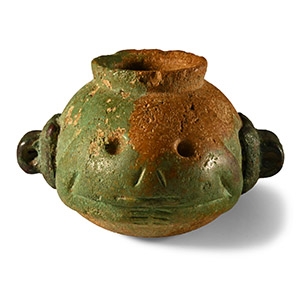
Egyptian Indurated Limestone Frog-Shaped Cosmetic Vessel
Predynastic Period, Late Naqada I-Naqada II, circa 3700-3300 B.C.Sold for (Inc. bp): £9,750
Squat ovoid in profile, modelled with the legs folded beneath the body, with hollow socket eyes, flared rim to mouth; copper lug on either side. 165 grams, 63 mm
Ex collection of Madame Kismet Pilati, acquired in Vienna and London in 1976. with Bonhams, London, 24th October 2012, no.284 (£30,000-£50,000). Property of a London lady, part of her family's Swiss collection. Accompanied by an academic report by Egyptologist Paul Whelan. Accompanied by copies of the relevant Bonhams catalogue pages. This lot has been checked against the Interpol Database of stolen works of art and is accompanied by search certificate no.12101-213115. -
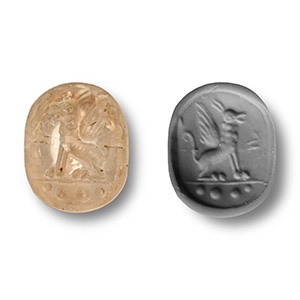
Egypto-Phoenician Rock Crystal Scaraboid with Winged Sphinx
Circa 900-700 B.C.Sold for (Inc. bp): £182
With detailed carapace and mouth parts, underside with intaglio winged sphinx sitting on a baseline with pellets beneath; supplied with a museum-quality impression. 2.85 grams, 16 mm
Ex London, UK, gallery, 1971. -
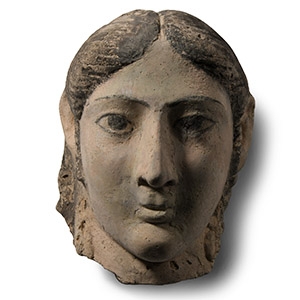
Egyptian Painted Plaster Mummy Mask of a Lady
Roman Period, 30 B.C.-323 A.D.Sold for (Inc. bp): £1,820
Hollow-formed with finely modelled facial details, dark hair parted in the middle and drawn back to each side with a ringlet before each ear; narrow brow with painted eyebrows, lentoid eyes with dark irises; narrow nose and small pursed lips; impressions of bandaging on the rear where attached to mummy. 777 grams, 20 cm high
From a London, UK, collection. Formerly with a central London auction house.
