
Loading, please wait...

LOT 0006
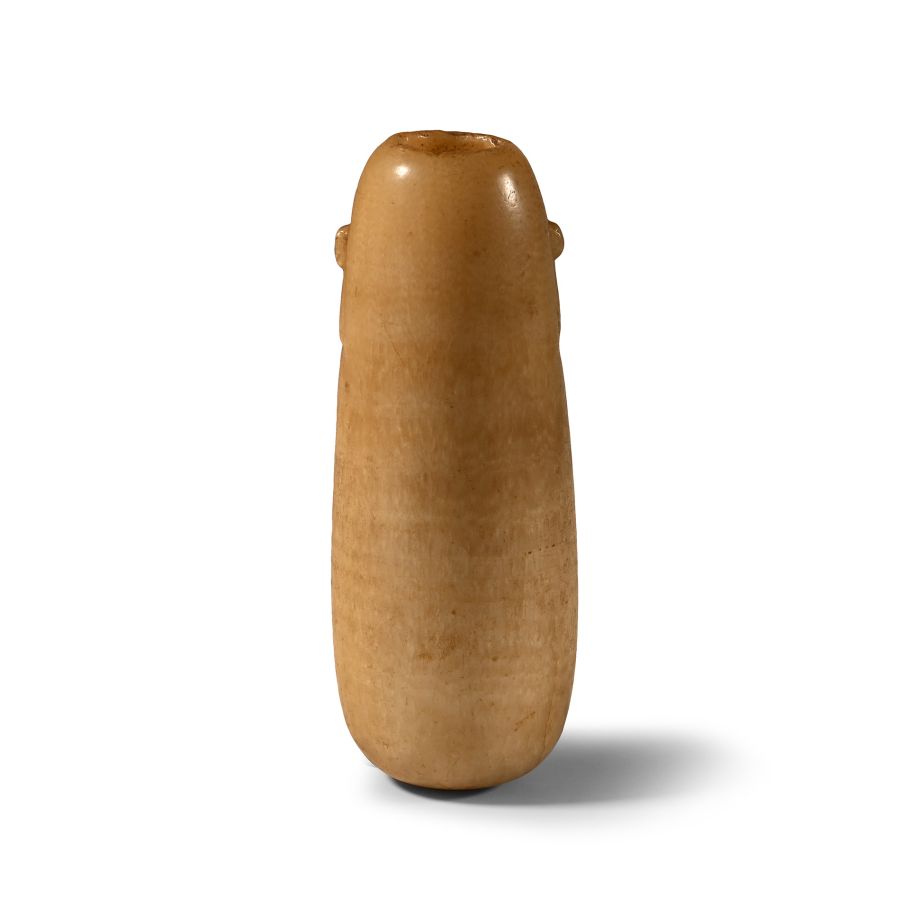
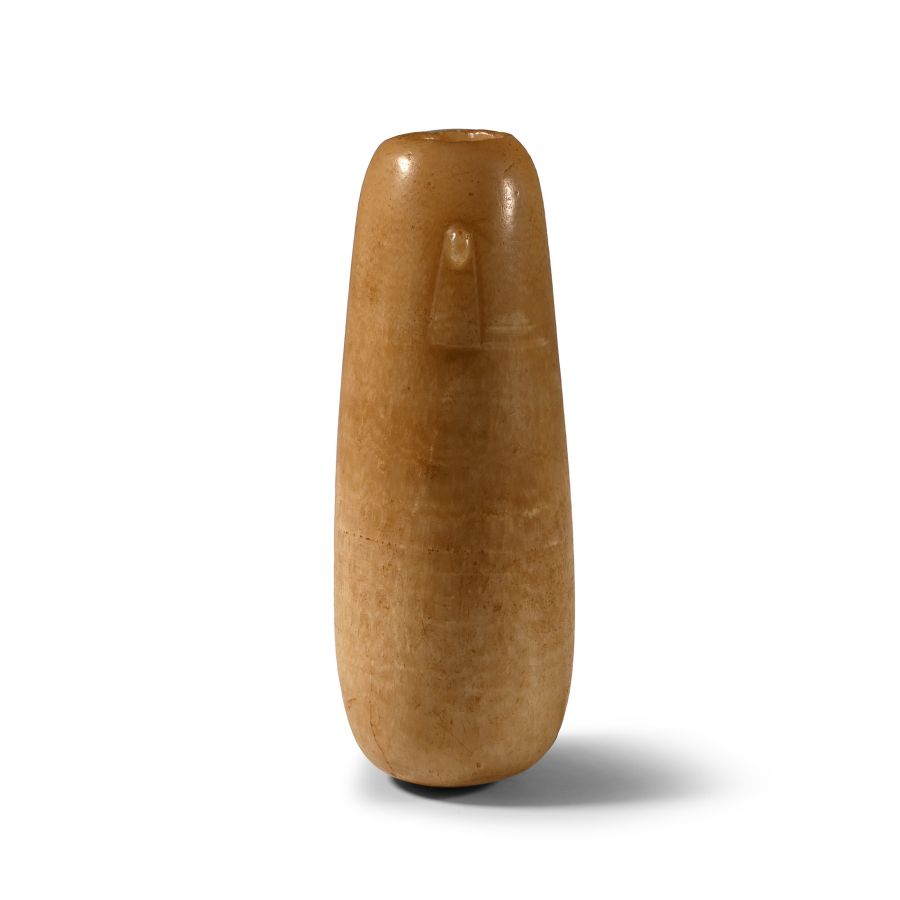
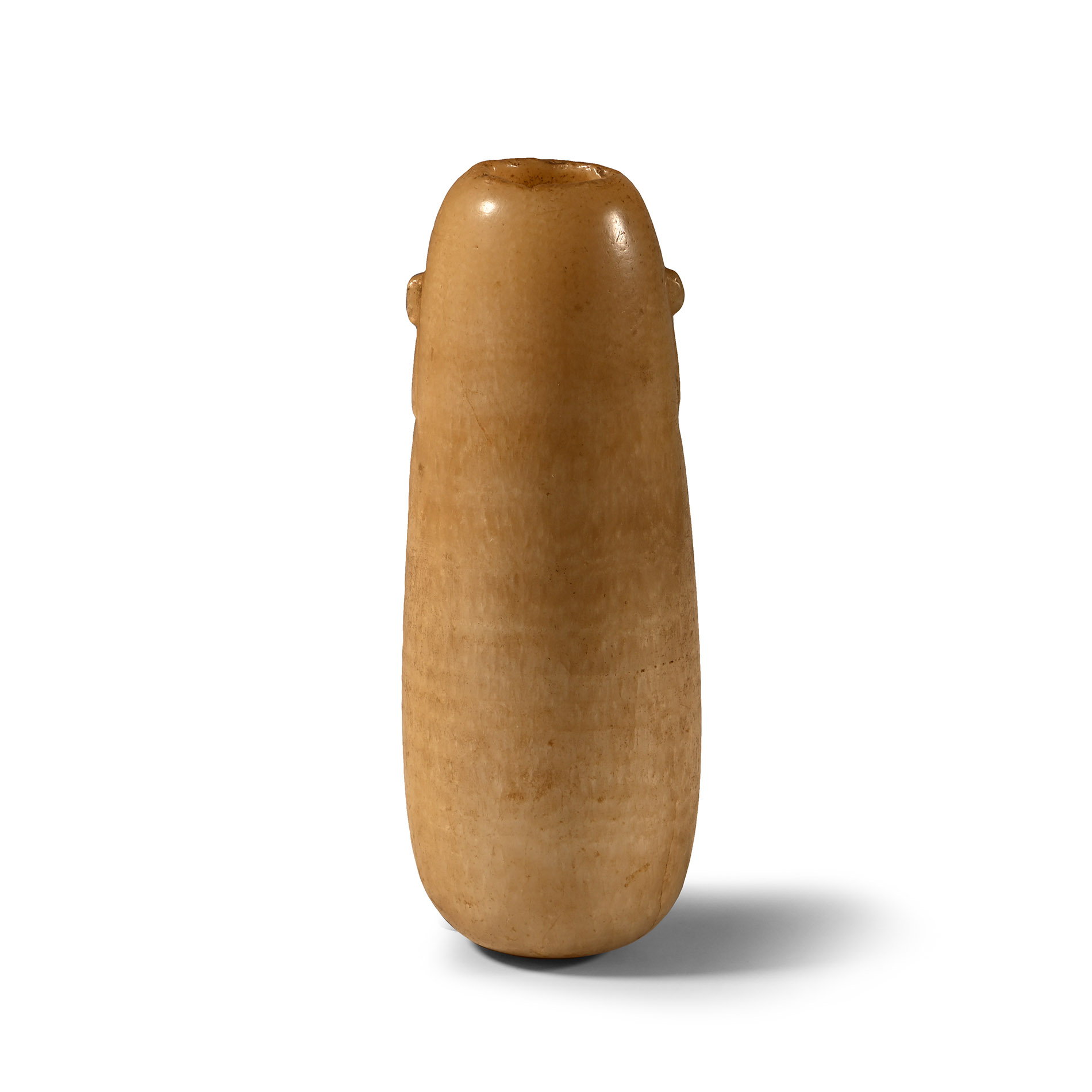
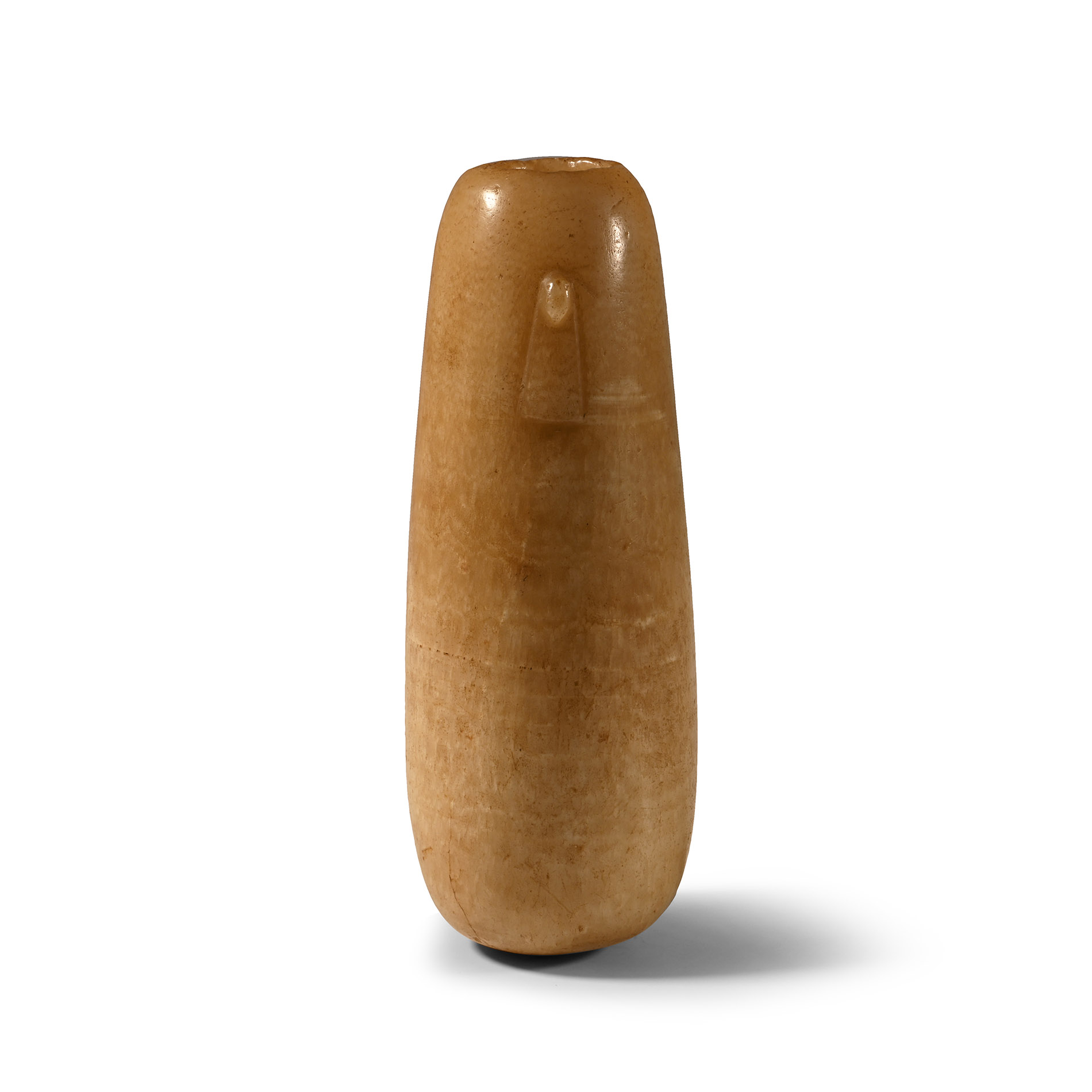
Egyptian Alabaster Alabastron with Vestigial Lug Handles
LATE PERIOD, CIRCA 664-332 B.C.
6 1/8 in. (440 grams, 15.5 cm high).
The elongated oval body on a flat base, with gently curving shoulder and two elegant duck-head shaped vestigial handles.
ProvenanceMary Stout Shaw (1880-1962); thence by direct descent to the present owner.
Accompanied by a copy of a 1976 family photo featuring some of the collection on display.
See Aston, B.G., Ancient Egyptian Stone Vessels: Materials and Forms, Heidelberg, 1994, pp.162-163 (Third Intermediate Period), p.166 (Late Period), for the type; for a museum comparable, cf. Liverpool Museum, acc. no. 1973.1.225.
FootnotesMary Kilgour Stone was born in 1880 in Cincinnati, Ohio. On 25 November 1903, she married Percy Wyfold Stout from Gloucester (DSO, OBE, 1875-1937), who had moved to Cairo after an international rugby career.
After fighting in the First World War, Percy became the Director of the Egyptian Delta Land Company and the Anglo-American Nile Tourist Company. He and Mary were friends with the famous Major Gayer-Anderson, who worked as a doctor on the company’s cruise boats between 1930 and 1939. Gayer-Anderson tells in his memoir how this allowed him to make frequent trips to Upper Egypt and fulfil his passion for collecting (and dealing in) ancient Egyptian art.
In his company, Mary became an enthusiast about all things Egypt and formed an elegant collection of ancient Egyptian alabaster vessels,
including the following lots. She was particularly fascinated with the ancient cat goddess Bastet. Therefore, when Gayer-Anderson decided
to give his famous ancient bronze cat to the British Museum in 1939, he made sure the donation was in both his name and Mary Stout Shaw’s, as a tribute to their friendship.
TimeLine Auctions follows a vetting process to ensure the authenticity and legality of all items, reinforcing our commitment to integrity and responsible trading. Each antiquity, antique, and coin lot undergoes thorough examination by a vetting committee of at least ten external specialists, professional trade association members, scientists, and archaeologists: Our Vetting Process
AUCTIONS:
TimeLine is a leading auction house specialising in antiquities, ancient art, collectables, natural history, coins, medals, and books. Our auctions offer museums, collectors, historians, and enthusiasts the opportunity to acquire unique and historically significant pieces.
LOT 0006
Egyptian Alabaster Alabastron with Vestigial Lug Handles
Estimate £1,500 - 2,000€1,740 - 2,320 (for guidance only)$2,030 - 2,700 (for guidance only)
-
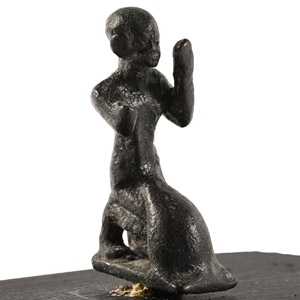
Egyptian Bronze Statue of a Kneeling Priest
Late Period, 664-332 B.C.Estimate: £300 - 400 (+bp*)
Opening Bid: £150
Kneeling on a rectangular platform with a wide apron covering his thighs, clean-shaven head and hands raised in adoration; tang on the underside for attachment; mounted on a display stand. 41 grams total, statue: 30 mm high
From an early 20th century Home Counties, UK, collection.
Priest figurines like this were commonly placed before a larger deity figurine, both attached to a base, e.g., Schulz, R., Seidel, M., Egyptian Art. The Walters Art Museum, London, 2009, for a kneeling priest before a standing figure of Anubis. -
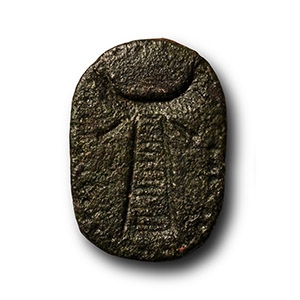
Phoenicio-Egyptian Dark Green Stone Scarab
Circa 6th-4th century B.C.Estimate: £300 - 400 (+bp*)
Opening Bid: £150
With textured carapace, bull-horned column to the reverse. 3.94 grams, 15 mm
From the property of the late Mr SM, London, UK, 1969-1999.
The very frequent discovery of scarabs in Eastern and Western Phoenician and Punic tombs is the most notable and evident document of the prestige that Egyptian magic had in the Phoenician world. The generalized adoption of the scarab, both in its symbolic language linked to the regenerative form of earthly or otherworldly life and in its function as a seal, identifies the extent of Egyptian influence on the Phoenician culture since its Syro-Palestinian origins. -
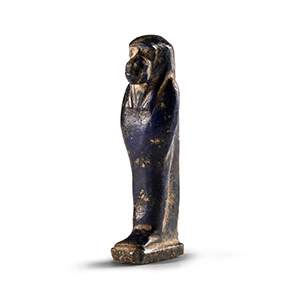
Egyptian Lapis Lazuli Son of Horus Amulet
Late Period, 664-332 B.C.Sold for (Inc. bp): £715
Carved amulet of the baboon-headed mummiform figure of Hapy shown standing with dorsal pillar, pierced for suspension. 2.52 grams, 28 mm
Private collection of Mr S.A., Switzerland, 1990s, thence by descent.
The Four Sons of Horus were deities responsible for protecting the internal organs of the deceased. The baboon-headed Hapy protected the lungs.
