
Loading, please wait...
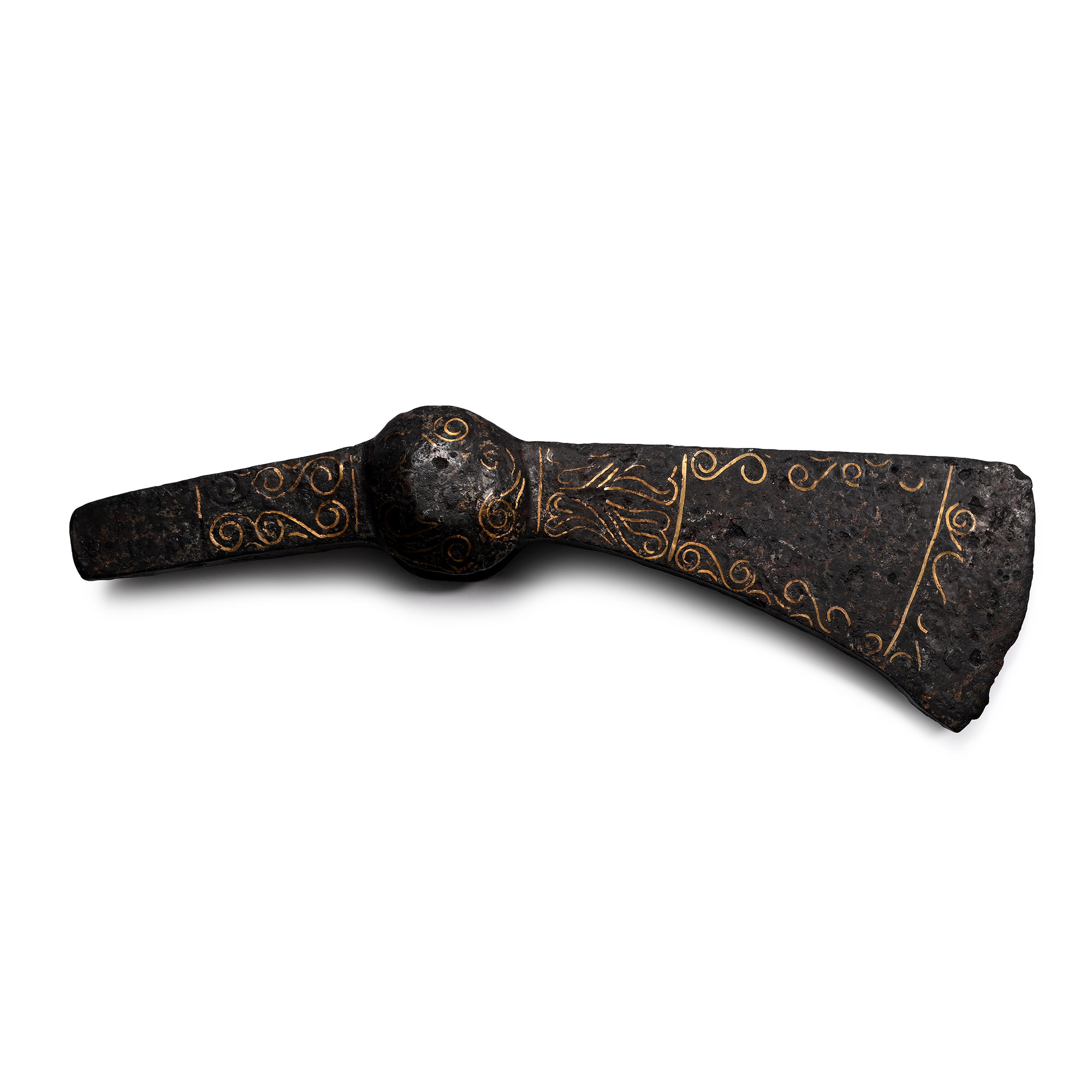
LOT 0336
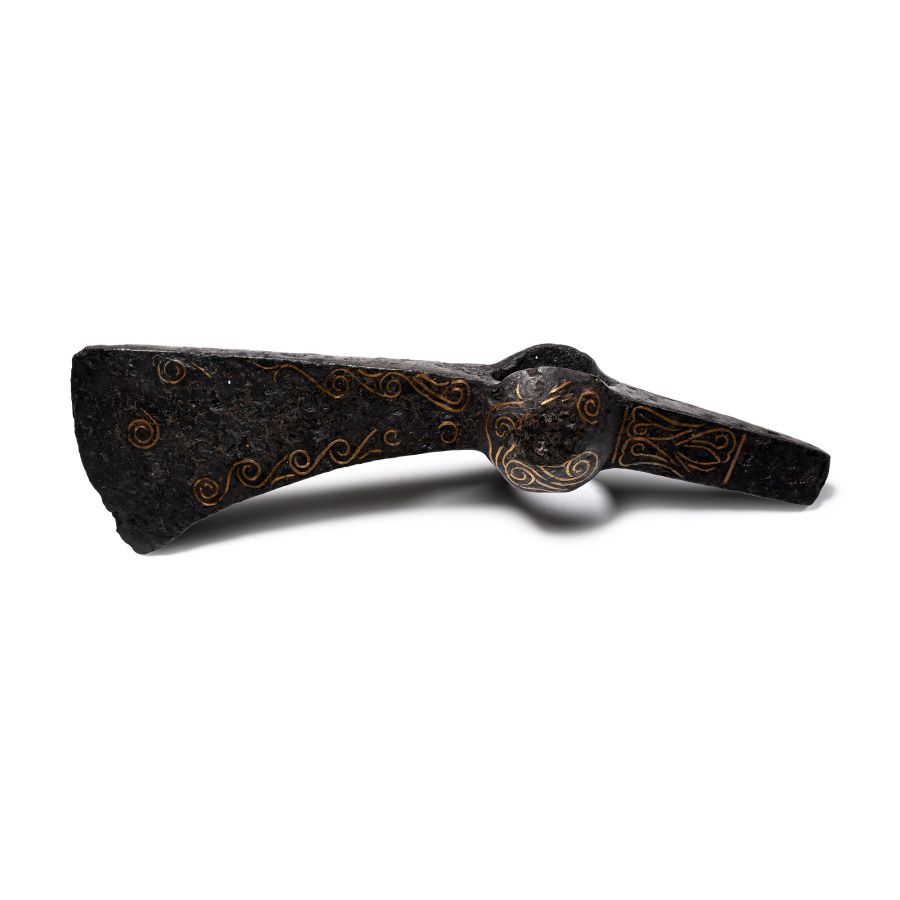
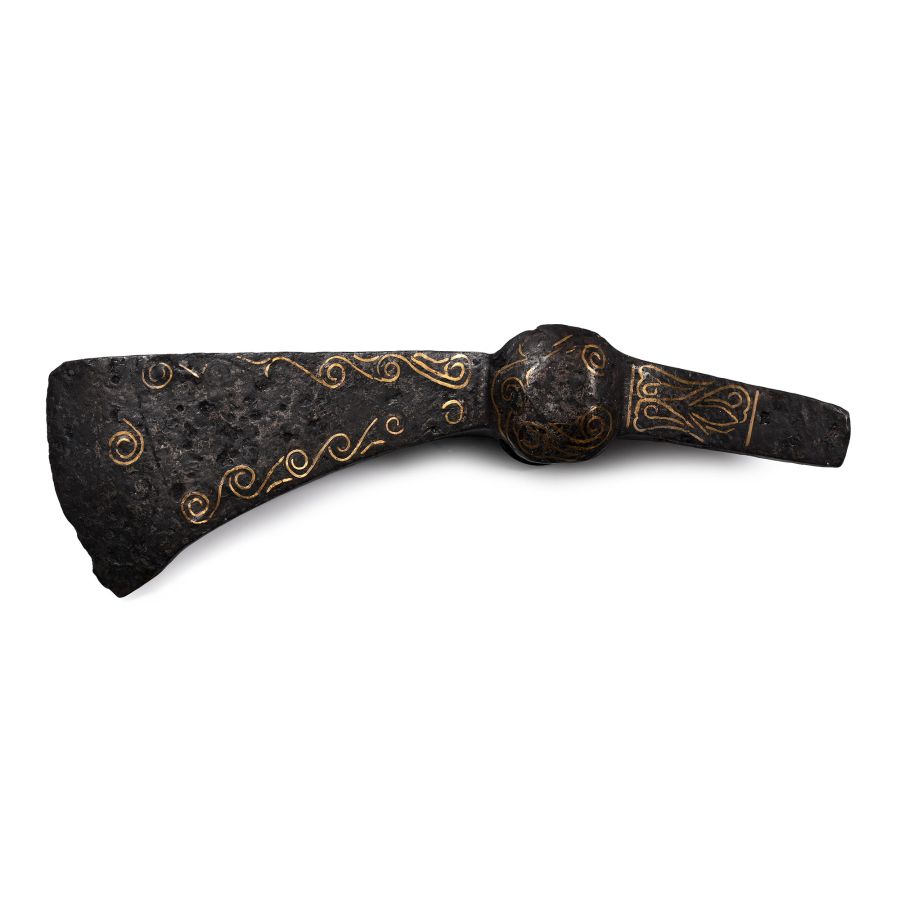
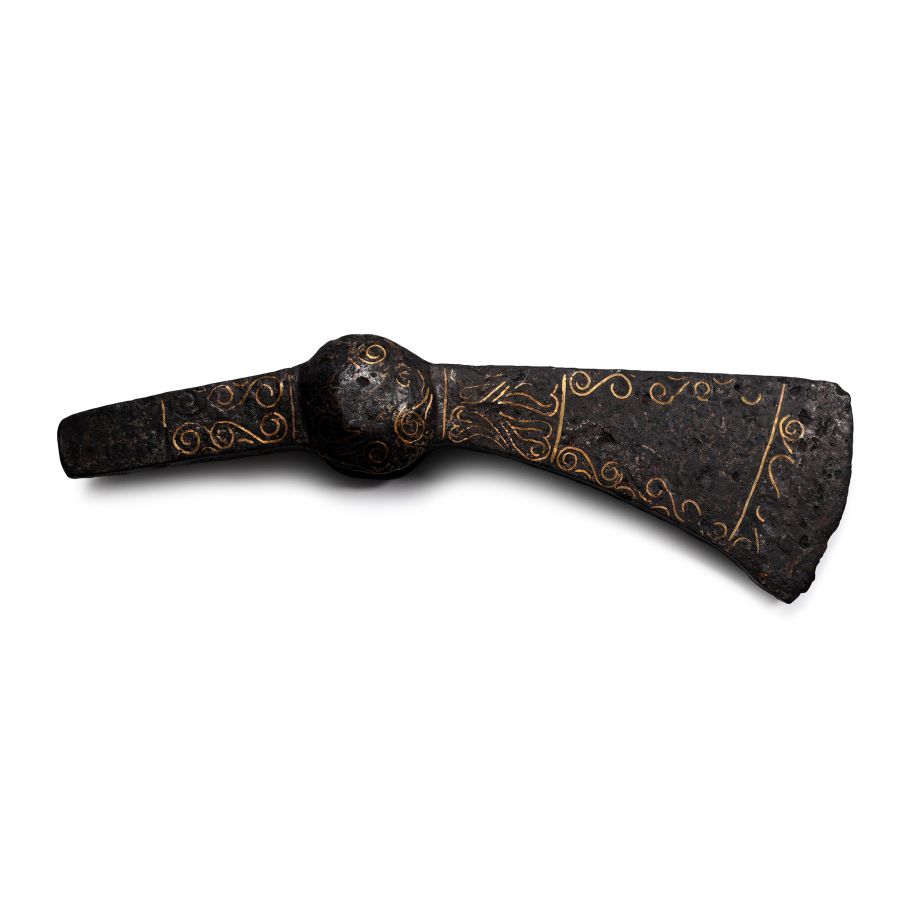
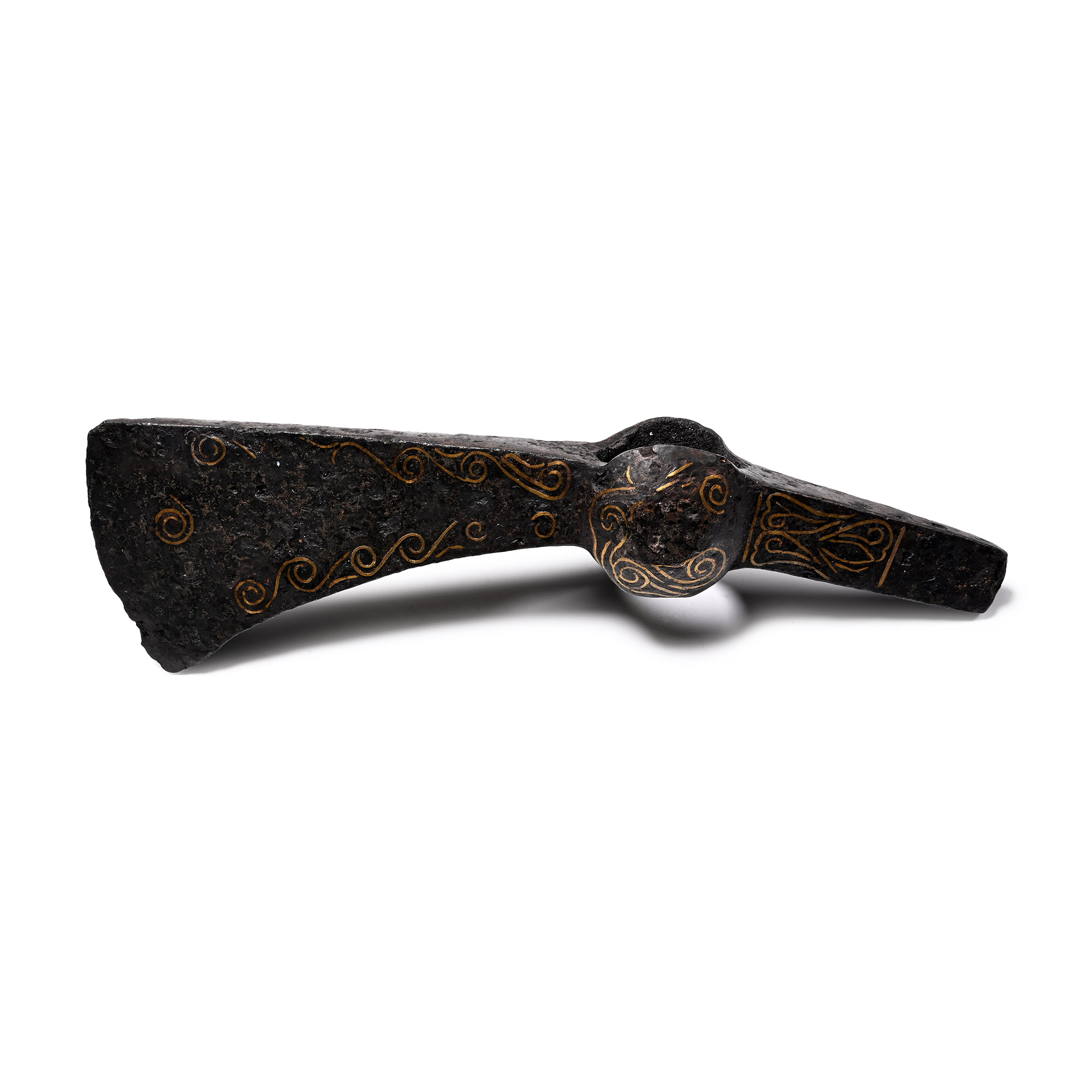
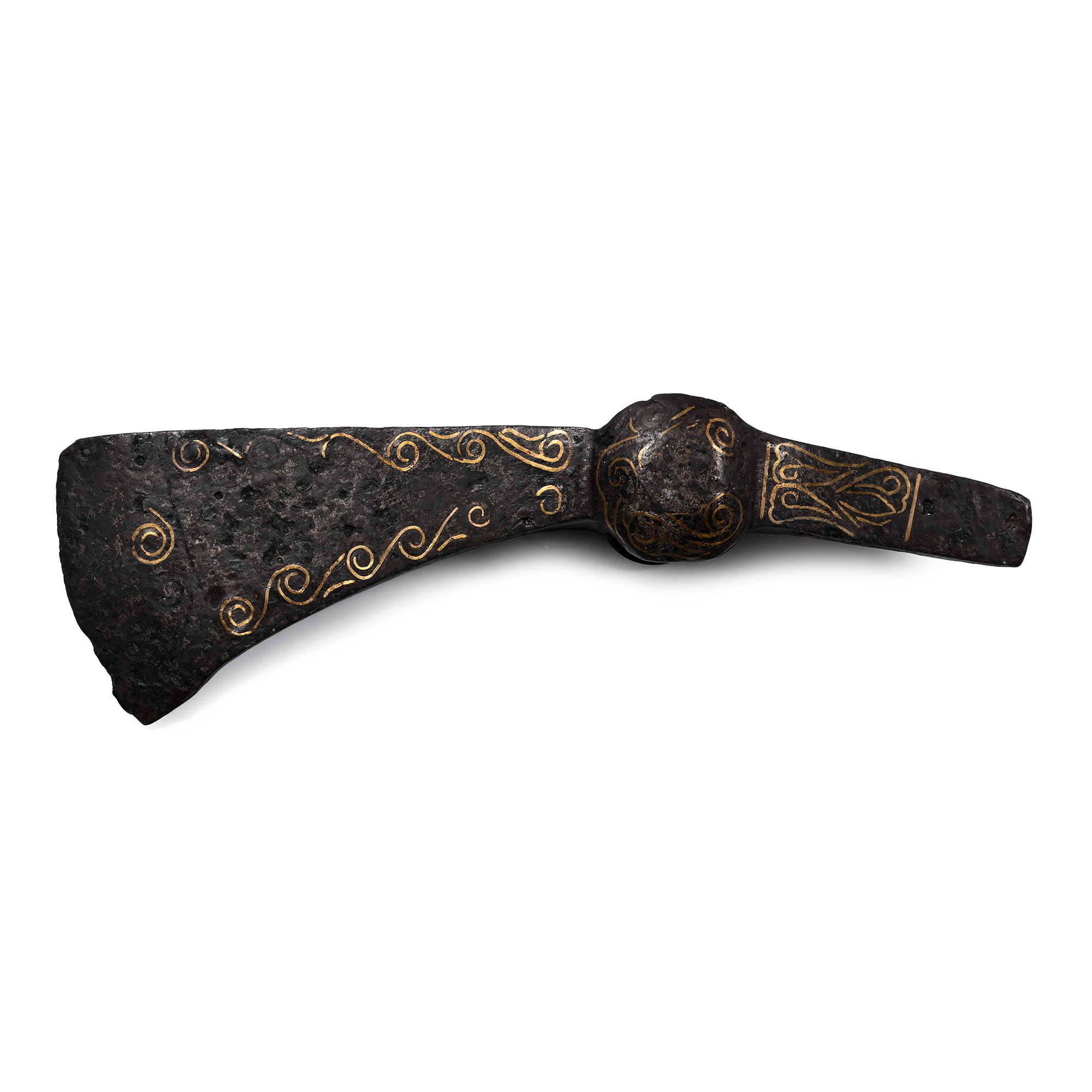
Eastern Viking Period Laten Inlaid Iron Axehead
9TH CENTURY A.D.
7 in. (275 grams, 17.7 cm).
With narrow straight blade, shank to the rear with square hammer-face, inlaid geometric and vegetal ornaments. [No Reserve]
ProvenancePrivate collection formed in Europe in the 1980s.
Westminster collection, central London, UK.
This lot has been cleared against the Art Loss Register database, and is accompanied by an illustrated lot declaration signed by the Head of the Antiquities Department, Dr Raffaele D'Amato.
Cf. Hjardar, K. & Vike, V., Vikings at war, Oxford-Philadelphia, 2016, p.163, lett. Y, for typology.
FootnotesBattle-axes came into use in Scandinavia, especially in the Eastern parts of Sweden, Gotland and Denmark. Among the types, there were narrow-bladed types described to be very light in the sources. They could weigh as little as 200-250 grams, making them suitable for single-handed use. Some of them were decorated according to the Slavic taste.
CONDITIONTimeLine Auctions follows a vetting process to ensure the authenticity and legality of all items, reinforcing our commitment to integrity and responsible trading. Each antiquity, antique, and coin lot undergoes thorough examination by a vetting committee of at least ten external specialists, professional trade association members, scientists, and archaeologists: Our Vetting Process
AUCTIONS:
TimeLine is a leading auction house specialising in antiquities, ancient art, collectables, natural history, coins, medals, and books. Our auctions offer museums, collectors, historians, and enthusiasts the opportunity to acquire unique and historically significant pieces.
-
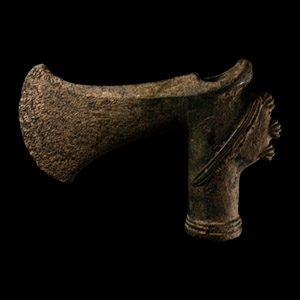
Luristan Socketted Bronze Axe Head
12th-8th century B.C.Estimate: £500 - 700 (‡+bp*)
Opening Bid: £225
Comprising a wide curving blade and long neck with a band of herringbone decoration at the base, tubular neck with claw-like extension to the rear and a decorative diagonal band to both sides. 308 grams, 10.6 cm
Acquired on the Swiss art market, 1997. Private collection, Europe. This lot is accompanied by an illustrated lot declaration signed by the Head of the Antiquities Department, Dr Raffaele D'Amato. -
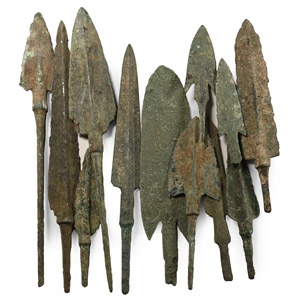
Luristan Bronze Arrowhead Collection
14th-10th century B.C.Sold for (Inc. bp): £182
A group of large tanged arrowheads, mainly of triangular type with some barbed examples. 288 grams total, 6.4-16.9 cm
Ex London art market, 1980-1990s. This lot is accompanied by an illustrated lot declaration signed by the Head of the Antiquities Department, Dr Raffaele D'Amato.
Although some of them are different in shape, these arrowheads are apparently related types of a polythetic group. Two basic deltoid forms are represented: one has a sharp, flat blade, the ends of which extend to form wings or barbs, and a prominent midrib extending into a long tang that often has a stop; the blade shape varies from deltoid to more triangular. The other form has no barbs, but it has a prominent midrib extending to the tang, and a narrow leaf-shaped blade. -
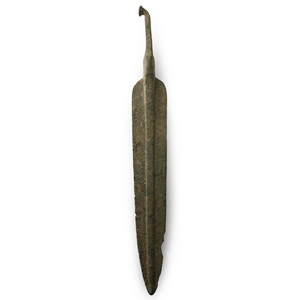
Massive Amlash Bronze Spearhead Blade
13th-12th century B.C.Sold for (Inc. bp): £124
With large ovate blade, broad midrib, rounded shoulders and rectangular-section tang with bent tip ending with a button. 370 grams, 42.5 cm
Acquired 1980-2015. Ex Abelita family collection. This lot is accompanied by an illustrated lot declaration signed by the Head of the Antiquities Department, Dr Raffaele D’Amato. This lot is accompanied by an illustrated lot declaration signed by the Head of the Antiquities Department, Dr Raffaele D'Amato.
The massive spearhead belongs to type 1 of the Khorasani classification. Similar excavated examples from Marlik attest the use of such spearheads with bent tang in the area, and Stutzinger dated such weapons to 1200-1100 B.C. The type was the evolution of a typology which began much earlier in Mesopotamia and the fertile crescent, the type 4 of the Stronach classification, with straight square-section tang, usually thickened at the base with a button tang.
