
Loading, please wait...
LOT 1402
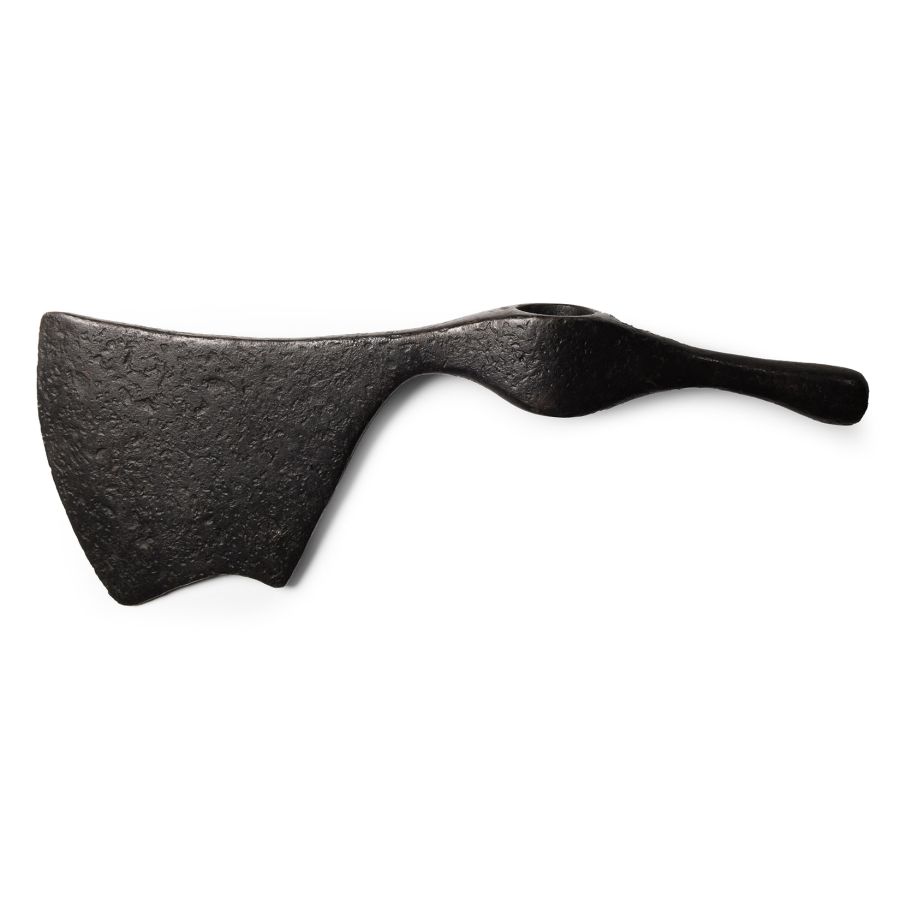
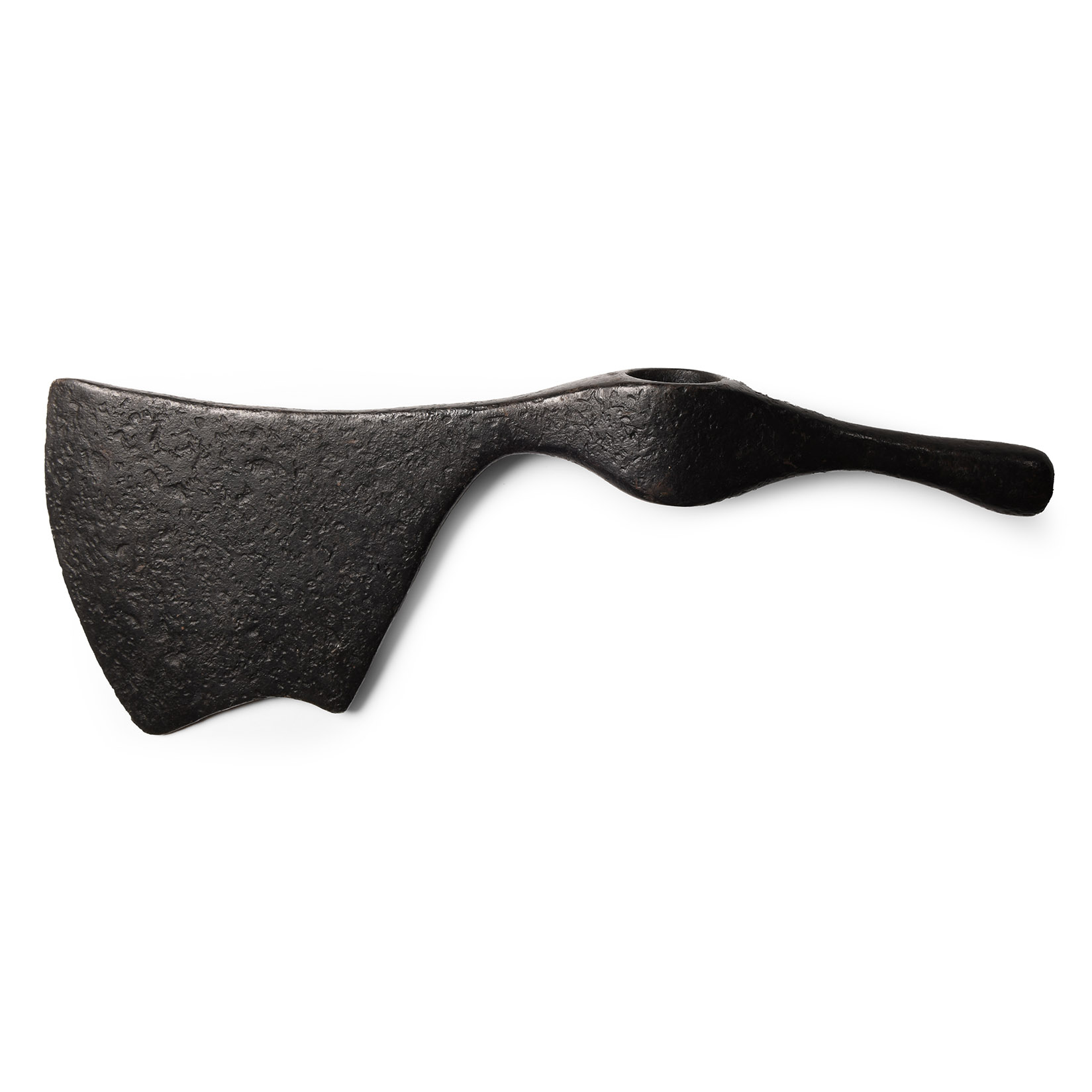
Eastern Viking Period Iron Bearded Axe-Hammer
CIRCA 11TH-12TH CENTURY A.D.
9 in. (427 grams, 23 cm).
With a narrow straight bearded blade enlarged in the lower side, rounded hammer-section shank to the rear. [No Reserve]
ProvenanceEx private North American collection, California, USA, 1970s-1990s.
LiteratureCf. Sedov, B.B., Finno-Ugri i Balti v Epokhi Srednevekovija, Moscow, 1987, plate LII, item 15.
FootnotesThe more commonly used weapons of the Finno-Ugrian people were axes, commonly found in all Finnic areas, as well as spears. Iron axeheads of this typology show a sub-trapezoidal asymmetrical blade.
CONDITIONTimeLine Auctions follows a vetting process to ensure the authenticity and legality of all items, reinforcing our commitment to integrity and responsible trading. Each antiquity, antique, and coin lot undergoes thorough examination by a vetting committee of at least ten external specialists, professional trade association members, scientists, and archaeologists: Our Vetting Process
AUCTIONS:
TimeLine is a leading auction house specialising in antiquities, ancient art, collectables, natural history, coins, medals, and books. Our auctions offer museums, collectors, historians, and enthusiasts the opportunity to acquire unique and historically significant pieces.
-
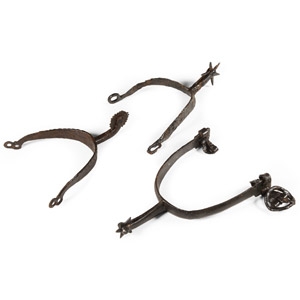
Medieval 'Published' Iron Spur Collection
Circa 13th-17th century A.D.Sold for (Inc. bp): £143
Comprising: a rowel spur of early 13th century date with short neck; a 14th century U-shaped rowel spur with straight neck, five star rowel and squared terminals with fittings and a buckle; a 17th century drop neck spur with multi-pointed rowel, the arched body decorated with transversal lines and bilobate terminals. 280 grams total, 13.2-16.5 cm
From the collection of the famous author, writer and speaker, Gordon Bailey, Essex, UK; formed since 1968.
By the late 13th century A.D., rowel spurs in the West had virtually replaced the old single prick point type spur. The rowel spurs were more effective as a goad and at the same time less damaging to the flank of the horse. -
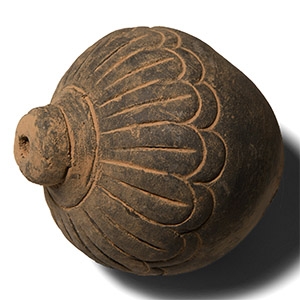
Byzantine 'Greek Fire' Ceramic Fire Bomb or Hand Grenade
9th-11th century A.D.Sold for (Inc. bp): £169
Piriform body with domed filler-hole, the upper body decorated with petals radiating from the filler-hole; intended to be filled with explosive liquid and wick, used as a hand grenade. 430 grams, 10.6 cm
From a specialist collection of militaria, London, UK, collected 1990s onwards. Accompanied by an academic paper by military specialist Dr Raffaele D'Amato, dated 15 July 2019 and titled 'Eastern Roman Empire - Greek Fire Bomb or Hand Grenade (μεσαίον kακάβιον) 9th-11th century AD'.
Apart from the use of siphons or manual flame-throwers called cheirosiphona, special corps of Roman soldiers employed terracotta grenades, in the form of small jars, abundantly evidenced in archaeological excavations. They were called μεσαία kακαβιά or κυτροκακάβια where the former had a bulbous shape and the latter a more cylindrical form. -
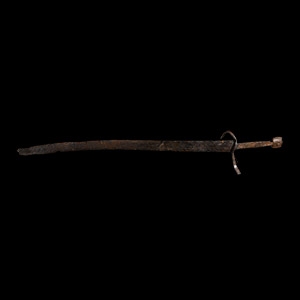
Medieval Iron Schiavonesca Type Sword with Latten Inlaid Crosses
Circa 15th century A.D.Sold for (Inc. bp): £468
Comprising a broad double-edged parallel-sided blade, flat-section at the upper third with a very shallow central fuller, elliptical-section at the lower end; flat guard with scooped lower edge, D-section arms horizontally S-curved; 'cat's head' type pommel, rectangular with scrolled upper edge and integral central boss to both faces; on the upper part of the blade an engraved three-armed workshop mark and two possibly later added brass inlaid marks including a cross fourchee inside and the image of a sword to one side; mounted on a wall display mount. 1.7 kg total, 1.11 m
In general good condition, point missing, blade structure with little delamination along the upper part, corrosion damages along the edges and on the surface, some material loss on the original surface.
Private collection, Munich, Germany, 1970s. Private collection, London, UK, 2014, acquired from the above.
The Schiavonesca sword was used by Dalmatian mercenaries serving in the Venetian state armies, and produced by the workshops of the Serenissima to which the marks probably belong. Many of these swords were produced in Dubrovnik, a Croatian city under Venetian rule. Oakeshott classified all the pommels of square shape in his Type Z. Certain morphological differences between them were individuated by Dr Aleksić as a criteria for distinguishing the distinct subtypes, in this case the type Z3 for the upper crenelleted edge. The cross-guards of type 12b, like in this case, have symmetrically and horizontally sharply bent arms in the opposite directions. The 'cat's head' pommel is also found on surviving examples of cross-hilted swords of the 14th century which can be traced into the hands of Slavonic soldiers stationed in southern Europe, employed in the European armies of this period. The independent representation of the cross fourchee usually inscribed in a circle is rather frequent on the swords with type 12 cross guards and type Z pommels from Hungary, Northern Balkans and the neighbouring regions (Aleksić, 2007, p.122).
