
Loading, please wait...
LOT 1057
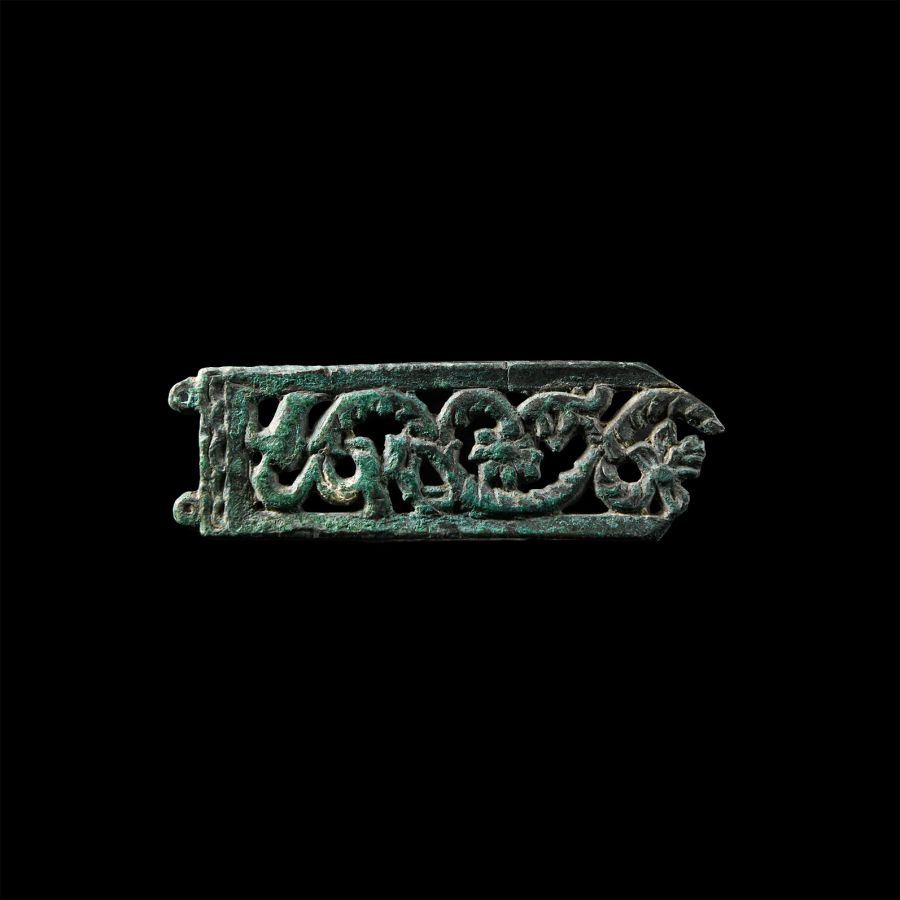
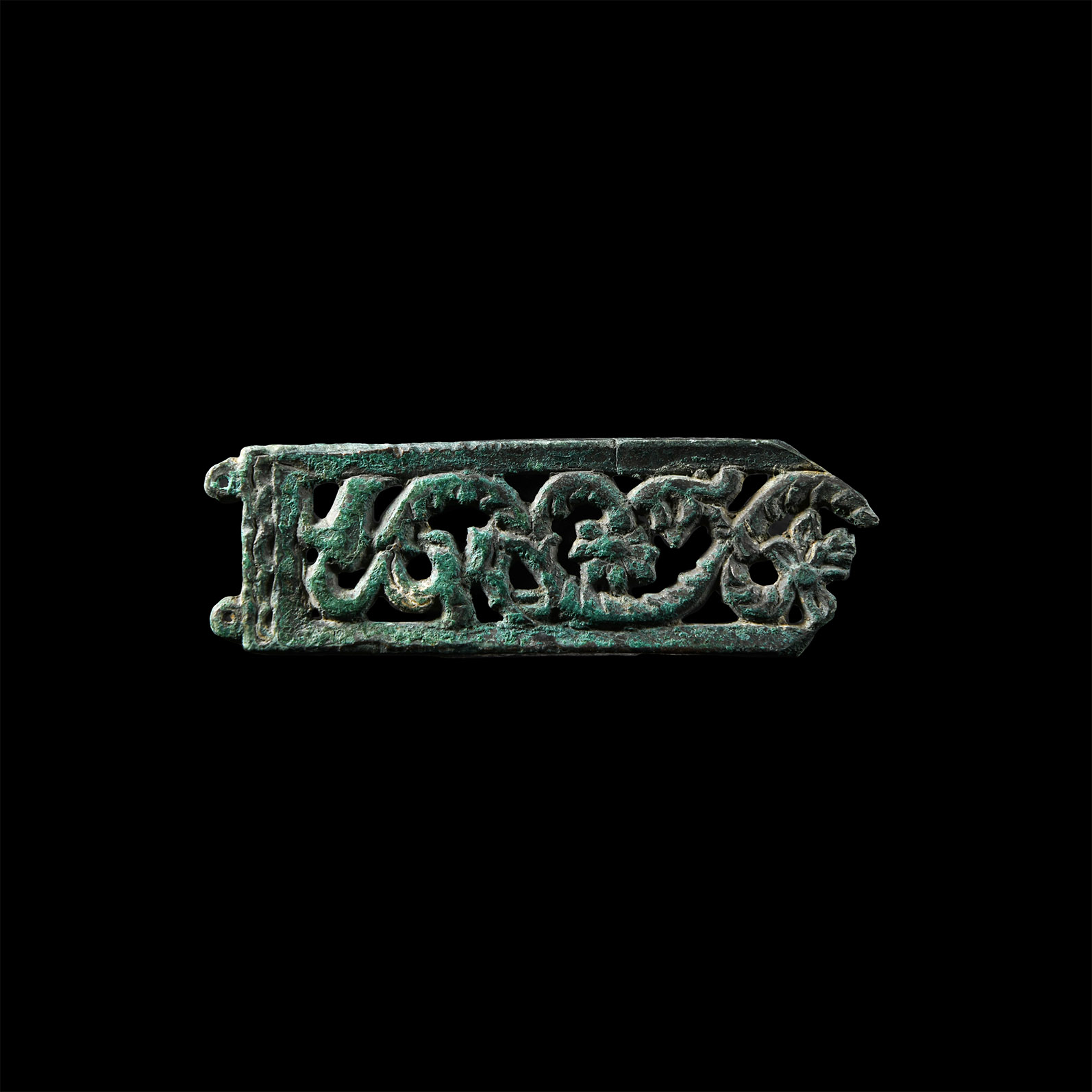
Eastern Roman Tinned Bronze Composite Belt Mount
8TH CENTURY A.D.
3 5/8 in. (27.9 grams, 93 mm).
Displaying openwork floriate decoration within a tongue-shaped frame; two pierced attachment lugs to the rear. [No Reserve]
ProvenanceFrom the collection of a North American gentleman, formed in the 1990s.
LiteratureCf. Daim, F., Die Awaren am Rand der Byzantinischen Welt (The Avars on the Border of the Byzantine World), Bad Vöslau, 2000, figs.1-2,37,112.
FootnotesThe belt is of composite type, decorated with scrollwork in Byzantine style. Many authors discuss the possibility that these belts were produced in the Eastern Roman capital or that they were made in the workshops of the Avar Khaganate, maybe with Roman matrices for producing sheet ornaments.
CONDITIONTimeLine Auctions follows a vetting process to ensure the authenticity and legality of all items, reinforcing our commitment to integrity and responsible trading. Each antiquity, antique, and coin lot undergoes thorough examination by a vetting committee of at least ten external specialists, professional trade association members, scientists, and archaeologists: Our Vetting Process
AUCTIONS:
TimeLine is a leading auction house specialising in antiquities, ancient art, collectables, natural history, coins, medals, and books. Our auctions offer museums, collectors, historians, and enthusiasts the opportunity to acquire unique and historically significant pieces.
LOT 1057
Eastern Roman Tinned Bronze Composite Belt Mount
Estimate £100 - 140€120 - 160 (for guidance only)$140 - 190 (for guidance only)
-
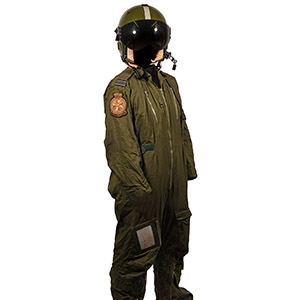
Mk3C Fighter Flying Helmet and Suit
1980s A.D.Sold for (Inc. bp): £572
Including MK 9 flying suit coveralls (for height 162-172cm, weight greater than 72.64 kg, size 4) with insignia to 825 Squadron (Fleet Air Arm) on shoulder and sewn cleaning and user instruction labels to the interior, shoulders with Flt Lieutenant Officer rank slides; MK3C flying helmet with clear and smoked visors, pig skin and blue velvet lining with electrical headset and adjustable microphone with radio lead and plug; Air Ministry label to interior reading 'Serial number 26396 Large Mk 3C' and AM 'crow's foot'. 2.9 kg, 29 cm
Acquired from J C Militaria, UK. The Kusmirek Collection, UK. Accompanied by a copy of JCM listing details and brief squadron research.
825 Squadron was originally formed in 1934 and served during WWII; it was reformed on the outbreak of the Falklands War in 1982 and equipped with ten Sea King helicopters; the squadron was disbanded in September 1982. -
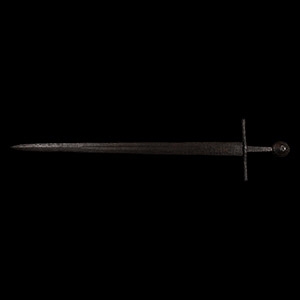
Medieval Iron Single-Handed Sword
Late 13th-early 14th century A.D.Sold for (Inc. bp): £3,640
Of Oakeshott Type XII or XIII with a double-edged, well-balanced tapering blade, shallow fullers and a parallel-sided straight lower guard of cross style 2; medium tang and disc pommel of type K with chamfered sides; the blade with later inlaid markings, one side with Passau wolf, the other side with cross within a circle; cleaned and conserved. 1.39 kg, 95 cm
fine condition, restored.
Acquired 1990s-early 2000s. East Anglian private collection. Accompanied by an academic report by Dr Raffaele D'Amato.
The sword’s blade presents analogies with a sword of type XIIIa (Aleksic, 2007, pl.7,1) sharing the same type of pommel and the same length of the fuller. The sword, found in the Danube near the village Visnjica, is now in the City Museum, Belgrad, and presents a cross and a wolf impressed on the blade and inlaid with a yellow metal. -
.jpg)
Nathan Starr 1816 Pattern Musket
1832 A.D.Sold for (Inc. bp): £715
Type III, made under contract by Nathan Starr of Middletown, CT; with .69 calibre, 107 cm (42”) browned barrel with side lock marked with Starr’s earlier style of 'US / (ornate sunburst) / N. STARR' ahead of the cock and 'MIDDTN / CONN / 1832 / (rosette)' to the rear with 'US / JM' over a raised 'P' in sunken circular cartouche to top of breech, with various inspection and other small marks, fitted with sling swivels (upper possibly a replacement), steel ramrod with flared tip, full wood stock with steel butt plate, trigger guard, side-plate, barrel rings and fore-end, lock with brass pan; action in good working order. 4.10 kg, 148 cm
Acquired from M J Noble Ltd, UK, 2015. The Kusmirek Collection, UK. Accompanied by the Noble purchase invoice and listing.
Sold as an exempt item under Section 58 (2) of the Firearms Act, 1968, to be held as a curiosity or ornament. No license required but buyer must be over 18 years of age. Overseas bidders should note that, due to UK regulations governing export of all firearms, overseas buyers will need to make arrangements for shipping this lot out of the UK directly, by air freight, with a specialist company or agent.
