
Loading, please wait...
LOT 0891
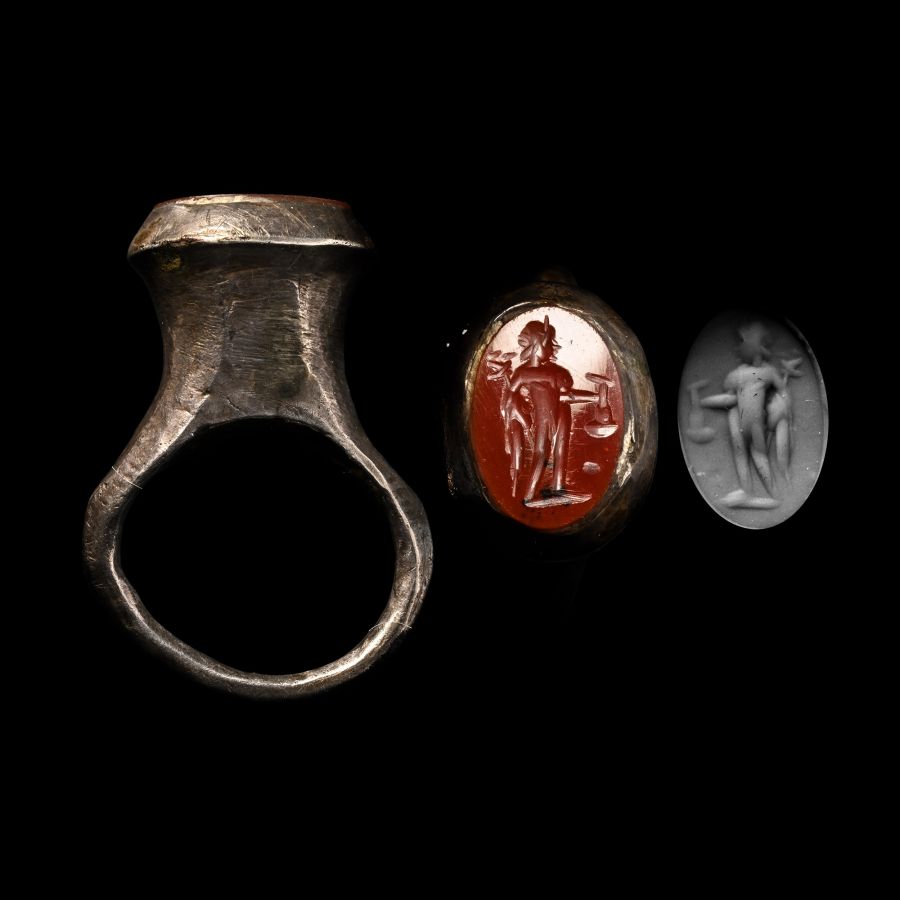
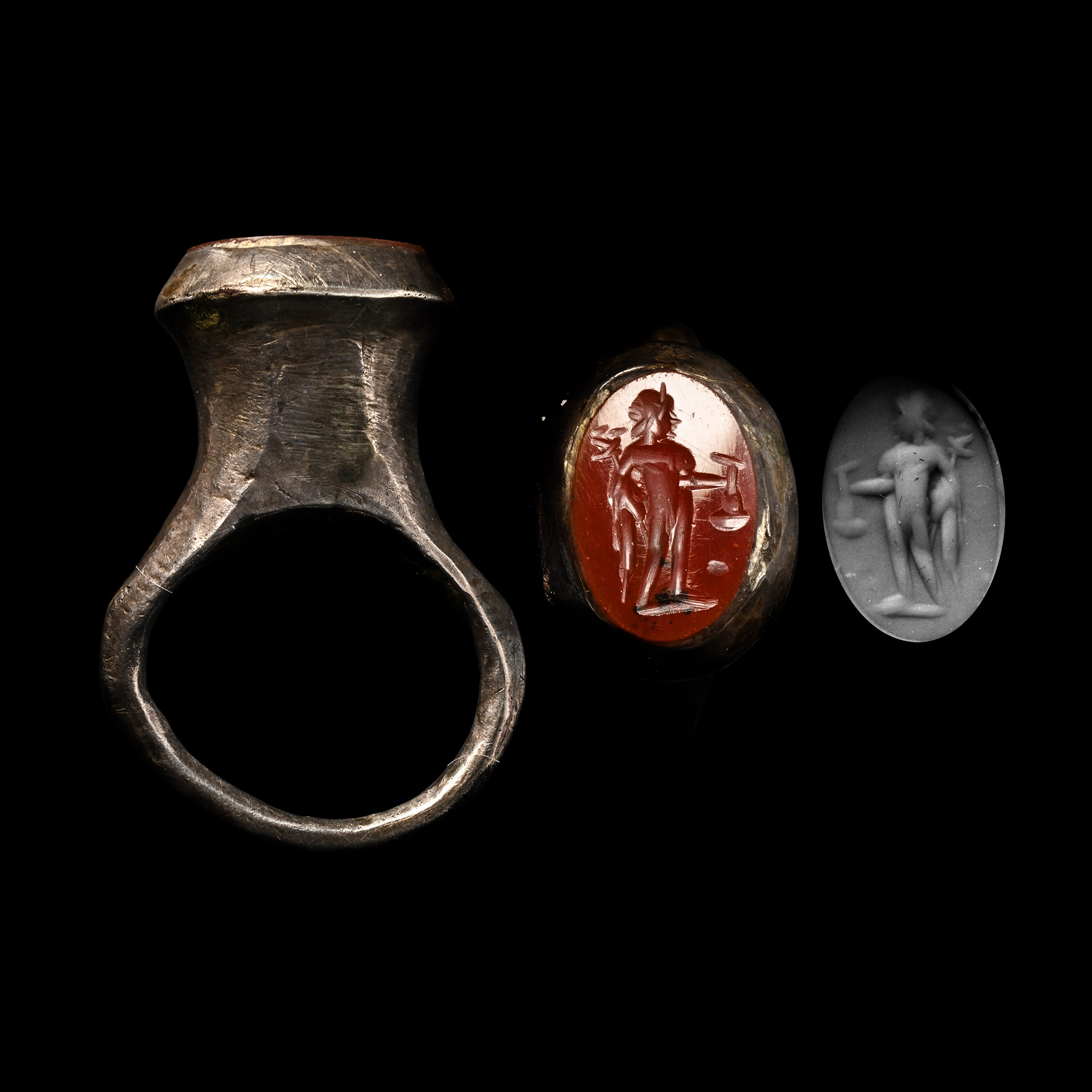
Eastern Roman Mercury Gemstone in Medieval Silver Ring
3RD-11TH CENTURY A.D.
1 1/4 in. (5.72 grams, 30.64 mm overall, 16.55 x 14.39 mm internal diameter (approximate size British G, USA 3 1/4, Europe 4.92, Japan 4)).
Eastern Roman carnelian cloison with intaglio Mercury standing with caduceus and coin-purse; in a medieval round-section hoop with scooped shoulders, tall hollow-formed facetted bezel with carinated rim; supplied with a museum-quality impression. [No Reserve]
ProvenanceEx property of a North London lady; gifted from her father's collection; formerly with a Mayfair gallery, London, UK; previously acquired in the 1980s.
CONDITIONTimeLine Auctions follows a vetting process to ensure the authenticity and legality of all items, reinforcing our commitment to integrity and responsible trading. Each antiquity, antique, and coin lot undergoes thorough examination by a vetting committee of at least ten external specialists, professional trade association members, scientists, and archaeologists: Our Vetting Process
AUCTIONS:
TimeLine is a leading auction house specialising in antiquities, ancient art, collectables, natural history, coins, medals, and books. Our auctions offer museums, collectors, historians, and enthusiasts the opportunity to acquire unique and historically significant pieces.
-
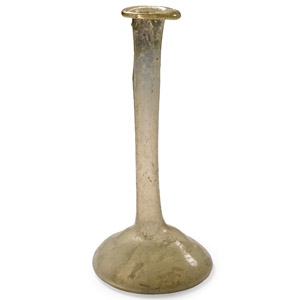
Roman Glass Candlestick Unguentarium
1st-3rd century A.D.Sold for (Inc. bp): £195
Comprising a low conical body and slightly convex wall, dimple base; tall cylindrical neck flaring to mouth with inward-folded rim; slightly iridescent surface. 58 grams, 17.5 cm
From an important London collection of glass, 1990s. This lot is accompanied by an illustrated lot declaration signed by the Head of the Antiquities Department, Dr Raffaele D'Amato.
This kind of toilet bottle was called ‘candlestick unguentarium’ by the academics due to the shape of its neck. They are especially found in Roman Egypt (Karanis class XIII.A.I.). -
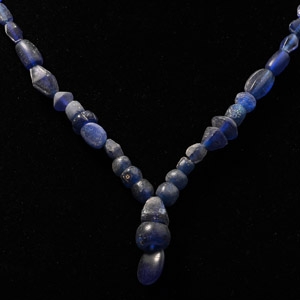
Roman Deep Blue Glass Bead Necklace String
1st-4th century A.D. and laterSold for (Inc. bp): £65
Restrung designer necklace string of tubular, polyhedral and other types with pendant centrepiece. 21.77 grams, 35 cm
London, UK, collection, 2000s. -
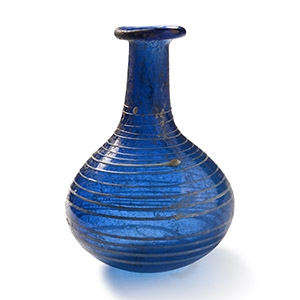
Roman Cobalt Blue Glass Bottle with Trail
Circa 1st century A.D.Sold for (Inc. bp): £1,300
Piriform with rounded rim and underside, applied white glass trail in spiral from shoulder to base. 38.2 grams, 95 mm
Acquired Christie's, London, Antiquities, Works of Art and Important Renaissance Bronzes, Plaquettes and Limoges Enamels, 8 July 1981, no.5 (illus). From a private Wiltshire, UK, collection. Accompanied by a copy of the relevant Christie's catalogue pages.
