
Loading, please wait...
LOT 1127
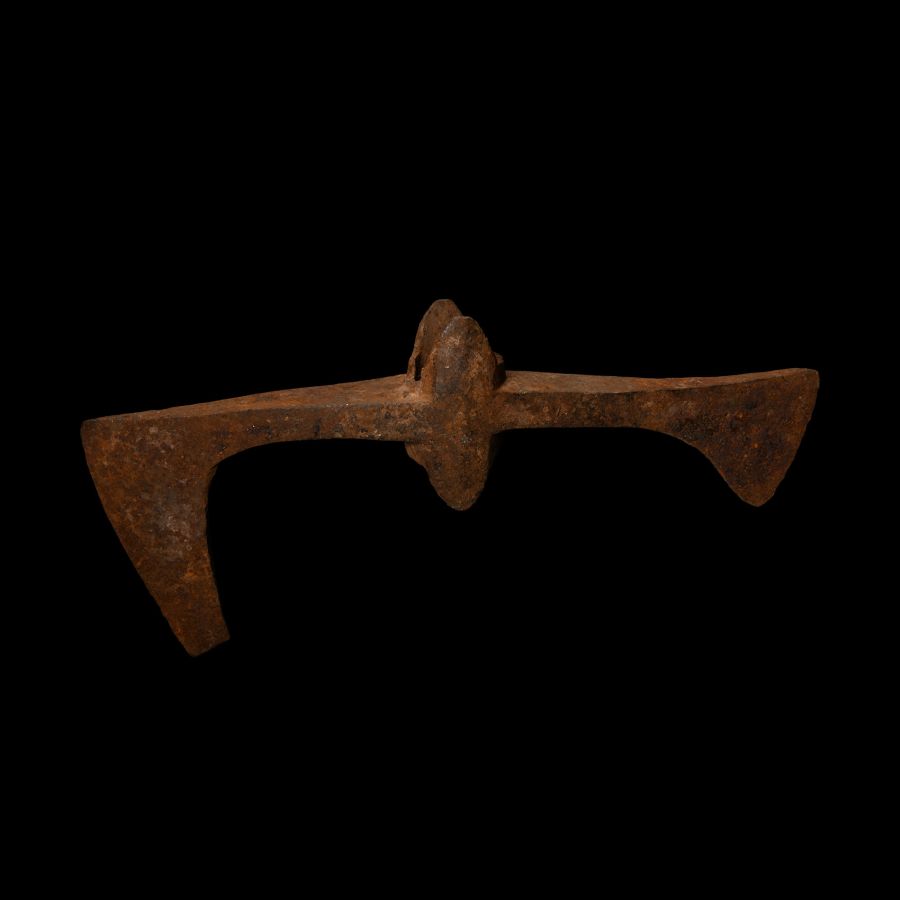
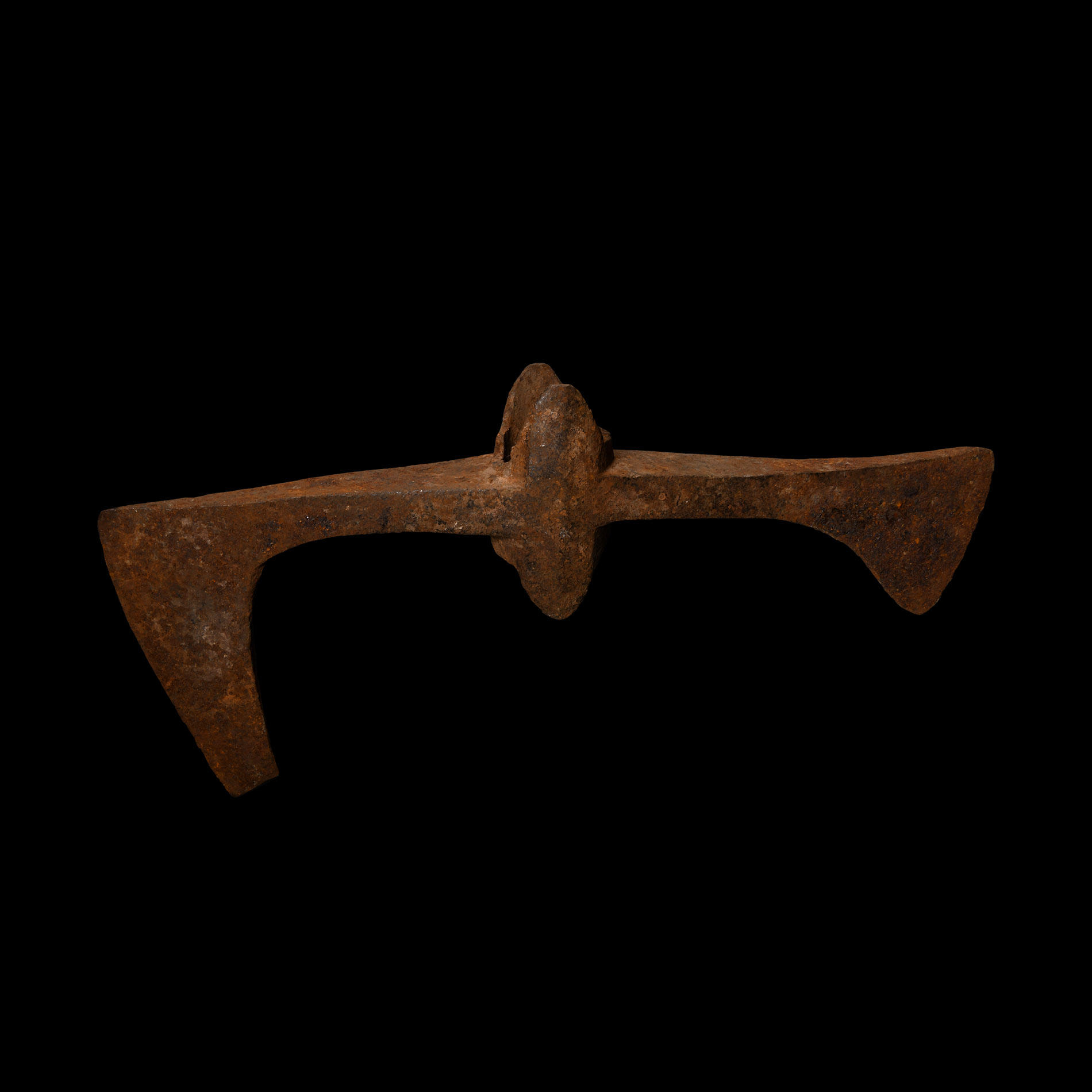
Eastern Roman Iron Double Axehead
11TH-14TH CENTURY A.D.
14 1/8 in. (1.8 kg, 36 cm).
Composed of a central circular socket with flanges, one head with extended lower blade, the other with a wedge-shaped head. [No Reserve]
ProvenanceAcquired 1990s-early 2000s.
East Anglian private collection.
Cf. Schwarzer, J.K., 'Arms from an eleventh Century Shipwreck', in Graeco-Arabica IV, (1991), pp. 327-350, fig.6 and p.330.
FootnotesThis kind of 'Tzikourion' is found in all the Eastern Roman territories from 11th to 14th century A.D., and in many South East European territories. The overall design and the massive T-shaped hafting socket are very similar to those of an 11th century war axe from Cozanesti, Moldova, and from various14th century A.D. specimens from Bulgaria.
CONDITIONTimeLine Auctions follows a vetting process to ensure the authenticity and legality of all items, reinforcing our commitment to integrity and responsible trading. Each antiquity, antique, and coin lot undergoes thorough examination by a vetting committee of at least ten external specialists, professional trade association members, scientists, and archaeologists: Our Vetting Process
AUCTIONS:
TimeLine is a leading auction house specialising in antiquities, ancient art, collectables, natural history, coins, medals, and books. Our auctions offer museums, collectors, historians, and enthusiasts the opportunity to acquire unique and historically significant pieces.
-
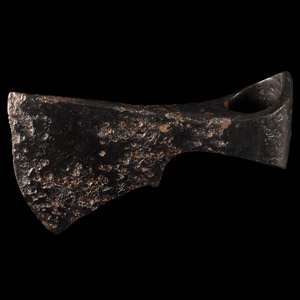
Viking Iron Bearded Axehead
9th-12th century A.D.Sold for (Inc. bp): £234
Composed of a flanged and rounded butt, shaped lower edge and convex cutting edge. 688 grams, 16.2 cm
Ex American collection, acquired 1980-200. The Kusmirek Collection, UK. -
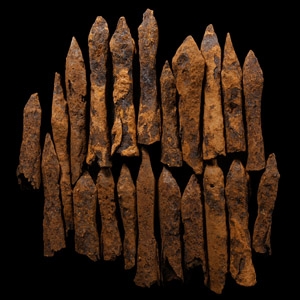
Medieval Iron Crossbow Bolt Group
Circa 12th-15th century A.D.Sold for (Inc. bp): £208
Composed of socketted bolts of various types, most with tapering or facetted square-section tips. 888 grams total, 5.4-10.3 cm
Acquired 1990s-early 2000s. East Anglian private collection. -
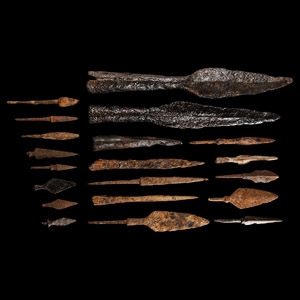
Medieval Iron Spear and Arrowhead Group
Circa 10th-15th century A.D.Sold for (Inc. bp): £156
Mainly comprising socketted spearheads and tanged arrowheads of various types, including conical, triangular-section, bodkin and lanceolate types. 408 grams total, 3.3-20 cm
UK private collection, 1990s. Acquired from a provincial auction.
