
Loading, please wait...
_900x900.jpg "Eastern Roman Gold Ring with Portrait Gemstone")
_200x200.jpg "Eastern Roman Gold Ring with Portrait Gemstone")
.jpg "Eastern Roman Gold Ring with Portrait Gemstone")
LOT 0102
Eastern Roman Gold Ring with Portrait Gemstone
CIRCA 3RD CENTURY A.D.
1 in. (9.61 grams, 27.60 mm overall, 15.39 mm internal diameter (approximate size British H 1/2, USA 4, Europe 6.81, Japan 6)).
Composed of a lentoid-section hoop expanding at the shoulders to an oval bezel set with a garnet intaglio gemstone depicting a bearded male bust facing left, wearing an earring and pendant necklace.
ProvenancePrivate collection.
Accompanied by an expert report by Dr Jack Ogden, 9 June 2017.
TimeLine Auctions follows a vetting process to ensure the authenticity and legality of all items, reinforcing our commitment to integrity and responsible trading. Each antiquity, antique, and coin lot undergoes thorough examination by a vetting committee of at least ten external specialists, professional trade association members, scientists, and archaeologists: Our Vetting Process
AUCTIONS:
TimeLine is a leading auction house specialising in antiquities, ancient art, collectables, natural history, coins, medals, and books. Our auctions offer museums, collectors, historians, and enthusiasts the opportunity to acquire unique and historically significant pieces.
-
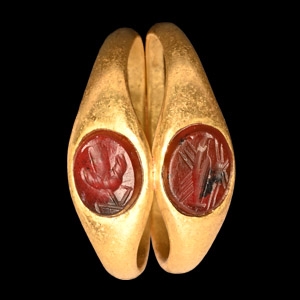
Roman Gold Ring with Gemstone Pair
1st century A.D.Sold for (Inc. bp): £1,040
Bifid hoop expanding to ellipsoid cells, each with an inset garnet cloison, intaglio clasped-hands and chalice(?) motifs. 6.46 grams, 21.57 mm overall, 18.72 mm internal diameter (approximate size British I 1/2, USA 4 1/2, Europe 7.44, Japan 7)
Acquired on the German art market around 2000. From the collection of a Surrey, UK, gentleman. -
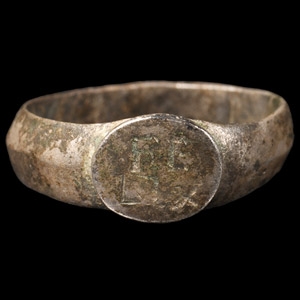
Roman Silver Ring with FELIX
1st century A.D.Sold for (Inc. bp): £169
Carinated hoop, stud bezel with incised with the Roman name 'FE/LIX'. 3.39 grams, 21.24 mm overall, 16.82 mm internal diameter (approximate size British M 1/2, USA 6 1/4, Europe 13.09, Japan 12)
Acquired on the EU art market around 2000. From the collection of a North American gentleman. -
.jpg)
Roman and Later Bronze Ram Collection
1st-4th century A.D. and laterEstimate: £800 - 1,000 (+bp*)
Opening Bid: £444
Most modelled standing with stylised detailing; one later example depicted limp with a collar or wineskins draped around the waist. 238 grams total, 22-46 mm
‘The Ancient Menagerie Collection’ formerly the property of a Cambridgeshire lady, collected since the 1990s and acquired from auctions and dealers throughout Europe and the USA, now ex London collection.
