
Loading, please wait...
LOT 0797
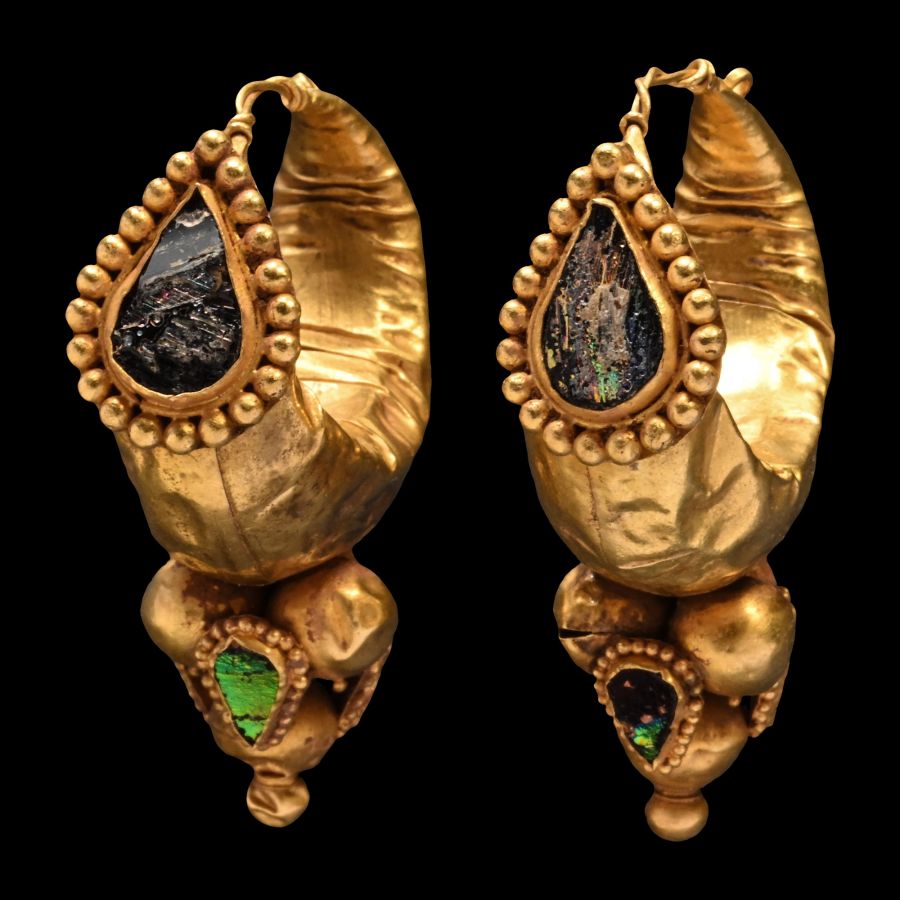
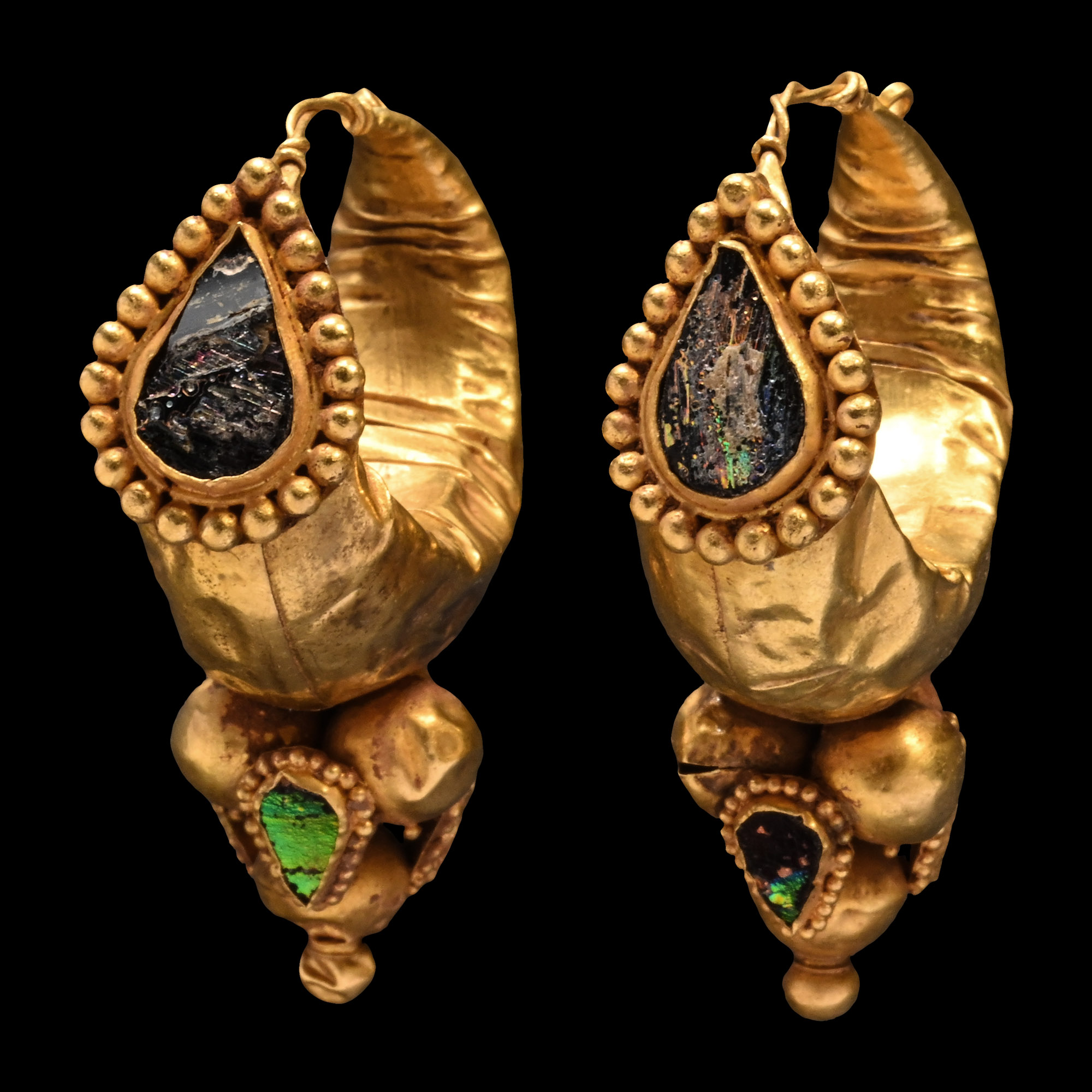
Eastern Roman Gold Hoop Earrings with Stone Inlays
3RD-4TH CENTURY A.D.
1 1/2 in. (9.26 grams total, 37-38 mm).
Each with a hollow-formed crescentic hoop, piriform plaque with inset glass panel and granulated border, hollow-bulb cluster beneath with three applied piriform plaques and granule finial. [2]
ProvenanceAcquired in the mid 1980s-1990s.
Private collection, Switzerland, thence by descent.
Private collection, since the late 1990s.
This lot has been checked against the Interpol Database of stolen works of art and is accompanied by a search certificate number no.12393-226929.
Cf. The Metropolitan Museum, New York, accession number 08.251.5, .6, for earrings in similar style.
FootnotesAs a result of the expansion of the Roman Empire, jewellery became more and more elaborate in its designs and materials used, such as precious and semi-precious gemstones. This pair of earrings represent a highly baroque evolution of the boat-shaped type, already visible in Etruscan jewellery and certainly in Roman jewellery, as demonstrated by the excavations of Herculaneum. Using the body of the boat-shaped earrings, the late Imperial artist added decorative clusters and applications of pearled borders and precious stones, according to the taste of Eastern Hellenism rooted for centuries in the provinces of the Black Sea and Roman Asia.
CONDITIONTimeLine Auctions follows a vetting process to ensure the authenticity and legality of all items, reinforcing our commitment to integrity and responsible trading. Each antiquity, antique, and coin lot undergoes thorough examination by a vetting committee of at least ten external specialists, professional trade association members, scientists, and archaeologists: Our Vetting Process
AUCTIONS:
TimeLine is a leading auction house specialising in antiquities, ancient art, collectables, natural history, coins, medals, and books. Our auctions offer museums, collectors, historians, and enthusiasts the opportunity to acquire unique and historically significant pieces.
LOT 0797
Eastern Roman Gold Hoop Earrings with Stone Inlays
Estimate £1,500 - 2,000€1,740 - 2,320 (for guidance only)$2,030 - 2,700 (for guidance only)
-
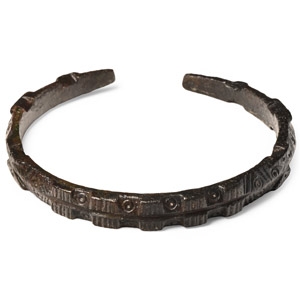
Roman Decorated Bronze Bracelet
2nd-4th century A.D.Sold for (Inc. bp): £124
Penannular body divided into segments with raised areas, ring-and-dot and linear decoration with stylised beast-head terminals. 21.26 grams, 58 mm
From a private Tyneside collection, formed since the early 2000s. -
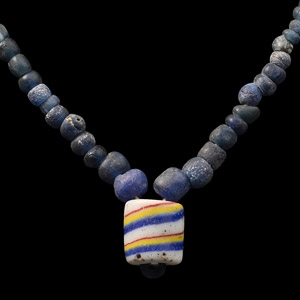
Roman Blue Glass Bead Necklace String
1st-4th century A.D. and laterSold for (Inc. bp): £39
Restrung designer necklace string of tubular, oblate and other types with a modern Indian polychrome centrepiece. 20.38 grams, 43 cm
London, UK, collection, 2000s. -
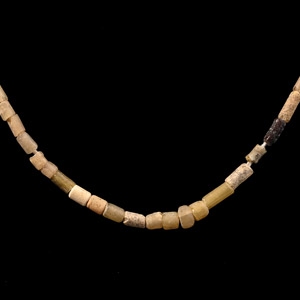
Roman Mixed Glass Bead Necklace String
1st-4th century A.D. and laterSold for (Inc. bp): £26
Restrung designer necklace string of tubular and other types. 6.53 grams, 45.5 cm
London, UK, collection, 2000s.
