
Loading, please wait...
LOT 0760
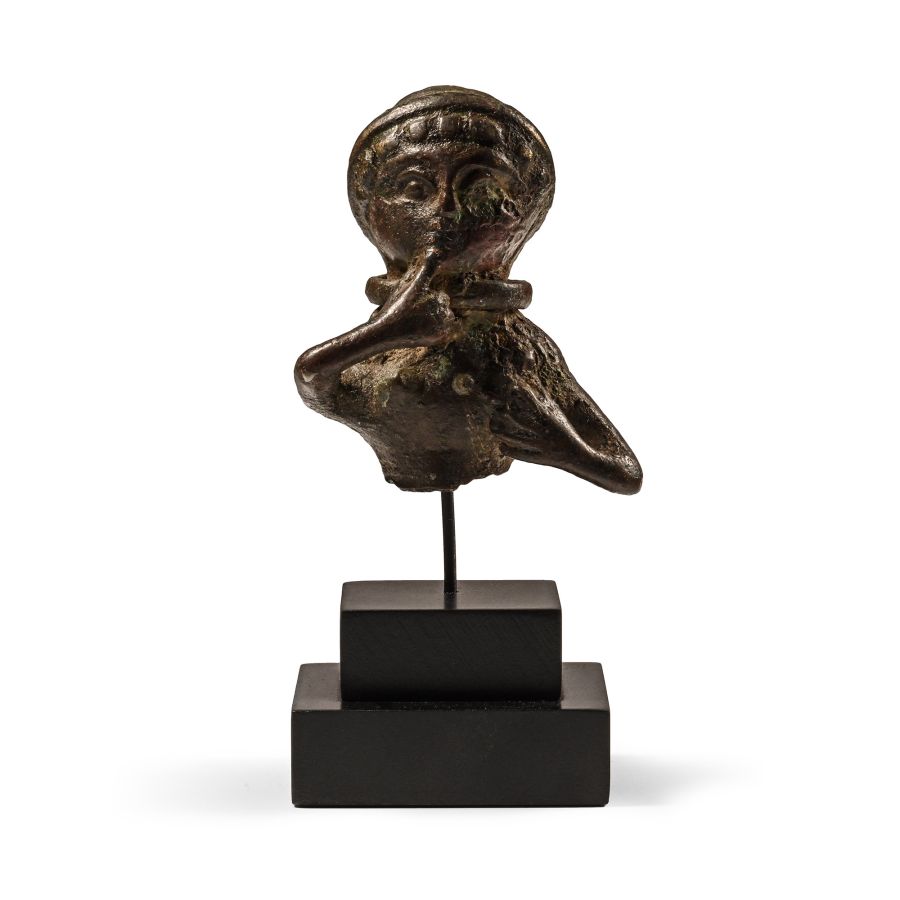
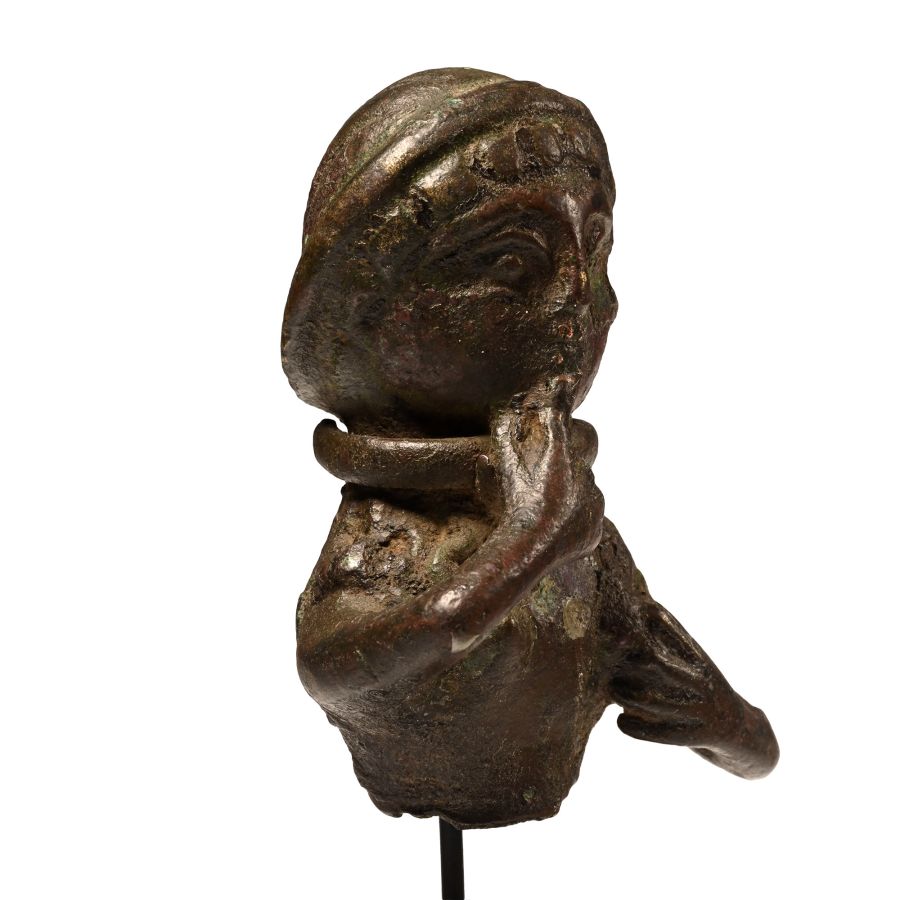
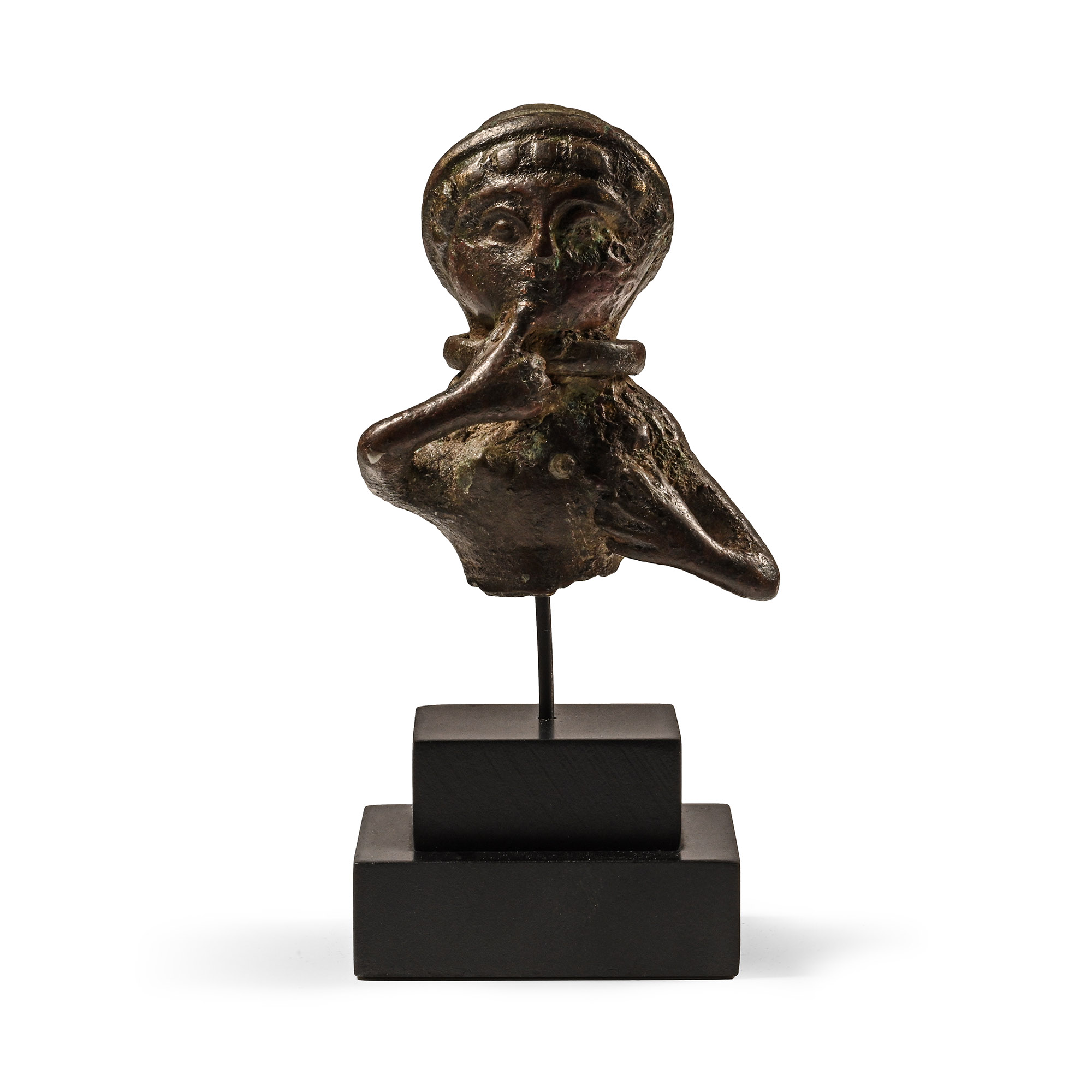
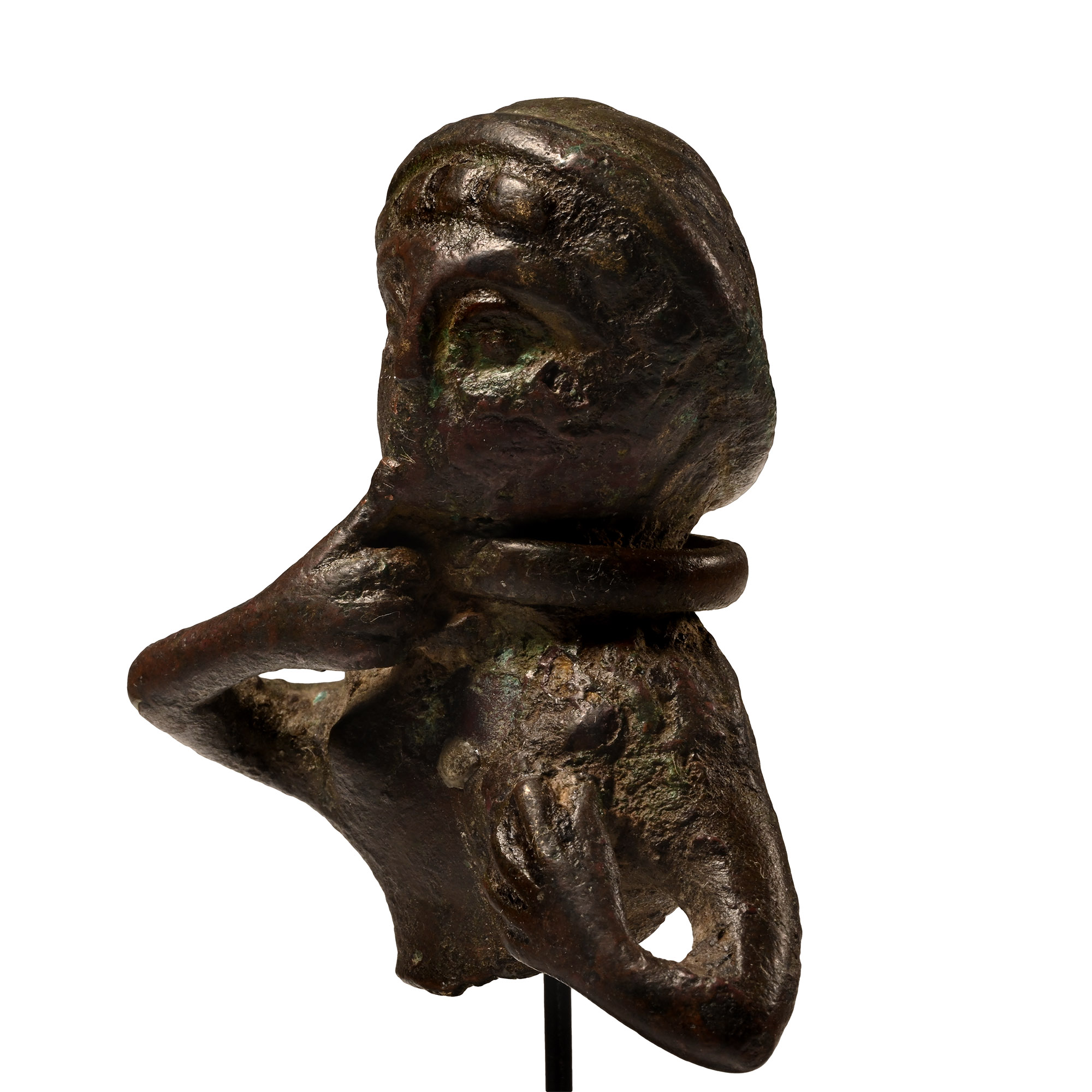
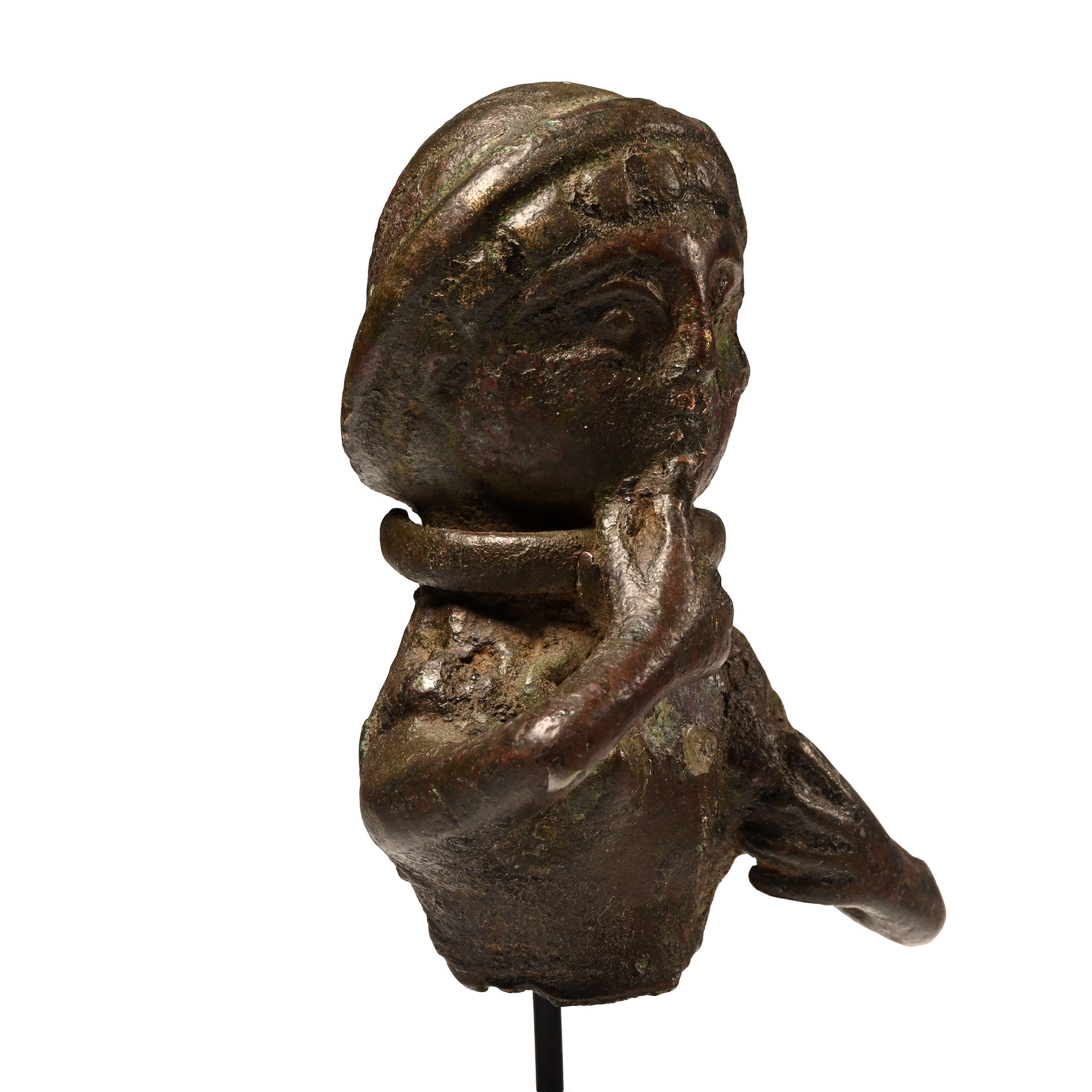
Eastern Roman Bronze Female Bust
1ST CENTURY B.C.-1ST CENTURY A.D.
4 3/8 in. (195 grams total, 11.2 cm including stand).
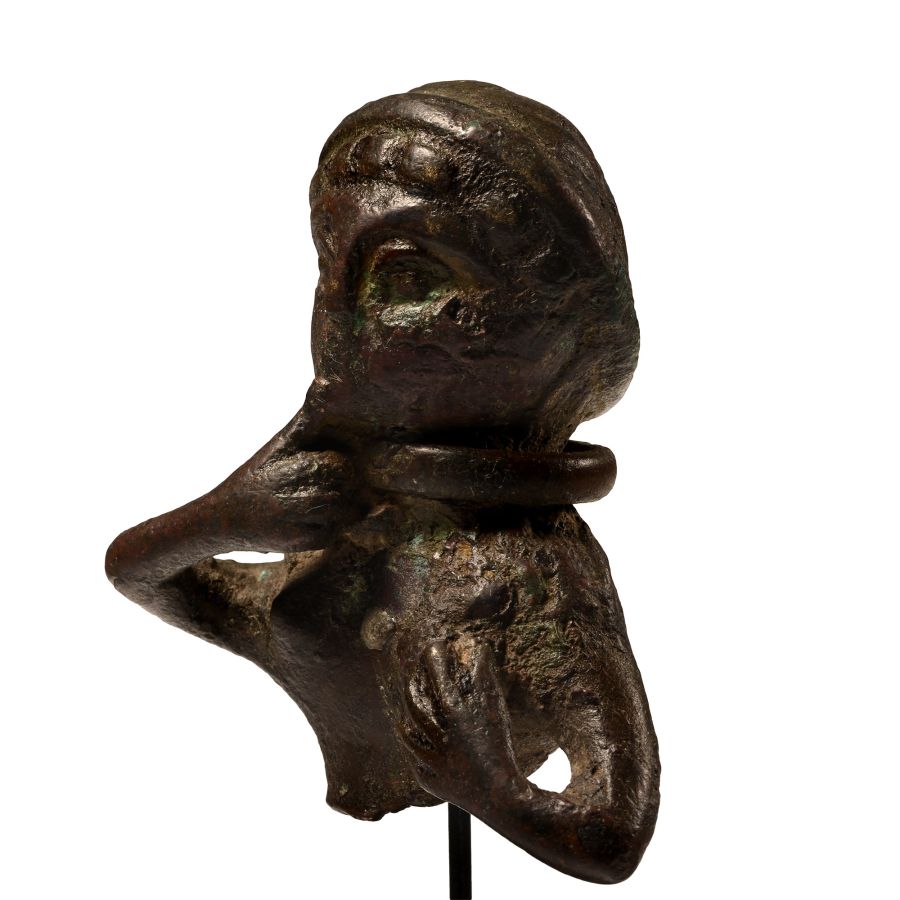
Hollow-formed figurine fragment depicting a bare-chested female with a tight-fitting cap placed over her hair and row of curls escaping from beneath the brim, broad forehead above lentoid eyes and narrow nose, small pursed mouth; integral swag of beads to the upper chest above the conical breasts, left arm bent and hand clutching the left breast, right arm raised and forefinger placed on the chin; separate round-section ring added to the neck; mounted on a custom-made display stand. [No Reserve]
ProvenanceFrom a collection acquired on the UK art market from various auction houses and collections mostly before 2000.
From an important Cambridgeshire estate; thence by descent.
Cf. statue in the British Museum under accession no.1824,0453.11, with similarly dressed Etruscan lady and male companion holding her breast.
CONDITIONTimeLine Auctions follows a vetting process to ensure the authenticity and legality of all items, reinforcing our commitment to integrity and responsible trading. Each antiquity, antique, and coin lot undergoes thorough examination by a vetting committee of at least ten external specialists, professional trade association members, scientists, and archaeologists: Our Vetting Process
AUCTIONS:
TimeLine is a leading auction house specialising in antiquities, ancient art, collectables, natural history, coins, medals, and books. Our auctions offer museums, collectors, historians, and enthusiasts the opportunity to acquire unique and historically significant pieces.
-
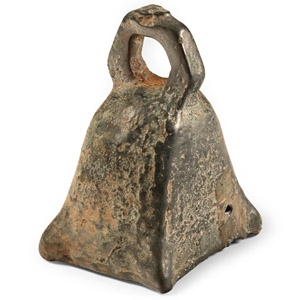
Roman Bronze Square Bell
1st-4th century A.D.Sold for (Inc. bp): £85
With integral loop and four spurs to the lower edge. 136 grams, 81 mm
Ex German art market, 2000s. Acquired from an EU collector living in London. From the collection of Surrey, UK, gentleman. -
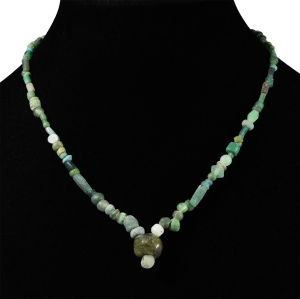
Roman and Other Bead Necklace
1st-4th century A.D. and laterSold for (Inc. bp): £65
Restrung designer necklace including oblate, biconvex, barrel-shaped and other types. 16.6 grams, 38 cm
Acquired on the London, UK, art market in the 1990s. Ex London, UK, gallery. -
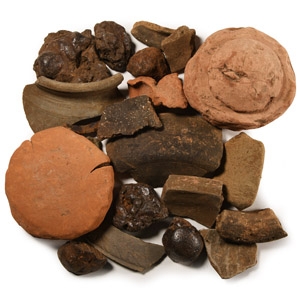
Roman 'Wetwang' Artefact Collection
1st-4th century A.D.Sold for (Inc. bp): £4
Including ceramic rim fragments, terracotta figurine fragments, iron slag, decorated sherds and other items. 1.82 kg total, 2-10 cm
Found near Wetwang, East Yorkshire, UK. Acquired 2005. Ian Wilkinson collection, Nottinghamshire, UK.
