
Loading, please wait...
LOT 0047
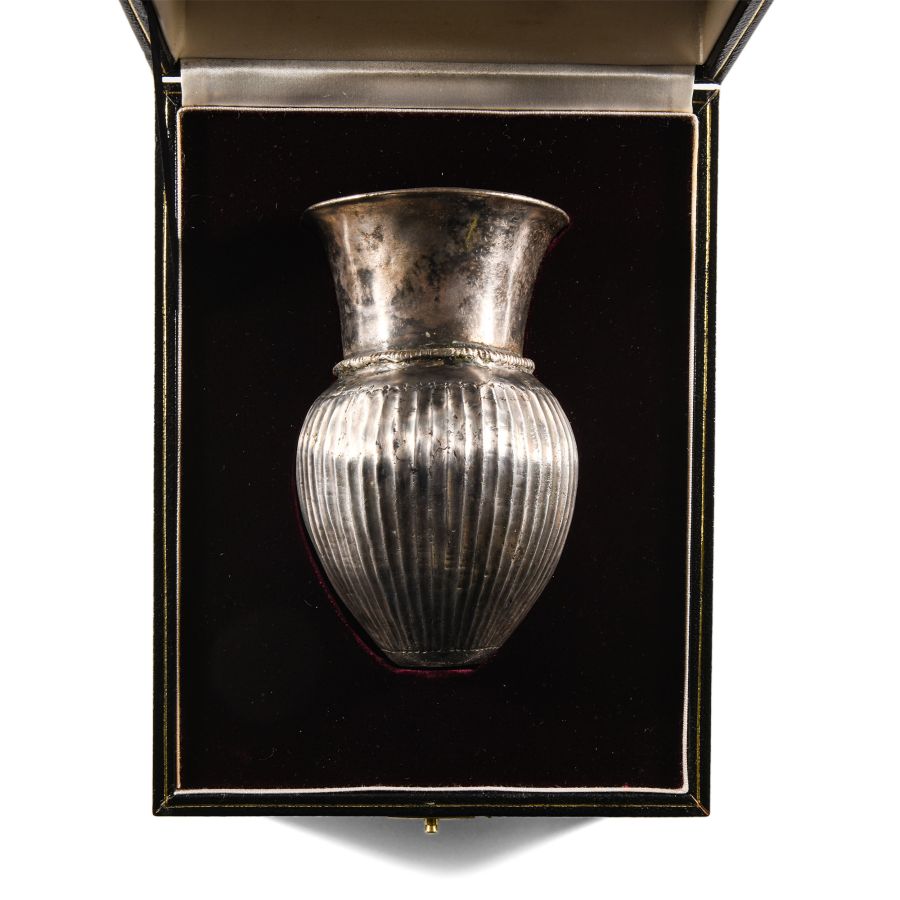
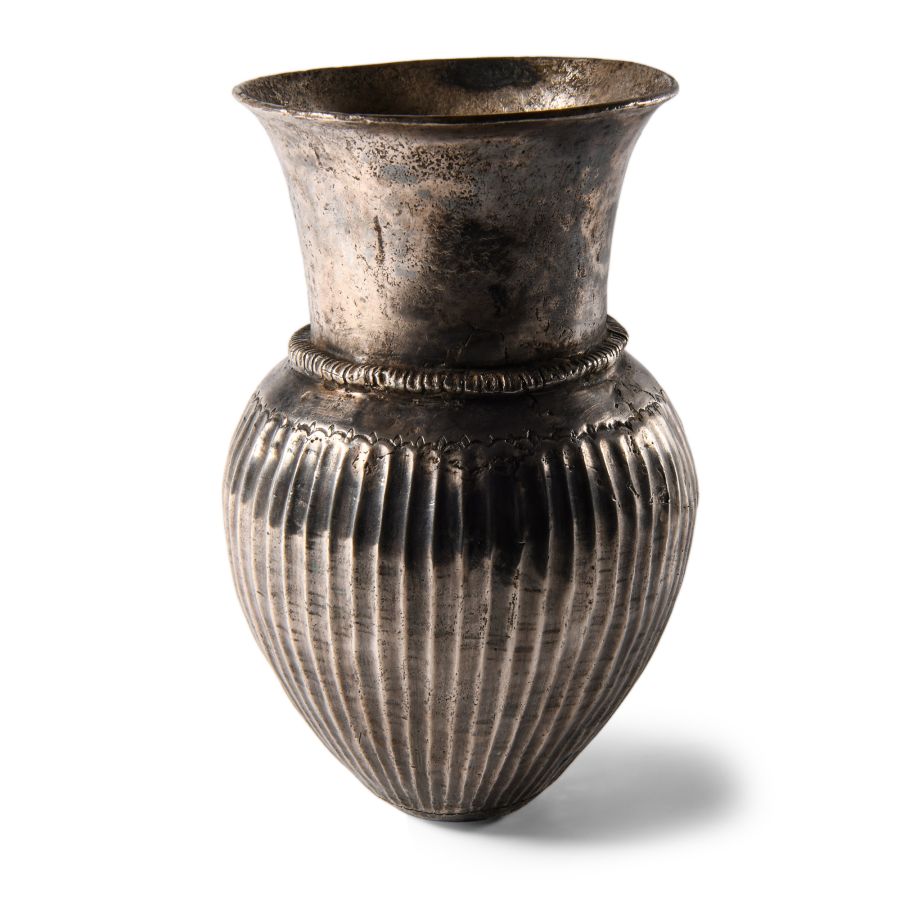
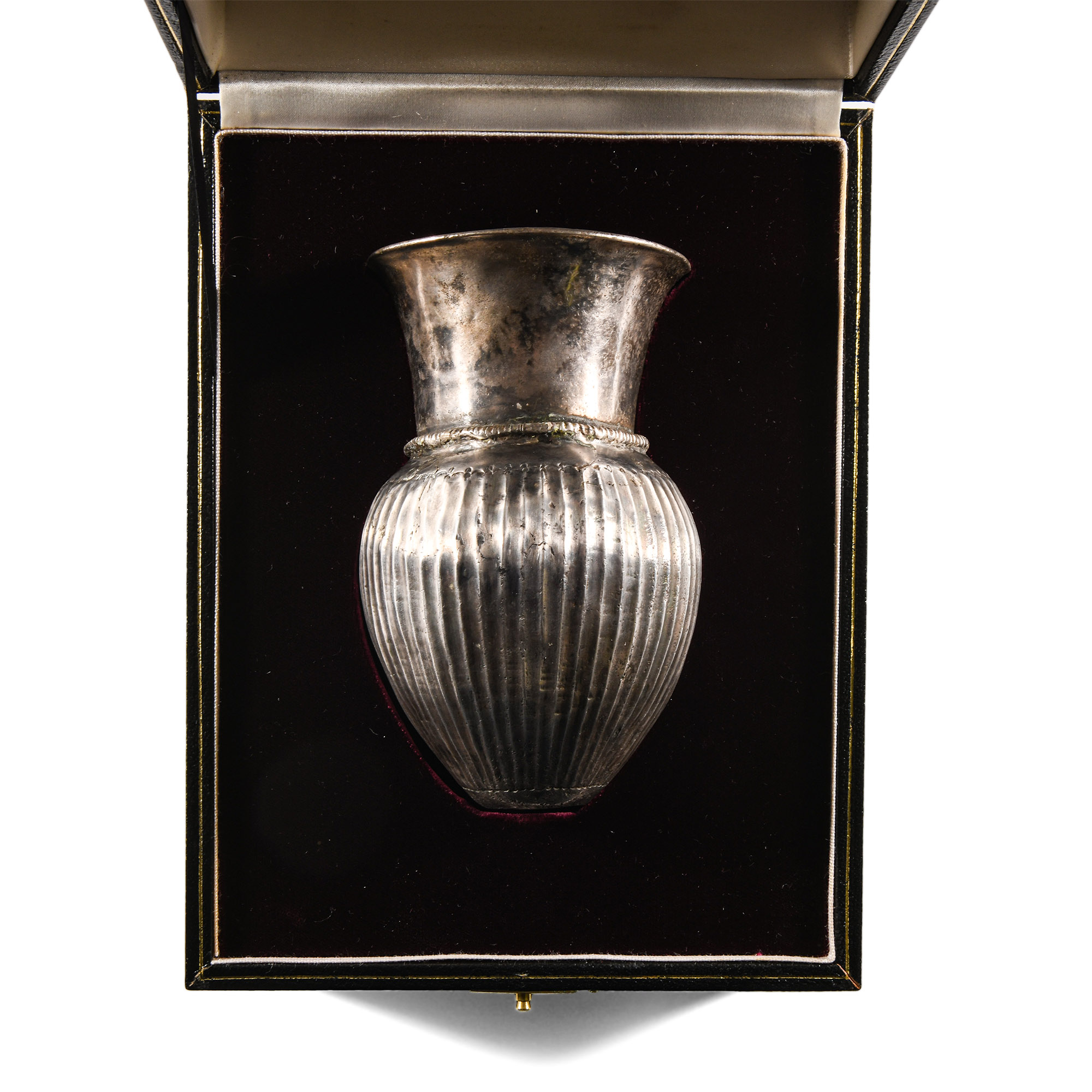
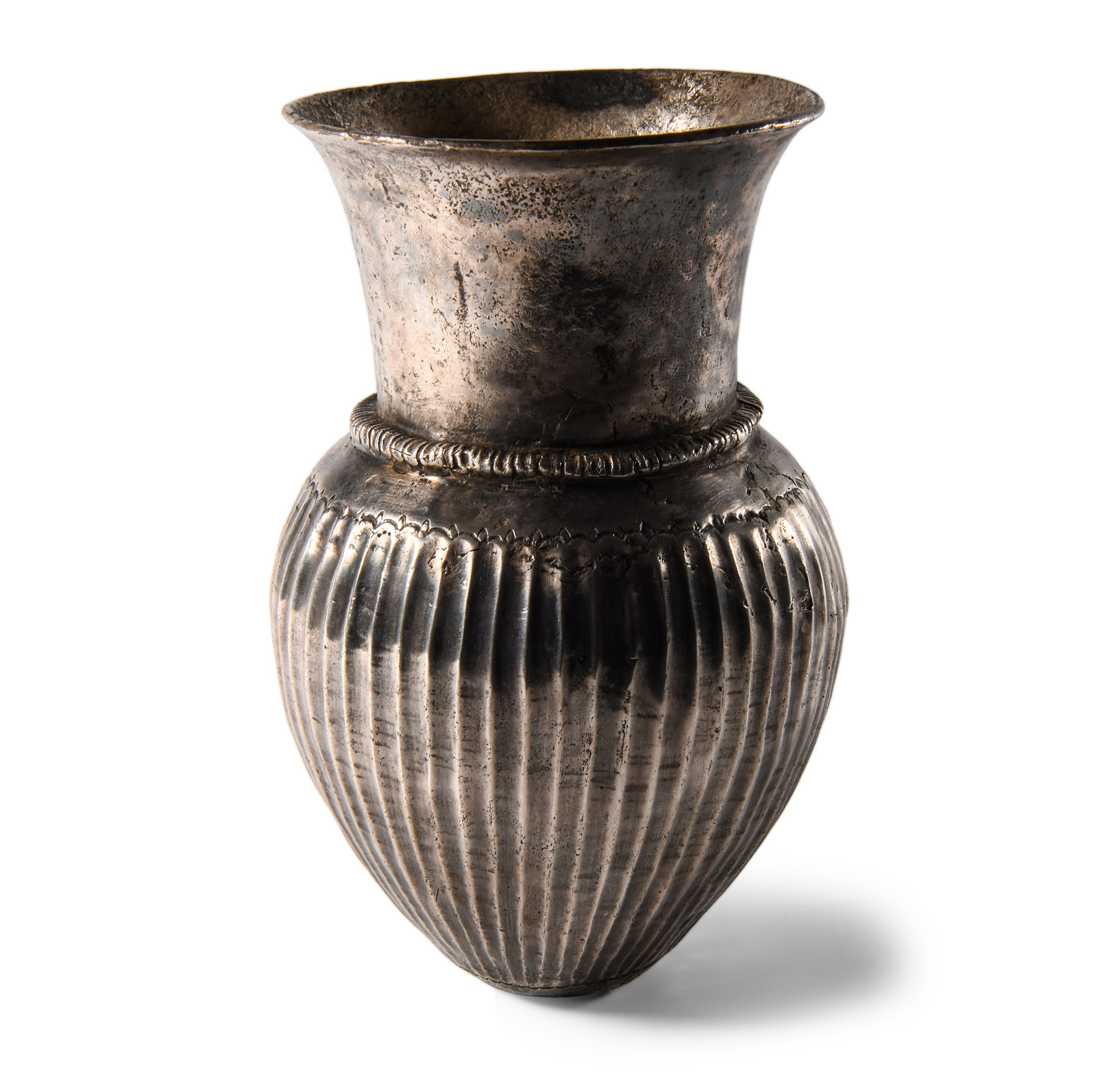
Eastern Greek Ribbed Silver Vase
CIRCA 3RD CENTURY B.C.
5 1/4 in. (8 5/8 x 6 3/4 in.) (132 grams, 13.5 cm high ( 765 grams total, 22 x 17 cm including box)).
Of piriform shape with a small foot, multi-petalled rosette within the shallow kick-up to base, vertically fluted body, ovolo ornament to the shoulder and flared mouth with rolled rim; six strain holes to the shoulder; held within a custom-made felt-lined display box.
Provenancewith the Mahboubian Gallery, London, UK; acquired before 1972.
with Bonhams, London, 26 October 2007, lot 213.
Acquired on the London art market.
The straining holes are an indication that the vessel possibly once had a spout.
CONDITIONTimeLine Auctions follows a vetting process to ensure the authenticity and legality of all items, reinforcing our commitment to integrity and responsible trading. Each antiquity, antique, and coin lot undergoes thorough examination by a vetting committee of at least ten external specialists, professional trade association members, scientists, and archaeologists: Our Vetting Process
AUCTIONS:
TimeLine is a leading auction house specialising in antiquities, ancient art, collectables, natural history, coins, medals, and books. Our auctions offer museums, collectors, historians, and enthusiasts the opportunity to acquire unique and historically significant pieces.
-
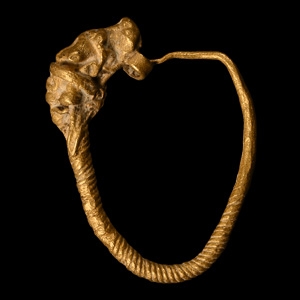
Greek Gold Animal-Headed Earring
4th-3rd century B.C.Sold for (Inc. bp): £312
The decoratively twisted hoop tapering toward the closure, cow or bull head modelled in the round with filigree ornament to the collar. 2.91 grams, 22.69 mm overall, 17.67 mm internal diameter (approximate size British E, USA 2 1/4, Europe 2.41, Japan 2)
From the collection of H.N., Milton Keynes, 1980s-1990s. -
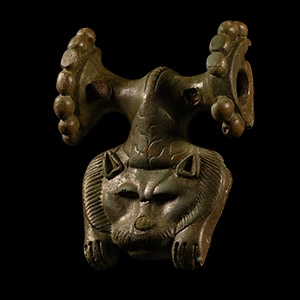
Greek Bronze Handle with Lion-Skin Head
Circa 5th-4th century B.C.Estimate: £1,000 - 1,400 (+bp*)
Opening Bid: £400
Formed as the skinned head and forepaws of a lion, together with two lateral handles with fastening holes surmounted by a pearled edge. 159 grams, 80 mm
Acquired on the UK art market 2000s.
The handle appears to be a device once attached to a wine vessel or pan-like vessels. The vessel handles were usually formed as divinities or animals linked with gods (ie. lions for Herakles). The lion's skin is hanging down like in the images representing Herakles resting and drinking after his labours. -
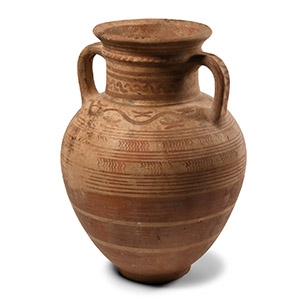
Italo-Geometric Painted Terracotta Amphora
Circa 7th-6th century B.C.Sold for (Inc. bp): £1,040
Decorated in red with geometric motifs including encircling bands, a horizontal wavy band with motifs at the shoulder, with two rows of vertical wavy linear panels below. 1.2 kg, 27 cm high
From a New Mexico private collection, acquired before 1991. with Bonhams, 3 July 2019, lot 53, (£1,500-£2,500). Accompanied by a copy of a previous collector's catalogue pages with inventory number 20.13.
