
Loading, please wait...
LOT 0544
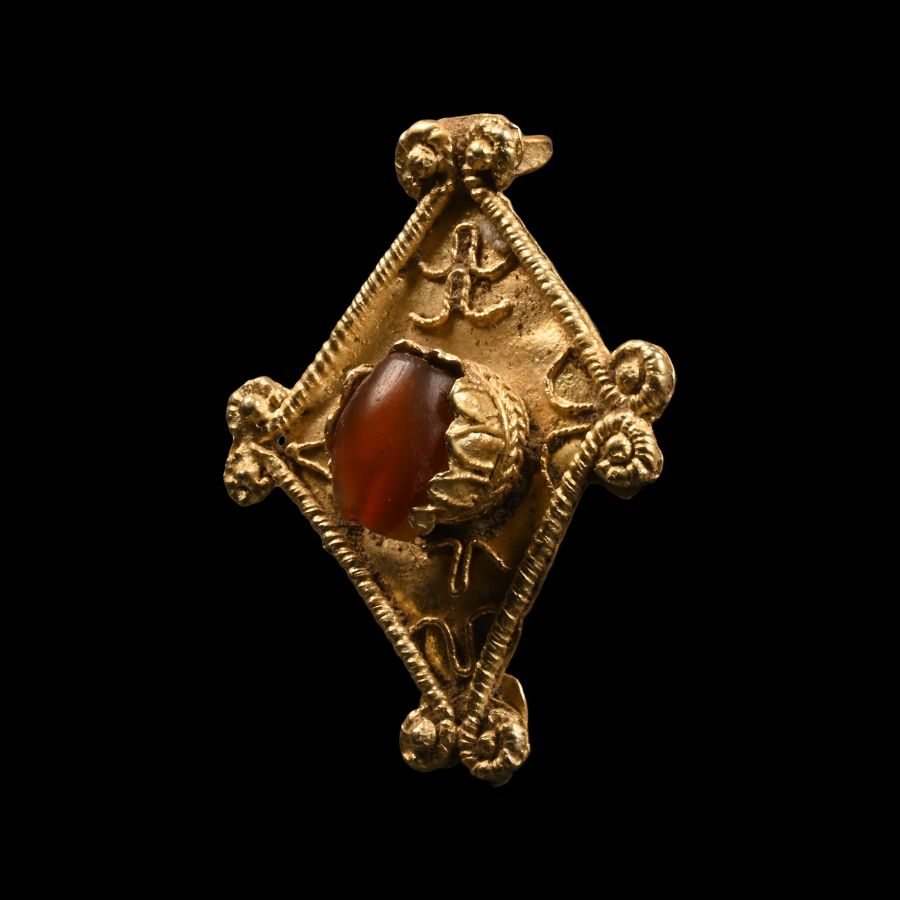
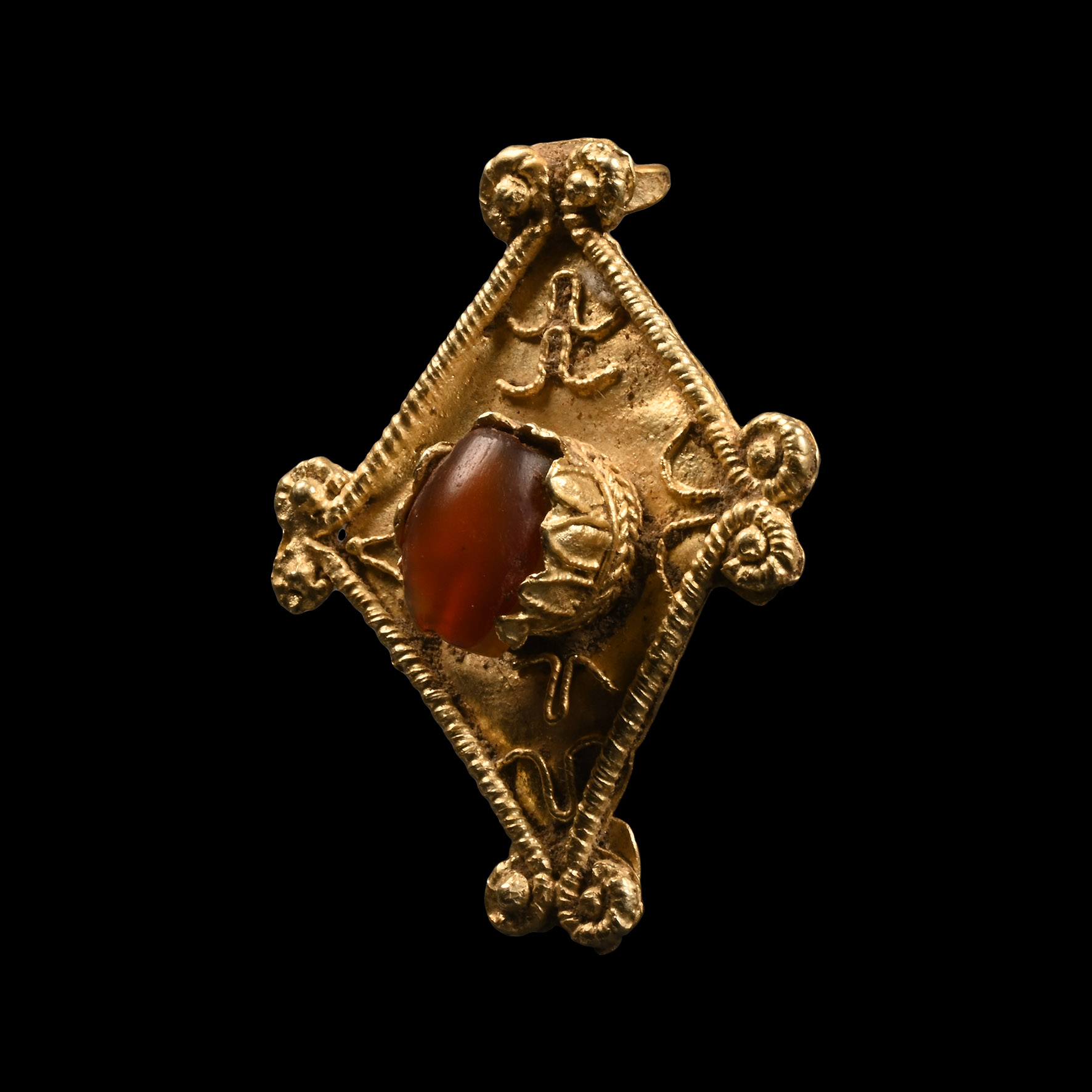
Eastern Greek Gold Lozenge-Shaped Brooch
5TH-3RD CENTURY B.C.
1 1/4 in. (3.88 grams, 33 mm).
Retaining the pin lug and catchplate to reverse, filigree borders and scrolls to the perimeter, central cell adorned with filigree ropework and petals; stone replaced. [No Reserve]
ProvenanceFrom the collection of a North American gentleman, formed in the 1990s.
CONDITIONTimeLine Auctions follows a vetting process to ensure the authenticity and legality of all items, reinforcing our commitment to integrity and responsible trading. Each antiquity, antique, and coin lot undergoes thorough examination by a vetting committee of at least ten external specialists, professional trade association members, scientists, and archaeologists: Our Vetting Process
AUCTIONS:
TimeLine is a leading auction house specialising in antiquities, ancient art, collectables, natural history, coins, medals, and books. Our auctions offer museums, collectors, historians, and enthusiasts the opportunity to acquire unique and historically significant pieces.
-
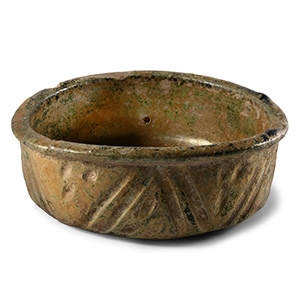
Parthian Green Glazed Dish
3rd-2nd century B.C.Estimate: £600 - 800 (+bp*)
Opening Bid: £250
Of squat form with incised chevrons and dashes decorating the exterior; iridescent surfaces. 298 grams, 13.5 cm
with a London, UK gallery 1971-early 2000s. -
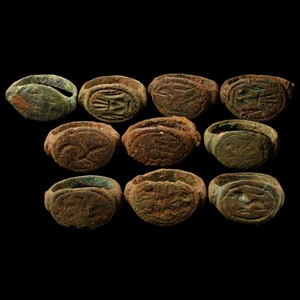
Graeco-Persian Bronze Ring Group
2nd century B.C. and laterSold for (Inc. bp): £312
Mainly featuring convex hops, stepped shoulders and oval or elliptical bezel, most displaying an incuse animal, figural or other motif. 54 grams total, 24-26 mm
Ex private collection, 1980s. Acquired on the UK art market in the 1990s. -
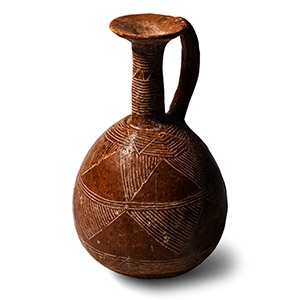
Early Cypriot Red Burnished-Ware Jug
Bronze Age, circa 2300-1650 B.C.Sold for (Inc. bp): £1,300
Bulbous bodied with a rounded base, slender cylindrical neck, trumpet-shaped rim and integral handle, decorated with incised circumferential bands, hatched triangles and chevrons; accompanied by an acrylic display base. 388 grams, 18 cm high
Acquired in the 1990s. From the deceased estate of a North Yorkshire private collector, UK. Ex Den of Antiquity, Cambridgeshire, UK.
Red burnished-ware pottery became the dominant pottery ware lasting into the Middle Bronze Age on the island of Cyprus. Vessels were handmade and covered with a slip, which was burnished and often decorated with patterns incised with a sharp cutting edge before being fired. Potters were able to produce vessels that were either mottled or painted in two colours, often red outside and black inside and on the exterior of the rim.
