
Loading, please wait...
LOT 0651
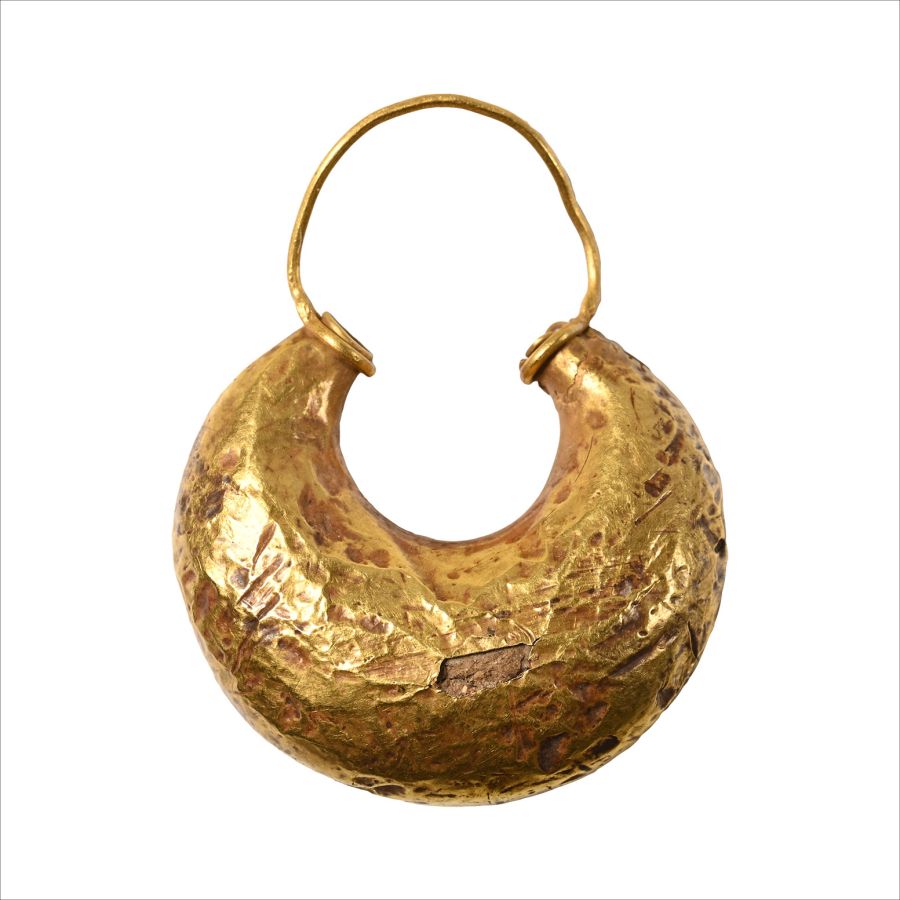
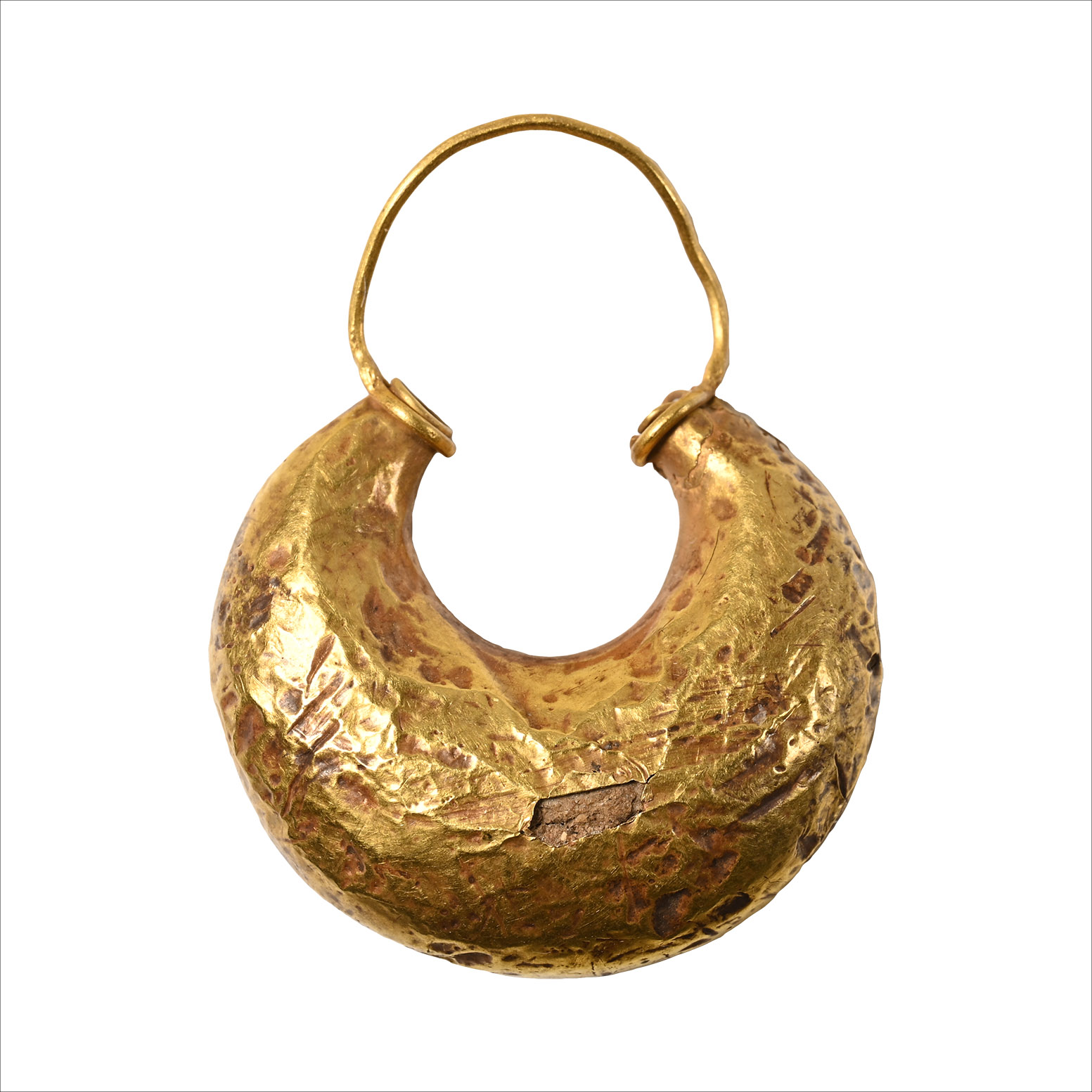
Eastern Greek Gold Hoop Earring
CIRCA 8TH CENTURY B.C.
1 3/8 in. (4.88 grams, 35 mm).
Comprising a tapering hoop with applied filigree collars, wire hoop. [No Reserve]
ProvenanceSwiss private collection, Basel, M.C. (b.1933) and R.C.B. (b.1929), thence by descent.
LiteratureCf. Williams, D. & Ogden, J., Greek Gold - Jewellery of the Classical World, London, 1994, item 99, for type.
CONDITIONTimeLine Auctions follows a vetting process to ensure the authenticity and legality of all items, reinforcing our commitment to integrity and responsible trading. Each antiquity, antique, and coin lot undergoes thorough examination by a vetting committee of at least ten external specialists, professional trade association members, scientists, and archaeologists: Our Vetting Process
AUCTIONS:
TimeLine is a leading auction house specialising in antiquities, ancient art, collectables, natural history, coins, medals, and books. Our auctions offer museums, collectors, historians, and enthusiasts the opportunity to acquire unique and historically significant pieces.
-
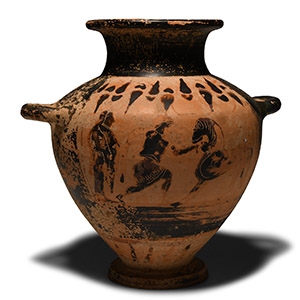
Greek Black Glazed Terracotta Hydria with Figures
6th-5th century B.C.Estimate: £1,500 - 2,000 (‡+bp*)
Opening Bid: £833
Tall vessel with narrow base and loop handles to the shoulder, strap handle to the rear; reserved figural scene of a horse in profile with handler and rider behind. 515 grams, 18.6 cm
Private collection of Mr S.A., Switzerland, 1990, thence by descent. This lot has been checked against the Interpol Database of stolen works of art and is accompanied by search certificate no.12047-211885. -
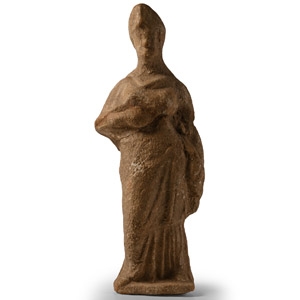
Greek Terracotta Figure
4th-3rd century B.C.Estimate: £180 - 240 (‡+bp*)
Opening Bid: £100
Tanagra type, hollow-formed with a void to the reverse, standing female in tiered robe wearing a diadem and with her hair drawn back, right hand cradling an object; chipped, repaired. 95 grams, 16.5 cm
European art market. Acquired in Münich in 2012. European private collection. -
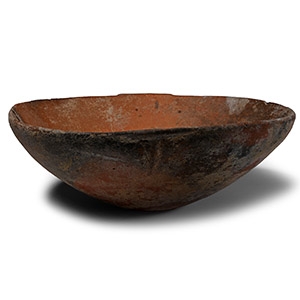
Large Cypriot Red Ware Terracotta Bowl
Late Bronze Age, circa 1450-1200 B.C.Sold for (Inc. bp): £78
Broad squat bowl with dished profile, rounded rim, single pierced ledge handle; with inked inscription to base: 'L.S / 726'. 1.32 kg, 28.5 cm
From a collection acquired on the UK art market from various auction houses and collections mostly before 2000. From an important Cambridgeshire estate; thence by descent.
