
Loading, please wait...
LOT 0033
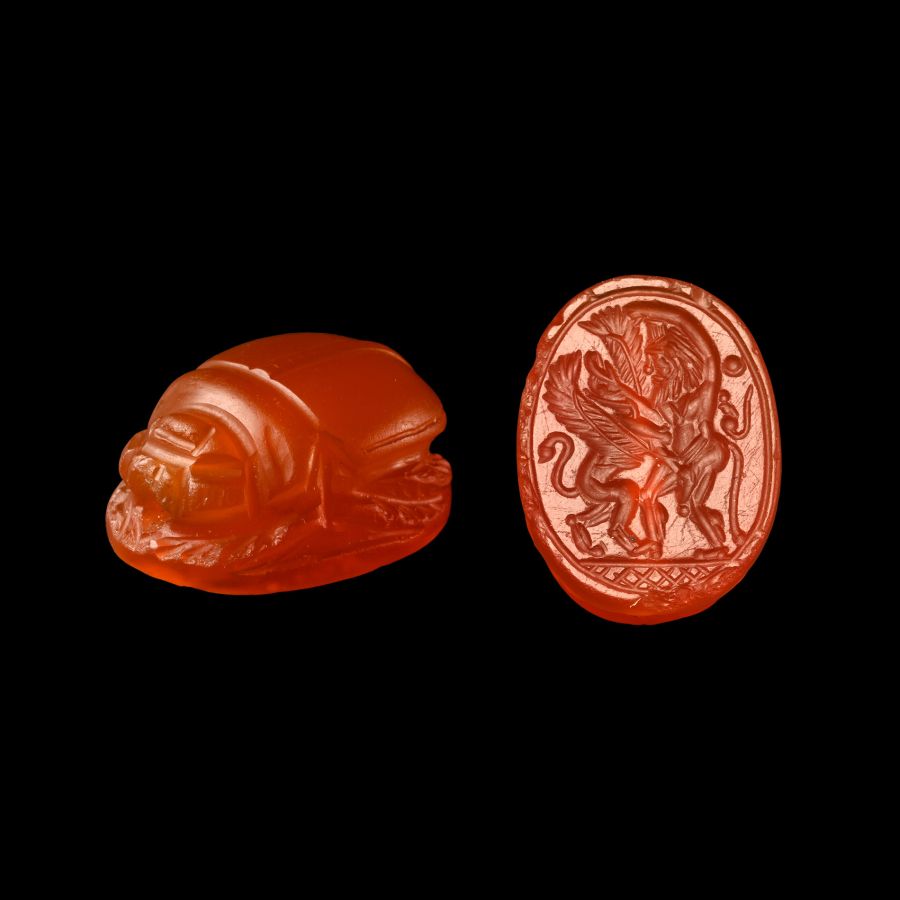
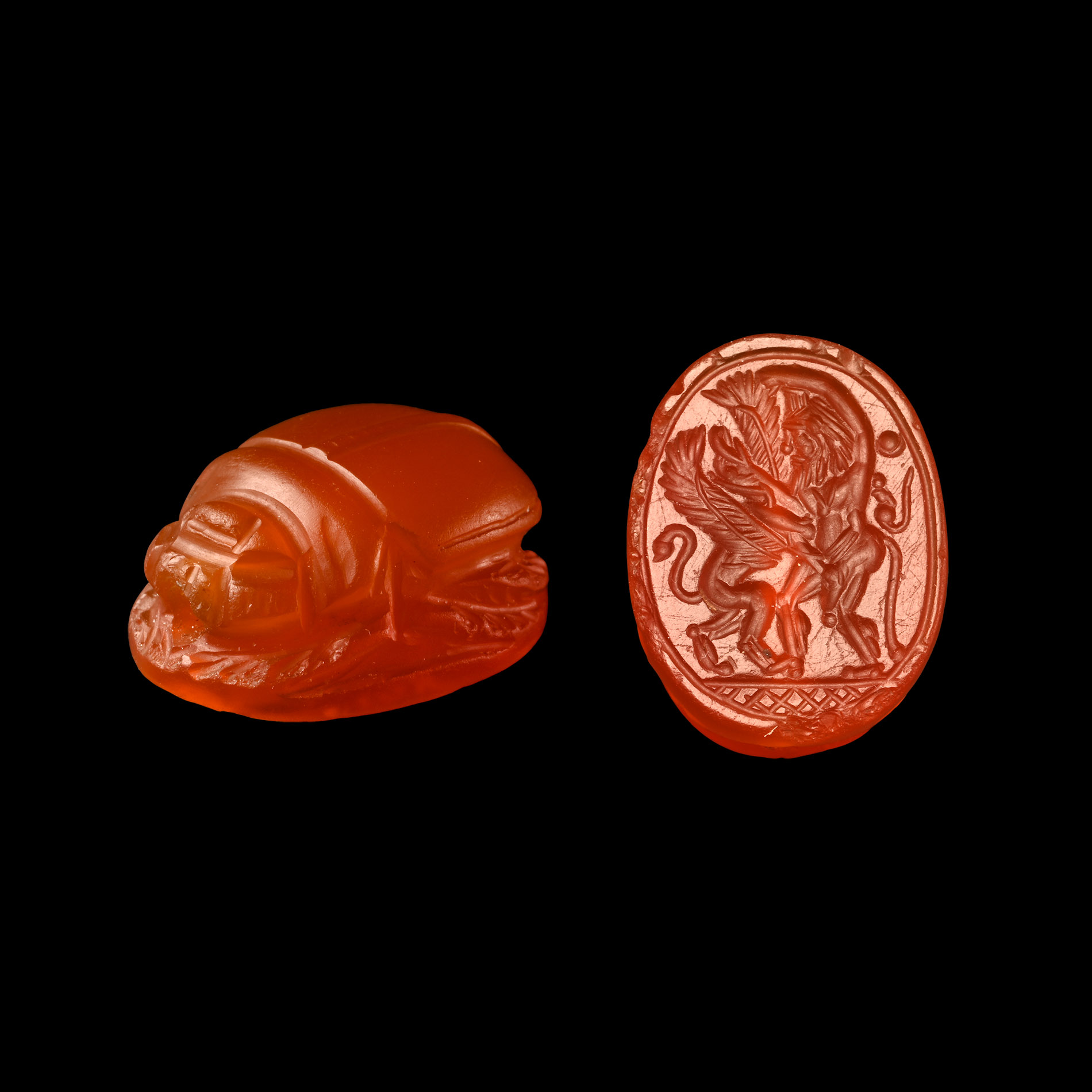
Eastern Greek Carnelian Scarab Seal
6TH-5TH CENTURY B.C.
5/8 in. (2.29 grams, 16 mm).
Modelled with semi-naturalistic anatomical detailing, the base displaying a battle showing a mature and muscular naked man grappling with a winged gryphon; drilled for suspension.
ProvenanceEx F.A., Brussels, 1980.
Private collection of a London antiquarian.
Cf. a comparable scene in Boardman, J., Greek Gems and finger rings, early Bronze Age to Late Classical, London, 1973 (2001), no.361.
FootnotesCombat between a man and gryphon is a well-attested subject matter on Greek scarabs. A faience factory was found in Naukratis by Flinders-Petrie, with innumerable faience and discarded moulds. The motifs on the bottom surface are repetitive and hurriedly worked. They depict lucky symbols or representative subjects (lions with sun disc, ibex, Horus falcons, lotus flowers); such motifs had already been adopted into Greek art but are generally considered typically Egyptian. Here the subject of a fight against a gryphon is Greek, although the style of the fighting character seems Phoenician, which points to Eastern Mediterranean workmanship, possibly on the Island of Rhodes.
CONDITIONTimeLine Auctions follows a vetting process to ensure the authenticity and legality of all items, reinforcing our commitment to integrity and responsible trading. Each antiquity, antique, and coin lot undergoes thorough examination by a vetting committee of at least ten external specialists, professional trade association members, scientists, and archaeologists: Our Vetting Process
AUCTIONS:
TimeLine is a leading auction house specialising in antiquities, ancient art, collectables, natural history, coins, medals, and books. Our auctions offer museums, collectors, historians, and enthusiasts the opportunity to acquire unique and historically significant pieces.
-
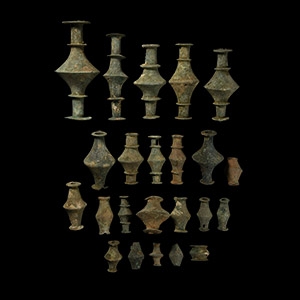
Greek Bronze Furniture Fitting Group
3rd-2nd century B.C.Estimate: £100 - 140 (+bp*)
Opening Bid: £40
Comprising over 20 hollow-formed bicones. 790 grams total, 21-96 mm
Acquired 1960s-1990s. Late Alison Barker collection, a retired London barrister. -
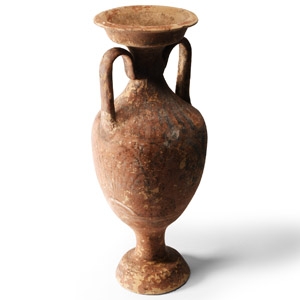
Greek Terracotta Amphora with Palmettes and Standing Figure
Apulian, 4th century B.C.Sold for (Inc. bp): £572
Piriform-bodied with two handles flanking a stepped neck and mouth, stemmed foot with chamfered edge; polychrome painted shell ornament together with a figural panel; possibly a marriage. 1.6 kg, 37.5 cm high
Ex collection of a Suffolk, UK, gentleman, 1990s. -
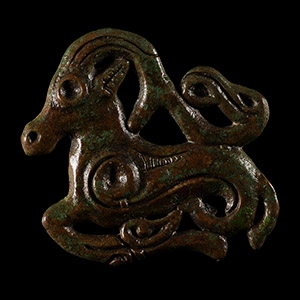
Scythian Bronze Galloping Stag Mount
4th-3rd century B.C.Sold for (Inc. bp): £910
In the form of a stag or other horned quadruped facing left, shallow geometric cells forming the eyes and other stylised anatomical detailing; mounting lug to reverse. 55 grams, 72 mm
Acquired 1980-2015. Ex Abelita family collection.
