
Loading, please wait...
LOT 2048
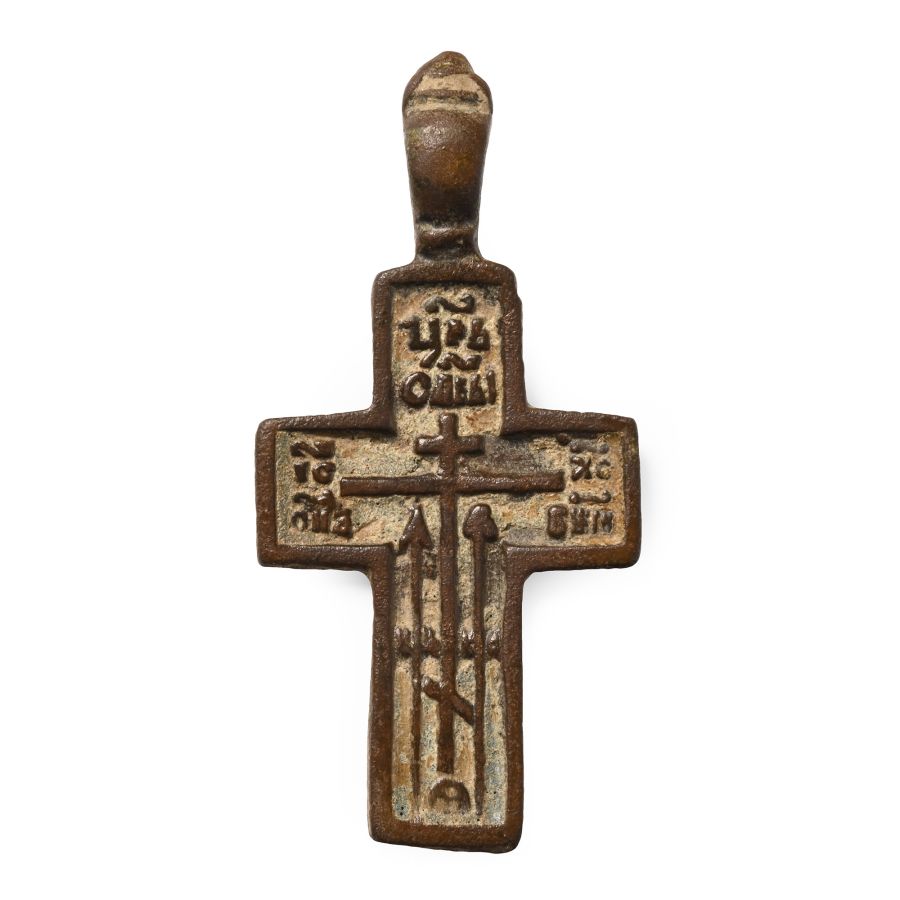
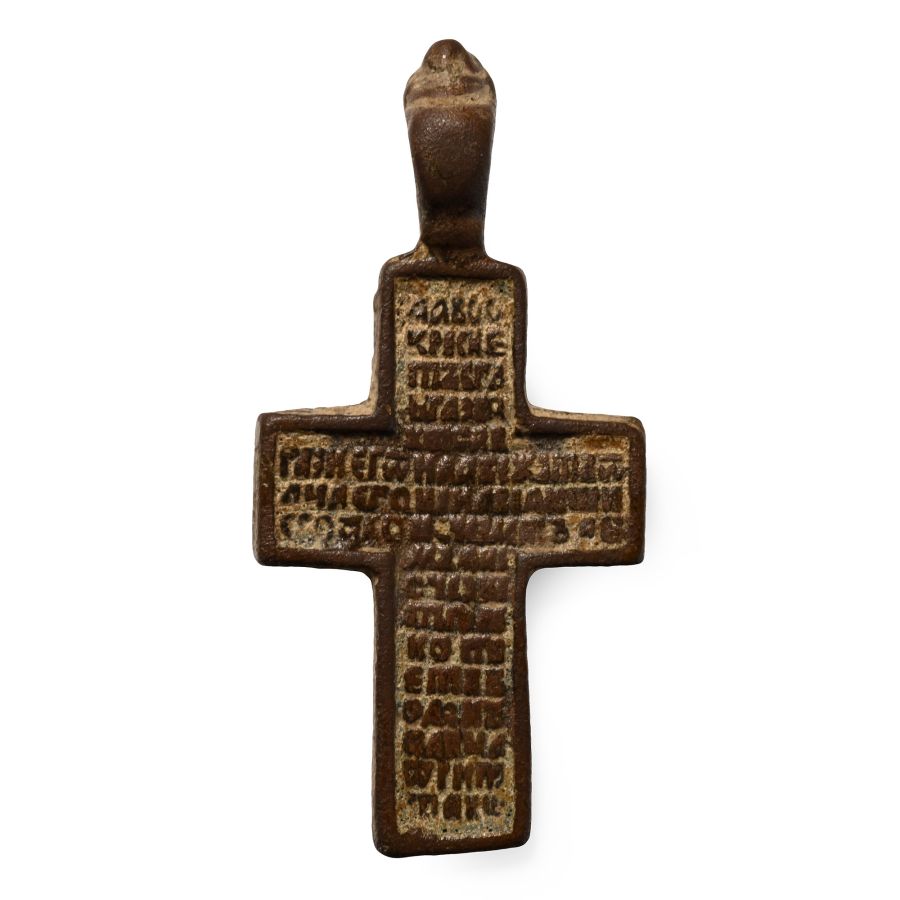
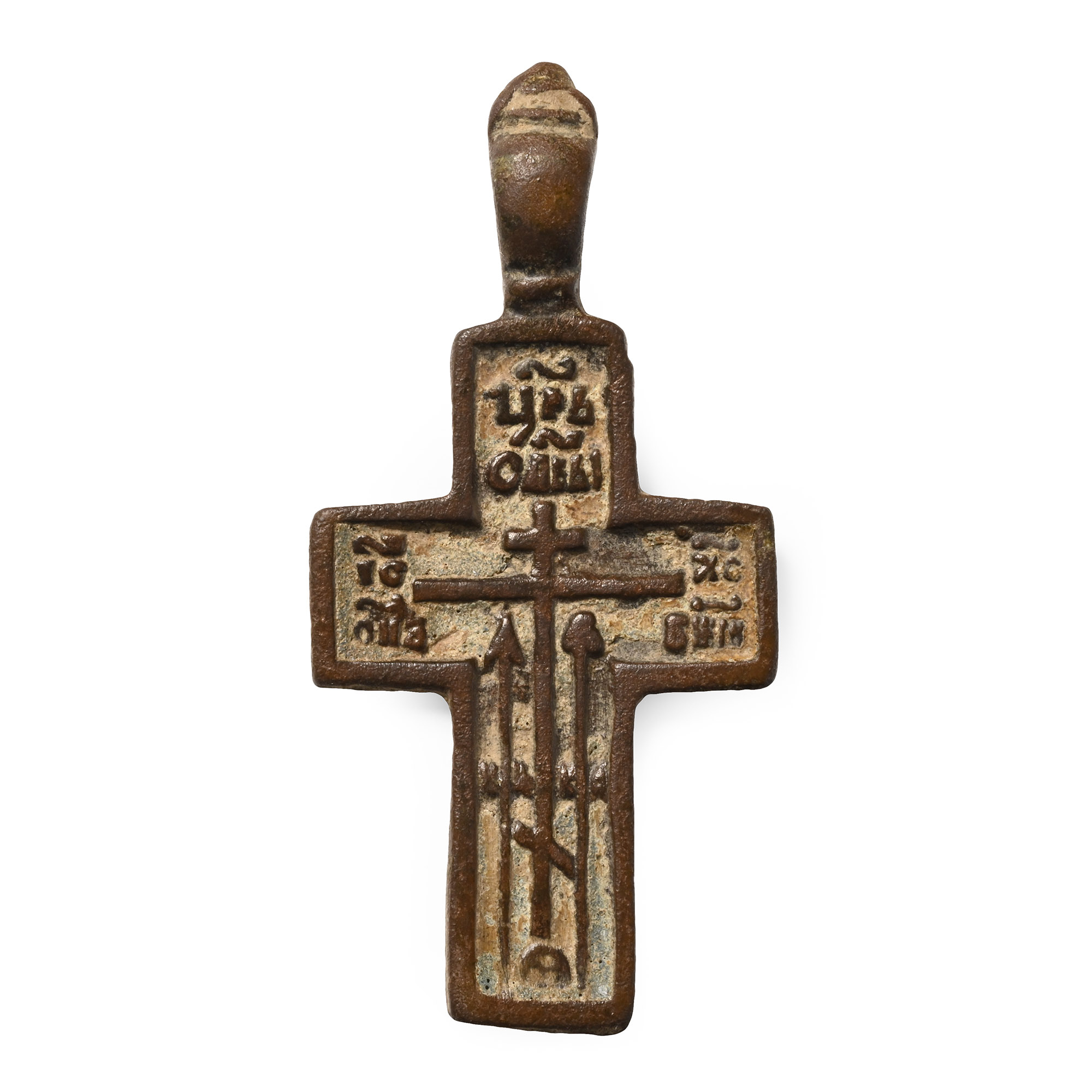
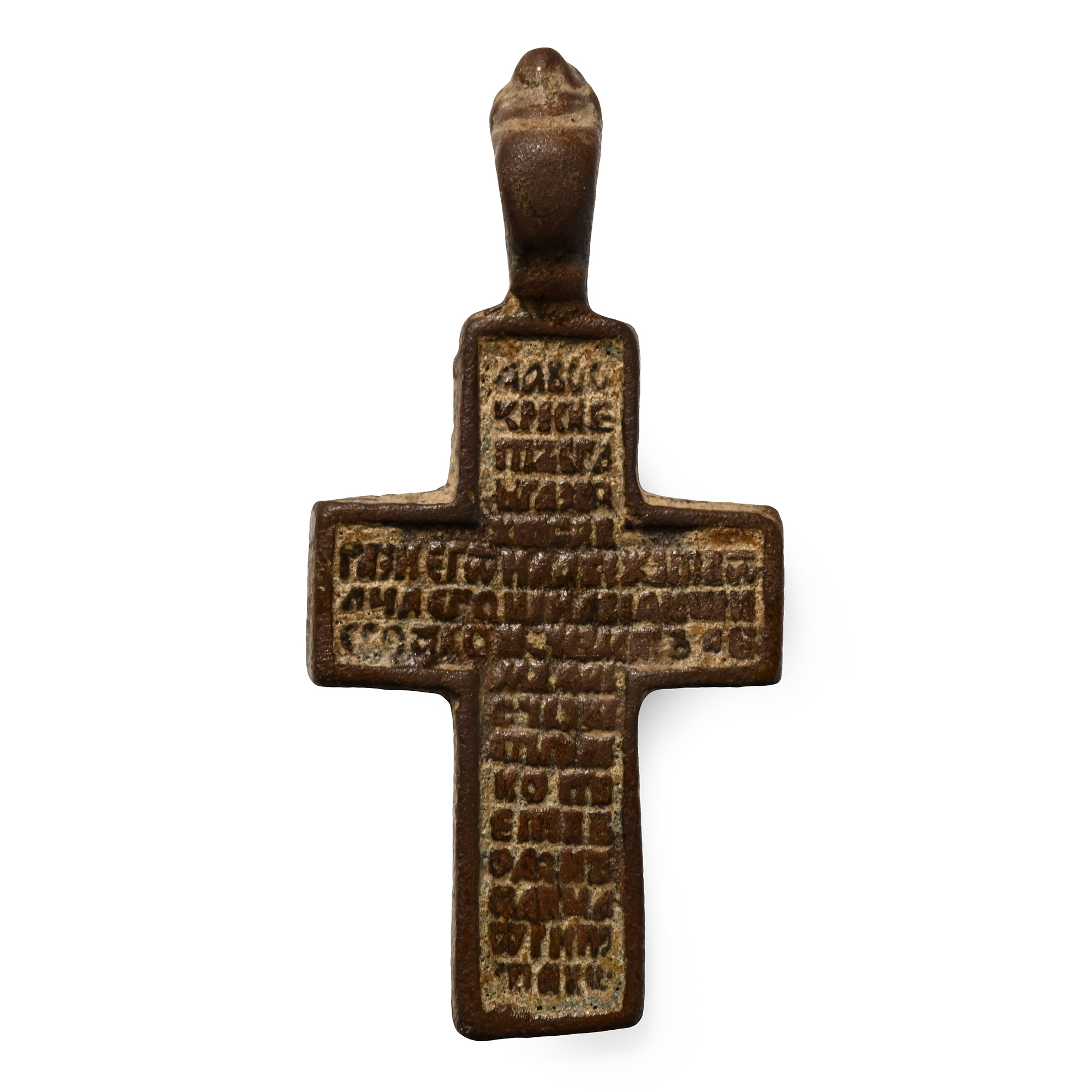
East European Bronze Cross Pendant
17TH-18TH CENTURY A.D.
1 3/4 in. (5.25 grams, 46 mm).
Comprising: the obverse a voided cross with Calvary scene of cross, spear and sponge with text surrounding; reverse with dense text. [No Reserve]
ProvenancePrivate collection formed in Europe in the 1980s.
Westminster collection, central London, UK.
TimeLine Auctions follows a vetting process to ensure the authenticity and legality of all items, reinforcing our commitment to integrity and responsible trading. Each antiquity, antique, and coin lot undergoes thorough examination by a vetting committee of at least ten external specialists, professional trade association members, scientists, and archaeologists: Our Vetting Process
AUCTIONS:
TimeLine is a leading auction house specialising in antiquities, ancient art, collectables, natural history, coins, medals, and books. Our auctions offer museums, collectors, historians, and enthusiasts the opportunity to acquire unique and historically significant pieces.
-
Lapis Lazuli and Hardstone Bead Necklace String
20th century A.D.Sold for (Inc. bp): £20
Restrung group of annular, tabular and other types with granulated collars. 39.63 grams, 47 cm
London, UK, collection, 2000s. -
Egyptian Style Stone Wedjat Eye Amulet Collection
20th century A.D.Sold for (Inc. bp): £20
Amuletic plaques in various materials, each in the form of the wedjat Eye of Horus. 14.9 grams total, 21-25 mm
with Archaeologia, Switzerland, before 1983. Ex private North American collection. London private collection, 2016. -
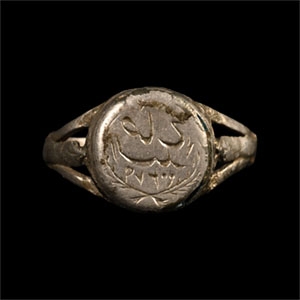
Silver Ring with Epigraphic Bezel
17th-18th century A.D.Sold for (Inc. bp): £59
Comprising a D-section hoop, openwork columnar shoulders supporting a hollow disc bezel, the bezel with Arabic inscription above a wreath. 3.95 grams, 24.30 mm overall, 18.64 mm internal diameter (approximate size British Q 1/2, USA 8 1/4, Europe 18.12, Japan 17)
From an English collection formed before 2000. This lot is accompanied by an illustrated lot declaration signed by the Head of the Antiquities Department, Dr Raffaele D’Amato.
