
Loading, please wait...
LOT 0038
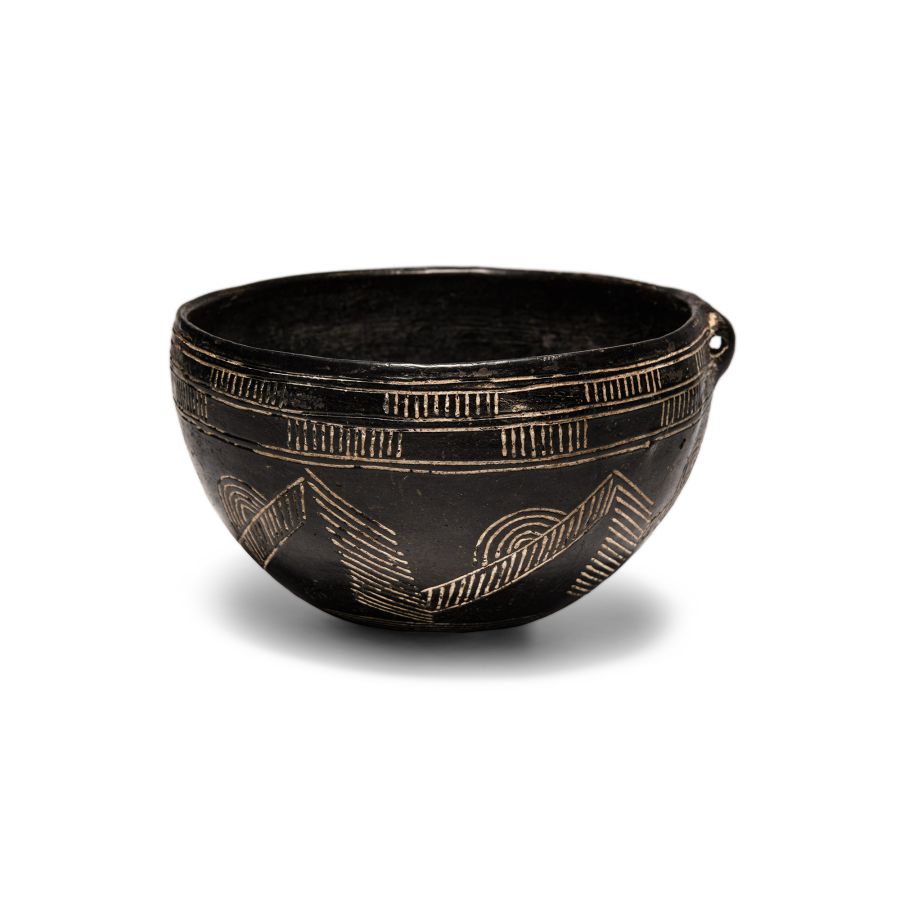
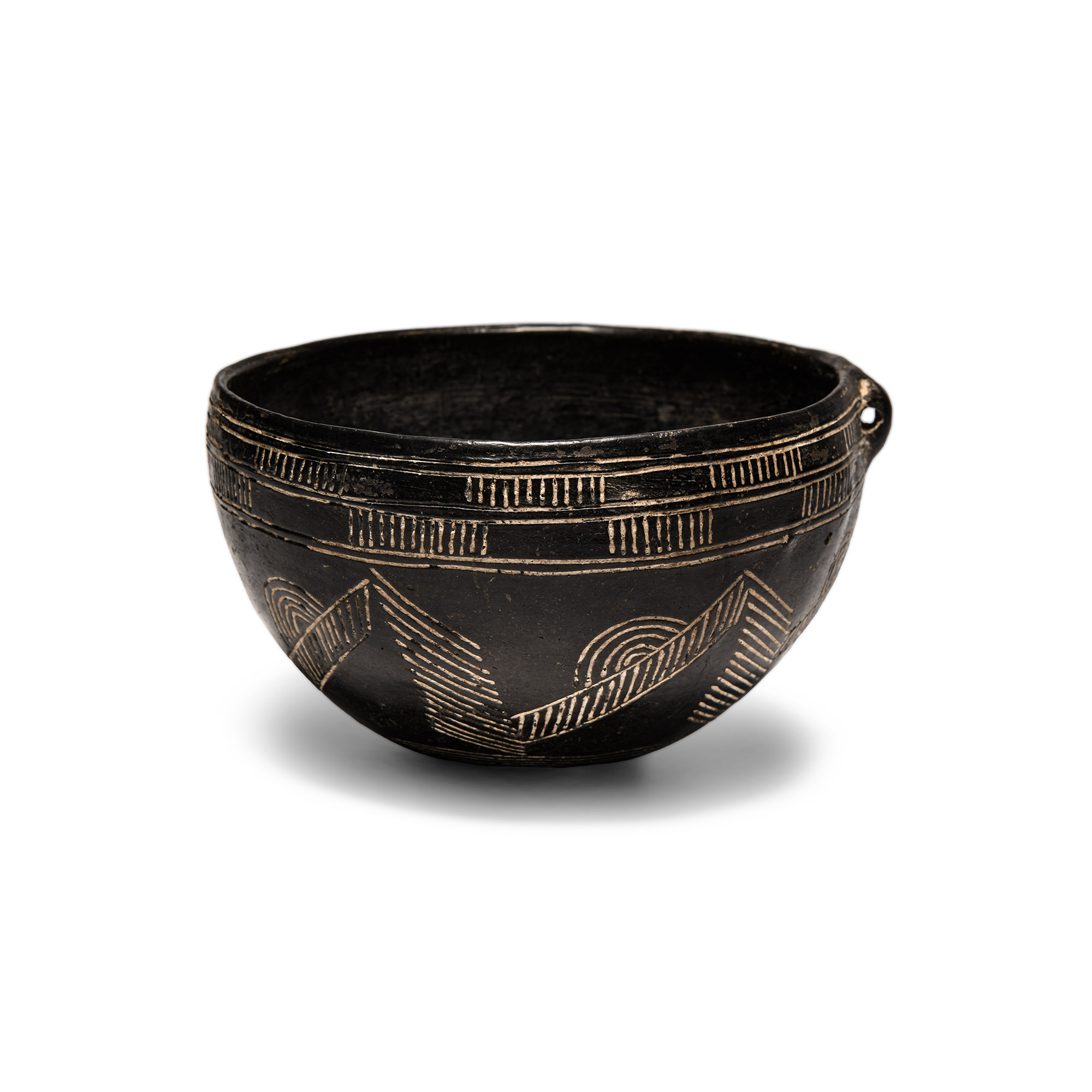
Early Cypriot Terracotta Bowl
BRONZE AGE, CIRCA 2300-1650 B.C.
4 3/8 in. (163 grams, 11 cm wide).
Hemispherical in form, black burnished finish with small loop below the rim, incised geometric bands with hatching.
ProvenanceEx private Bonn collection, acquired c.1960-1970.
LiteratureCf. similar item in the British Museum, London, under reference 1939,0217.16.
CONDITIONTimeLine Auctions follows a vetting process to ensure the authenticity and legality of all items, reinforcing our commitment to integrity and responsible trading. Each antiquity, antique, and coin lot undergoes thorough examination by a vetting committee of at least ten external specialists, professional trade association members, scientists, and archaeologists: Our Vetting Process
AUCTIONS:
TimeLine is a leading auction house specialising in antiquities, ancient art, collectables, natural history, coins, medals, and books. Our auctions offer museums, collectors, historians, and enthusiasts the opportunity to acquire unique and historically significant pieces.
-
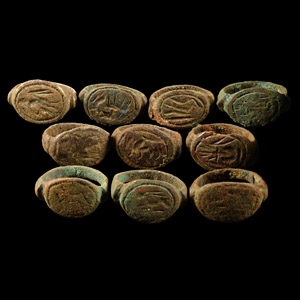
Graeco-Persian Bronze Ring Group
2nd century B.C. and laterSold for (Inc. bp): £416
Mainly comprising rings composed of a hoop with stepped shoulders and an oval bezel, most displaying an incuse human or animal figure. 52 grams total, 21-25 mm
Ex private collection, 1980s. Acquired on the UK art market in the 1990s. -
.jpg)
Etruscan Red Carnelian Scaraboid with Archery Intaglio
Circa 6th-4th century B.C.Sold for (Inc. bp): £585
Polished and incised with semi-naturalistic anatomical detailing; intaglio to base displaying archer's bow and quiver; drilled for suspension. 2.54 grams, 15 mm
Acquired 1969-1999. From the private collection of the late Mr S.M., London, UK, thence by descent. -
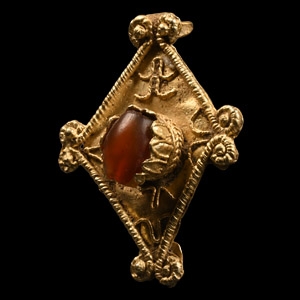
Eastern Greek Gold Lozenge-Shaped Brooch
5th-3rd century B.C.Sold for (Inc. bp): £260
Retaining the pin lug and catchplate to reverse, filigree borders and scrolls to the perimeter, central cell adorned with filigree ropework and petals; stone replaced. 3.88 grams, 33 mm
From the collection of a North American gentleman, formed in the 1990s.
