
Loading, please wait...
LOT 0036
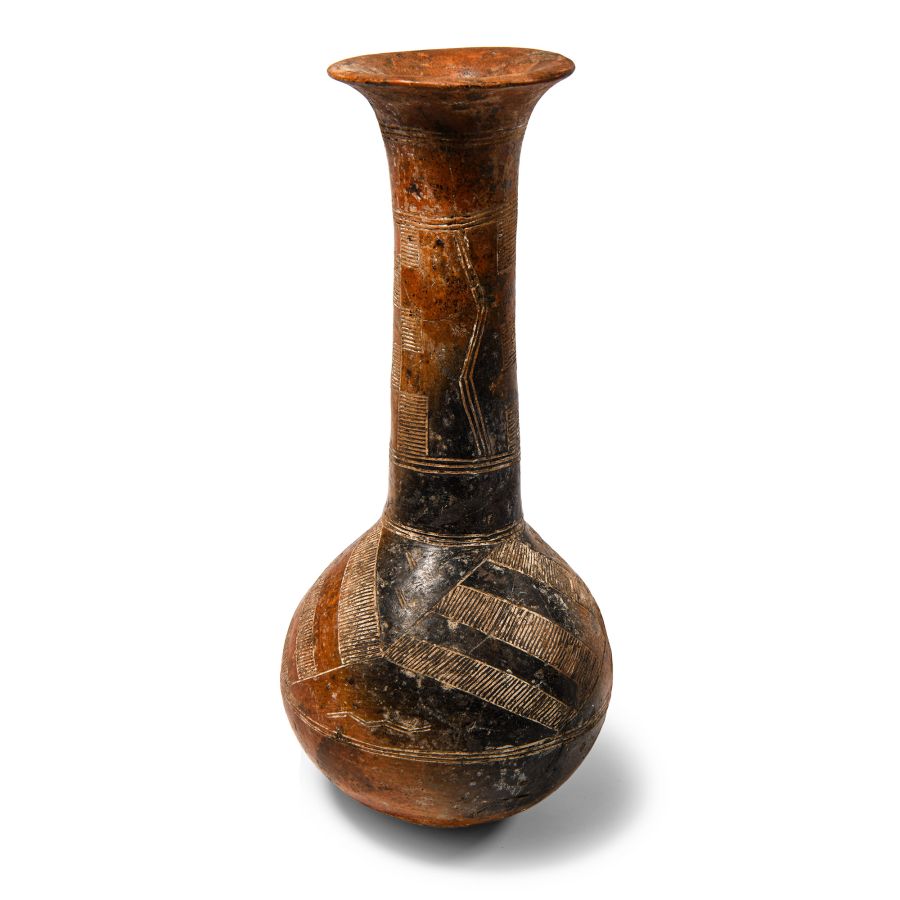
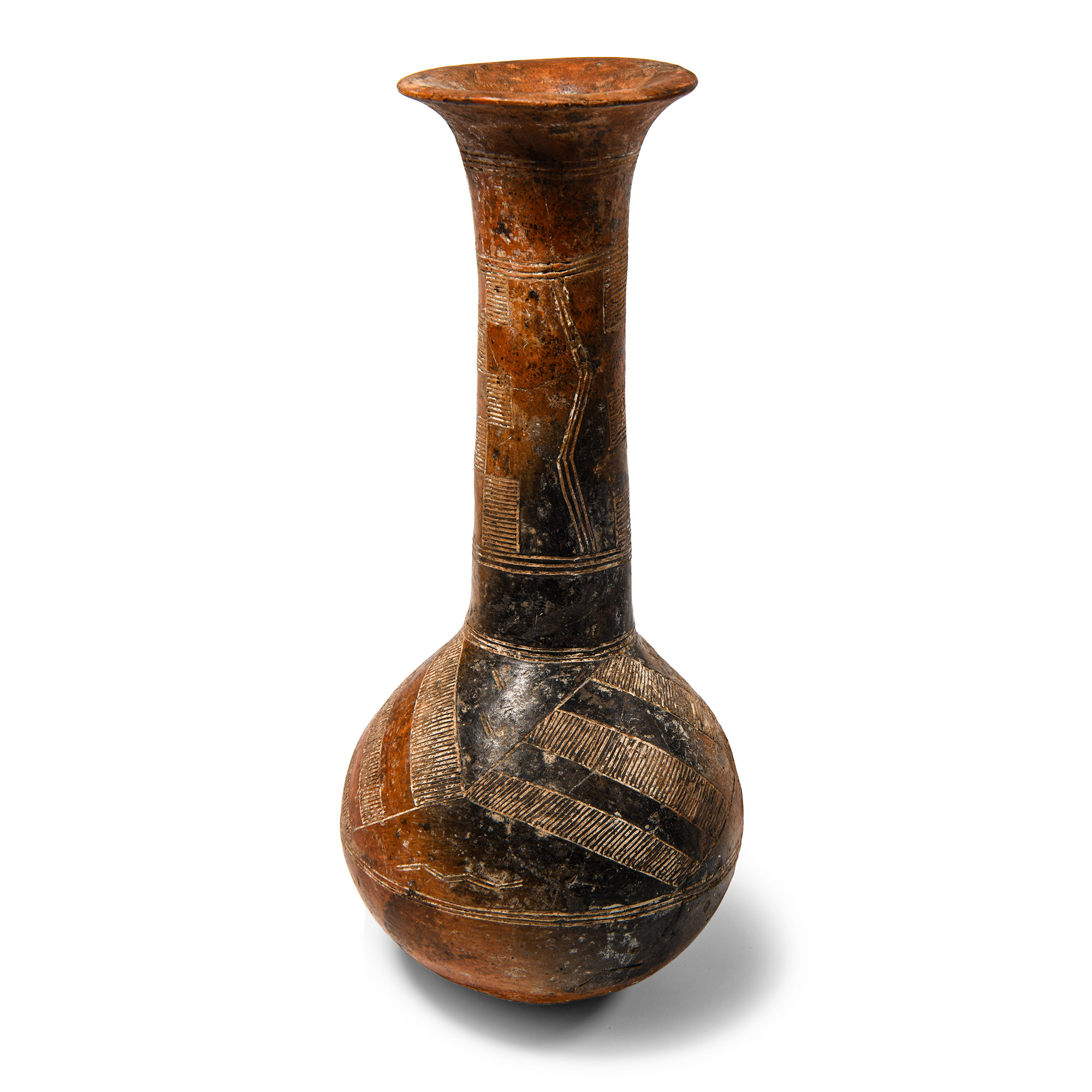
Early Cypriot Red Burnished-Ware Vase
BRONZE AGE, CIRCA 2300-1650 B.C.
7 7/8 in. (375 grams, 20 cm high).
Bulbous bodied with a cylindrical neck and everted rim, decorated with incised geometric motifs: chequered squares, vertical chevrons, hatched and striped lozenges, combed circumferential bands; accompanied by an acrylic display base.
ProvenanceAcquired in the 1990s.
From the deceased estate of a North Yorkshire private collector, UK.
Ex Den of Antiquity, Cambridgeshire, UK.
Cf. The British Museum, museum numbers 1888,0927.29 and 2001,0423.4, for similar motifs.
FootnotesRed burnished-ware pottery became the dominant pottery ware lasting into the Middle Bronze Age on the island of Cyprus. Vessels were handmade and covered with a slip, which was burnished and often decorated with patterns incised with a sharp cutting edge before being fired. Potters were able to produce vessels that were either mottled or painted in two colours, often red outside and black inside and on the exterior of the rim.
CONDITIONTimeLine Auctions follows a vetting process to ensure the authenticity and legality of all items, reinforcing our commitment to integrity and responsible trading. Each antiquity, antique, and coin lot undergoes thorough examination by a vetting committee of at least ten external specialists, professional trade association members, scientists, and archaeologists: Our Vetting Process
AUCTIONS:
TimeLine is a leading auction house specialising in antiquities, ancient art, collectables, natural history, coins, medals, and books. Our auctions offer museums, collectors, historians, and enthusiasts the opportunity to acquire unique and historically significant pieces.
-
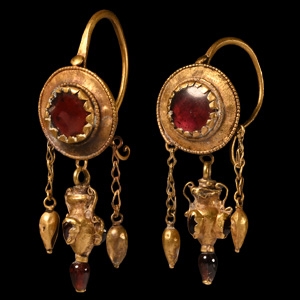
Greek Gold Earrings with Amphora Drops
Circa 2nd century B.C.Sold for (Inc. bp): £1,950
Each composed of a tiered discoid head with polished garnet inlays in claw settings, filigree to the outer perimeter, tapering hook to reverse and three dangles below, the central one formed as an amphora with scrolled handles, three polished garnet cabochons to the equator and a garnet bead to base; flanked by two lotus or bud-shaped charms on short lengths of chain. 14.28 grams total, 52-57 mm
Acquired 1970-2010. From the collection of a late Japanese gentleman. -
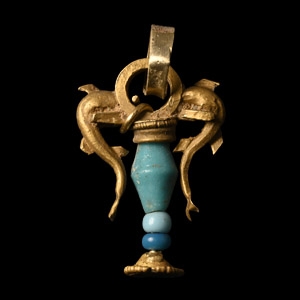
Greek Gold Dolphin Amphora Pendant
Circa 2nd century B.C.Sold for (Inc. bp): £715
The vessel body composed of blue glass beads threaded on a slender gold wire stem, splayed gold foot with beaded rim, handles formed as leaping dolphins with suspension loops between. 1.99 grams, 22 mm
Acquired 1970-2010. Collection of a late Japanese gentleman. -
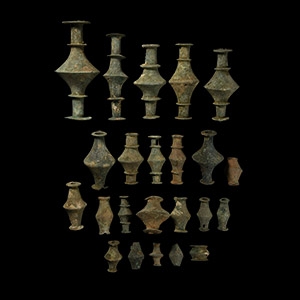
Greek Bronze Furniture Fitting Group
3rd-2nd century B.C.Estimate: £100 - 140 (+bp*)
Opening Bid: £40
Comprising over 20 hollow-formed bicones. 790 grams total, 21-96 mm
Acquired 1960s-1990s. Late Alison Barker collection, a retired London barrister.
