
Loading, please wait...
LOT 0279
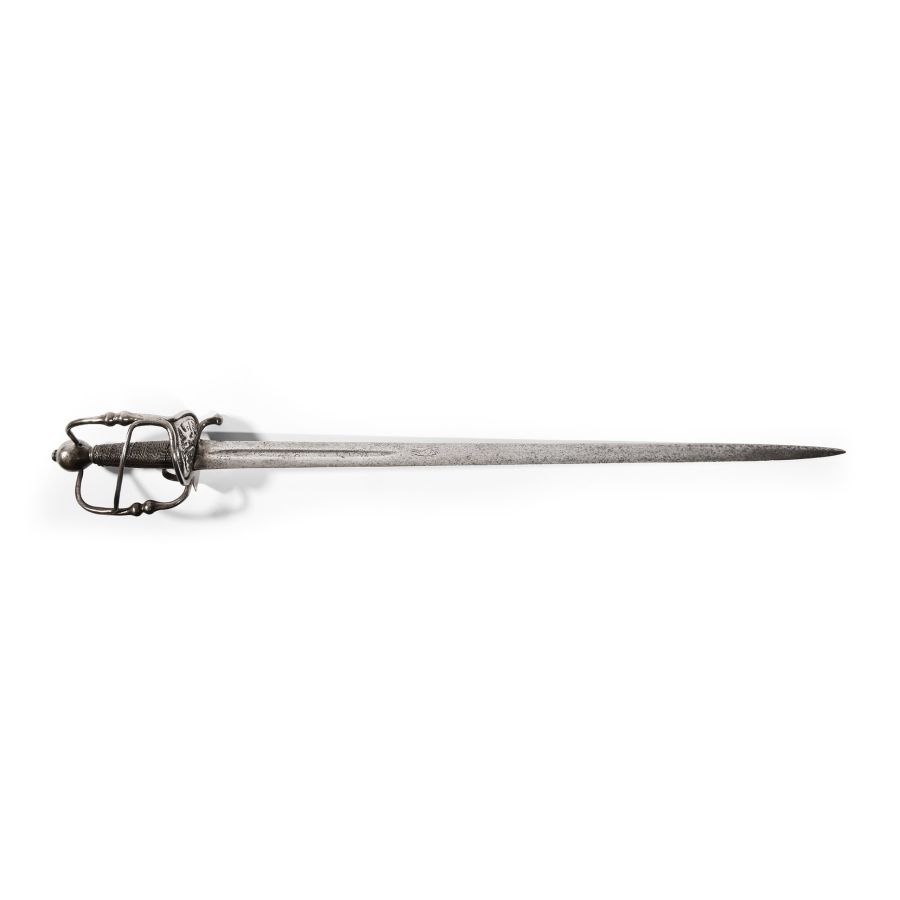
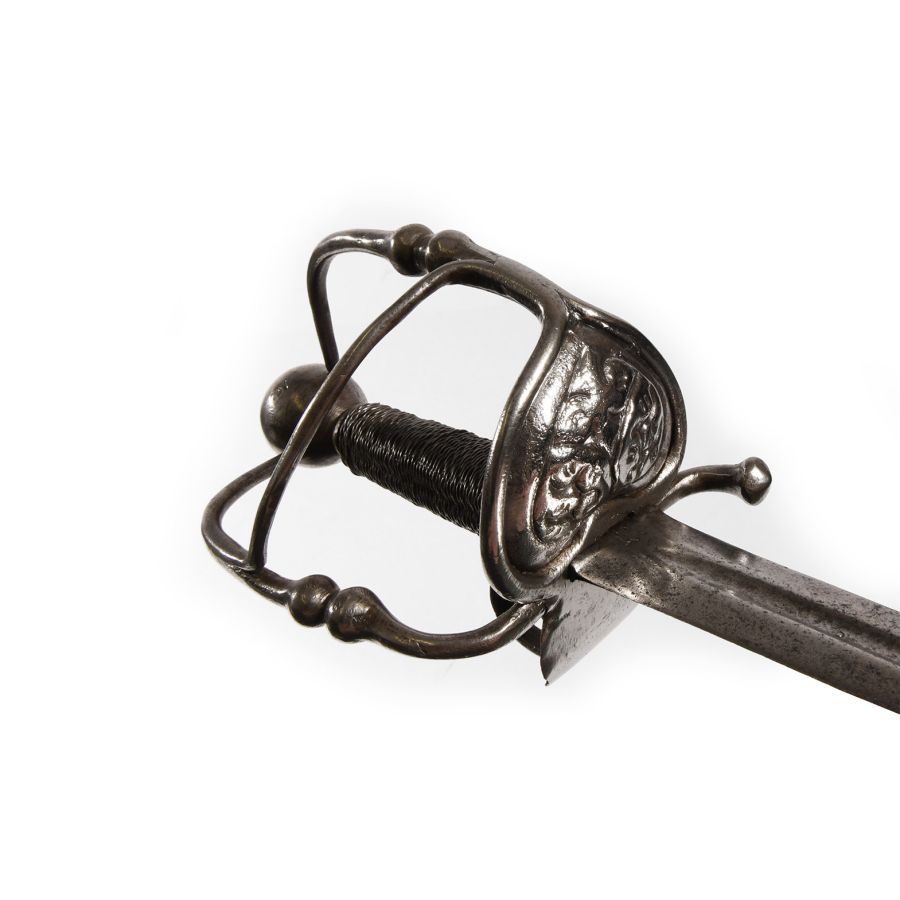
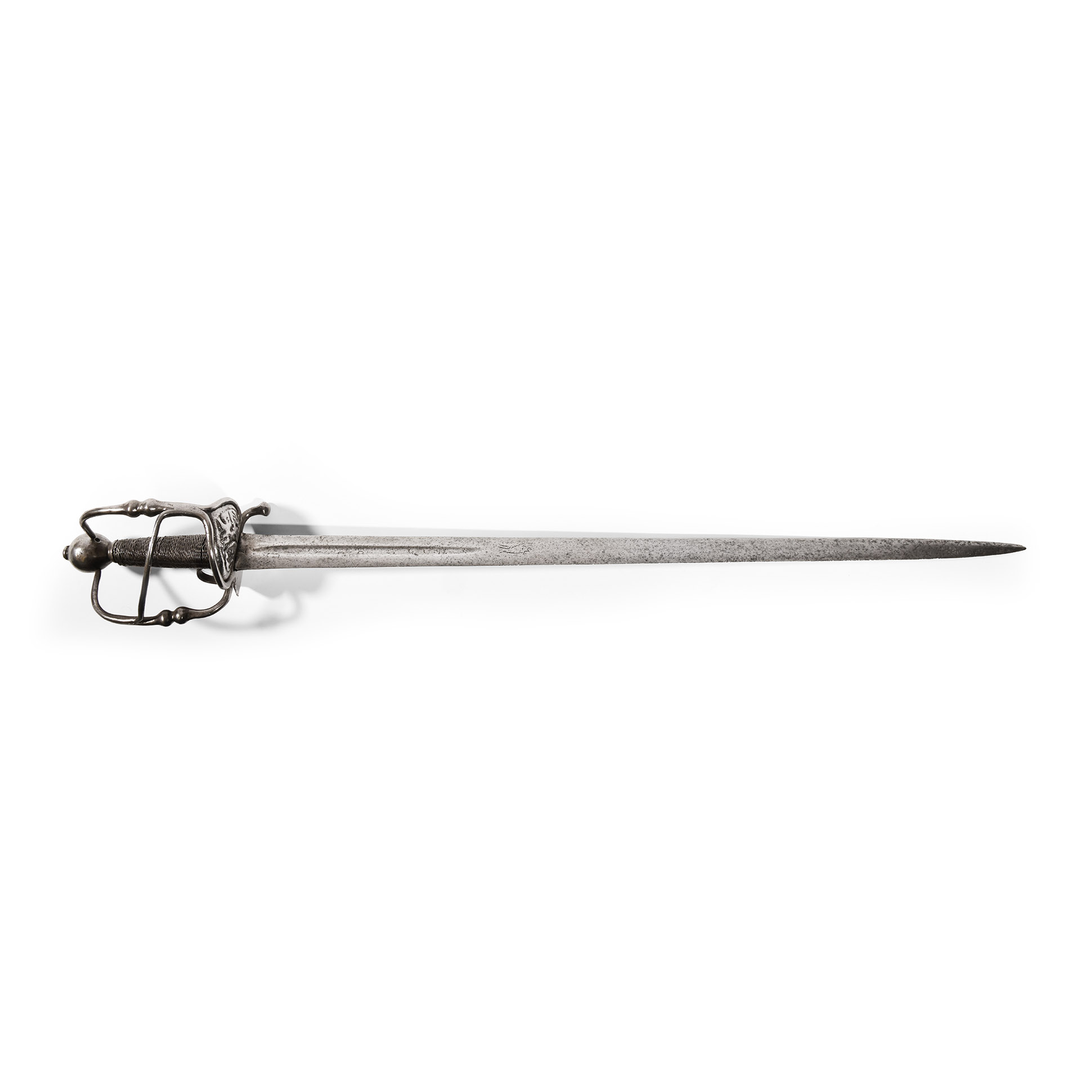
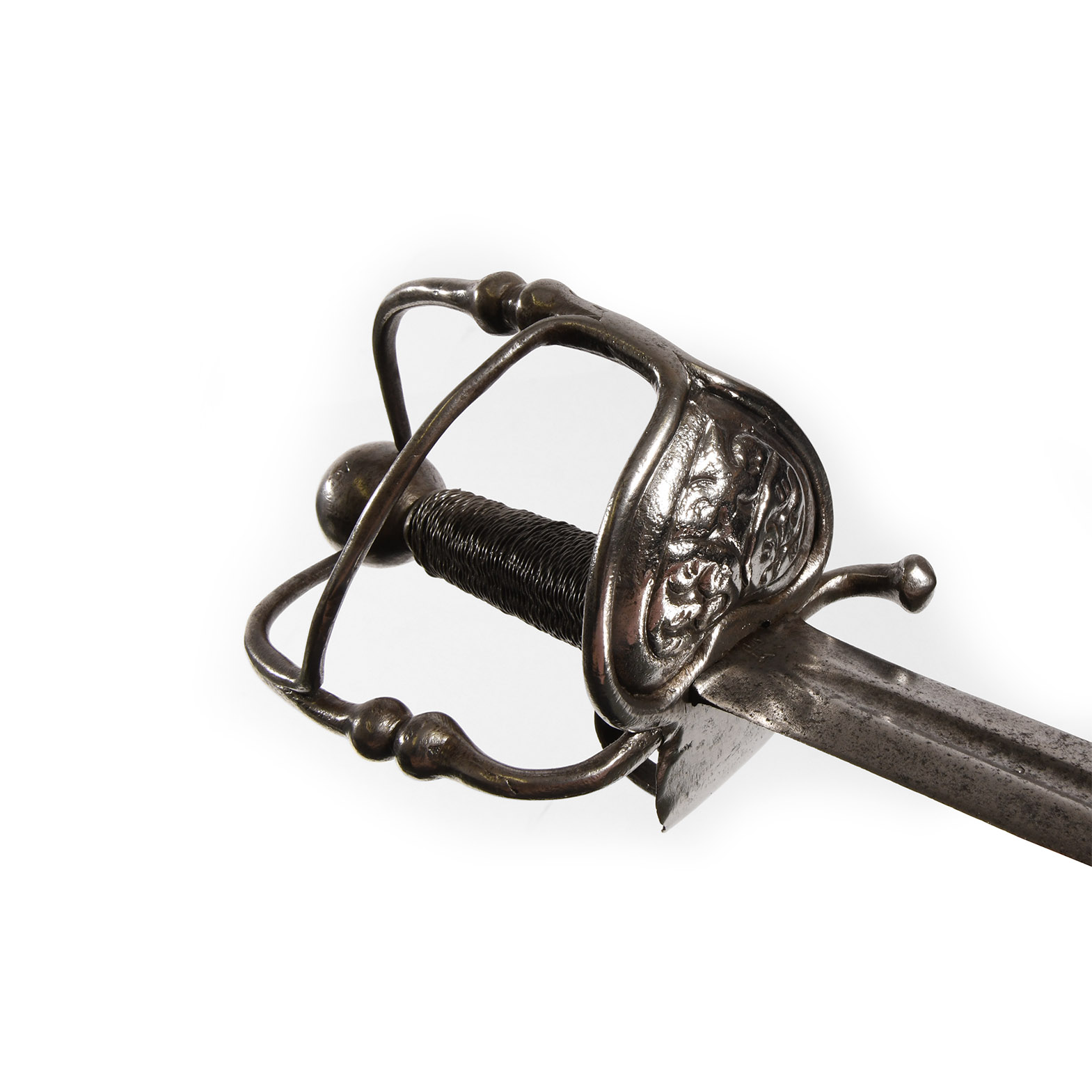
Dutch Thumb Ring Sword
MID 16TH CENTURY A.D.
33 in. (826 grams, 84 cm).
The blade composed of a straight, double edge with single fuller and clear running wolf marks; signed 'S AH A GOM' in both fullers with 'shooting star' below and with punched crown mark just below the hilt; twisted wire grip, thumb ring, leaf-shaped guard to hilt, bulbous pommel.
ProvenanceAcquired from West Street Antiques, Dorking, Surrey, UK, 2015.
The Kusmirek Collection, UK.
Accompanied by copy of a previous listing and item ticket.
TimeLine Auctions follows a vetting process to ensure the authenticity and legality of all items, reinforcing our commitment to integrity and responsible trading. Each antiquity, antique, and coin lot undergoes thorough examination by a vetting committee of at least ten external specialists, professional trade association members, scientists, and archaeologists: Our Vetting Process
AUCTIONS:
TimeLine is a leading auction house specialising in antiquities, ancient art, collectables, natural history, coins, medals, and books. Our auctions offer museums, collectors, historians, and enthusiasts the opportunity to acquire unique and historically significant pieces.
LOT 0279
Dutch Thumb Ring Sword
Estimate £1,000 - 1,400€1,160 - 1,620 (for guidance only)$1,350 - 1,890 (for guidance only)
-
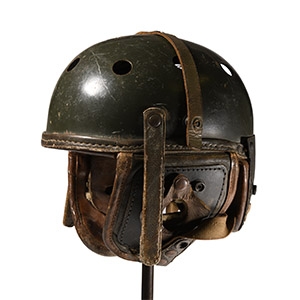
United States M38 Tank Crew Helmet
Circa 1940's A.D.Sold for (Inc. bp): £143
Rawling's pattern M38 composition tank crew helmet with neck protection plate and ear-flaps, fitted with leather lining with leather and fabric securing straps; finished dark green; with later inked 'CESARE' owner name and '1-5-79' date to liner. 613 grams, 27 cm high
Acquired from Czerny's Auction, lot 81515. The Kusmirek Collection, UK. Accompanied by copy of a previous invoice and lot description.
Possibly of Italian manufacture of the type used by US forces in WWII. -
.jpg)
Roman Bronze Military Helmet Section
3rd century A.D.Sold for (Inc. bp): £975
From the right side of the face mask, the upper edge with an embossed band of diagonal lines, Jupiter’s eagle embossed to the centre, looking back and holding a laurel crown in its beak; a hole for the fastening thongs at ear-level. 87 grams, 19.7 cm
Acquired 1960s-1990s. Late Alison Barker collection, a retired London barrister.
The decoration of Roman weaponry contained themes that were directly associated with state propaganda, as well as with the Imperial cult. As the god-protector of the state and the army, Jupiter was the most esteemed. The combination of an eagle (helmet), Minerva and bust of Mars (armour) can also be understood as an image of dii militares. -
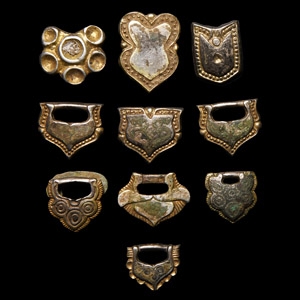
Volga Silver-Gilt Sword Belt Mount Group
11th-12th century A.D.Sold for (Inc. bp): £195
Comprising: two matching ogival plates with pellet borders; a trefoil plate with border of radiating lines framing three concentric circle and oval motifs; a plate with five lobes decorated with dashed lines and six concentric oval motifs at the centre; ogival plate with scalloped border, trefoil motif at centre; ogival plate with pellet border divided into three 'petals' by larger single pellets, scrolling vegetal motif; a floral style plate composed of discoid dimples; irregular hexagonal plate, the shape repeated at the centre, pellet border; trilobate plate with three single pellets to the perimeter and pellet border; ogival plate with expanded waist, raised 'wings' and rounded lozenge against a background of radiating lines; nine with three attachment lugs to reverse, one with two lugs. 31.8 grams total, 17-26 mm
Fine condition.
Acquired in the 1980s-1990s. Ex an important central London gallery, London W1.
The belt fittings find various comparisons with non-ferrous belt appliqués found in the territories of the Volga Bulgars, like specimens from the Semenovsky village. These items were parts of long warrior belts, the leather surfaces decorated all over with such bronze and silver appliqués. Symbols of ranks and elite warrior aristocracy, these belts also served a utilitarian purpose of suspending weapons such as a bow, quiver or a sabre.
