
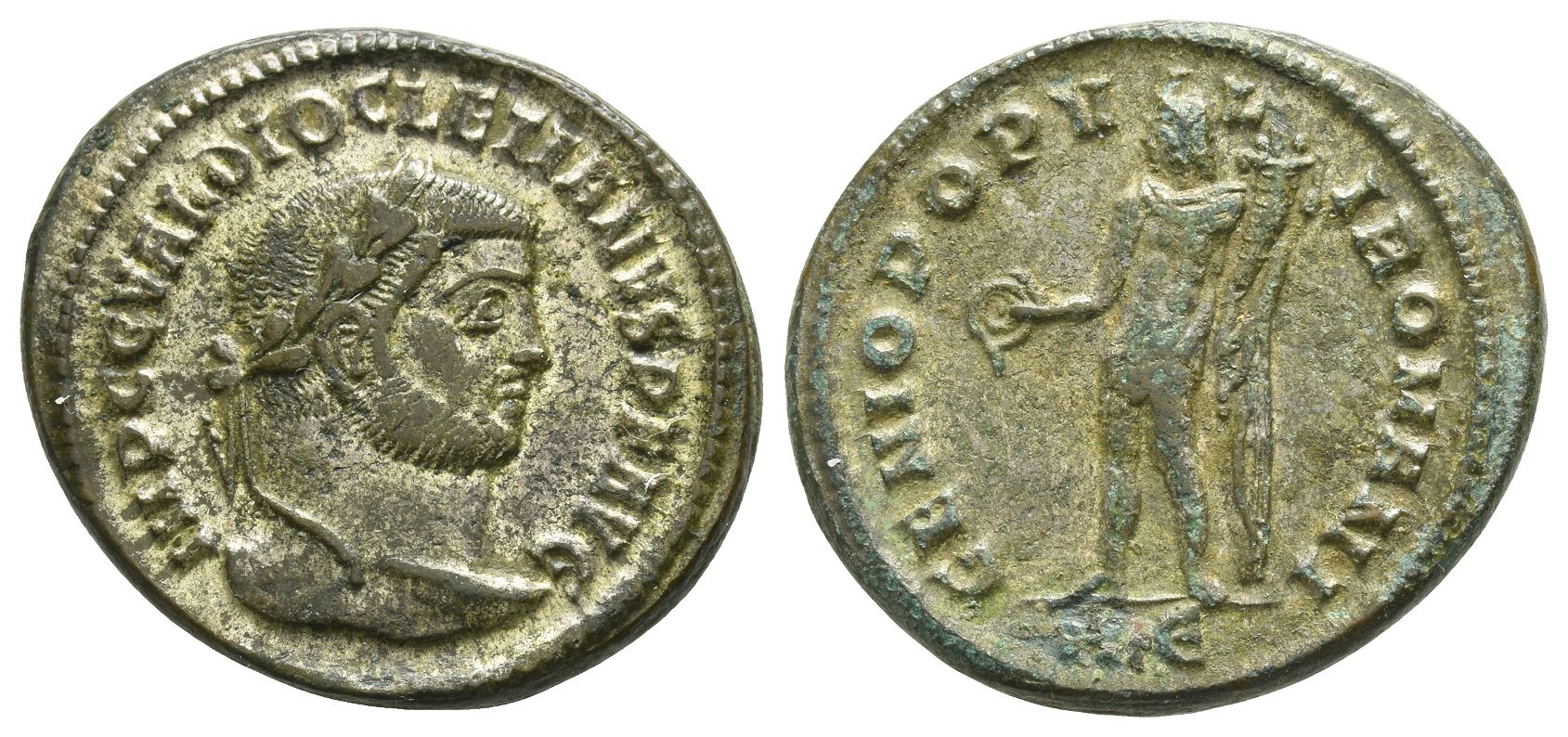
LOT 3517
Diocletian BI Nummus. Circa AD 297-299. Cyzicus(?) mint. 5th officina.
IMP C C VAL DIOCLETIANVS P F AVG, laureate head to right / GENIO POPVLI ROMANI, Genius standing to left, modius on head, holding patera and cornucopia; K(?)Є in exergue. Cf. RIC VI 12a. Very Fine. Much original silvering remaining.(10.80gr, 28mm, 12h.).
ProvenanceAcquired 1970s-1996.
Property of a North American collector.
London collection, 2016.
TimeLine Auctions follows a vetting process to ensure the authenticity and legality of all items, reinforcing our commitment to integrity and responsible trading. Each antiquity, antique, and coin lot undergoes thorough examination by a vetting committee of at least ten external specialists, professional trade association members, scientists, and archaeologists: Our Vetting Process
AUCTIONS:
TimeLine is a leading auction house specialising in antiquities, ancient art, collectables, natural history, coins, medals, and books. Our auctions offer museums, collectors, historians, and enthusiasts the opportunity to acquire unique and historically significant pieces.
-
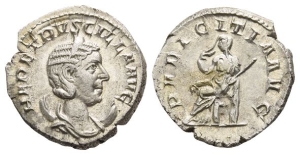
Herennia Etruscilla AR Antoninianus. AD 249-251. Rome mint.
Sold for (Inc. bp): £39
HER ETRVSCILLA AVG, diademed and draped bust to right, set on crescent / PVDICITIA AVG, Pudicitia seated to left, drawing veil from face and holding sceptre. RIC IV 59b (Decius); RSC 19. 4.09gr, 21mm, 12h.
Near Extremely Fine.
From the private collection of a Canadian gentleman living in Essex, UK, formed since the 1920s-circa 1990. Property of an Essex lady until the the late 1990s; thence by descent. From the private collection of an Essex gentleman since the late 1990s. -
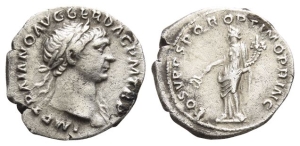
Trajan AR Denarius. AD 108-109. Rome mint.
Sold for (Inc. bp): £59
IMP TRAIANO AVG GER DAC P M TR P, laureate bust to right, aegis on far shoulder / COS V P P S P Q R OPTIMO PRINC, Felicitas standing to left, holding caduceus and cornucopia. RIC II 121 var. (bust type); BMCRE -; Woytek 280c; RSC -. 3.15gr, 19mm, 7h.
Good Very Fine.
Acquired 1970s-1996. Property of a North American collector. London collection, 2016. -
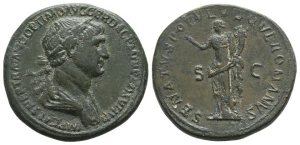
Trajan AE Sestertius. AD 114-117. Rome mint.
Sold for (Inc. bp): £234
IMP CAES NER TRAIANO OPTIM AVG GER DAC P M TR P COS VI P P, laureate and draped bust to right / SENATVS POPVLVSQVE ROMANVS, Felicitas standing facing, head to left, holding caduceus and cornucopiae; S C across fields. RIC II 672; Woytek 534v; Banti 106. 26.35gr, 34mm, 6h.
Very Fine.
Acquired 1970s-1996. Property of a North American collector. London collection, 2016.
