
Loading, please wait...
LOT 1396
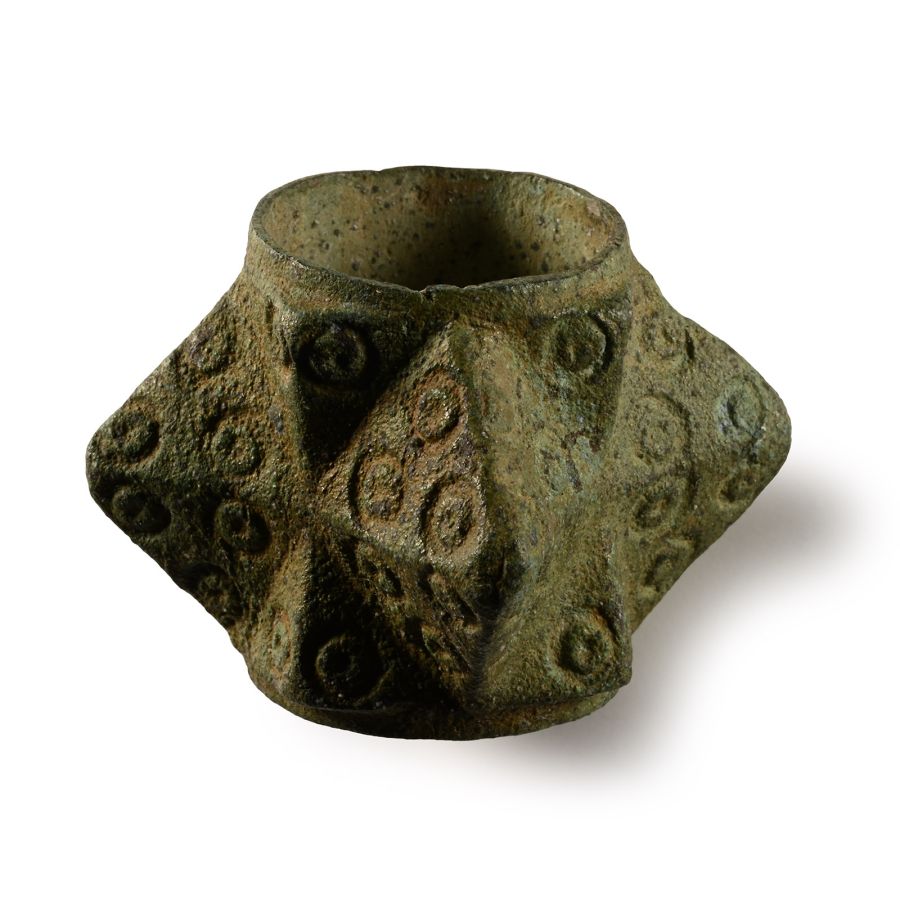
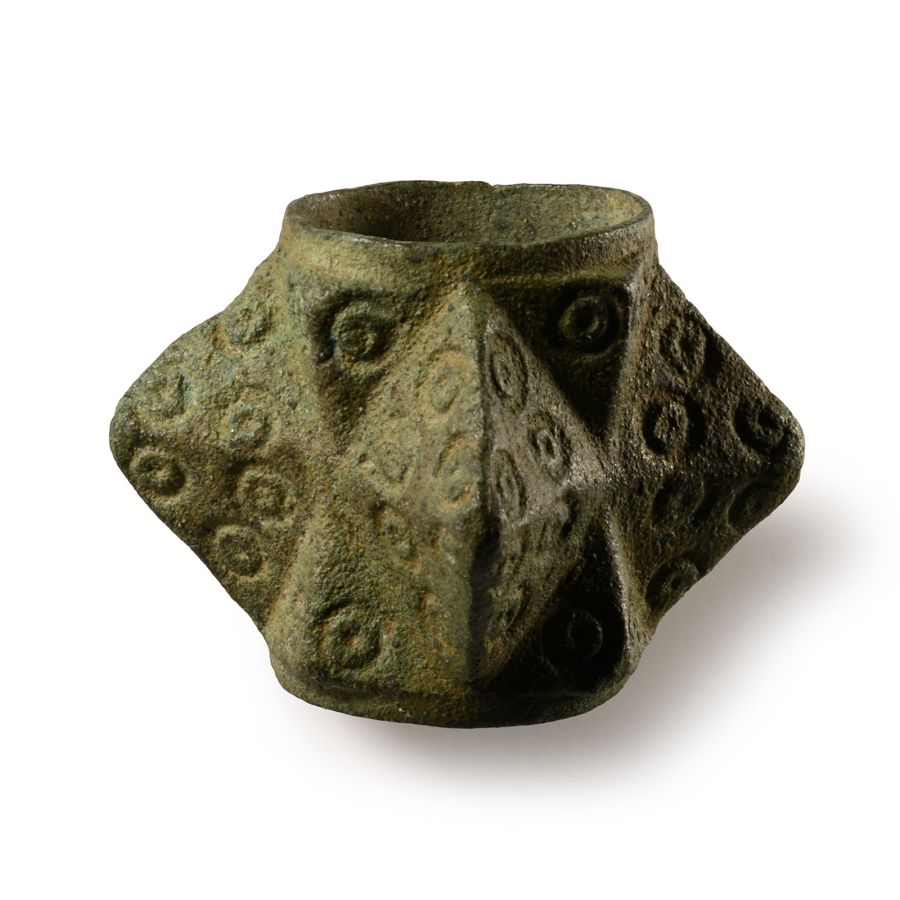
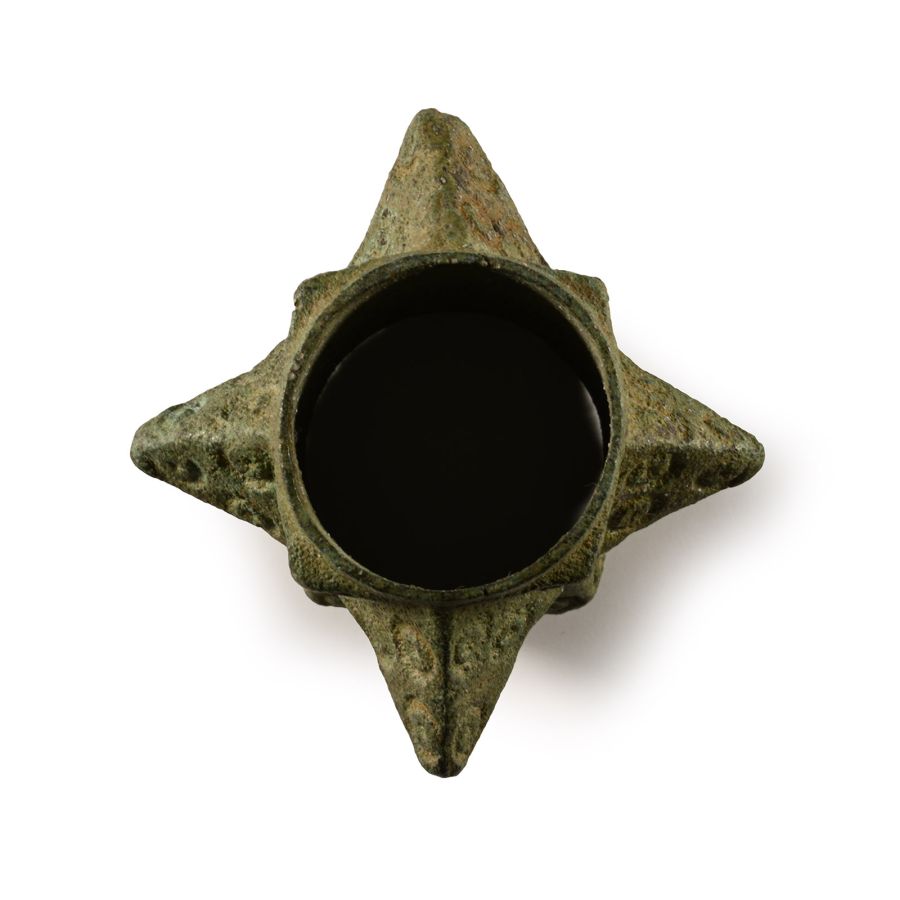
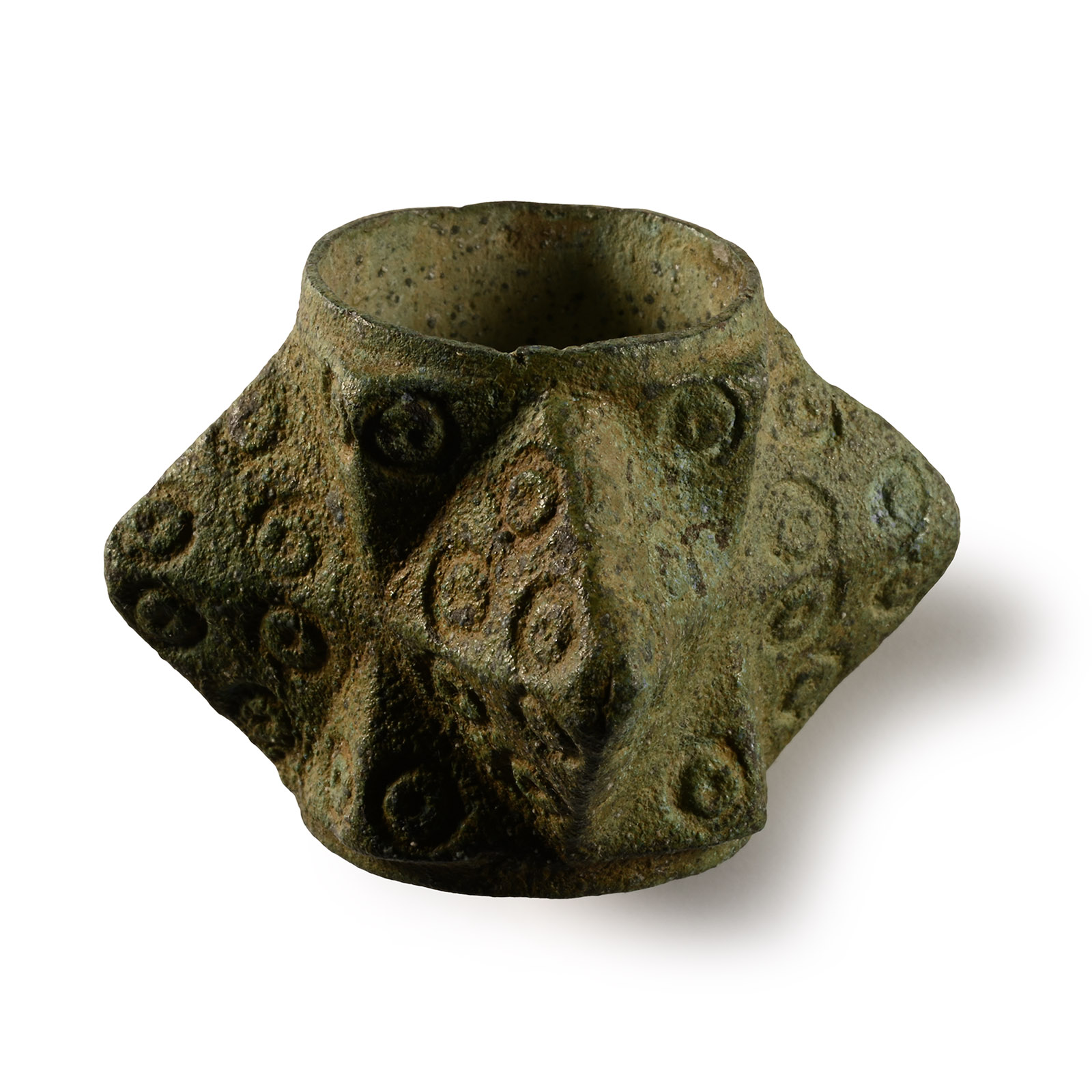
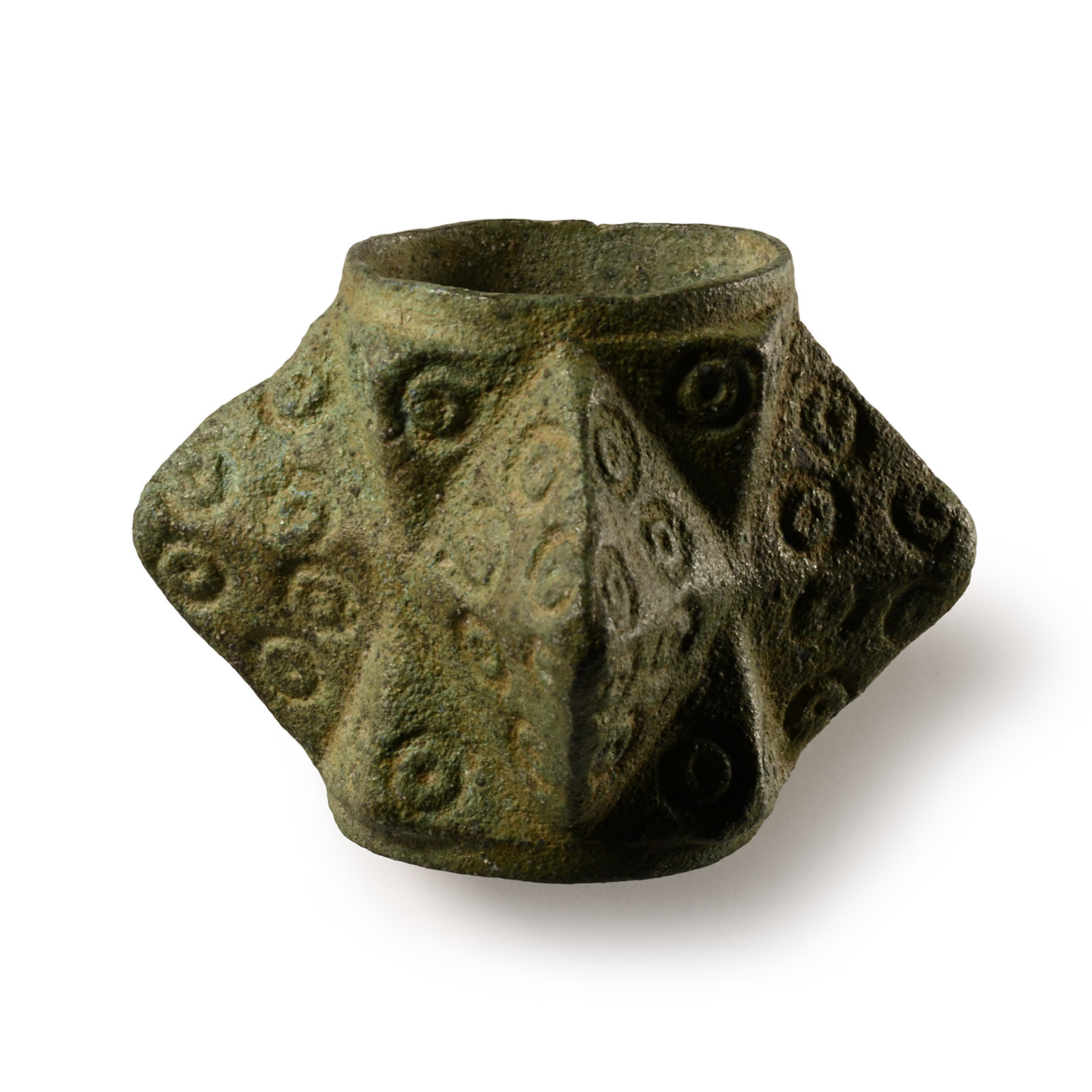
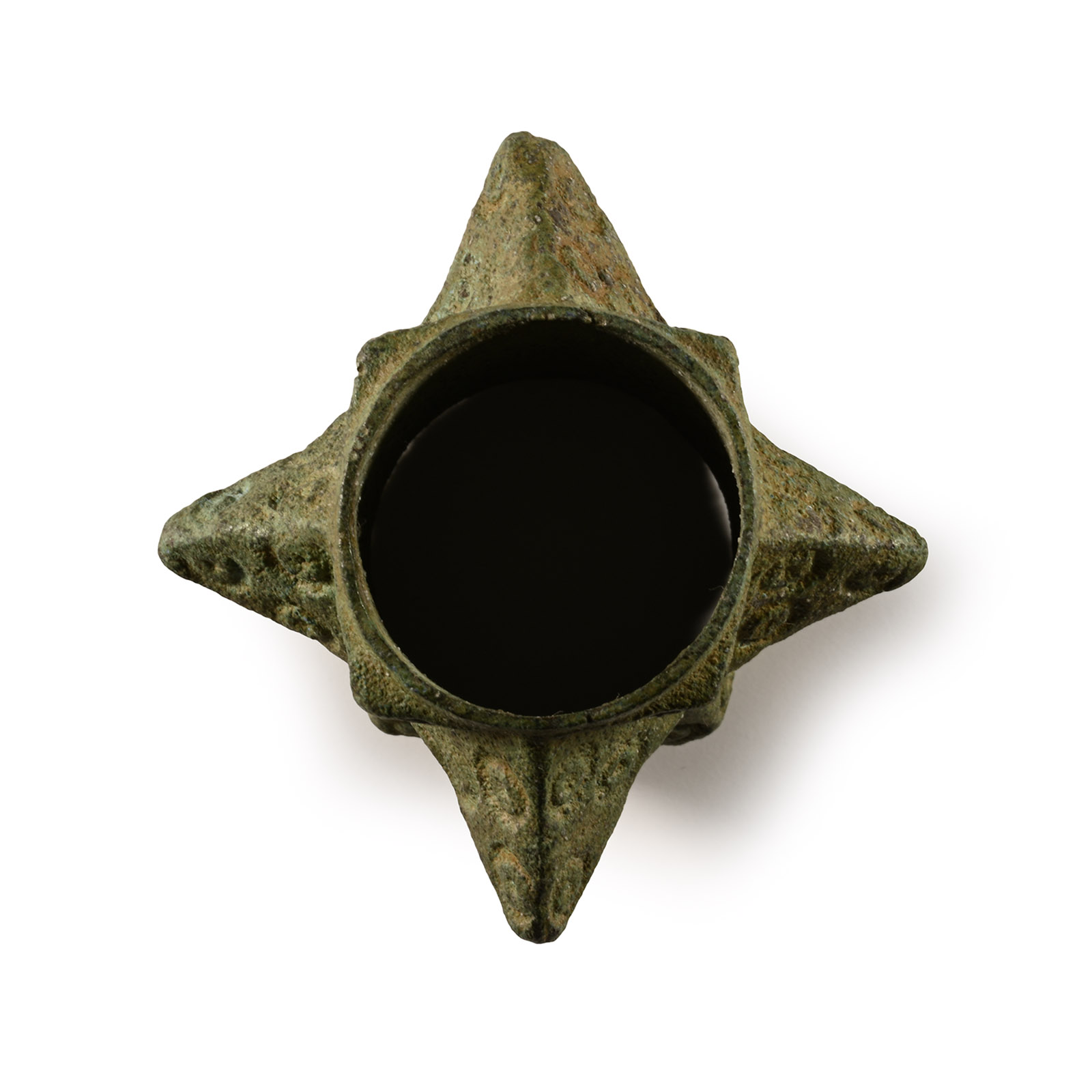
Decorated Star-Shaped Macehead
EASTERN EUROPEAN, CIRCA 14TH CENTURY A.D.
2 in. (85 grams, 53 mm).
With short thick triangular spikes, decorated with engraved concentric circles. [No Reserve]
ProvenanceFrom a collection acquired on the UK art market from various auction houses and collections mostly before 2000.
From an important Cambridgeshire estate; thence by descent.
Cf. Gilliot, C., Weapons and Armours, Bayeux, 2008, pp.160-161, for similar maceheads.
FootnotesThe polygonal mace evolved into the hexagonal winged mace. Originating in the east, this weapon spread across Eastern Europe during the 13th century A.D., and from there to the west. The winged mace, used by the western Europeans, was almost certainly based upon Eastern Roman or Islamic prototypes. It is relevant to note that the polygonal mace was widely used by the eastern cavalrymen (like Turkish and Mongols), during the 14th century A.D.
CONDITIONTimeLine Auctions follows a vetting process to ensure the authenticity and legality of all items, reinforcing our commitment to integrity and responsible trading. Each antiquity, antique, and coin lot undergoes thorough examination by a vetting committee of at least ten external specialists, professional trade association members, scientists, and archaeologists: Our Vetting Process
AUCTIONS:
TimeLine is a leading auction house specialising in antiquities, ancient art, collectables, natural history, coins, medals, and books. Our auctions offer museums, collectors, historians, and enthusiasts the opportunity to acquire unique and historically significant pieces.
-
Luristan Bronze Arrowhead Collection
13th-7th century B.C.Sold for (Inc. bp): £72
Tanged, barbed and leaf-shaped types. 91 grams total, 10.3-14 cm
Ex G. White collection, 1980s-1990s. -
Viking Iron Bearded Axehead
Circa 9th-11th century A.D.Sold for (Inc. bp): £208
With curved edge to the blade, square chin and scooped underside, rounded socket. 390 grams, 15 cm
From the private collection of a London gentleman, from his grandfather's collection formed before the early 1970s. -
Greek Bronze Arrowhead Collection
Circa 5th-3rd century B.C.Sold for (Inc. bp): £111
Comprising: two leaf-shaped with raised midribs; one triangular with barbs; one triangular with short socket. 18 grams total, 34-52 mm
From an old UK collection, acquired on the UK art market. Property of a Shropshire private collector.
