
Loading, please wait...
LOT 0465
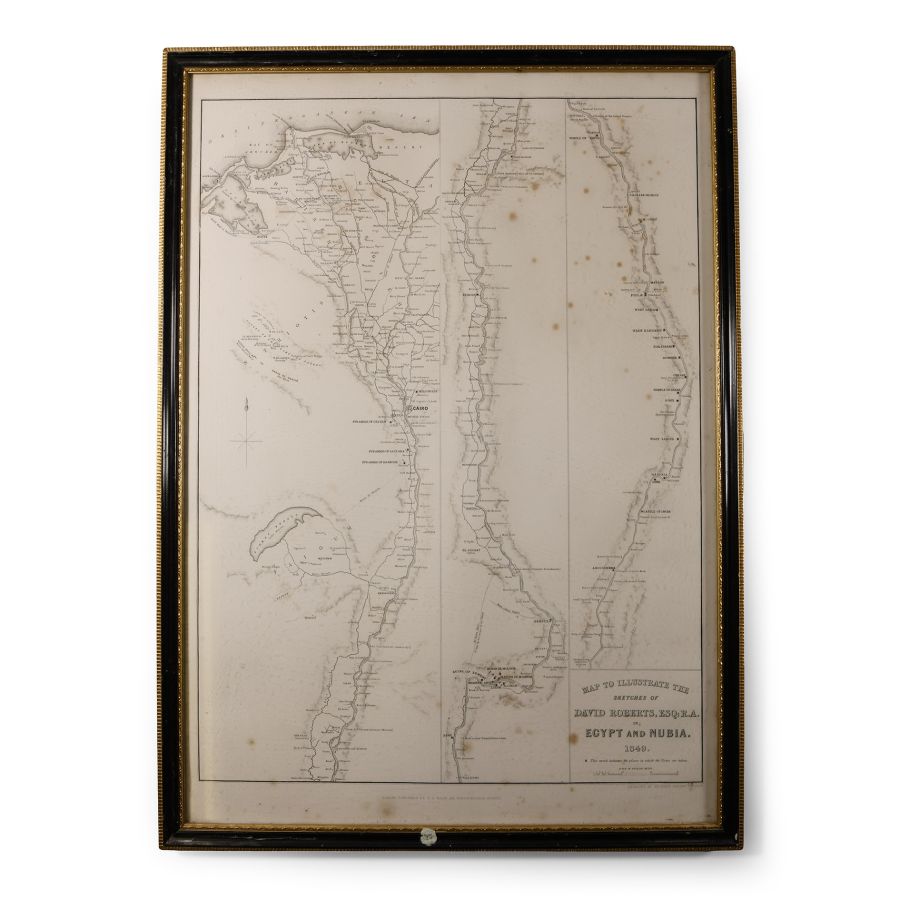
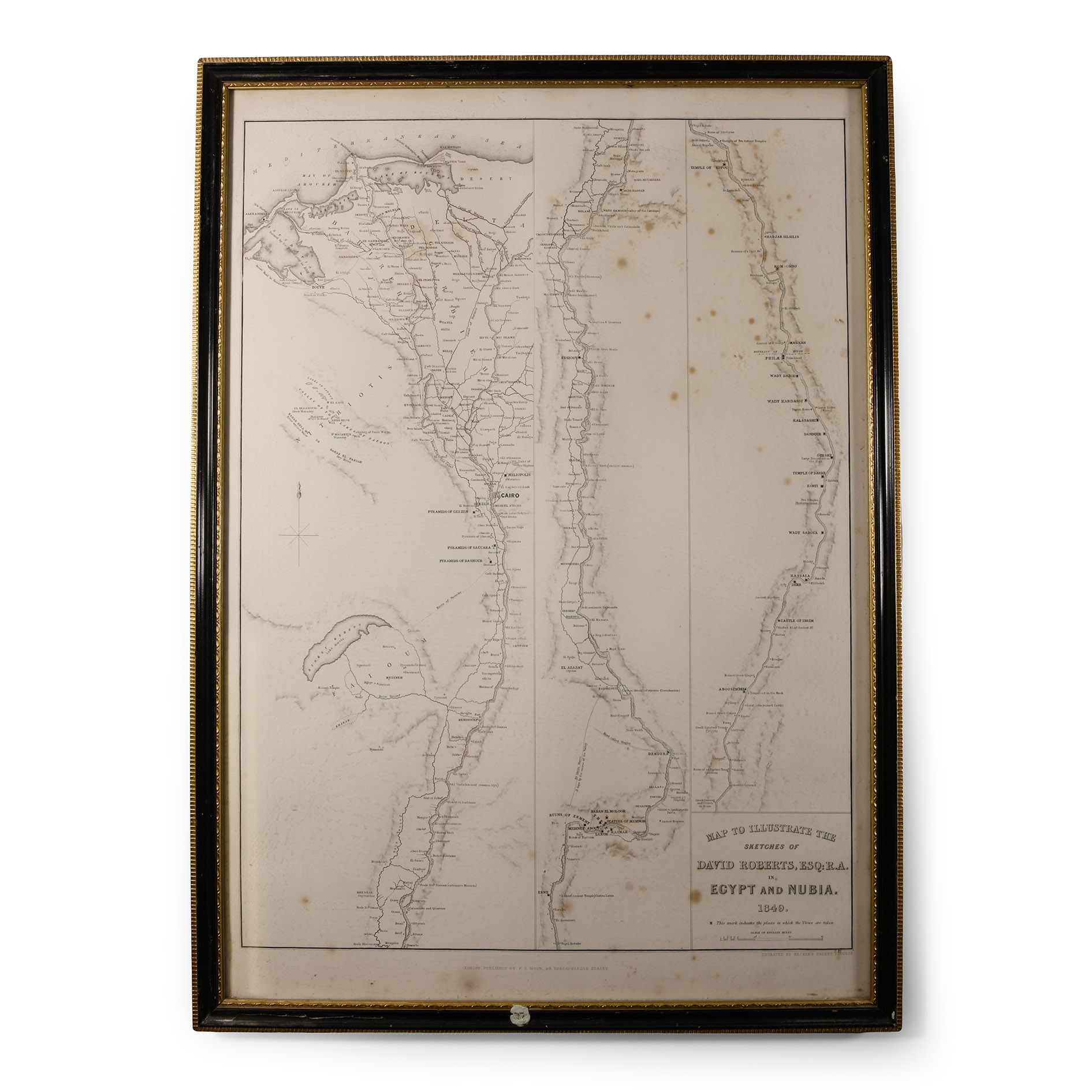
David Roberts Print
19TH CENTURY A.D.
18 1/8 x 25 1/4 in. (2.2 kg, 46 x 64 cm).
Printed map of Egypt and Nubia with locations marked of the sketches of David Roberts, RA on his 1849 expedition; mounted in a glazed wooden frame. [No Reserve]
ProvenanceFrom the private collection of the late Mrs Belinda Ellison, a long time member of the Egyptian Exploration Society, c.1940-2020.
CONDITIONTimeLine Auctions follows a vetting process to ensure the authenticity and legality of all items, reinforcing our commitment to integrity and responsible trading. Each antiquity, antique, and coin lot undergoes thorough examination by a vetting committee of at least ten external specialists, professional trade association members, scientists, and archaeologists: Our Vetting Process
AUCTIONS:
TimeLine is a leading auction house specialising in antiquities, ancient art, collectables, natural history, coins, medals, and books. Our auctions offer museums, collectors, historians, and enthusiasts the opportunity to acquire unique and historically significant pieces.
-
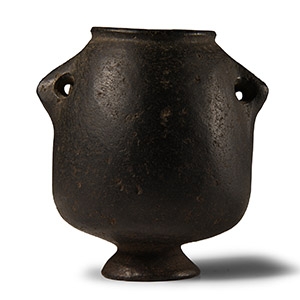
Egyptian Predynastic Basalt Vase
Naqada I-II, circa 3900-3300 B.C.Estimate: £5,000 - 7,000 (‡+bp*)
Opening Bid: £2,500
Barrel-shaped in profile with tapering neck and trumpet-shaped foot, two lateral pierced lug handles, flared rim (damaged). 330 grams, 86 mm
French private collection. From the 'Yvelines Department', Northern France. with Mme Digard, Drouot, Paris, 7 February 2011, no.107. Accompanied by a copy of a French cultural passport. This lot has been checked against the Interpol Database of stolen works of art and is accompanied by a search certificate number no.12072-218133. -
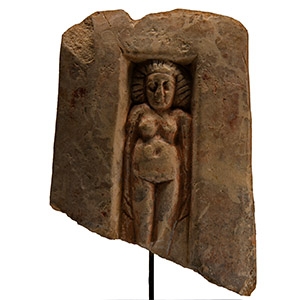
Egyptian Female Fertility Figurine Plaque
Late Period-Ptolemaic Period, 664-31 B.C.Estimate: £1,200 - 1,700 (+bp*)
Opening Bid: £600
Carved rectangular plaque with central recess, carved image of a nude female modelled in the half-round with a deeply striated bag wig, arms by her side; traces of red and black pigment on the body; mounted on a custom-made stand. 502 grams total, 17.1 cm including stand
From a central London collection, formed 1980-2000. From the private collection of Mr David Barker, London, UK; thence by descent.
The rectangular limestone plaque almost certainly represents a shrine. Such plaques first appeared in Lower Egypt and became widespread in the Late Period and Ptolemaic era. They may have developed from earlier female figurines depicted on beds and are usually associated with the female goddesses Isis and Hathor, both powerful protectors of women and childbirth and associated with fertility. -

Egyptian Steatite Scaraboid for Pharaoh Shabaka
Late 8th-early 9th century B.C.Estimate: £2,000 - 3,000 (+bp*)
Opening Bid: £1,000
Bifacial carved scaraboid; reverse with royal cartouche for Pharaoh Shabaka, flanked by the uraeus of Lower and Upper Egypt, surmounted by the Pharaonic epithet “King of the Upper and Lower Egypt” (“king of the reed” and “king of the bee”) and by the title “the son of Ra” and below, the sign of neb (damaged) “lord”; obverse with on the left, wedjat (winged cobra with the red crown – Lower Egypt), embracing with his wings shen (solar symbol) and in the centre, a lion with a ram's head, crowned and on the right, wedjat with the white crown of the Upper Egypt; on the upper section, a scarab with opened wings, instead of a lotus flower is depicted on the lower section. 7.65 grams, 27 mm
UK private collection before 2000. On the UK art market. Property of a London gentleman. This lot has been checked against the Interpol Database of stolen works of art and is accompanied by a search certificate number no.12081-217354.
