
Loading, please wait...
LOT 0416
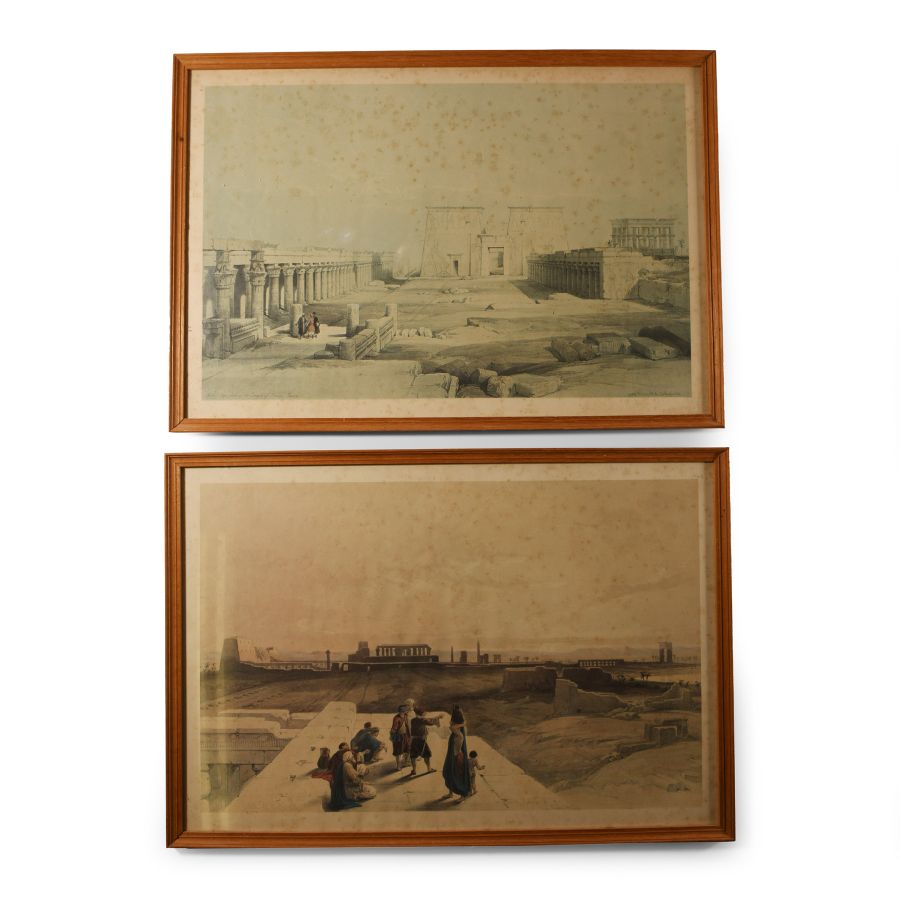
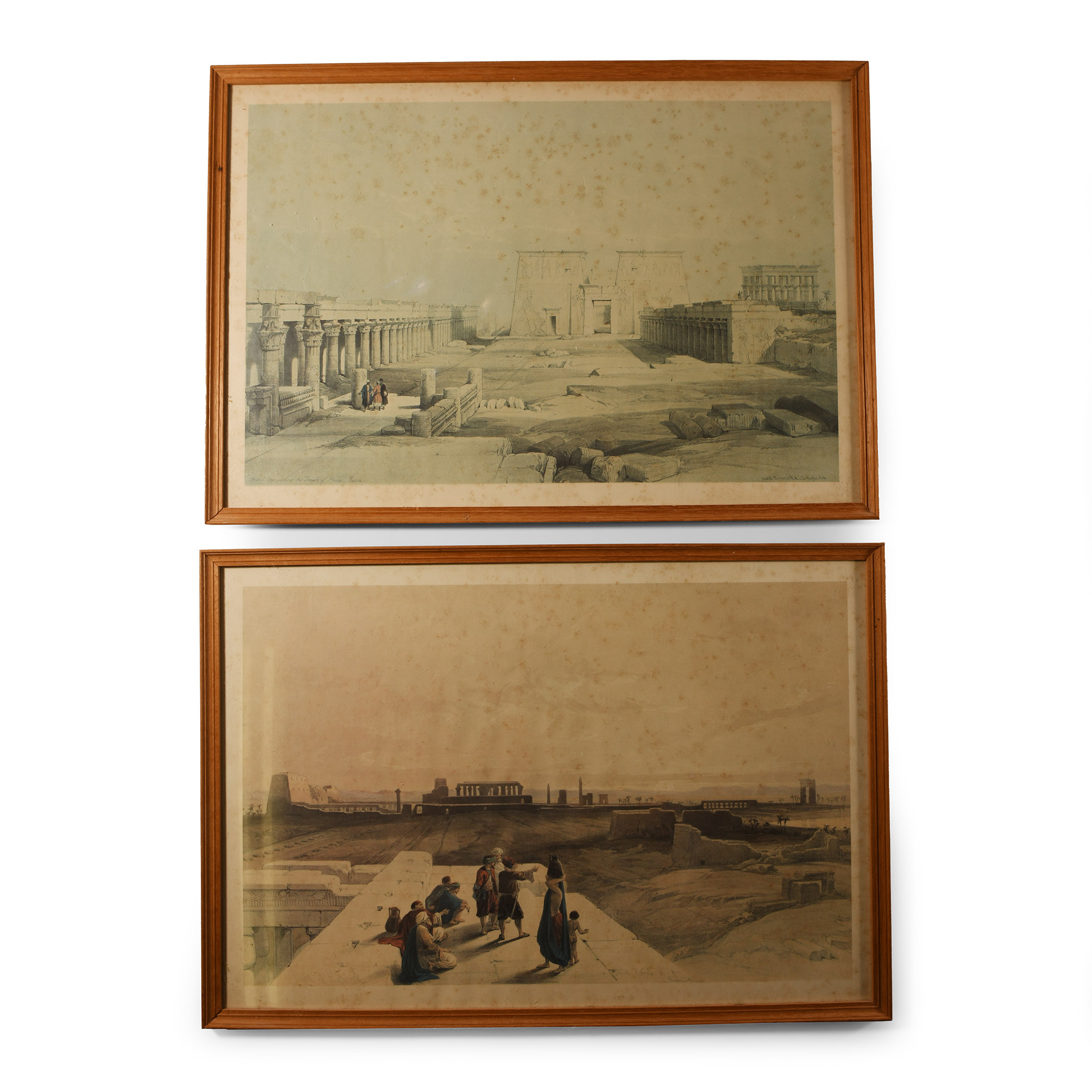
David Roberts Print of Karnak
19TH CENTURY A.D.
13 1/2 x 19 3/4 in. (2.9 kg total, 34.5 x 50 cm each).
Hand-tinted lithographs of a view over the temple complex at Karnak, and of a view of the Great Hypostyle Hall; each mounted in a glazed wooden frame. [2, No Reserve]
ProvenanceFrom the private collection of the late Mrs Belinda Ellison, a long time member of the Egyptian Exploration Society, c.1940-2020.
CONDITIONTimeLine Auctions follows a vetting process to ensure the authenticity and legality of all items, reinforcing our commitment to integrity and responsible trading. Each antiquity, antique, and coin lot undergoes thorough examination by a vetting committee of at least ten external specialists, professional trade association members, scientists, and archaeologists: Our Vetting Process
AUCTIONS:
TimeLine is a leading auction house specialising in antiquities, ancient art, collectables, natural history, coins, medals, and books. Our auctions offer museums, collectors, historians, and enthusiasts the opportunity to acquire unique and historically significant pieces.
-
.jpg)
Egyptian Hardstone Amulet Group
Late Period, 664-332 B.C.Sold for (Inc. bp): £39
Comprising: a melon bead; double plume with inked collector's reference to the reverse 'ES.7'. 3.61 grams total, 14-23 mm
Left Amulet: Brought by missionaries in the 19th century. Acquired in 1962. Ex Haeberlin collection. From a North German private collection E.S. with Gorny Mosch, Munich, Germany, 16 December 2015, 828 (Part) Right Amulet: From the collection of Doctor Girard, a collector for over 60 years. with Hotel des Ventes de Clermont-Ferrand, 22 May 2017. Property of a French collector. -
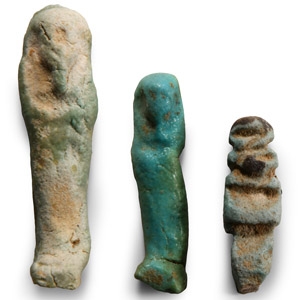
Egyptian Faience Shabti and Amulet Group
Late Period-Ptolemaic Period, 664-30 B.C.Sold for (Inc. bp): £78
Two mummiform shabti figurines, one faded pale green and the other bright turquoise; one amuletic figurine, possibly of a ram or baboon-headed deity with sun disk headdress, applied black pigment detailing. 20 grams total, 41-65 mm
From the H.N. collection, Milton Keynes, Berkshire, UK, 1990s.
Shabti figures were created to carry out heavy manual tasks on behalf of a person in the afterlife. From the Third Intermediate Period into the Late Period burials were often provided with several hundred shabtis. -
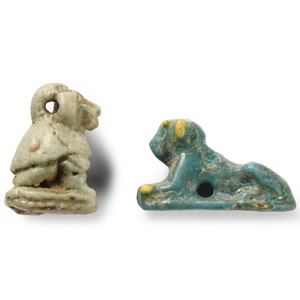
Egyptian Faience Amulet Group
Late Period, 664-332 B.C.Sold for (Inc. bp): £247
Comprising a resting lioness on a rectangular base and the god Thoth in baboon form. 1.30 grams total, 12-15 mm
From the collection of Doctor Girard, a collector for over 60 years. with Hotel des Ventes de Clermont-Ferrand, 22 May 2017. Property of a French collector.
Throughout ancient Egyptian mythology, lioness goddesses played a significant role in the religious beliefs of the people. These goddesses, including Sekhmet, Bastet, and Wadjet were revered as powerful and fierce protectors. Their presence was believed to ward off evil and safeguard the people from harm. The baboon was an animal manifestation of the god Thoth. Thoth was revered for his association with knowledge, writing, and healing. It is likely that the popularity of Thoth amulets as mummy amulets is linked to his role as the recorder of the final judgment, which determined whether the deceased had lived a life of virtue.
