
Loading, please wait...
LOT 0625
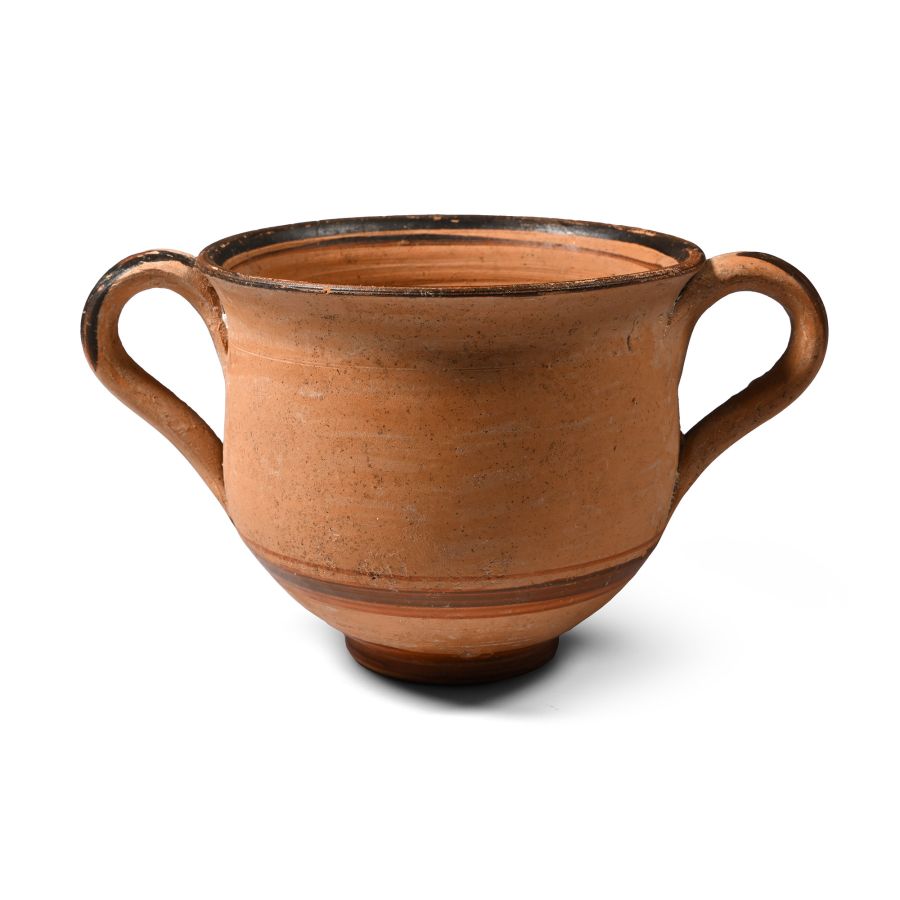
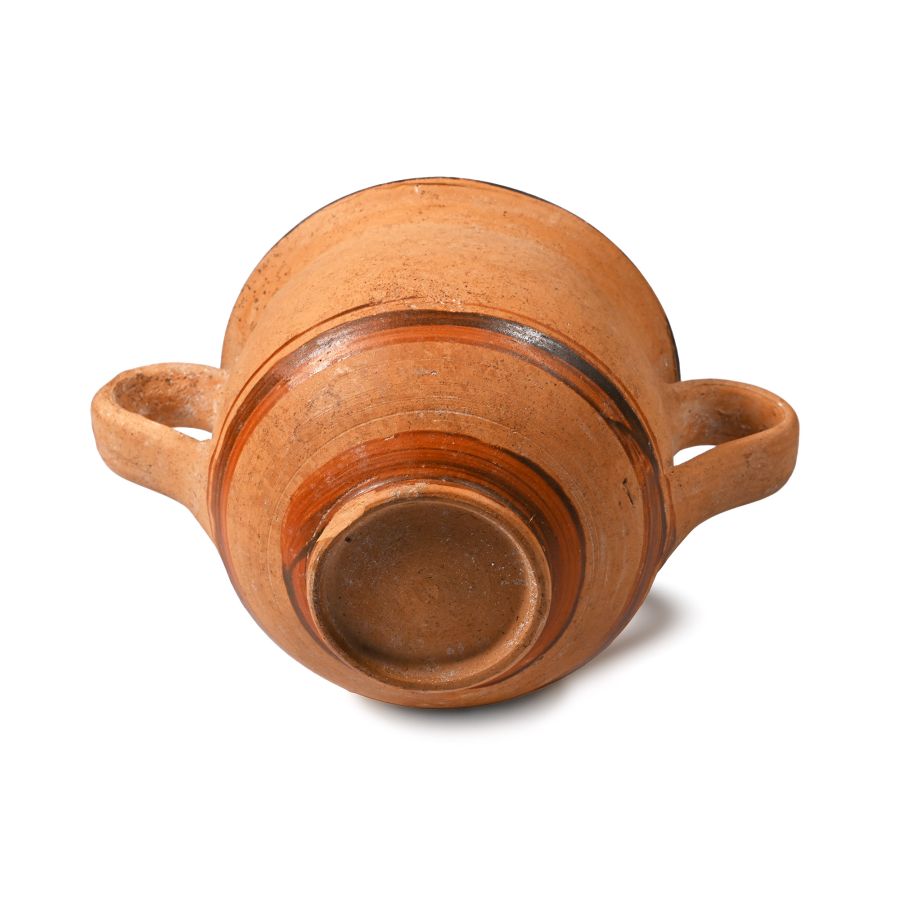
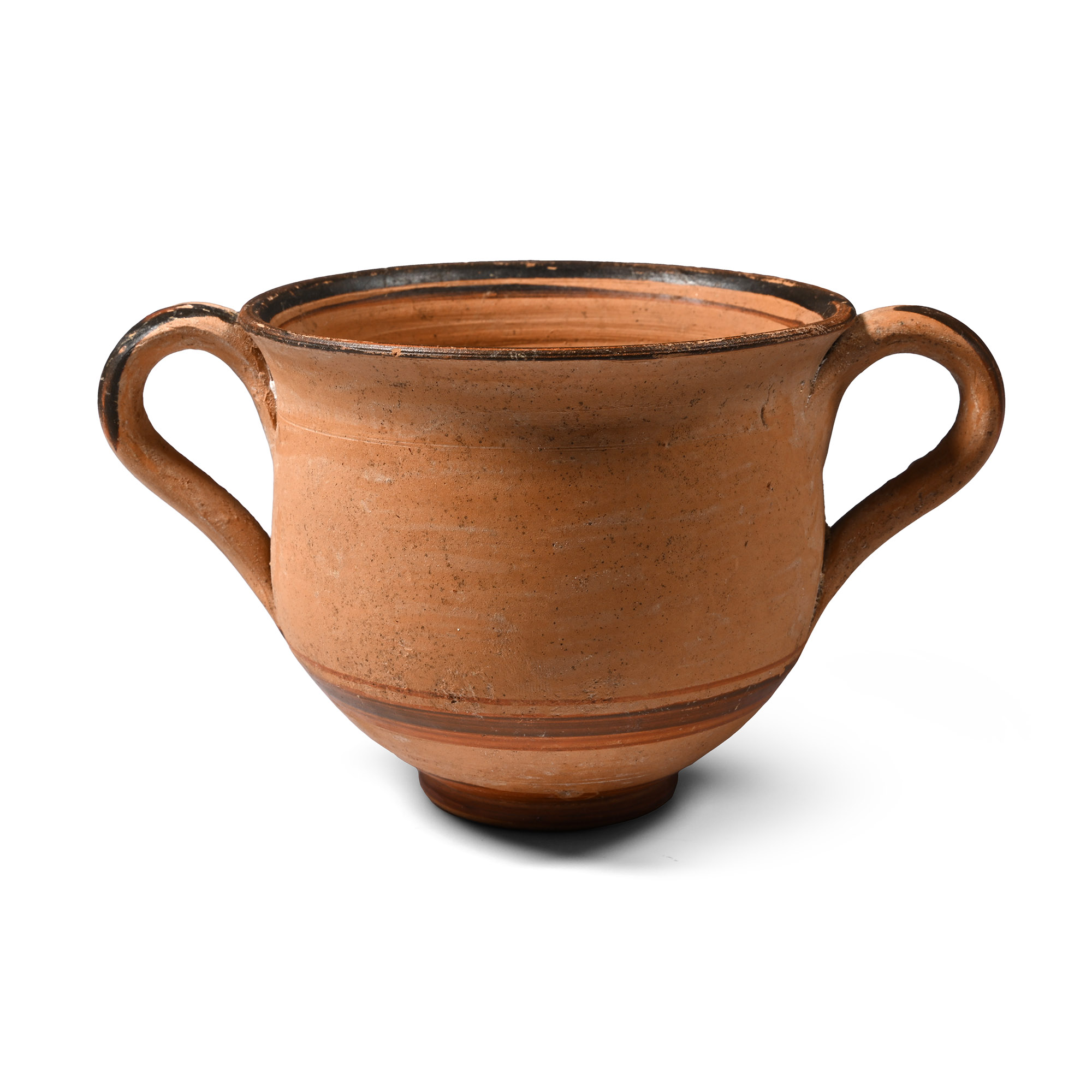
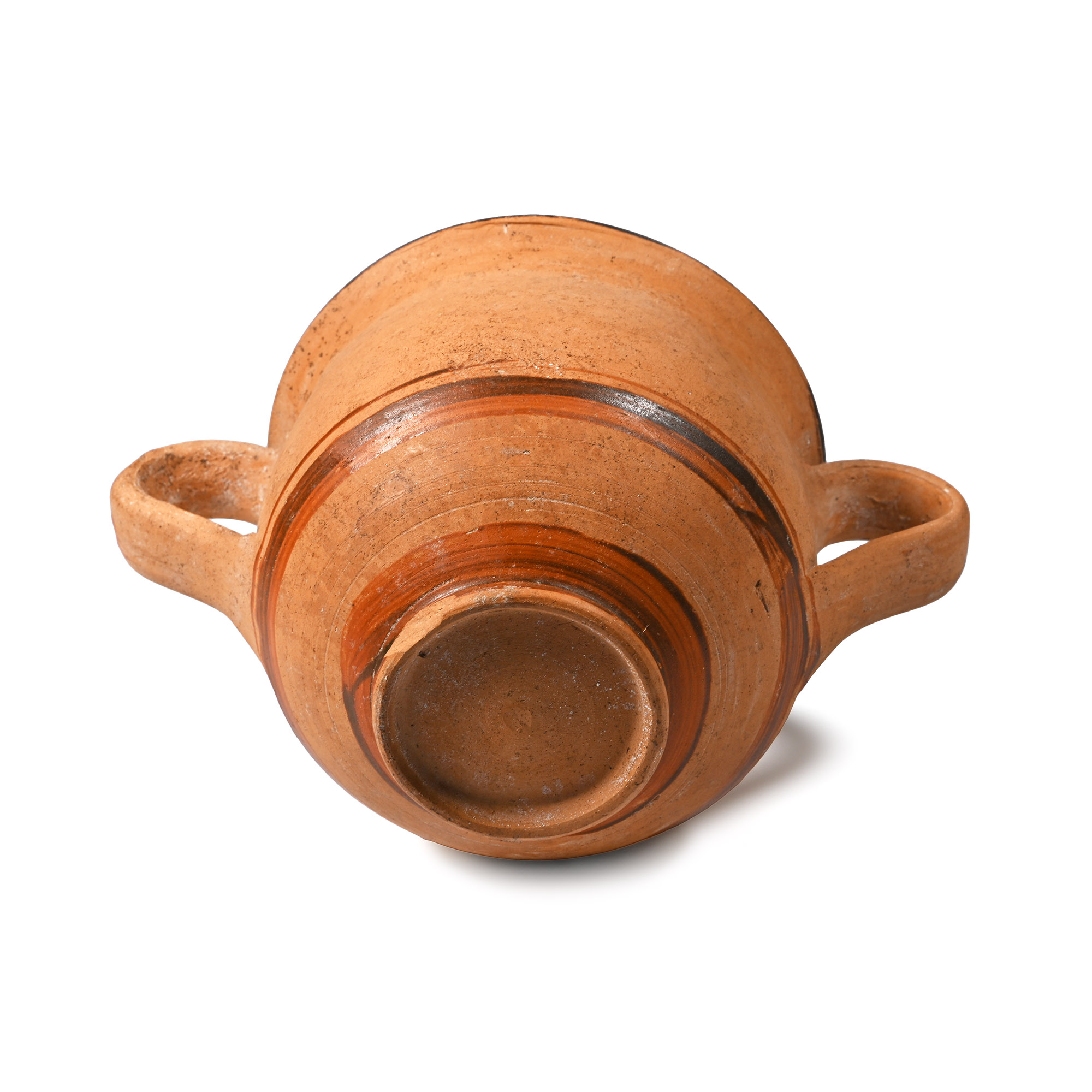
Daunian Terracotta Twin-Handled Cup
5TH-4TH CENTURY B.C.
6 1/4 in. (206 grams, 16 cm wide).
Comprising a bell-shaped thin-walled body with two strap handles and an everted rim, dark lip with a thin circumferential band below; each handle with a lentoid motif; narrow foot with two circumferential bands above.
ProvenanceFrom the estate of a Swiss gentleman, Ticino, before 1970.
with Galerie Rhéa, Zurich, Switzerland.
Daunian pottery is characterised by unique shapes and decorative motifs, which include geometric patterns, plant and animal motifs, and human figures. The pottery is typically made from a coarse clay, and it is decorated with black or dark brown slip, a type of liquid clay that is applied to the surface of the pottery before firing.
CONDITIONTimeLine Auctions follows a vetting process to ensure the authenticity and legality of all items, reinforcing our commitment to integrity and responsible trading. Each antiquity, antique, and coin lot undergoes thorough examination by a vetting committee of at least ten external specialists, professional trade association members, scientists, and archaeologists: Our Vetting Process
AUCTIONS:
TimeLine is a leading auction house specialising in antiquities, ancient art, collectables, natural history, coins, medals, and books. Our auctions offer museums, collectors, historians, and enthusiasts the opportunity to acquire unique and historically significant pieces.
LOT 0625
Daunian Terracotta Twin-Handled Cup
Estimate £400 - 600€460 - 700 (for guidance only)$540 - 810 (for guidance only)
-
Large Hellenistic Teano-Ware Fish Plate
Early 3rd century B.C.Estimate: £1,500 - 2,000 (+bp*)
Opening Bid: £750
Broad face with incised rings outlining the painted border of running vinescroll in red and white; with a shallow central socket outlined in red, broad carinated rim and low foot. 834 grams, 26.5 cm
Acquired at Auction, London, UK, 1990s, no.233. Private collection, Suffolk, UK. Accompanied by a copy of the relevant catalogue page.
'Teano ware' is a type of ceramic produced in the late 4th century to the early 3rd century BC. Its modern name derives from Teanum Sidicinum, in northern Campania, the main centre of production. White and red pigment was used for the painted decoration on the black surface. It was probably used for votive or funerary purposes. -
Greek Apulian Blackware Epichysis with Floral Design
Magna Gracia, circa 4th century B.C.Sold for (Inc. bp): £715
Blackware with spool base, domed upper face, tall neck with spout and strap handle to the rear; the spool with laurel-leaf band in white, the upper face with tendrils in cream and ochre. 217 grams, 18.5 cm
Property of a private Rutland, UK, collector, formed from at least from the 1990s. -
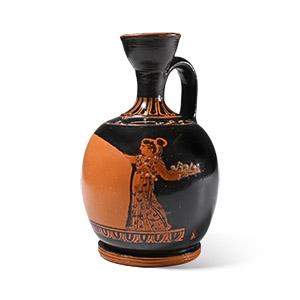
Greek Attic Red-Figure Squat Lekythos Attributed to the Meidian Painter
Circa 420-400 B.C.Estimate: £1,800 - 2,400 (‡+bp*)
Opening Bid: £900
Comprising a bulbous body with narrow neck and handle to the rear; radiating petals on the neck with a band of volute scrolls below, the body showing a female in a dynamic pose, dressed in an elaborate long dress and holding a plate of fruit with her left hand, a seated female before her; attributed to the Meidian Painter; some restoration. 95 grams, 10.9 cm
Ex Prof. Dr Hans (1918-1984) and Dr Ines (1922-2013) Jucker, classical archaeologists, Bern, Switzerland. with Galerie Rhéa, Zurich, Switzerland. This lot has been checked against the Interpol Database of stolen works of art and is accompanied by a search certificate number no.12645-236462.
Dancing women are a characteristic of the Meidian Painter. They are depicted as young women, wearing Doric costumes, earrings, pearls surmounting diadems, and golden bracelets, holding a patera and (probably originally here too) a thimiaterion.
