
Loading, please wait...
LOT 0555
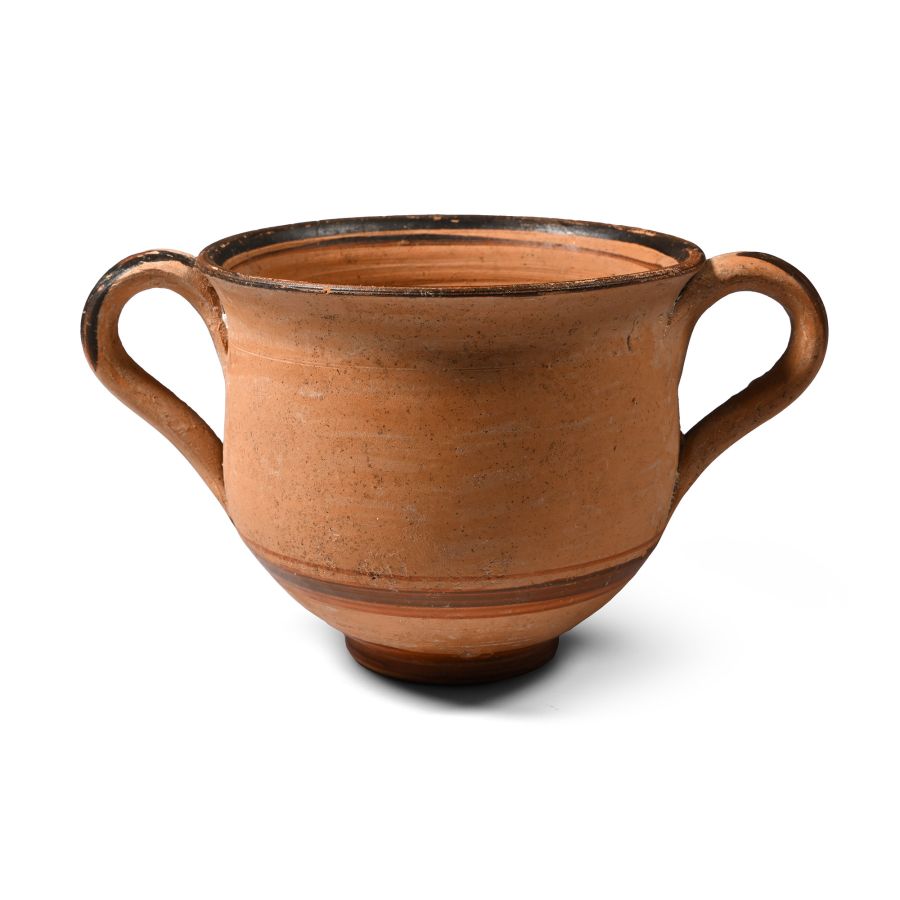
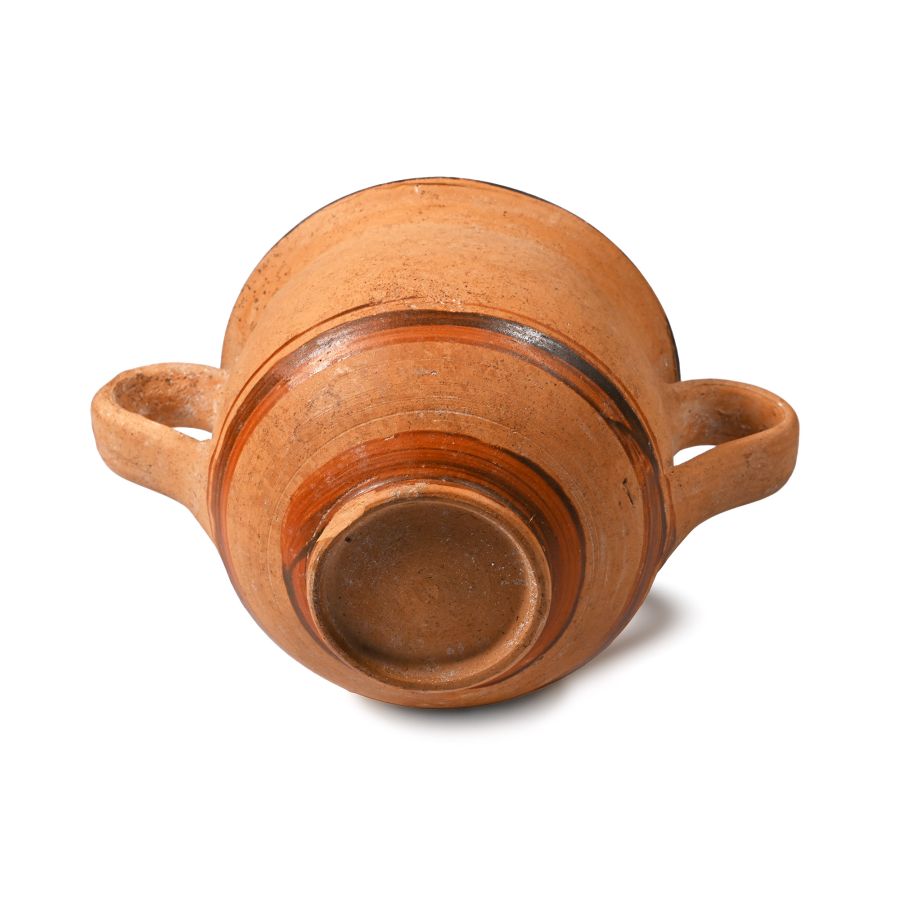
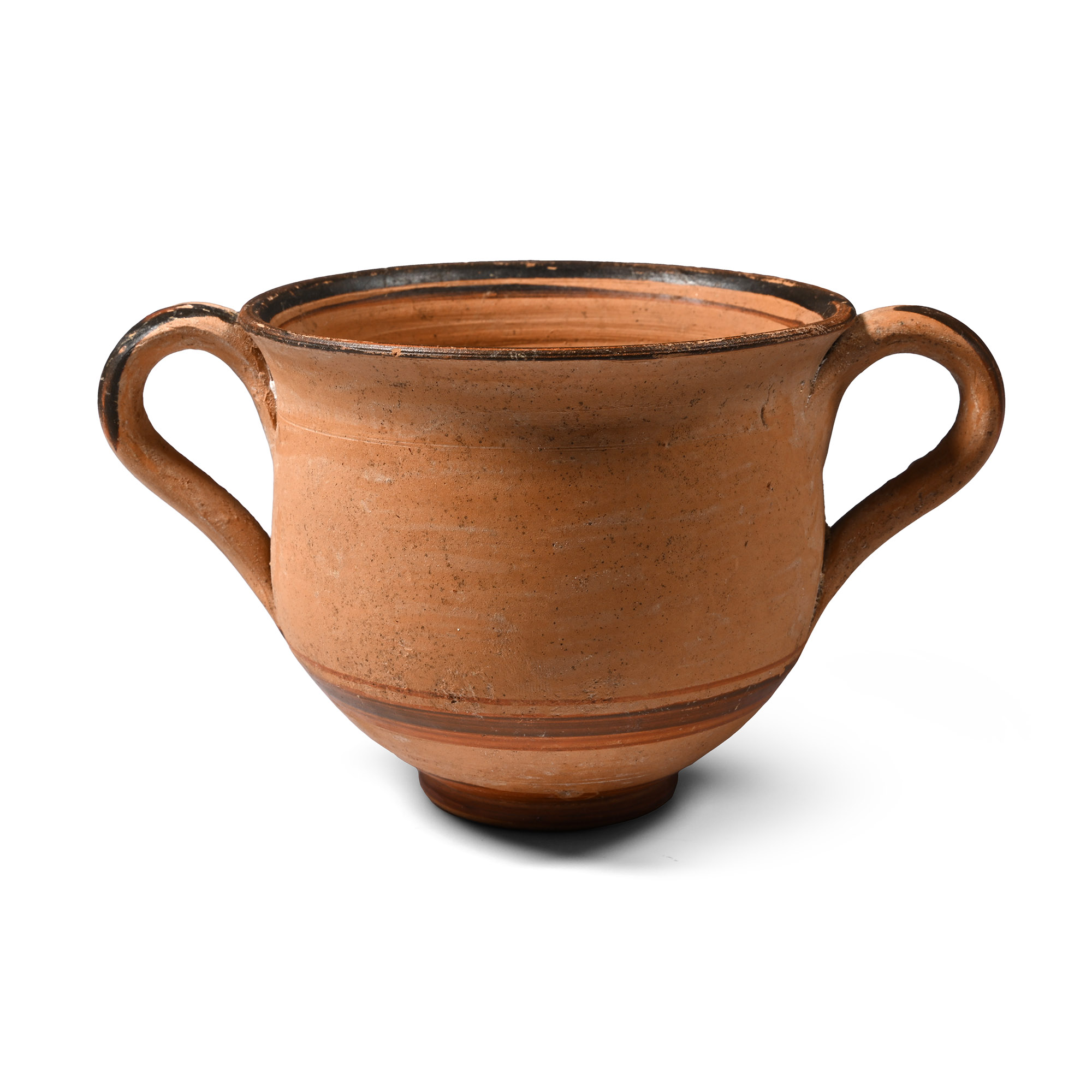
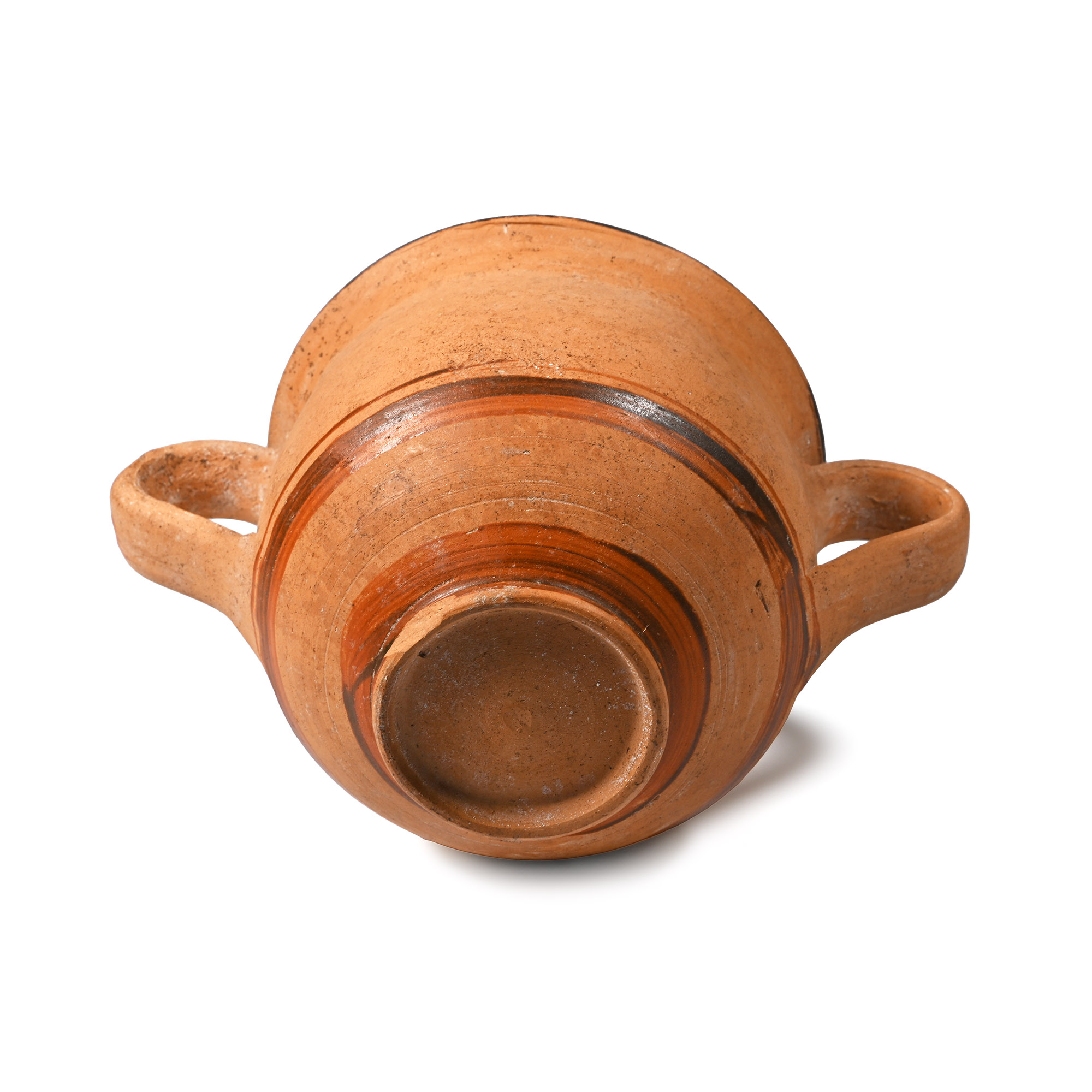
Daunian Terracotta Twin-Handled Cup
5TH-4TH CENTURY B.C.
6 1/4 in. (206 grams, 16 cm wide).
Comprising a bell-shaped thin-walled body with two strap handles and an everted rim, dark lip with a thin circumferential band below; each handle with a lentoid motif; narrow foot with two circumferential bands above.
ProvenanceFrom the estate of a Swiss gentleman, Ticino, before 1970.
with Galerie Rhéa, Zurich, Switzerland.
This lot is accompanied by an illustrated lot declaration signed by the Head of the Antiquities Department, Dr Raffaele D'Amato.
Daunian pottery is characterised by unique shapes and decorative motifs, which include geometric patterns, plant and animal motifs, and human figures. The pottery is typically made from a coarse clay, and it is decorated with black or dark brown slip, a type of liquid clay that is applied to the surface of the pottery before firing.
CONDITIONTimeLine Auctions follows a vetting process to ensure the authenticity and legality of all items, reinforcing our commitment to integrity and responsible trading. Each antiquity, antique, and coin lot undergoes thorough examination by a vetting committee of at least ten external specialists, professional trade association members, scientists, and archaeologists: Our Vetting Process
AUCTIONS:
TimeLine is a leading auction house specialising in antiquities, ancient art, collectables, natural history, coins, medals, and books. Our auctions offer museums, collectors, historians, and enthusiasts the opportunity to acquire unique and historically significant pieces.
LOT 0555
Daunian Terracotta Twin-Handled Cup
Estimate £500 - 700€580 - 810 (for guidance only)$680 - 950 (for guidance only)
-
Hellenistic Terracotta Brazier Fragment with Face
3rd-1st century B.C.Sold for (Inc. bp): £156
A rectangular fragment with the head Silenus or satyr wearing an ivy crown, projecting beard, double border above the head; accompanied by a custom-made display stand. 319 grams, 10 cm (584 grams total, 13.8 cm including stand)
From a private collection formed in the early 20th century. with Gorny & Mosch, Munich, 17 December 2014, no.631. with Galerie Rhéa, Zurich. This lot is accompanied by an illustrated lot declaration signed by the Head of the Antiquities Department, Dr Raffaele D'Amato. -
Greek Boeotian Horse and Rider Figure
Mid 6th century B.C.Sold for (Inc. bp): £1,365
In static stance with forelegs straight and head erect, rider gripping the neck, painted detailing to mane and body; mounted on a custom-made stand. 117 grams, 11.5 cm (268 grams total, 14 cm high including stand)
Acquired from Spink, London, UK, 30 June 1956. Ex private collection. with Sotheby's, New Bond Street, London, 8 December 1994, no.184. Accompanied by copies of the relevant Sotheby's catalogue pages. This lot is accompanied by an illustrated lot declaration signed by the Head of the Antiquities Department, Dr Raffaele D'Amato. -
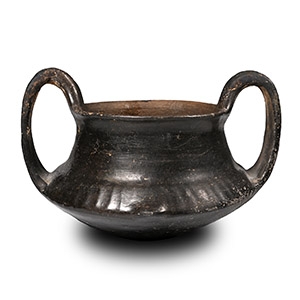
Villanovan Terracotta Two-Handled Bowl
9th-8th century B.C.Sold for (Inc. bp): £390
A squat vessel with a small base, raised neck and slightly projecting rim, carinated shoulder with two projecting bosses and a pair of high strap handles. 221 grams, 13.4 cm wide
Old Basel private collection. Elsa Bloch-Diener, Antike Kunst, Bern, 27 July 1990. Private collection, Bern, Switzerland. This lot is accompanied by an illustrated lot declaration signed by the Head of the Antiquities Department, Dr Raffaele D'Amato.
