
Loading, please wait...
LOT 0074
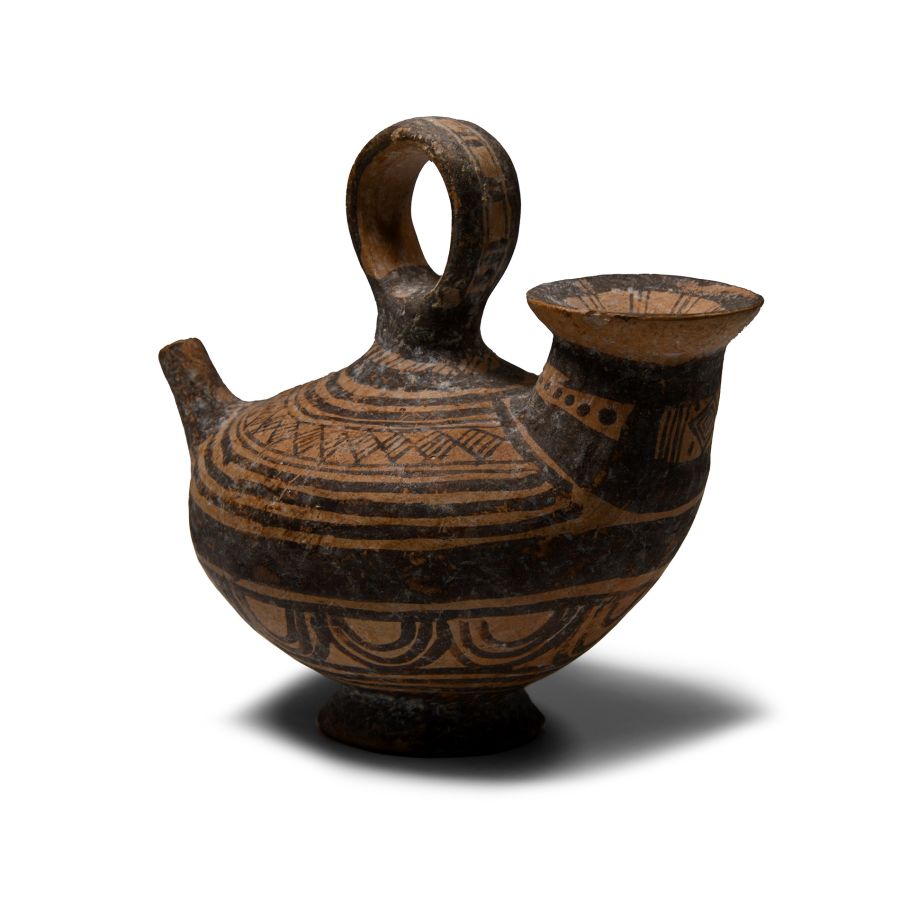
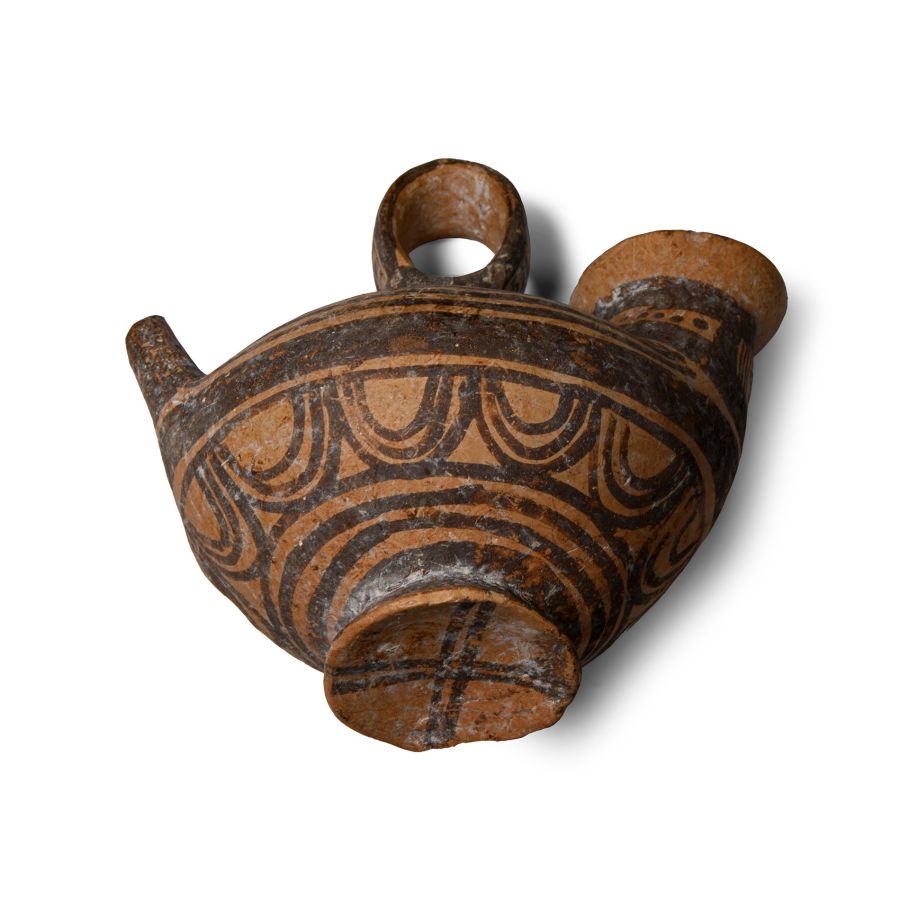
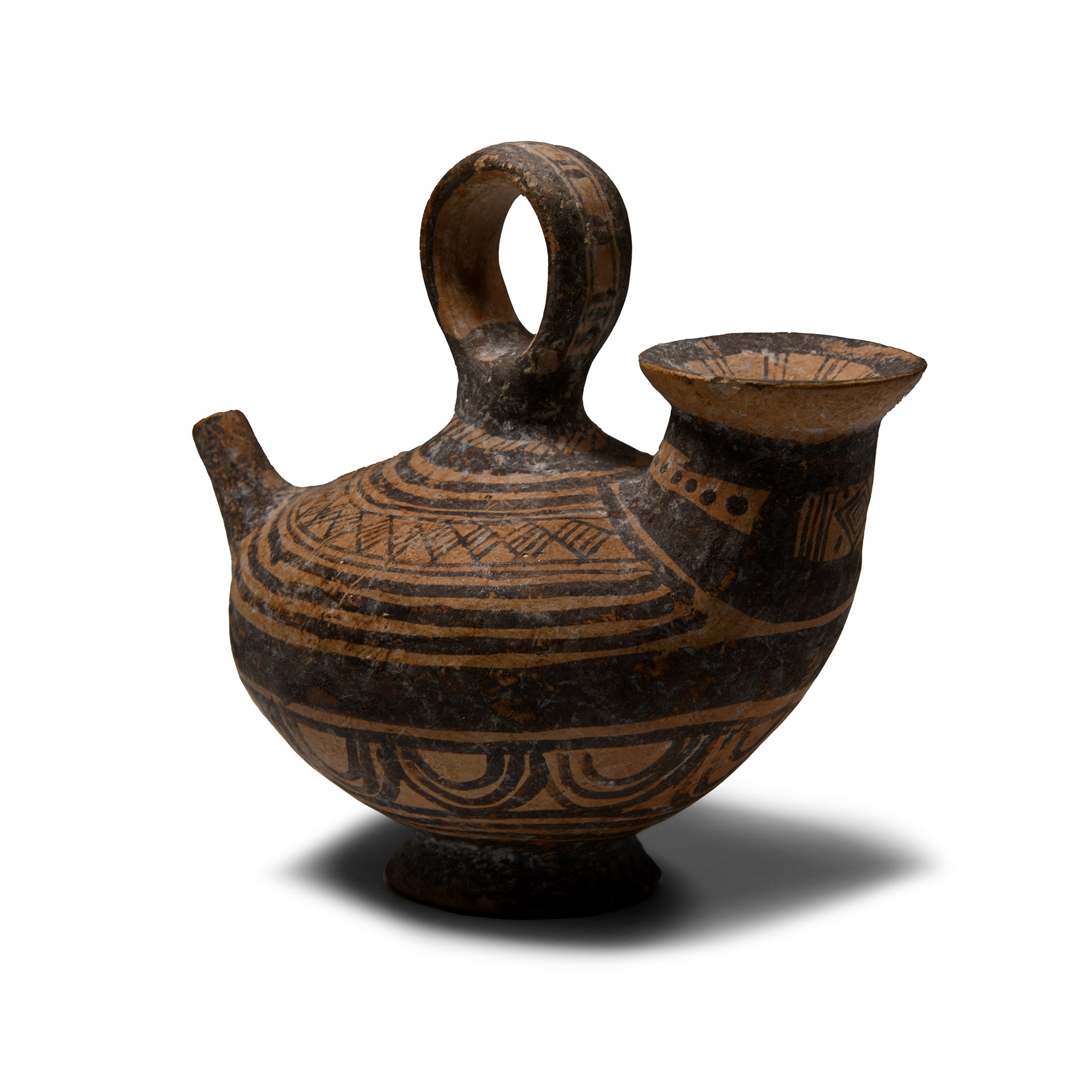
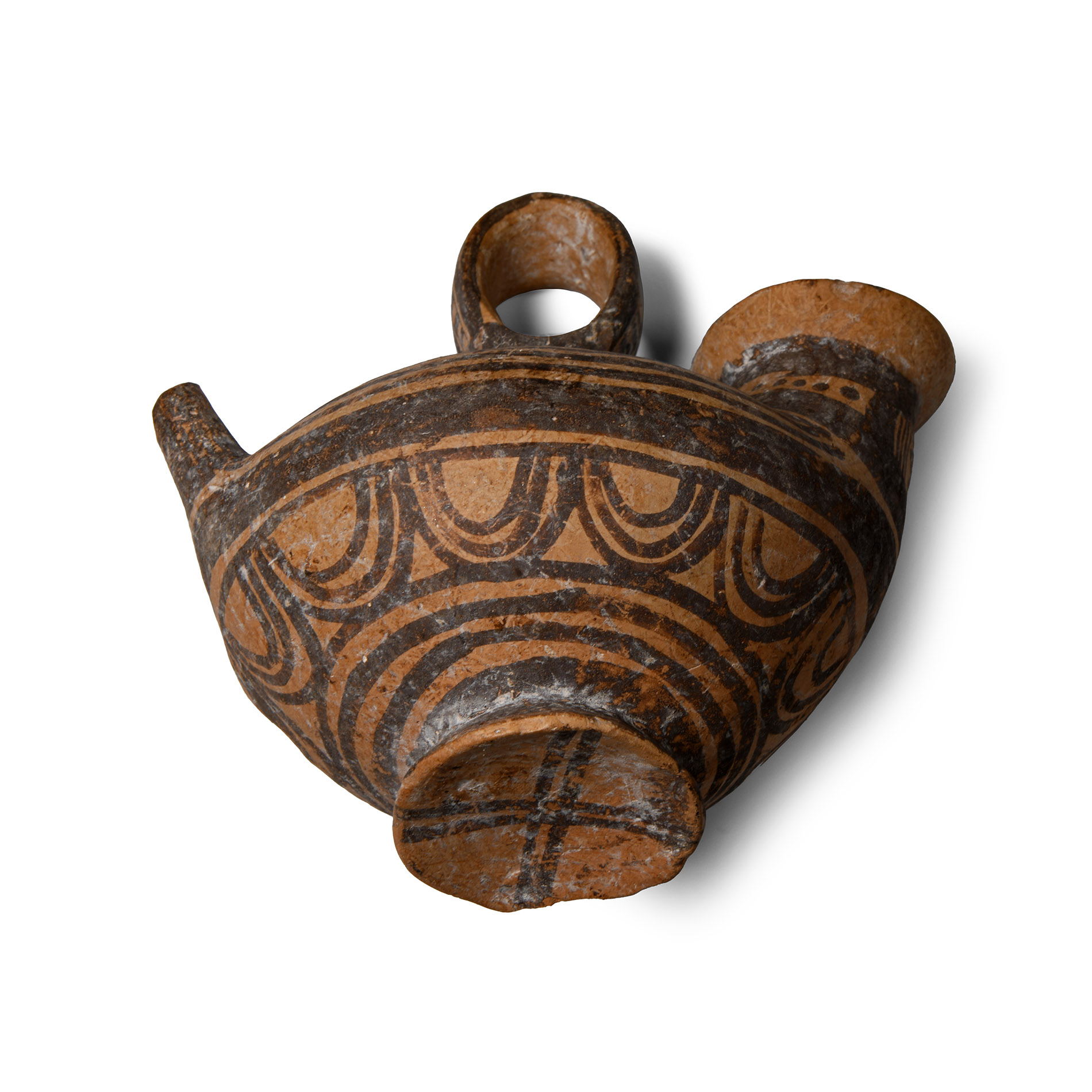
Daunian Terracotta Askos Bird-Shaped Flask
CIRCA 400-350 B.C.
4 1/4 in. (193 grams, 11 cm).
With squat bdy on a small disc foot, broad filler hole with flange rim and small stub spout, flat-section loop above; painted with bands of radiating hatching, segments and other designs.
ProvenanceFrom an old German collection.
Acquired in Brussels from Alara Gallery, 1994.
Private collection, London, UK.
Cf. less elaborate example in the British Museum under accession no.1856,1226.140.
CONDITIONTimeLine Auctions follows a vetting process to ensure the authenticity and legality of all items, reinforcing our commitment to integrity and responsible trading. Each antiquity, antique, and coin lot undergoes thorough examination by a vetting committee of at least ten external specialists, professional trade association members, scientists, and archaeologists: Our Vetting Process
AUCTIONS:
TimeLine is a leading auction house specialising in antiquities, ancient art, collectables, natural history, coins, medals, and books. Our auctions offer museums, collectors, historians, and enthusiasts the opportunity to acquire unique and historically significant pieces.
-
Cypriot Painted Terracotta Jug
Middle Bronze Age, circa 2000-1650 B.C.Sold for (Inc. bp): £46
Globular in profile with tall tubular neck and slightly everted rim, loop handle to the reverse. 319 grams, 15.5 cm
From a collection acquired on the UK art market from various auction houses and collections mostly before 2000. From an important Cambridgeshire estate; thence by descent. -
Cypriot Burnished Terracotta Vessel Group
Bronze Age, 2300-1650 B.C.Sold for (Inc. bp): £72
Mainly spherical with stub neck, incised detailing. 560 grams total, 57-87 mm
From a collection acquired on the UK art market from various auction houses and collections mostly before 2000. From an important Cambridgeshire estate; thence by descent. -
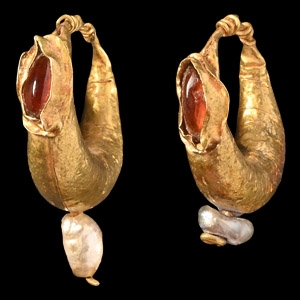
Greek Gold and Garnet Earrings
Circa 4th-3rd century B.C.Sold for (Inc. bp): £247
Crescent-shaped with coiled ends, applied ellipsoid cell with stepped profile and inset garnet cabochon. 0.93 grams total, 13-16 mm
Ex property of a late Japanese collector, 1970s-2000s.
