
Loading, please wait...
LOT 0647
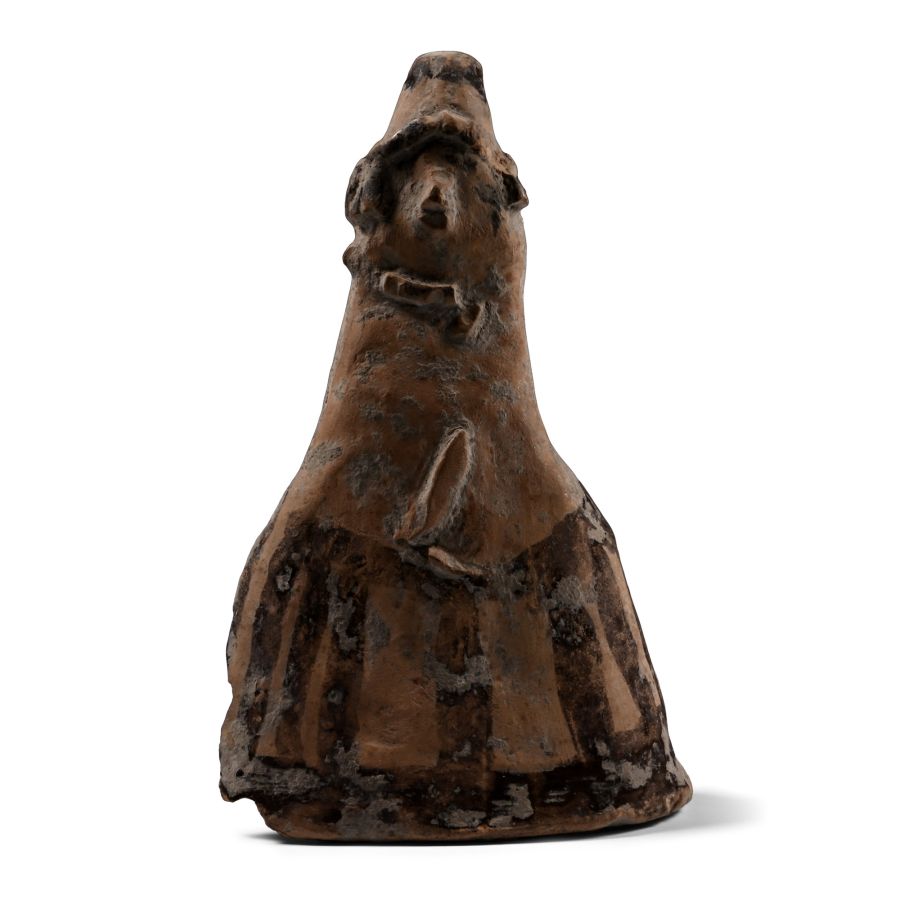
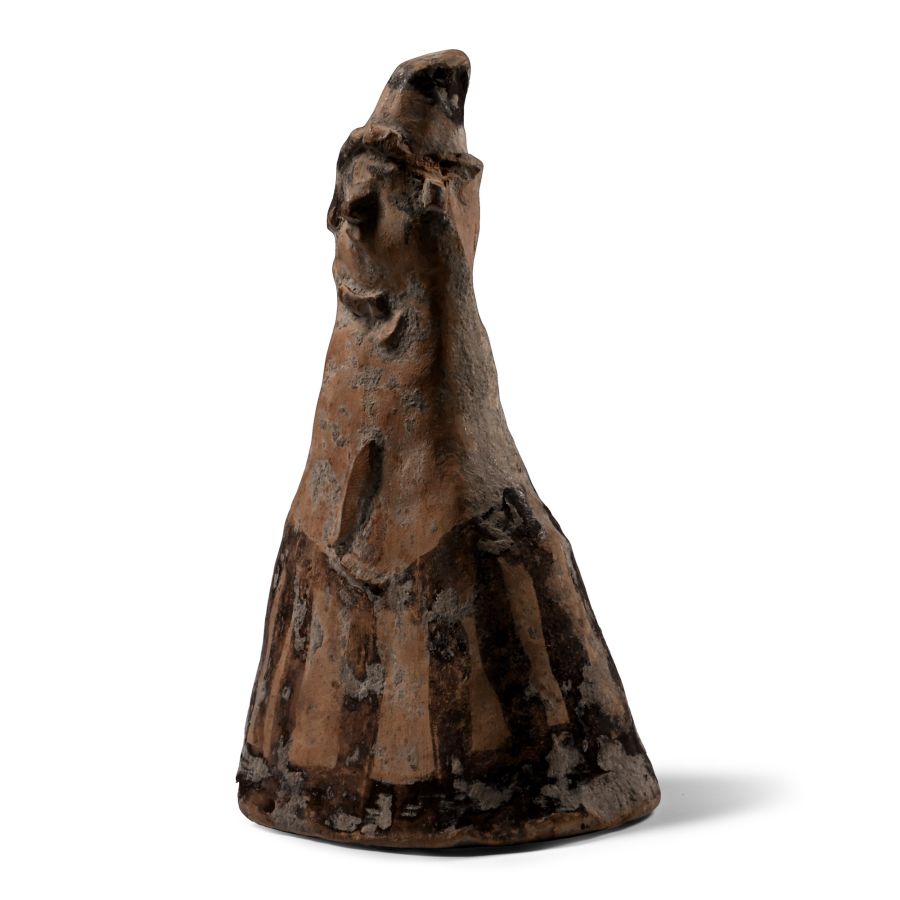
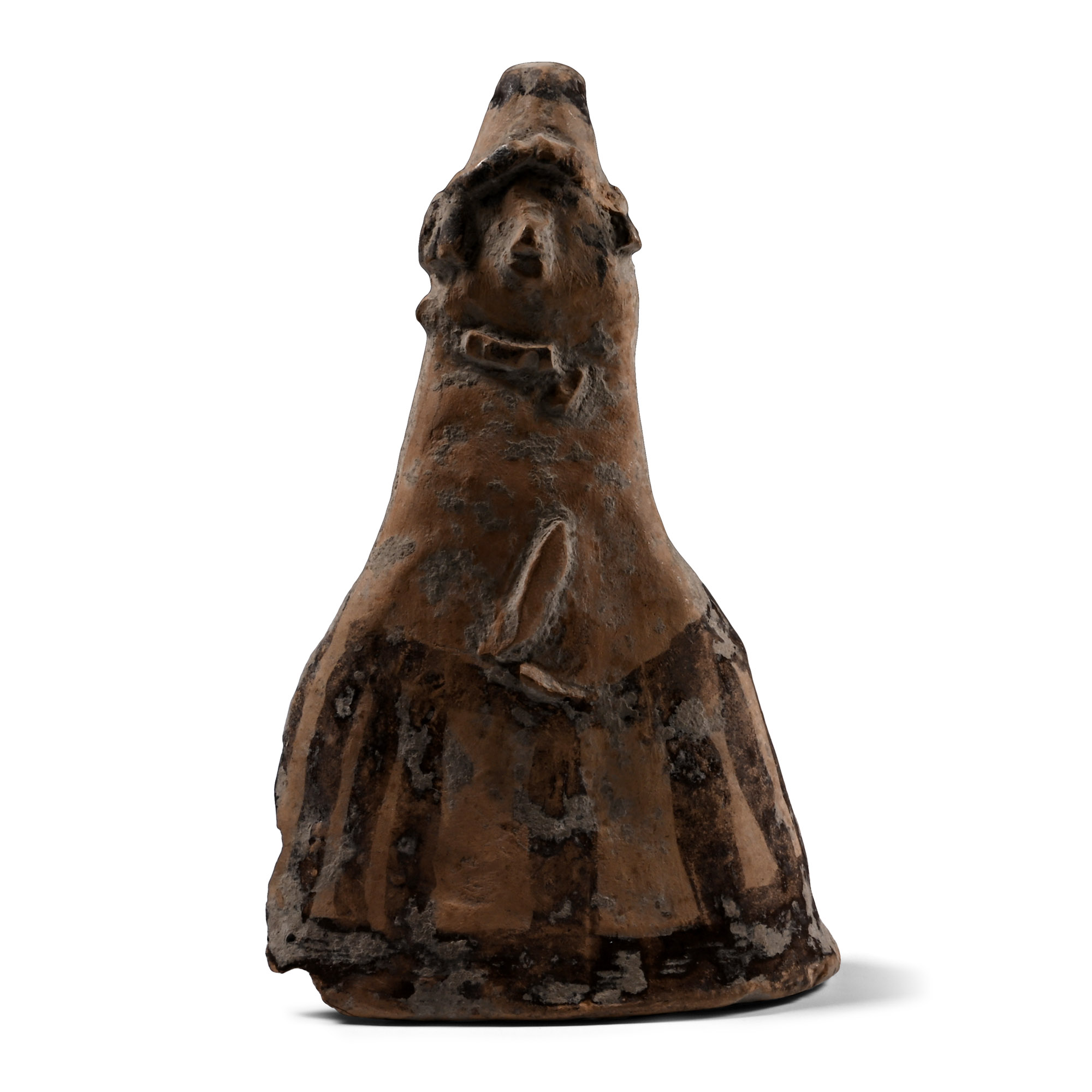
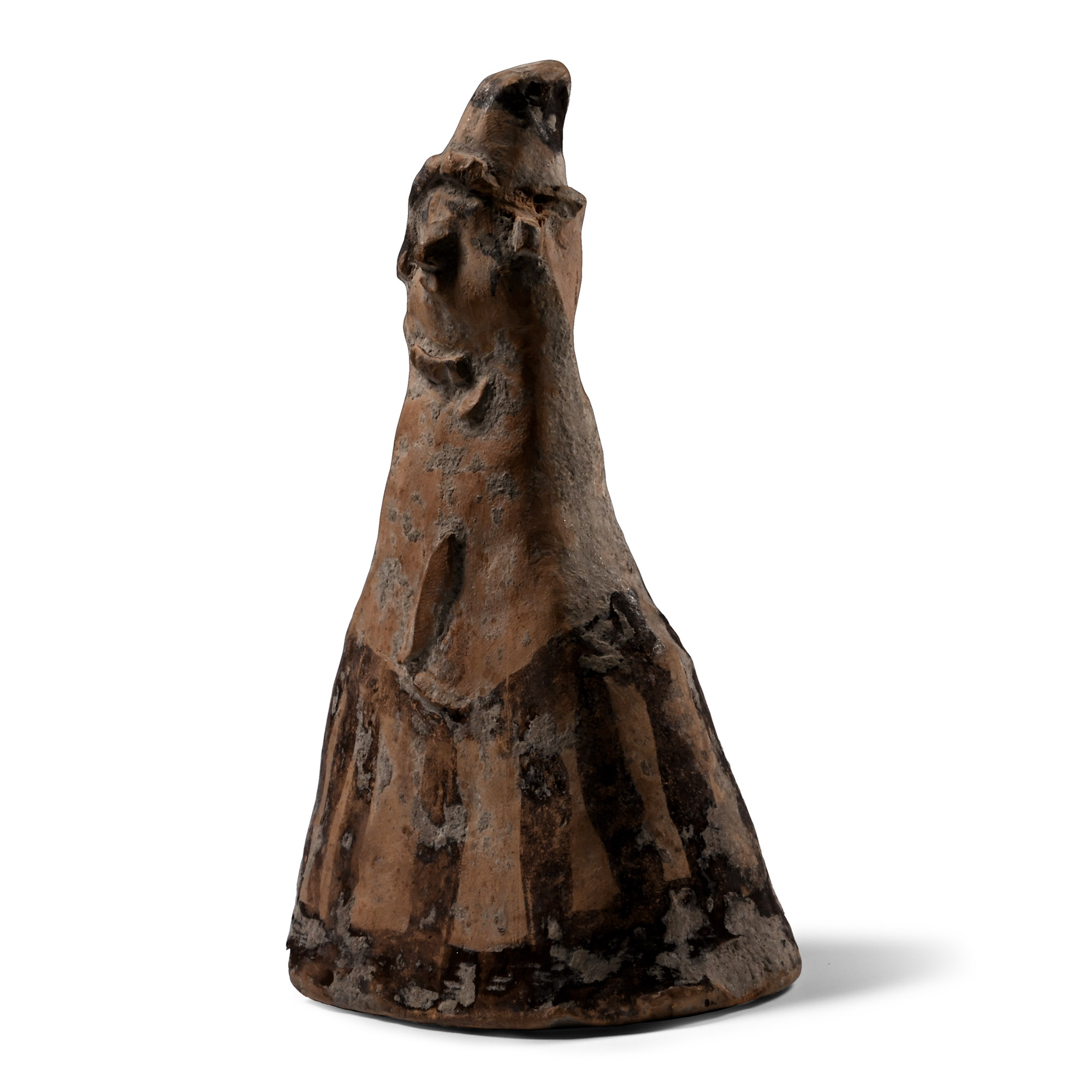
Daunian Ceramic Bell-Shaped Idol
7TH-6TH CENTURY B.C.
5 in. (140 grams, 12.5 cm).
A male figure with a bell-shaped lower body painted with horizontal stripes, an applied phallus above; column-like upper body and head with stylised facial features, tall conical headdress.
ProvenancePrivate collection of Mrs R.K., Basel, Switzerland.
with Galerie Rhéa, Zurich, Switzerland.
TimeLine Auctions follows a vetting process to ensure the authenticity and legality of all items, reinforcing our commitment to integrity and responsible trading. Each antiquity, antique, and coin lot undergoes thorough examination by a vetting committee of at least ten external specialists, professional trade association members, scientists, and archaeologists: Our Vetting Process
AUCTIONS:
TimeLine is a leading auction house specialising in antiquities, ancient art, collectables, natural history, coins, medals, and books. Our auctions offer museums, collectors, historians, and enthusiasts the opportunity to acquire unique and historically significant pieces.
LOT 0647
Daunian Ceramic Bell-Shaped Idol
Estimate £400 - 600€460 - 700 (for guidance only)$540 - 810 (for guidance only)
-

Greek Gold Diadem with Glass Gem
1st millennium B.C.Sold for (Inc. bp): £1,235
Sheet-gold with tapering finials, central raised cell set with a two-tone glass insert imitating banded agate; mounted on perspex backing. 76.87 grams total, 30 cm (36 cm including stand)
with Galerie Rhéa, Zurich, Switzerland. -

Archaic Greek Terracotta Mounted Warrior
7th-5th century B.C.Sold for (Inc. bp): £104
Modelled in the round as a mounted warrior, the stylised horse modelled standing on stub legs, with a long neck, the warrior holding a shield in his left hand, right hand and arm raised to eye level, wearing a crested helmet; restored and mounted on a custom-made display stand. 262 grams total, 15 cm including stand
Acquired before 1990. From an old German collection.
Terracotta figurines of horse and rider were common grave offerings in Boeotia, northwest of Attica, particularly during the 6th century B.C. Representations of warriors on horseback were already widespread in the Geometric Period, and also widely employed in Cyprus in this same period. The image of our rider, although influenced by Cypriot designs, does not show typical Cypriot characteristics, and indeed his kausia cap suggests a northern Greek origin. -
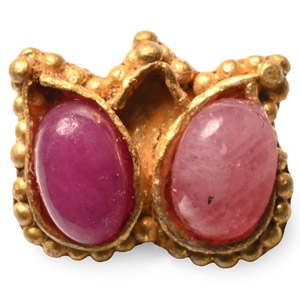
Hellenistic Gold Pendant with Cabochons
Circa 2nd-1st century B.C.Sold for (Inc. bp): £364
Plaque with granulated border, two carnelian cabochons and loop to reverse. 1.48 grams, 12 mm
Ex property of a late Japanese collector, 1970-2000s. This lot is accompanied by an illustrated lot declaration signed by the Head of the Antiquities Department, Dr Raffaele D'Amato.
